
Loading, please wait...
LOT 1291
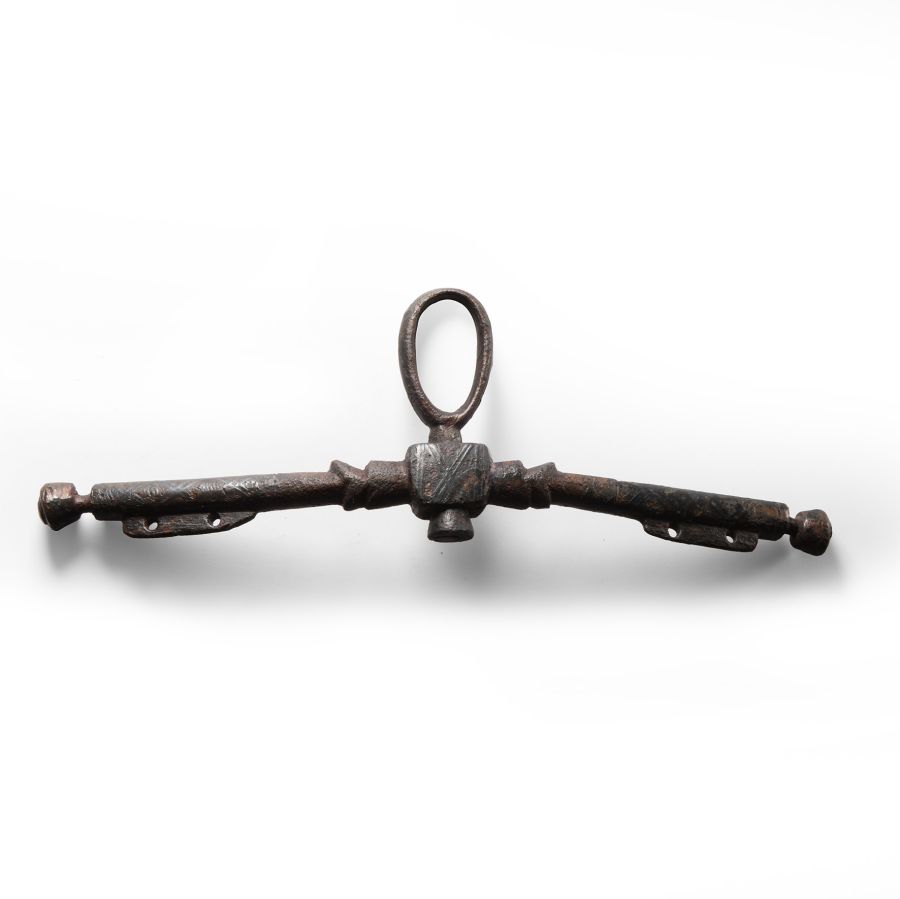
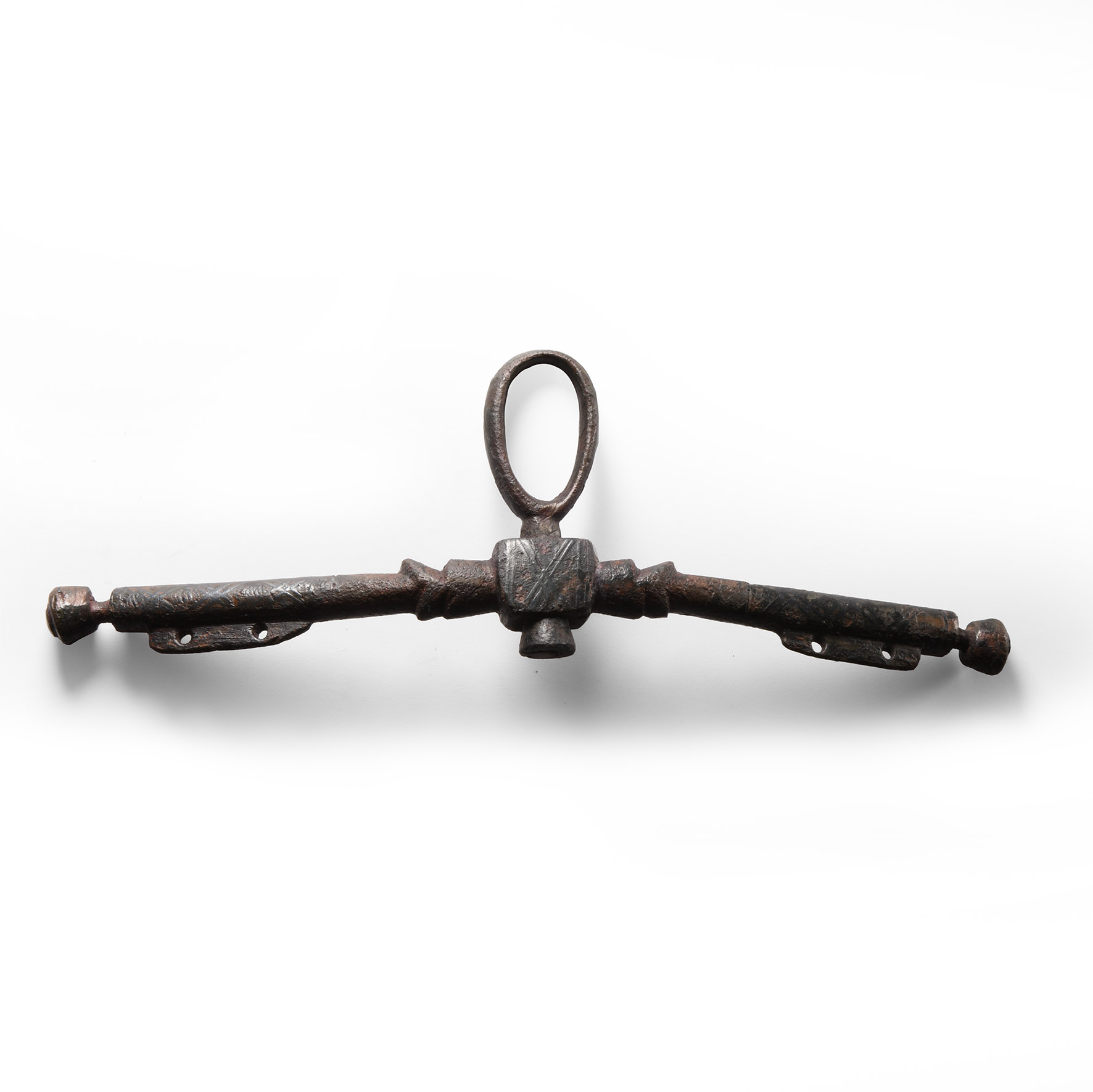
Medieval Niello Inlaid Bronze Purse Bar
15TH-16TH CENTURY A.D.
6 3/4 in. (95.9 grams, 17 cm).
Classified as a Williams Class A1 with rectangular central section, two expanding round-section arms with devolved gripping animal heads projecting from the central section; pierced attachment lobes below the arms; articulate central swivel; niello-inlaid double crisscross motif to arms and central section of both faces.
ProvenanceEx property of a Kent gentleman; found Romney Marsh area, Kent, UK, 1990-2015.
Property of a Buckinghamshire, UK, gentleman.
See Portable Antiquities Scheme, record id. PUBLIC-F46908, for similar, dated c.1450-1550 AD.
CONDITIONTimeLine Auctions follows a vetting process to ensure the authenticity and legality of all items, reinforcing our commitment to integrity and responsible trading. Each antiquity, antique, and coin lot undergoes thorough examination by a vetting committee of at least ten external specialists, professional trade association members, scientists, and archaeologists: Our Vetting Process
AUCTIONS:
TimeLine is a leading auction house specialising in antiquities, ancient art, collectables, natural history, coins, medals, and books. Our auctions offer museums, collectors, historians, and enthusiasts the opportunity to acquire unique and historically significant pieces.
LOT 1291
Medieval Niello Inlaid Bronze Purse Bar
Estimate £100 - 140€120 - 160 (for guidance only)$140 - 190 (for guidance only)
-
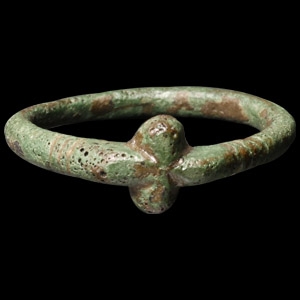
Medieval Bronze Stirrup Ring with Cross
13th-14th century A.D.Sold for (Inc. bp): £85
With incised lines to the shoulders, bezel formed as four radiating leaf-shaped knops. 3.11 grams, 25.44 mm overall, 18.59 mm internal diameter (approximate size British Q 1/2, USA 8 1/4, Europe 18.12, Japan 17)
Private collection formed since the 1940s. UK art market. Property of an Essex gentleman. -
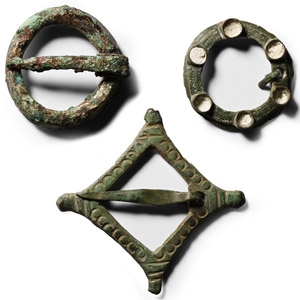
Medieval Bronze Ring Brooch Group
Circa 14th-16th century A.D.Sold for (Inc. bp): £26
Comprising: a plain ring brooch; one with six turrets; and one lozenge-shaped decorated with stamped annulets to the frame. 12 grams total, 23-38 mm
Found Cambridgeshire, UK. -
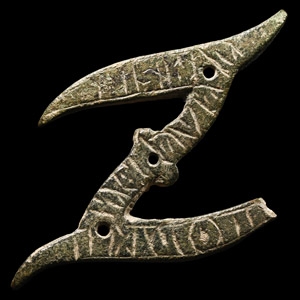
Medieval Bronze Mount with Inscription
14th-15th century A.D.Sold for (Inc. bp): £195
Formed as a capital 'N' or 'Z' with spurs to the median bar and swept arms; reserved enigmatic inscription 'MON[..] / [...] / NISI[.]. 19.3 grams, 55 mm
Acquired on the UK art market in the 1990s. Ex Paul Moore, Sussex, UK. Property of a Stowmarket, UK, gentleman. Accompanied by a previous typed and encapsulated identification card.
