
Loading, please wait...
LOT 1314
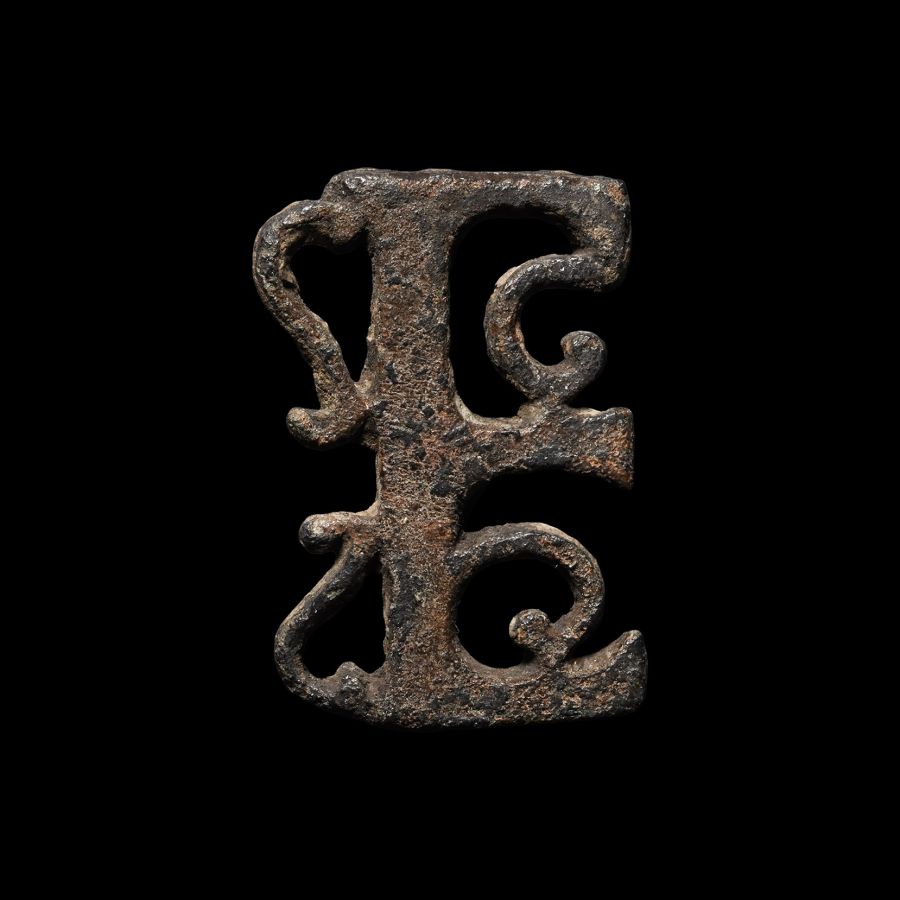
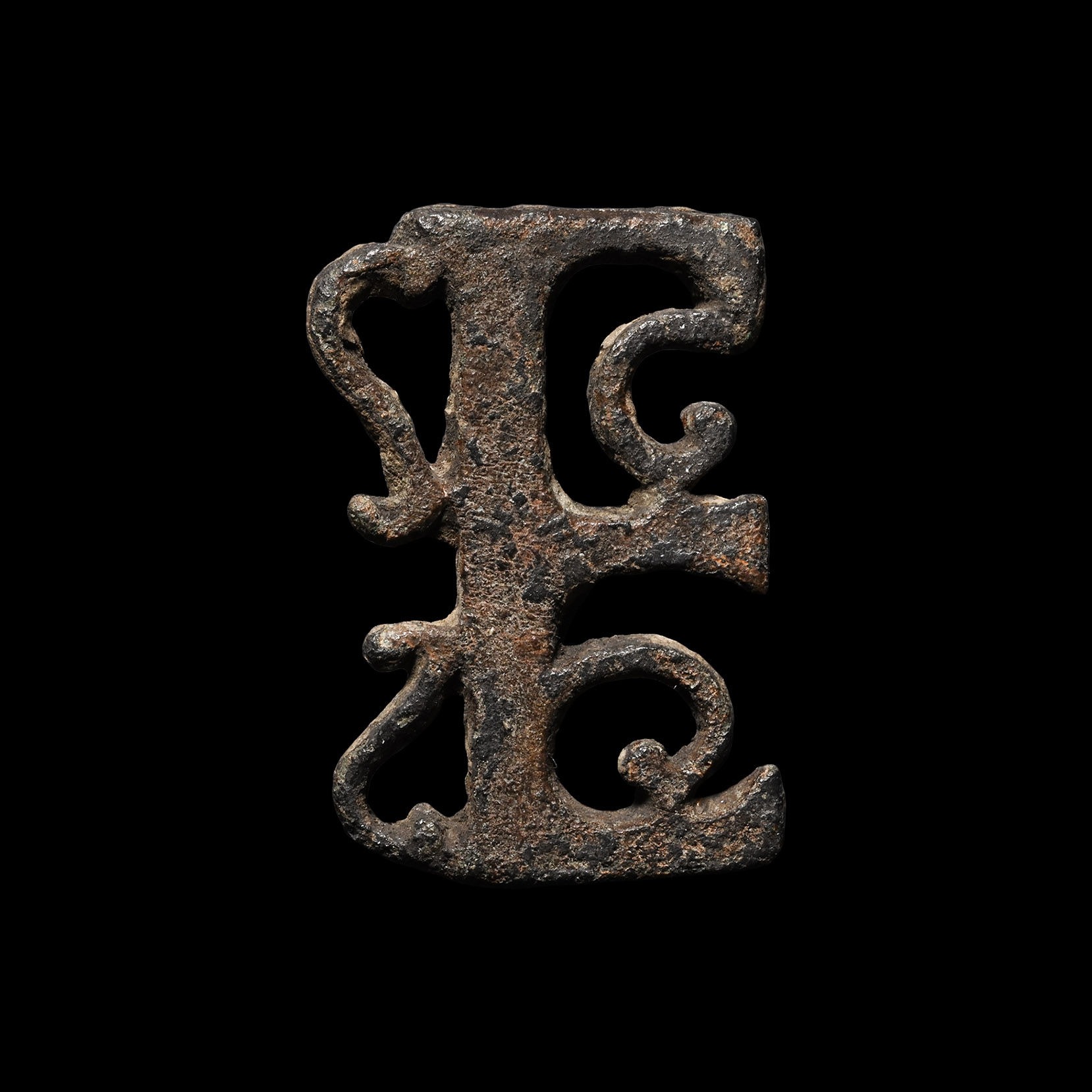
Medieval Mount of Saint Edward the Confessor
CIRCA 11TH-12TH CENTURY A.D.
1 1/8 in. (5.6 grams, 29 mm).
A mount formed as a capital letter E, representing Saint Edward, embellished with scrolling bars; three mounting lugs to the reverse.
ProvenanceAcquired in the late 1990s-2000.
Property of an East London gentleman.
TimeLine Auctions follows a vetting process to ensure the authenticity and legality of all items, reinforcing our commitment to integrity and responsible trading. Each antiquity, antique, and coin lot undergoes thorough examination by a vetting committee of at least ten external specialists, professional trade association members, scientists, and archaeologists: Our Vetting Process
AUCTIONS:
TimeLine is a leading auction house specialising in antiquities, ancient art, collectables, natural history, coins, medals, and books. Our auctions offer museums, collectors, historians, and enthusiasts the opportunity to acquire unique and historically significant pieces.
-
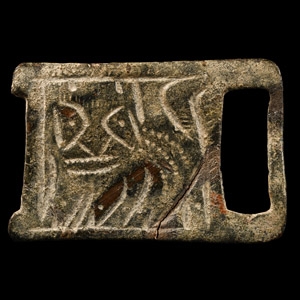
Medieval Buckle Plate with Facing Lion
Circa 10th century A.D. or laterSold for (Inc. bp): £33
A flat-section copper-alloy buckle plate of rectangular form with rectangular loop, decoratively incised with a stylised lion standing facing; cracked. 12.14 grams, 41 mm
Acquired 1990s. English private collection. Property of an Essex gentleman. -
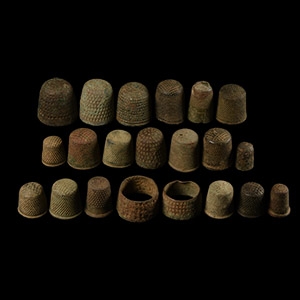
Medieval and later Thimble Group
14th-15th century A.D. and laterSold for (Inc. bp): £91
A mixed group of bronze thimbles including beehive, ring and other types. 95 grams total, 12-22 mm
Found Suffolk. -
.jpg)
English Medieval Handled Flask
15th-16th century A.D.Sold for (Inc. bp): £91
A wheel-thrown redware flask composed of a stout, piriform body, strap handle and pinched mouth, splayed foot; decorative lead glaze to the upper body; label to base: 'THE / HENRY SANDON / COLLECTION / E.140'. 745 grams, 22 cm high
Fine condition.
Ex Henry Sandon collection. Brunk Auctions, 18 January 2014, lot 25 (part). Ex central London gallery. Accompanied by a copy of a previous typed catalogue page.
