
Loading, please wait...

LOT 2195
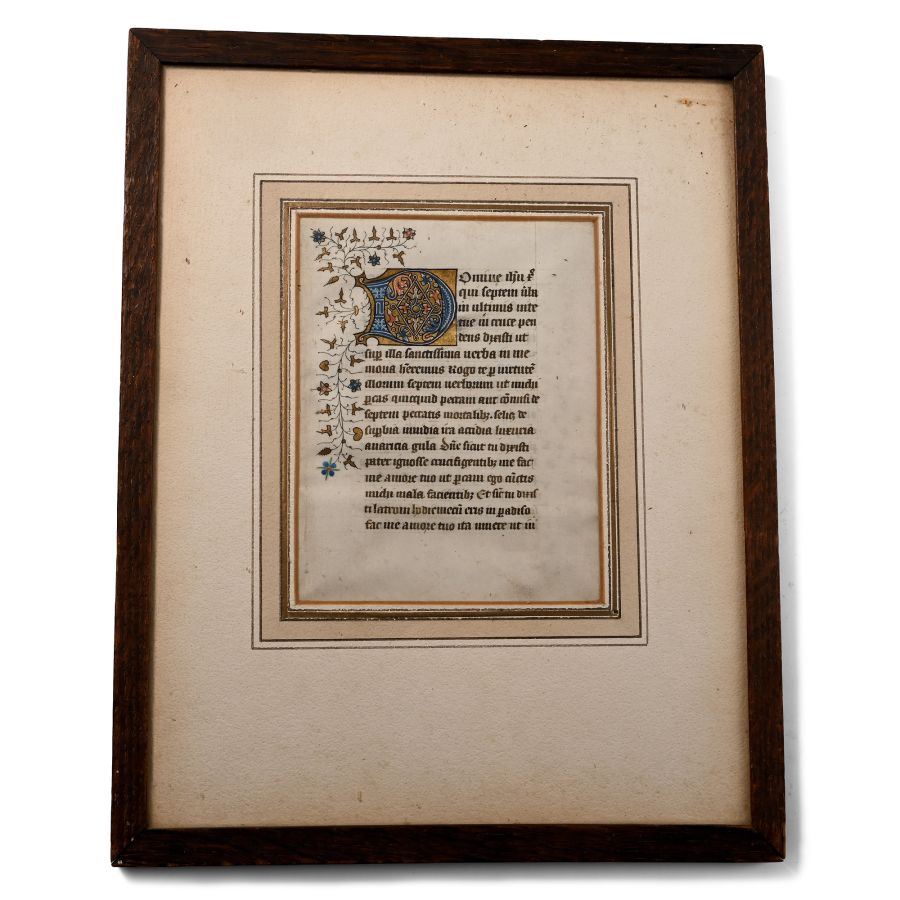
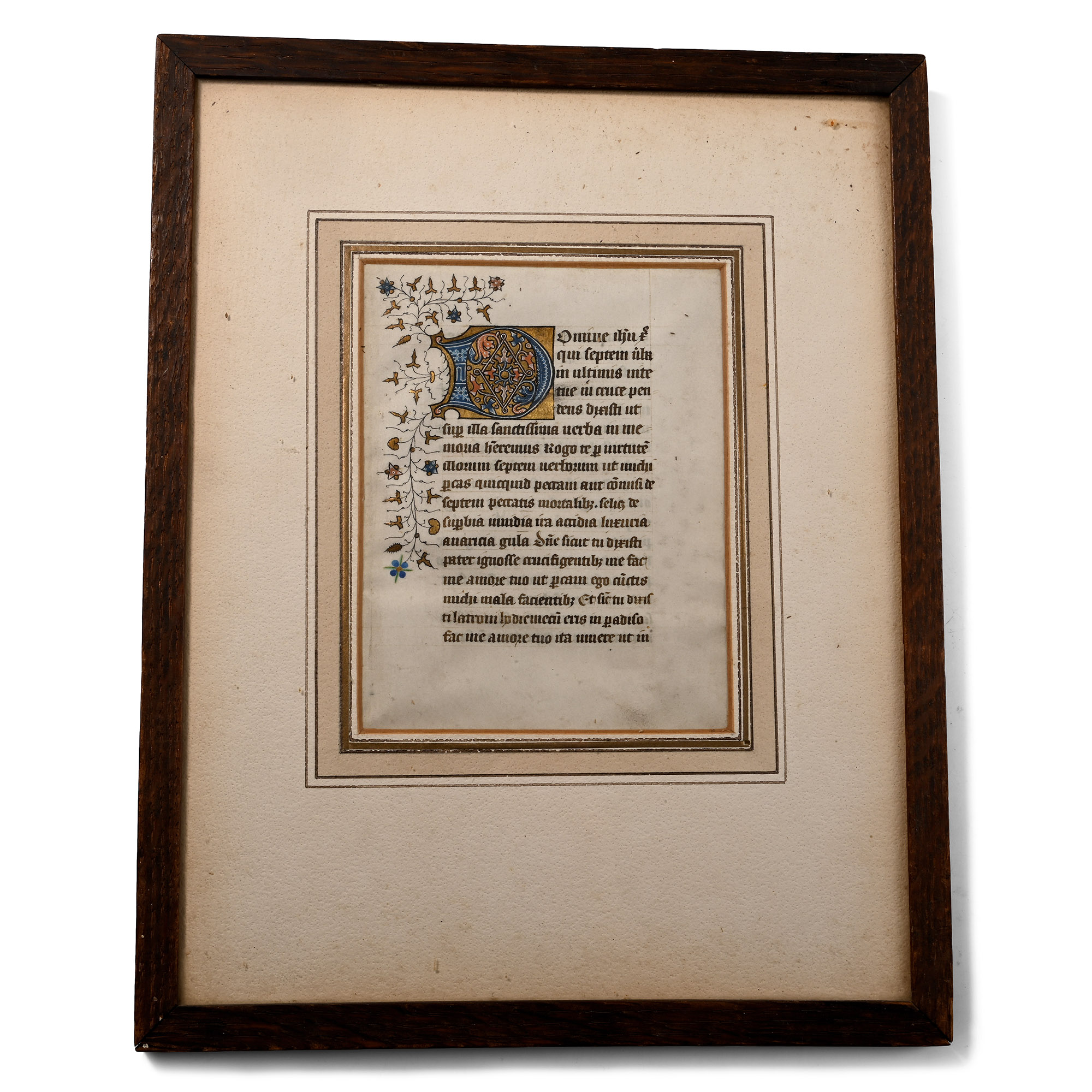
Medieval Manuscript Page
15TH CENTURY A.D.
12 x 9 1/2 in. (610 grams total, 30.5 x 24 cm including frame).
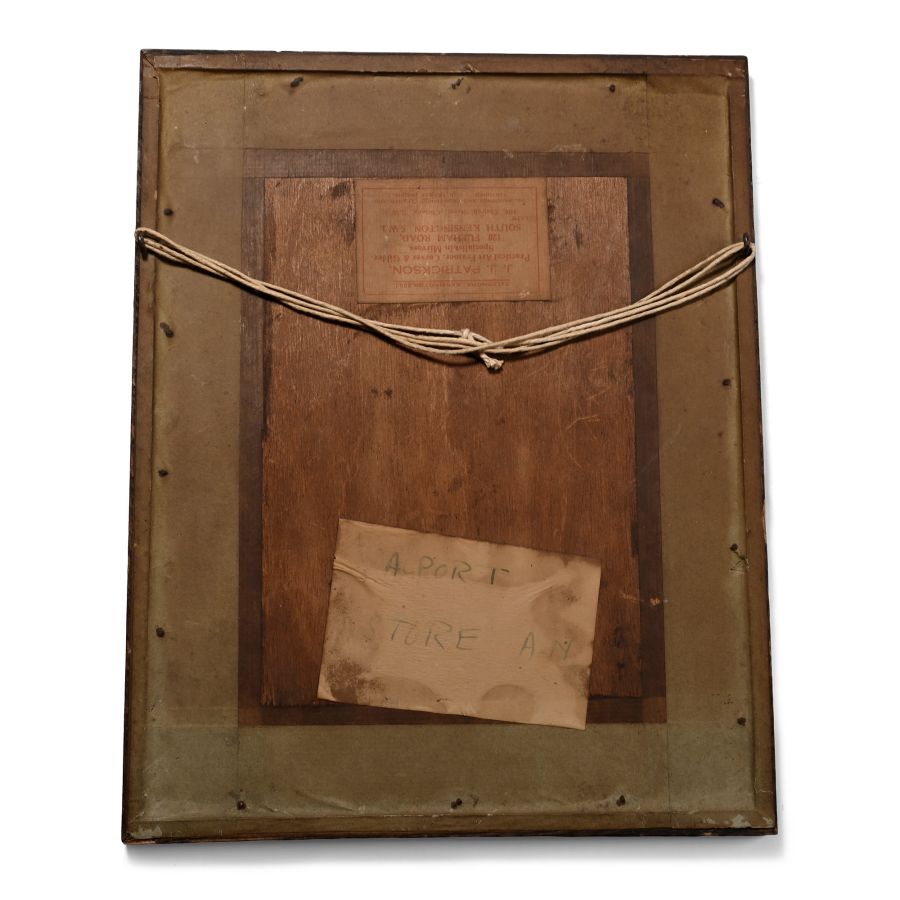
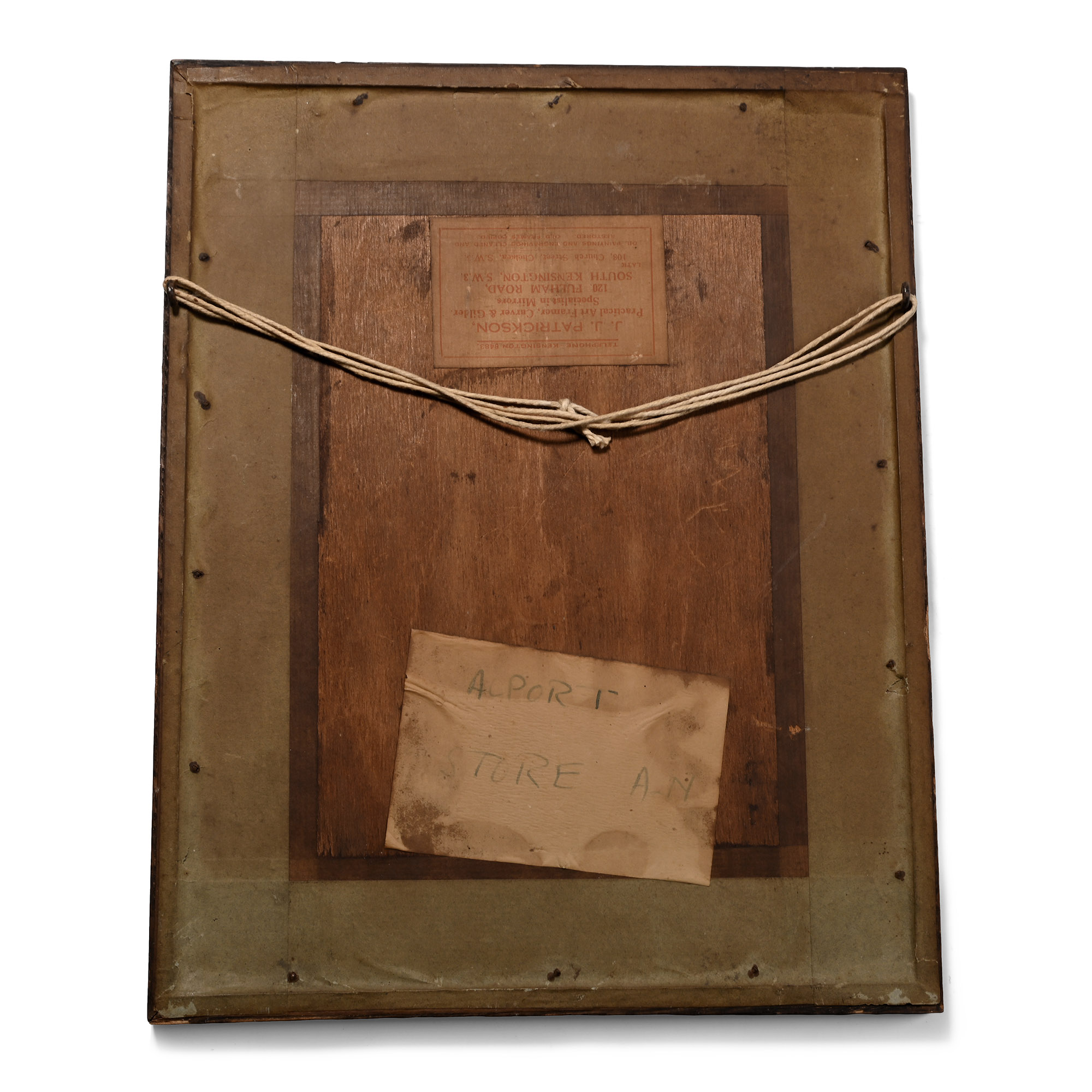
Vellum page with band of detailed floral ornament to the left edge and corner; seventeen-line block of bastarda-script text with Latin text beginning 'Domine Jesu Christe, qui septem verba die ultimo vitae tuae in ultimis in cruce pendens dixisti..' a reference to the last words of Christ while hanging on the cross; coloured versals with liquid gold field; mounted in a glazed wooden frame with old pasted label to reverse for J.J.Patrickosn and printed sheet with details of this craftsman. [No Reserve]
ProvenanceEx early-20th century, private collection.
Acquired on the UK art market, 2025.
TimeLine Auctions follows a vetting process to ensure the authenticity and legality of all items, reinforcing our commitment to integrity and responsible trading. Each antiquity, antique, and coin lot undergoes thorough examination by a vetting committee of at least ten external specialists, professional trade association members, scientists, and archaeologists: Our Vetting Process
AUCTIONS:
TimeLine is a leading auction house specialising in antiquities, ancient art, collectables, natural history, coins, medals, and books. Our auctions offer museums, collectors, historians, and enthusiasts the opportunity to acquire unique and historically significant pieces.
LOT 2195
Medieval Manuscript Page
Estimate £100 - 140€120 - 160 (for guidance only)$140 - 190 (for guidance only)
-
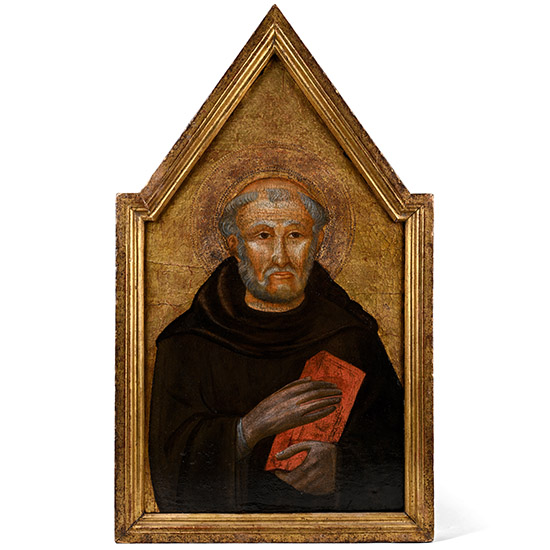
Medieval Painting of Saint Francis of Assisi
Italy, circa 1360-1380 A.D.Estimate: £3,000 - 4,000 (‡+bp*)
Bids: 4 | Current Bid: £120
Rectangular body with triangular arch to the upper edge; gilt finish to gesso-covered board and stepped frame; facing bust with pounced nimbus framing the grey-haired tonsured head, with short beard; dark brown monastic habit with hood over a grey undertunic visible at the cuff; both hands supporting a red-covered book; Sienna School, label to reverse: 'Firenze Sept,1935 Ecole Siennoise. No.934. A.K.K.K'. 3.6 kg, 69.5 cm high
Private collection, Geneva, formed in the 1980s; thence by descent. This lot has been checked against the Interpol Database of stolen works of art and is accompanied by search certificate no.13513-262847.
One of the earliest known portraits of the saint was painted by Cimabue while he was working on the frescoes at the Basilica of Assisi. Executed on a wooden panel, tradition holds that this board originally served as the lid for the humble wooden coffin in which Saint Francis was laid to rest immediately after his death. Over the centuries, the depiction of the saint was refined by masters like Giotto and other prominent Medieval and Renaissance artists, including the Master of Paciano, Taddeo di Bartolo, Benozzo Gozzoli, and Niccolò di Liberatore. Together, their works offer a focused yet deeply evocative journey, tracing how the saint’s image evolved alongside his rapidly growing cult. This artistic legacy is closely intertwined with the influential Sienese school of painting. -
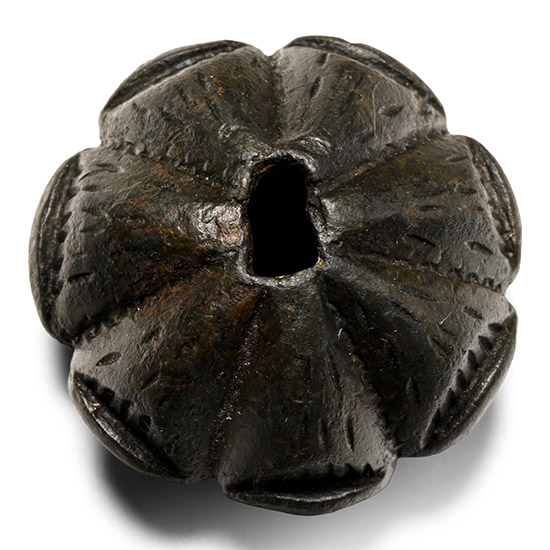
Medieval Bronze Ornate Dagger Pommel
Circa 13th-15th century A.D.Estimate: £100 - 140 (+bp*)
Opening Bid: £50
Rosette type with segmented lower body and domed upper with seven D-section radiating segments with keyed surface; hollow to underside, rectangular slot to accept the tang. 62 grams, 34 mm
Found Romney Marsh area, Kent, 1990-2015. Property of a Kent gentleman, a specialist medieval collector. -
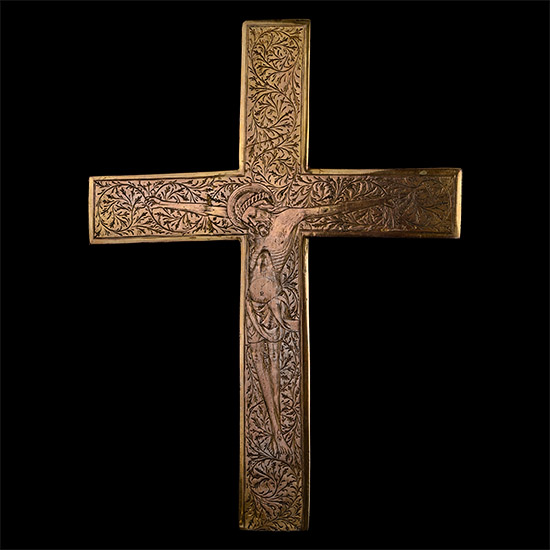
Gothic Gilt Copper Cross with Corpus Christi
Circa 1430 A.D.Estimate: £3,000 - 4,000 (‡+bp*)
Bids: 8 | Current Bid: £270
Hollow-formed cross with reserved Corpus Christi on a field of scrolled tendrils; reverse with similar tendril ornament and square panel to the end of each arm bearing the symbol of an evangelist. 452 grams, 27.4 cm
Collection of Richard Steiskal-Paur, Vienna. This lot has been checked against the Interpol Database of stolen works of art and is accompanied by search certificate no.13530-262853.
The image on the crucifix was realised according to the style of the period. Christ is at the centre of the cross, facing the viewer; his loincloth blowing to the left. At the foot of the cross, now missing, were probably Adam’s skull and bones.
