
Loading, please wait...
LOT 0341
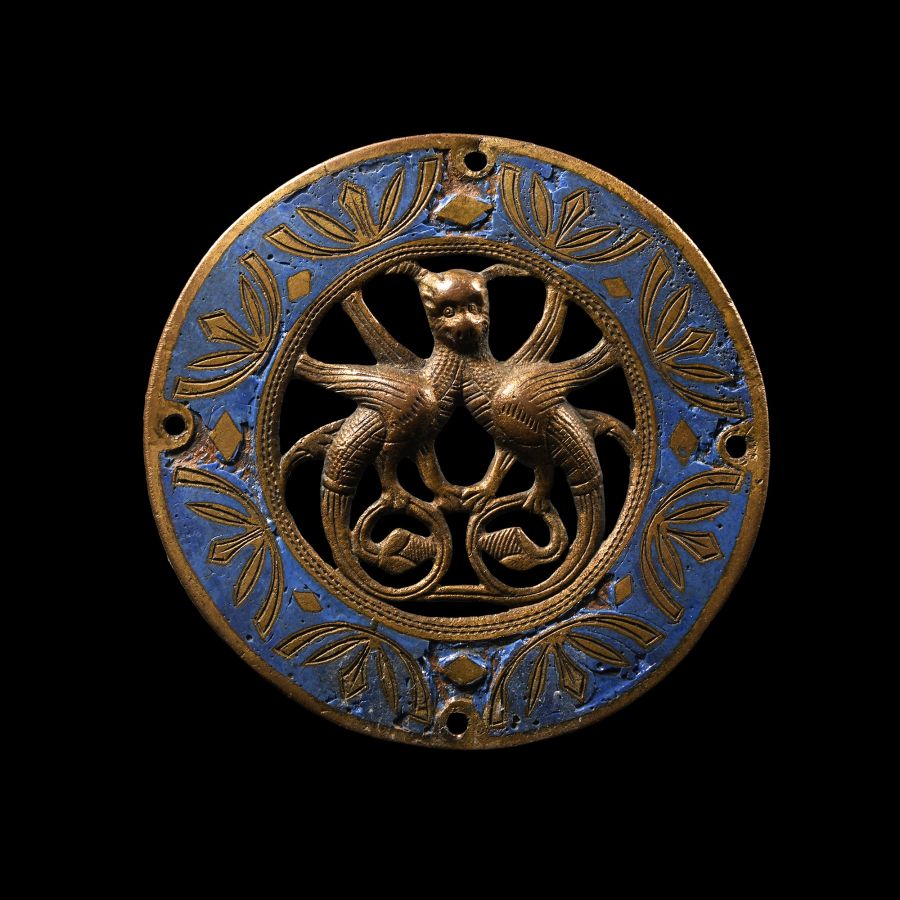
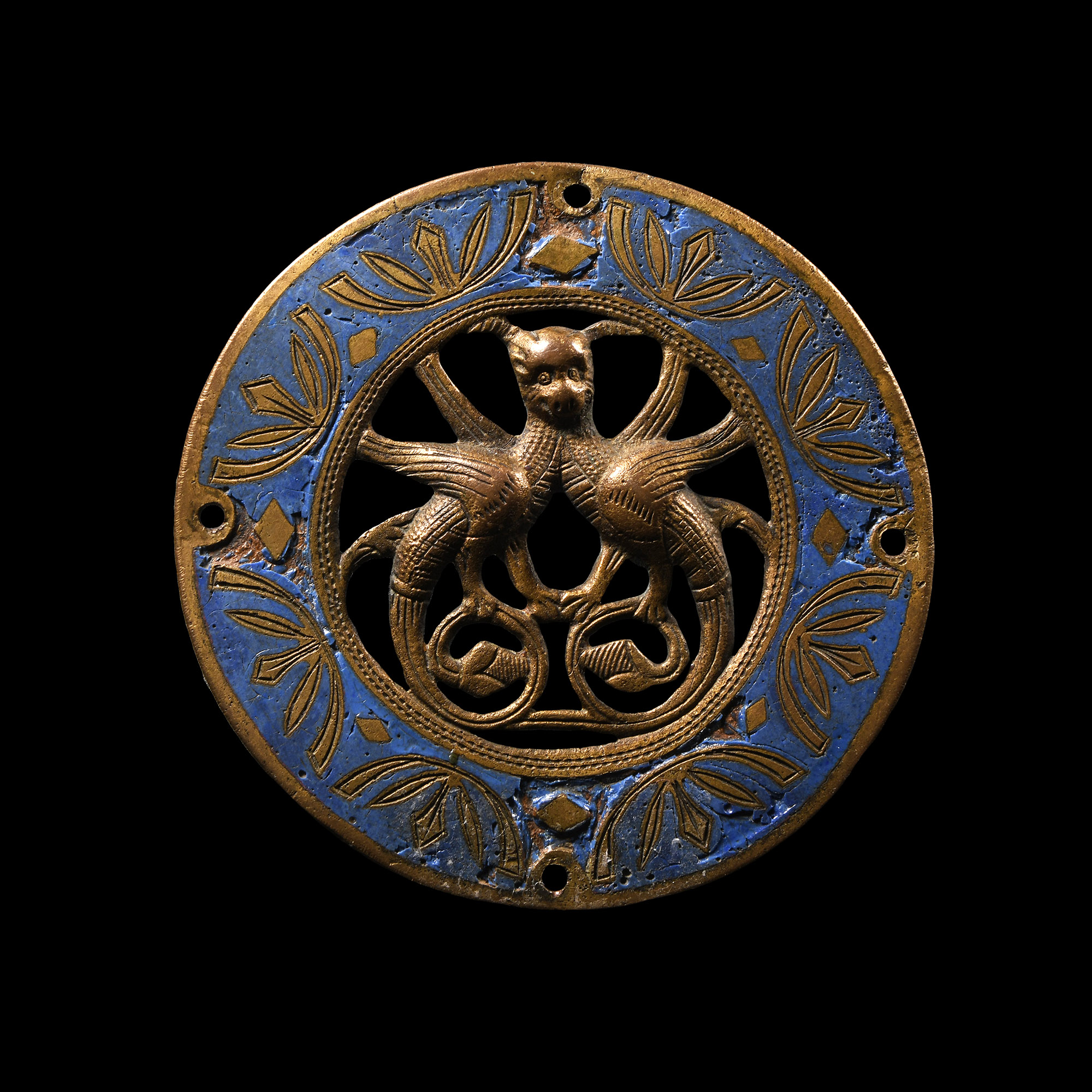
Medieval Limoges Bronze and Champleve Enamel Roundel with Fantastical Creature
CIRCA 13TH CENTURY A.D.
3 1/2 in. (61 grams, 89 mm wide).
Openwork winged beast to the centre, its tails curling beneath the body creating the foliate tendrils on which it perches, broad outer roundel decorated with geometric plants alternating with lozenges, extensive remains of blue champlevé enamelling; engraved and chiselled; four attachment holes.
Provenancewith Sotheby's, London, 9 December 1993, lot 22.
Private collection, Europe.
This lot has been checked against the Interpol Database of stolen works of art and is accompanied by search certificate no.11903-206496.
Cf. The Louvre, The Work of Limoges: Limousin enamels from the Middle Ages, Paris, 1995, pp.288-291, for discussion and an almost identical example; cf. The Metropolitan Museum, accession number 17.190.796, for type.
FootnotesLikely used to adorn a coffret.
Likely before 1227 A.D.
TimeLine Auctions follows a vetting process to ensure the authenticity and legality of all items, reinforcing our commitment to integrity and responsible trading. Each antiquity, antique, and coin lot undergoes thorough examination by a vetting committee of at least ten external specialists, professional trade association members, scientists, and archaeologists: Our Vetting Process
AUCTIONS:
TimeLine is a leading auction house specialising in antiquities, ancient art, collectables, natural history, coins, medals, and books. Our auctions offer museums, collectors, historians, and enthusiasts the opportunity to acquire unique and historically significant pieces.
LOT 0341
Medieval Limoges Bronze and Champleve Enamel Roundel with Fantastical Creature
Sold for (Inc. bp): £23,400
-
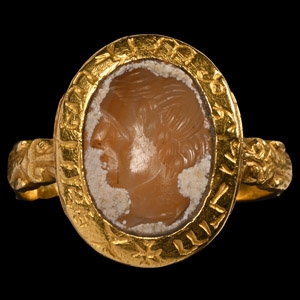
Medieval Gold Ring with Inscription
14th-15th century A.D.Estimate: £3,500 - 4,500 (+bp*)
Opening Bid: £1,944
The keeled hoop with three X-motifs, two stylised animal heads supporting the oval bezel inscribed with Lombardic letters (letters M and X separated by decorative motifs, cross to the top); the possibly earlier intaglio with a draped bust of an empress (Faustina the Younger?) in profile to the left, with an elongated neck and curled hair tied back in a bun at the nape of the neck. 5.98 grams, 22.96 mm overall, 18.46 mm internal diameter (approximate size British P 1/2, USA 7 3/4, Europe 16.86, Japan 16)
Acquired at Christie's, New York (Antiquities Sale), circa 2000. Important North West London collection. Accompanied by an academic report by Dr Raffaele D’Amato. This lot has been checked against the Interpol Database of stolen works of art and is accompanied by a search certificate number no.11818-204560.
It is likely that the inscription is abbreviation for 'Memento Mori', meaning 'remember you must die', accompanied by a cross and X for Christ. This imagery served as a reminder to the Christians to keep their soul in good order for the final judgment. -
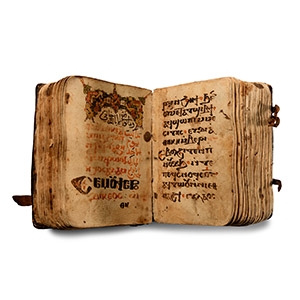
Leather Bound Illuminated Manuscript
Circa 15th-16th century A.D.Sold for (Inc. bp): £4,940
Codex of vellum pages bound within leather covers with securing straps; each page with a block of ten lines of Coptic black-ink text in Greek letters with red highlighting; probably from Egypt. 296 grams, 11 x 8.5 cm
Acquired 1970s-1996. Property of a North American collector. London collection, 2016. -
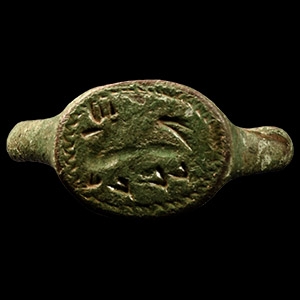
Norman Period Bronze Ring with Dragon Walking Right
Circa 11th-12th century A.D.Sold for (Inc. bp): £65
The slender, convex hoop supporting an oval-shaped bezel, engraved with a dragon trotting left within a zigzag border. 2.81 grams, 22.82 mm overall, 19.16 mm internal diameter (approximate size British S 1/2, USA 9 1/4, Europe 20.63, Japan 19)
Private collection formed since the 1940s. UK art market. Property of an Essex gentleman.
