
Loading, please wait...
LOT 1941
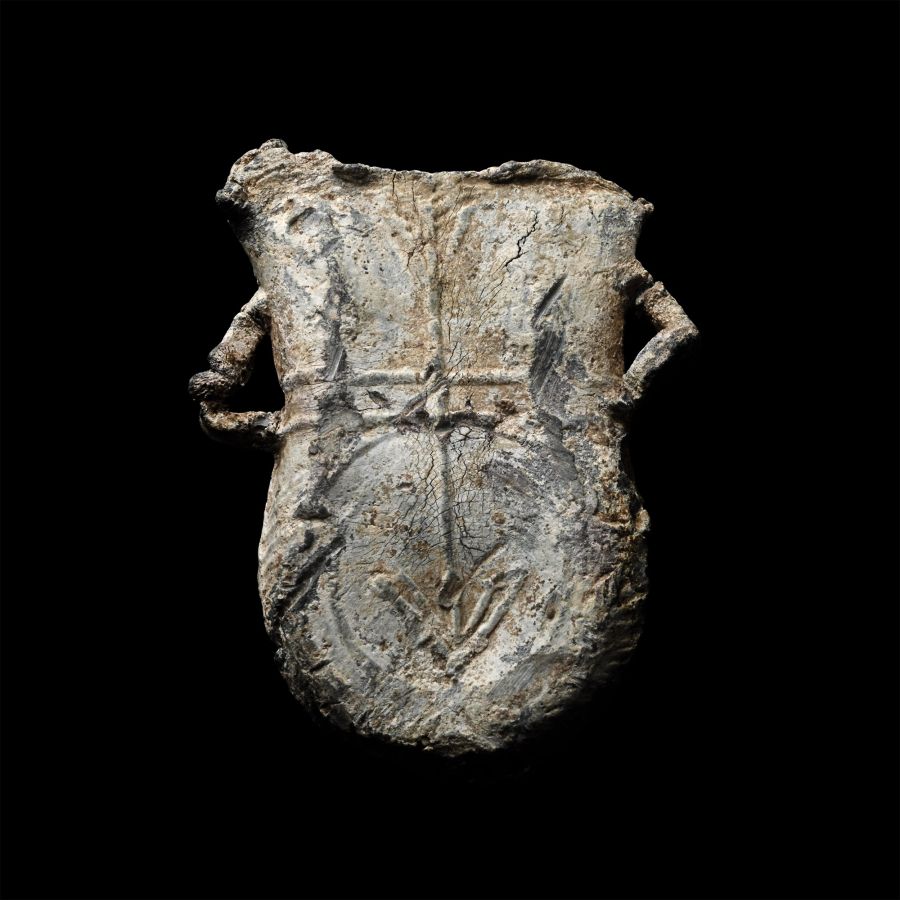
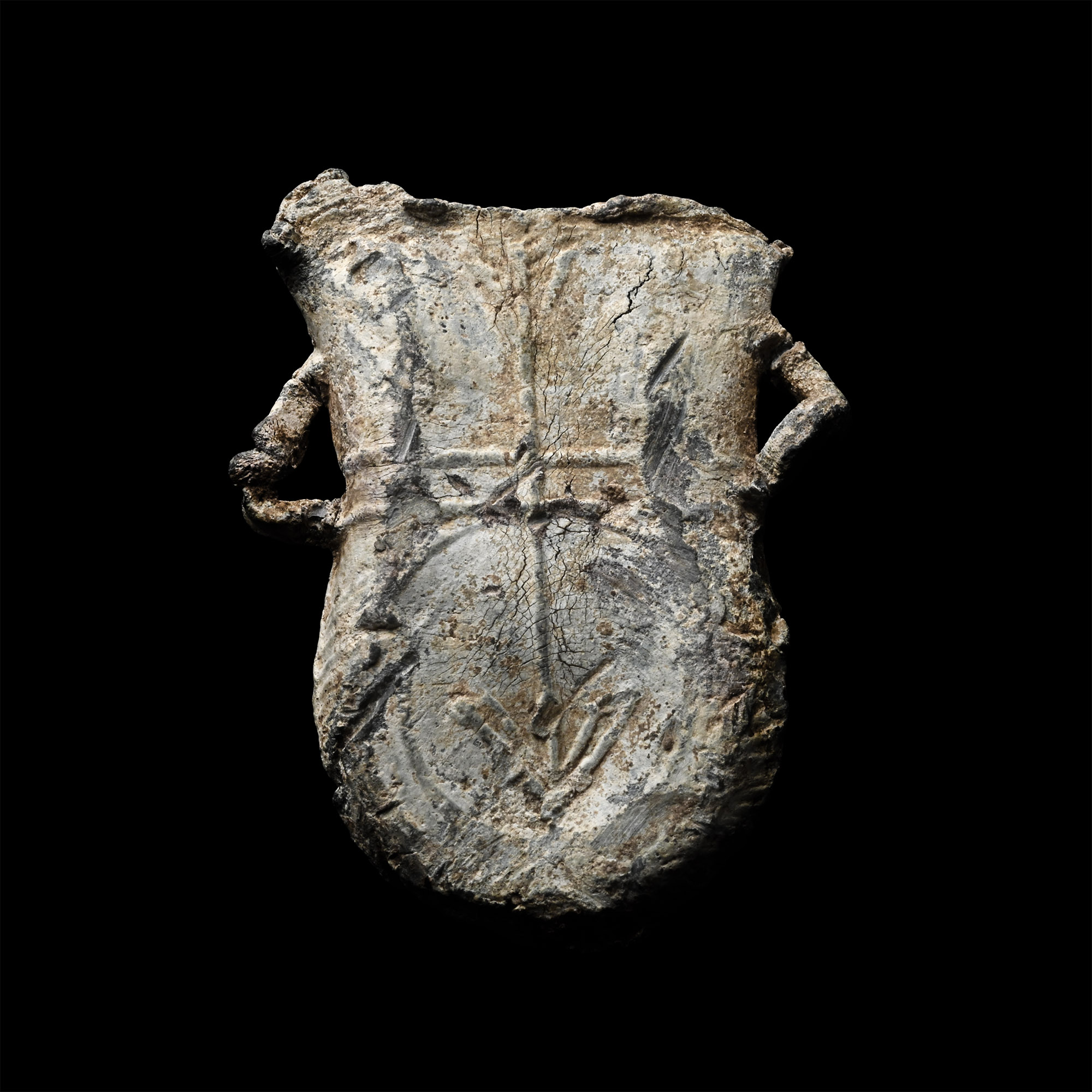
Medieval Lead Walsingham Pilgrim's Holy Water Ampulla
CIRCA 15TH CENTURY A.D.
1 3/4 in. (31.1 grams, 46 mm).
With lateral loops and low-profile cross with W to obverse, reverse with a hatched crescent. [No Reserve]
ProvenanceFound Suffolk, UK.
Property of a Suffolk, UK, gentleman.
TimeLine Auctions follows a vetting process to ensure the authenticity and legality of all items, reinforcing our commitment to integrity and responsible trading. Each antiquity, antique, and coin lot undergoes thorough examination by a vetting committee of at least ten external specialists, professional trade association members, scientists, and archaeologists: Our Vetting Process
AUCTIONS:
TimeLine is a leading auction house specialising in antiquities, ancient art, collectables, natural history, coins, medals, and books. Our auctions offer museums, collectors, historians, and enthusiasts the opportunity to acquire unique and historically significant pieces.
-
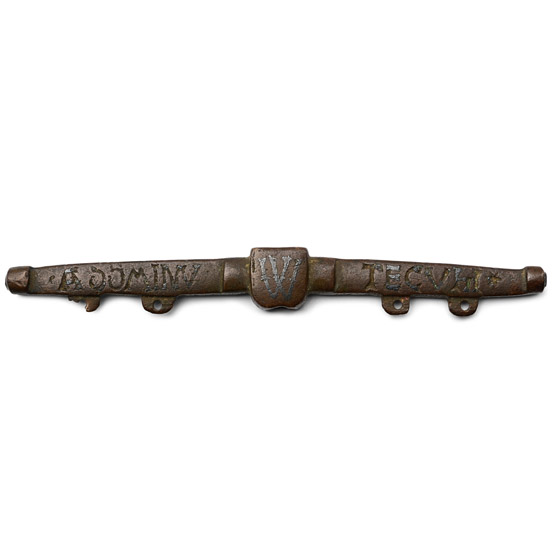
Medieval Inscribed Bronze Purse Bar
14th-15th century A.D.Sold for (Inc. bp): £98
With niello-filled legend to the bar: 'AVE MARIA G[R]ACIA PLE' and to reverse 'A DOMINV TE CVM *'; central heater-shaped plaque with niello-filled 'W' to one face and 'IHS' monogram to reverse. 58 grams, 15.1 cm
Acquired on the European art market in the early 2000s. with Galerie Rhéa, Zurich, Switzerland. -
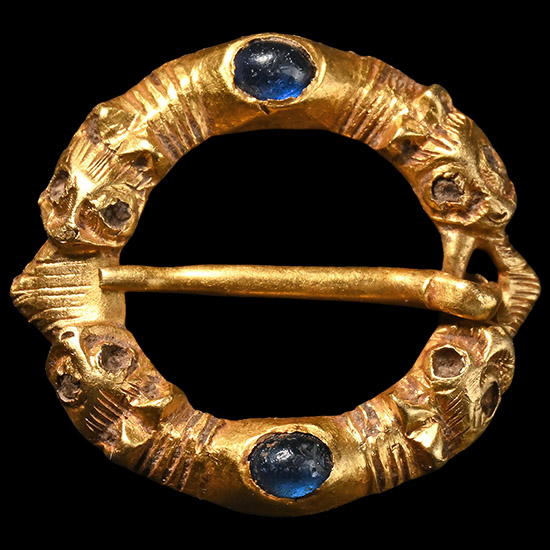
Medieval Gold Ring Brooch with Beast Heads
13th century A.D.Sold for (Inc. bp): £1,560
Annular brooch decorated with leopard heads, each originally with gem-set eyes, with two blue glass cabochons on each side of the pin. 1.18 grams, 14 mm
From the collection of Gordon Bailey, Essex, UK; formed since 1968.
An annular brooch is a type of brooch that is circular in shape, forming a complete ring. They were worn by both men and women of all social classes. The word 'annular' comes from the Latin word 'annulus', meaning ring. These brooches were popular in medieval Europe, particularly from the 13th to 15th centuries, and were used to fasten clothing such as tunics and cloaks. -
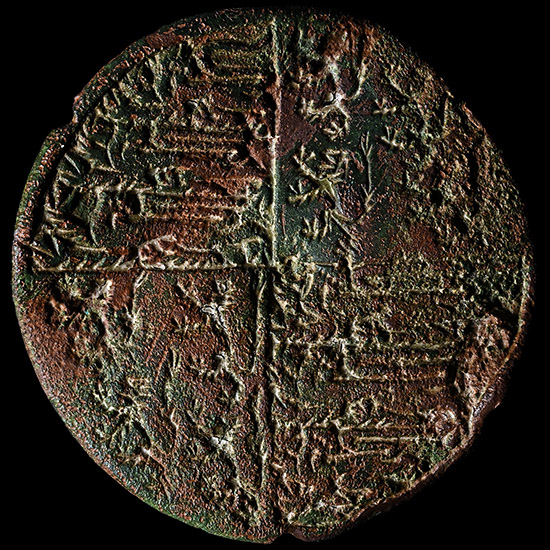
Royal Medieval Bronze Carriage Plate of Edward III and his Wife Queen Philippa of Hainault
England, 1327-1377 A.D.Sold for (Inc. bp): £546
Discoid appliqué, flat in section and slightly distorted; incuse heraldic detailing to obverse blazoned 'Quarterly 1st and 4th Gules three lions passant guardant [Or] 2nd and 3rd [Or] four lions rampant [in a quadrangle] the 1st and 4th Sable the 2nd and 3rd [Gules]'. 37.2 grams, 59 mm
Found Lowick, East Northamptonshire, UK. Accompanied by a copy of the British Museum's Portable Antiquities Scheme (PAS) report no.BH-7A9E2F.
The Royal College of Arms has identified these arms as belonging to King Edward III and his wife, Philippa of Hainault (r. 1327 - 1369). The terminus post quem for this piece is therefore 1327, the date of the marriage, and the likely terminus ante quem is Edward's death in 1377. A circular mount with the same fixing method, which bore the arms of the Bishopric of Ely, was found in Norfolk and is illustrated and described by Steven Ashley (2002: Fig. 20, p. 45, no. 196). The presence of the royal arms on this piece is likely to be a public display of allegiance to the throne rather than an indication of ownership on the part of the crown.
