
Loading, please wait...
LOT 1920
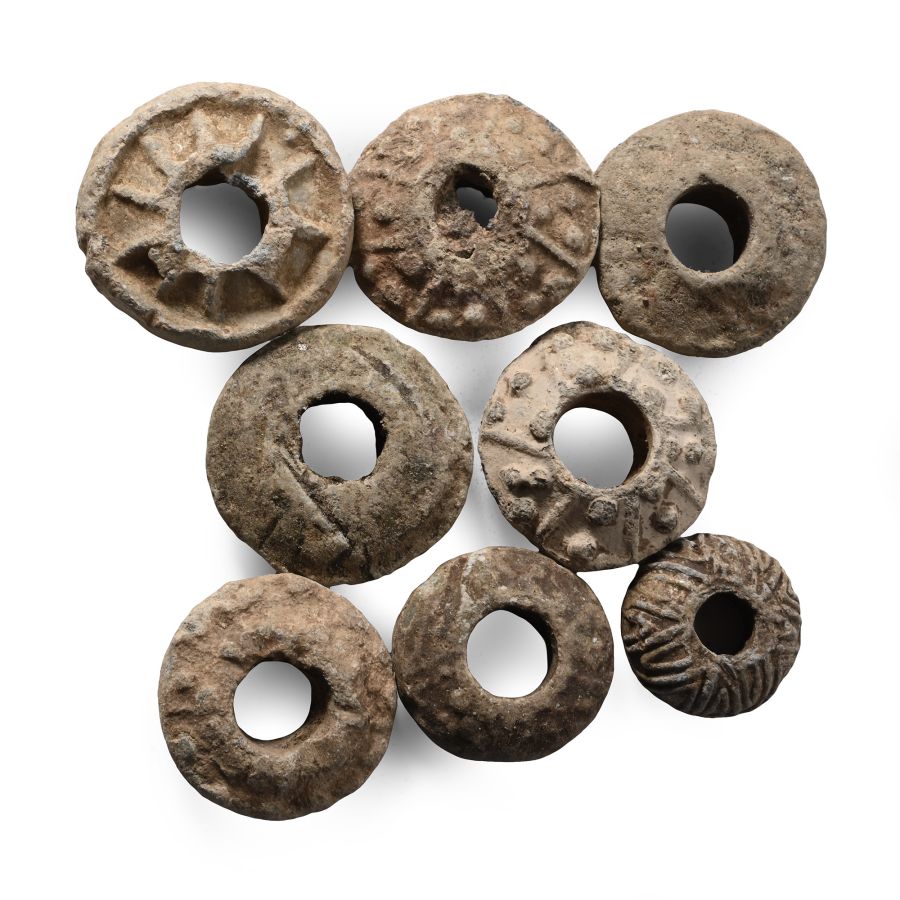
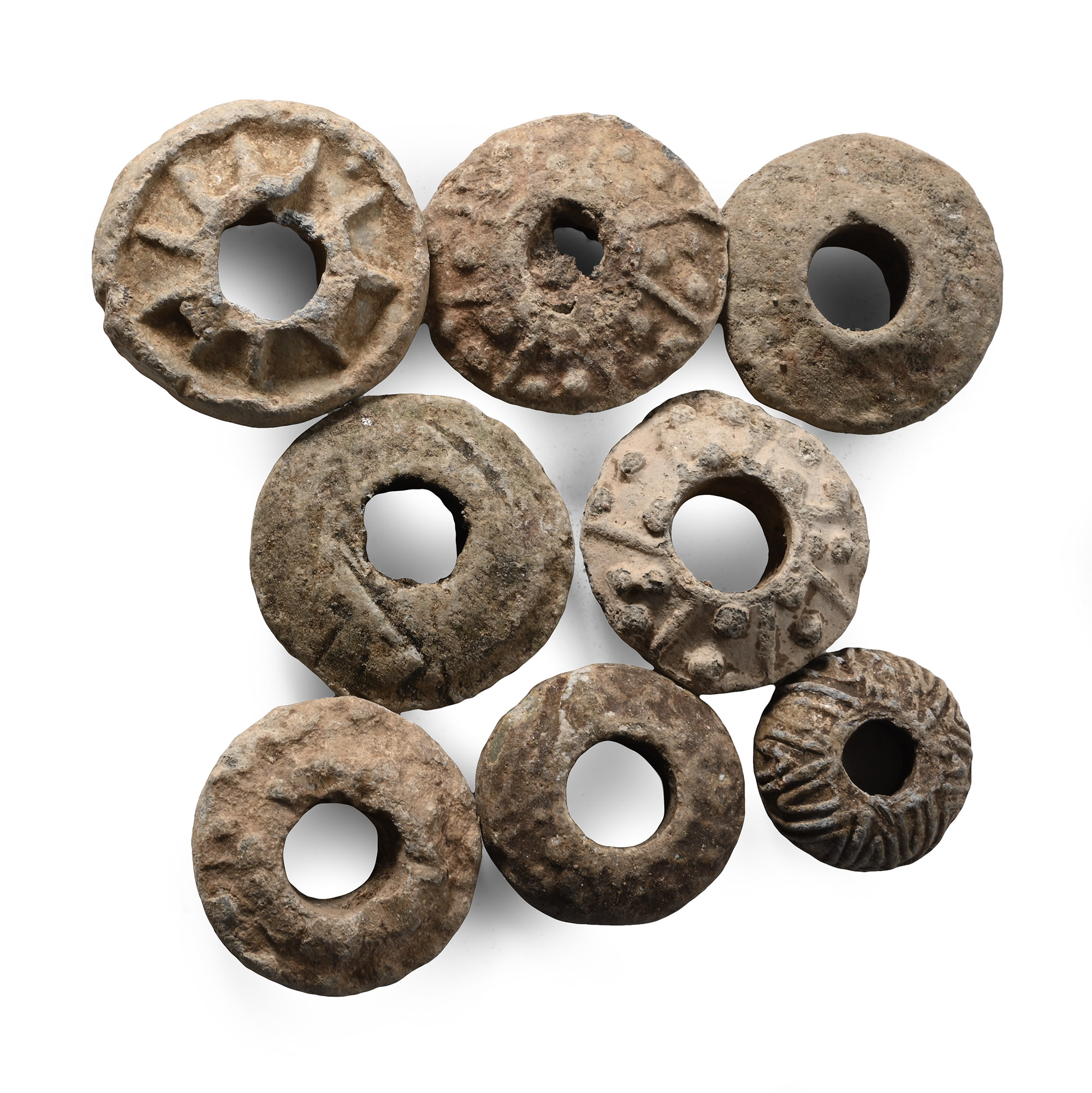
Medieval Lead Spindle Whorl Collection
CIRCA 12TH-15TH CENTURY A.D.
7/8 - 1 1/4 in. (272 grams total, 21-31 mm).
Comprising eight biconical spindle whorls, most with raised designs. [8, No Reserve]
ProvenanceFound near Mitton, Lancashire, UK.
Property of a Lancashire, UK, collector.
TimeLine Auctions follows a vetting process to ensure the authenticity and legality of all items, reinforcing our commitment to integrity and responsible trading. Each antiquity, antique, and coin lot undergoes thorough examination by a vetting committee of at least ten external specialists, professional trade association members, scientists, and archaeologists: Our Vetting Process
AUCTIONS:
TimeLine is a leading auction house specialising in antiquities, ancient art, collectables, natural history, coins, medals, and books. Our auctions offer museums, collectors, historians, and enthusiasts the opportunity to acquire unique and historically significant pieces.
-
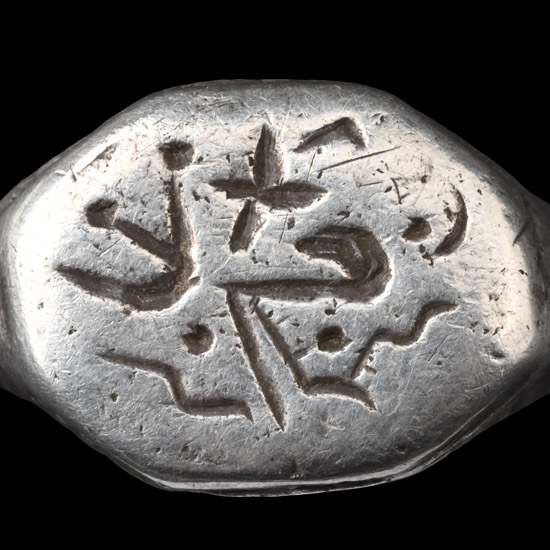
Medieval Silver Engraved Ring
15th-16th century A.D.Sold for (Inc. bp): £52
Comprising a D-section hoop with hatching on the shoulders, a raised oval bezel with a bird, a star, and other motifs. 9.55 grams, 24.29 mm overall, 18.83 mm internal diameter (approximate size British P 1/2, USA 7 3/4, Europe 16.86, Japan 16)
Ex German art market, 2000s. Acquired from an EU collector living in London. From the collection of a Surrey, UK, gentleman. -
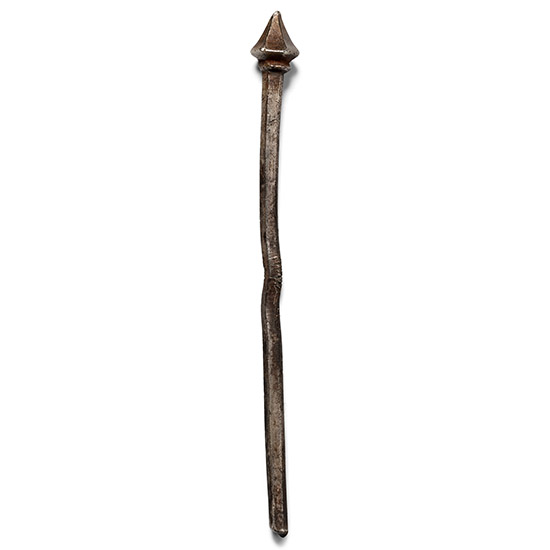
Medieval Silver-Gilt Diamond Top Spoon Handle
1400-1600 A.D.Sold for (Inc. bp): £59
Comprising a hexagonally-facetted stem with a hexagonal collar dividing the stem and terminal, the terminal formed as a hexagonally-facetted conical knop tapering to a point. 6.45 grams, 81 mm
Found by Jason Ashley whilst searching with a metal detector near Topcliffe, Hambleton, North Yorkshire, UK, on Sunday, 22nd October 2023. Accompanied by a copy of the Report for HM Coroner on find of Potential Treasure with Treasure reference no.2024T129. Accompanied by a copy of a letter from the British Museum disclaiming the Crown's interest in the find. Accompanied by a copy of the British Museum's Portable Antiquities Scheme (PAS) report no.YORYM-0EBA56. -
.jpg)
Medieval Silver-Gilt Betrothal Ring with Angel Holding a Heart
15th century A.D.Estimate: £800 - 1,000 (+bp*)
Opening Bid: £400
Featuring a flat-section hoop with chevrons set with an openwork bezel formed of a winged angel holding a heart. 3.62 grams, 19.65 mm overall, 17.20 mm internal diameter (approximate size British L 1/2, USA 6, Europe 11.87, Japan 11)
Acquired on the European art market.
