
Loading, please wait...
LOT 1371
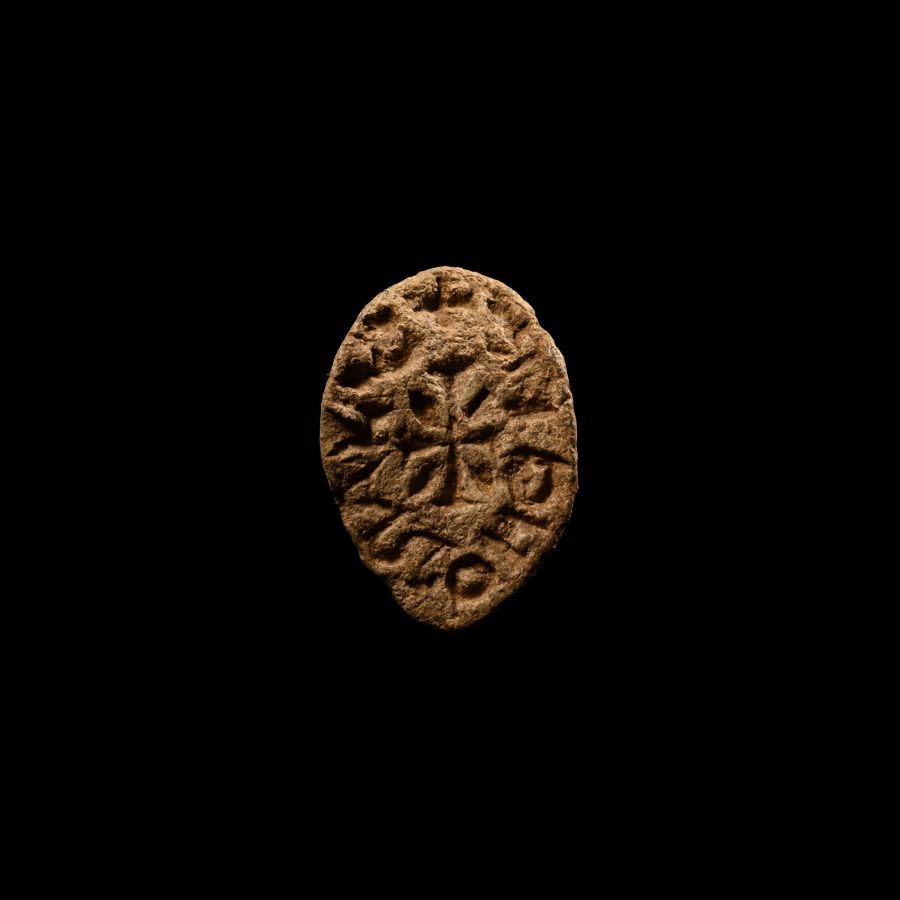
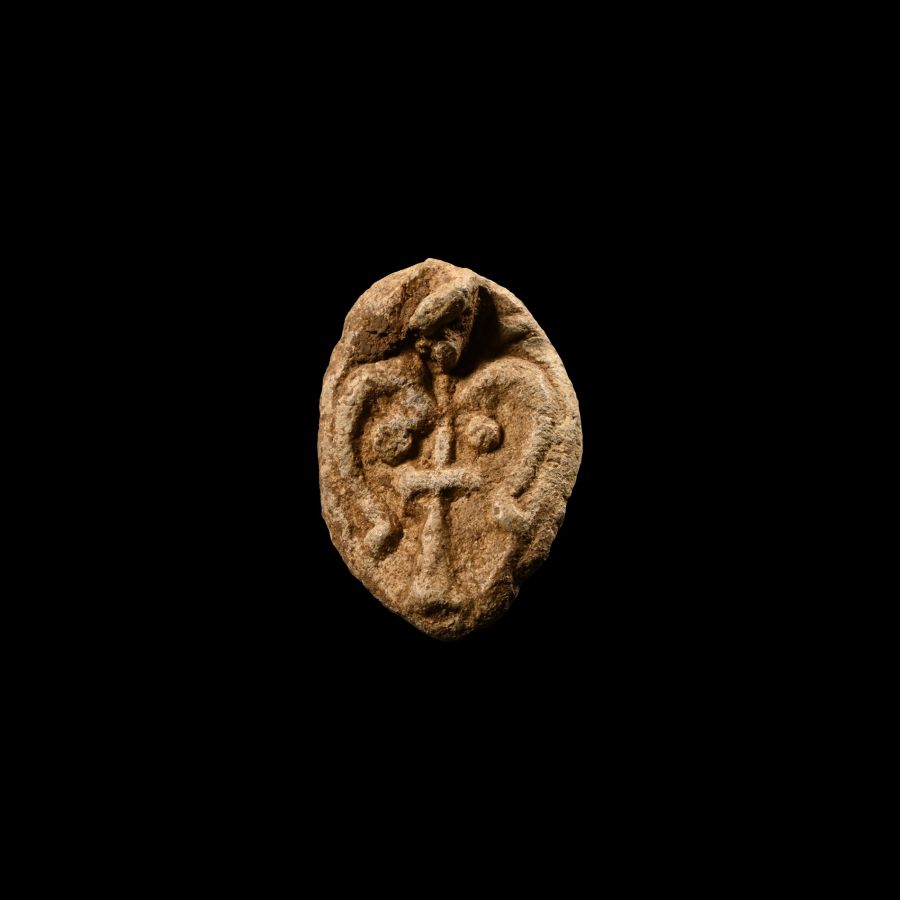
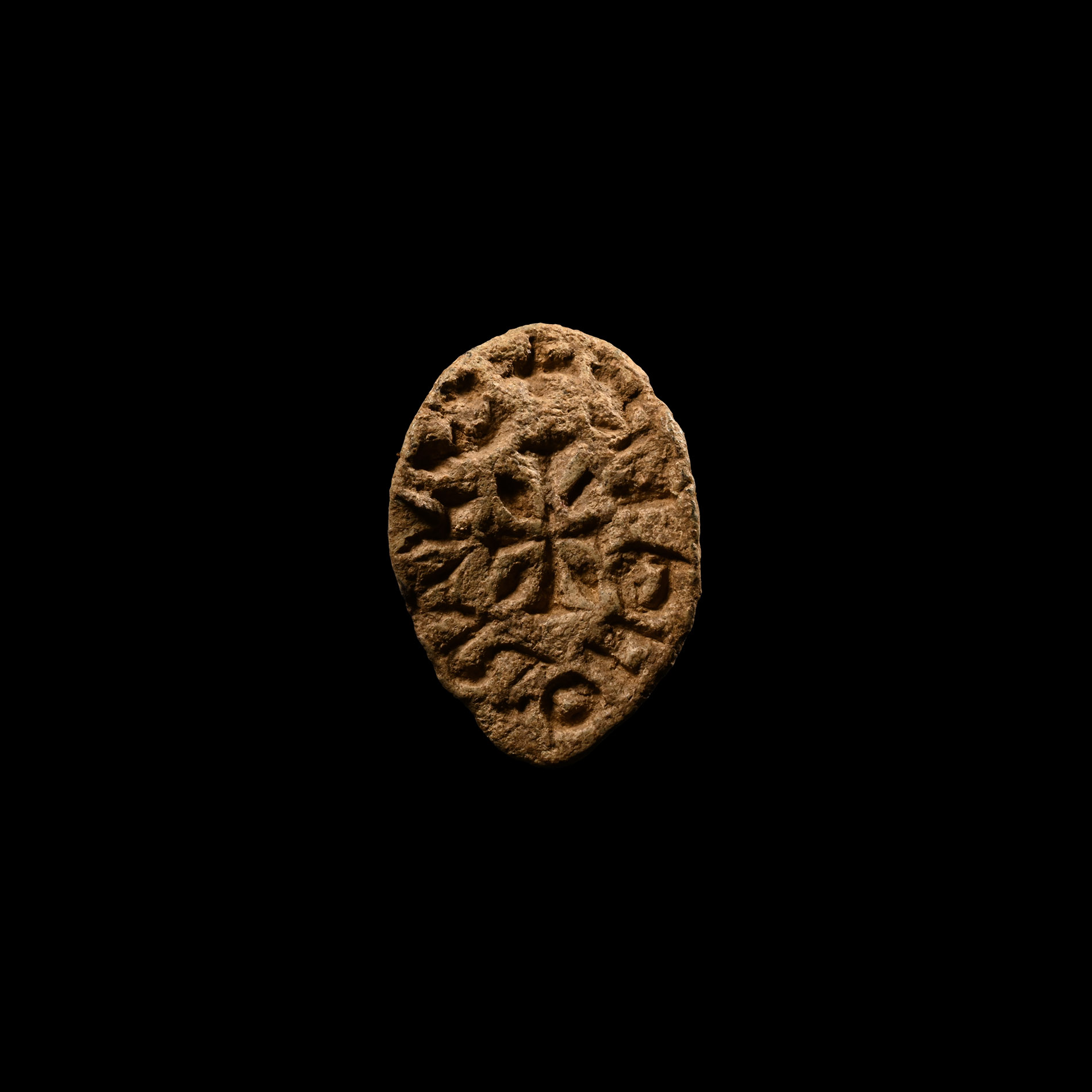
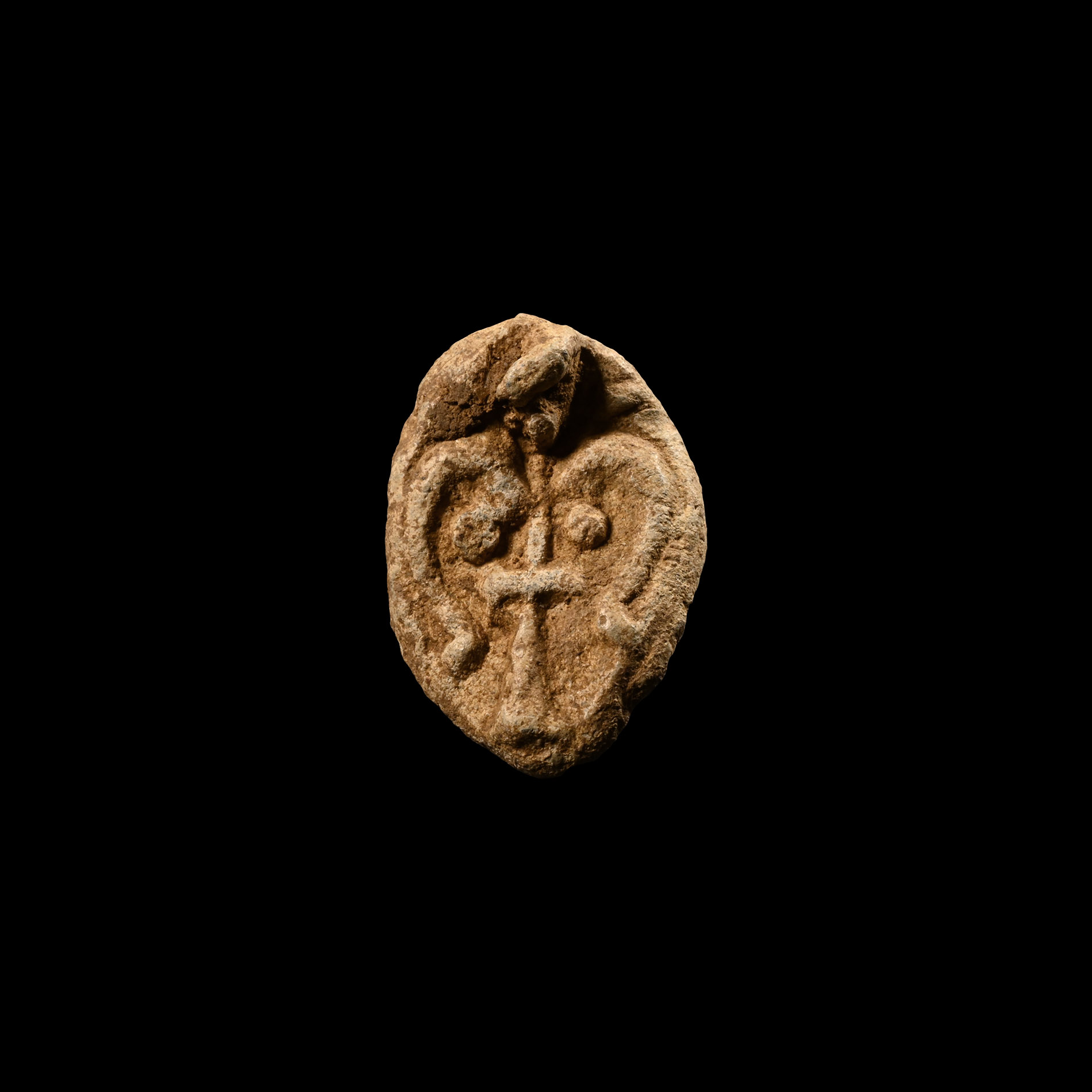
Medieval Lead Seal Matrix
13TH-14TH CENTURY A.D.
1 3/8 in. (15.9 grams, 31 mm).
A vesica-shaped lead seal matrix with fleur-de-lys and pellets to the reverse, central cinquefoil to the obverse and surrounding legend "+ S'MARIONGER[.]" (Seal of Marion Ger...). [No Reserve]
ProvenanceFound Suffolk, UK.
CONDITIONTimeLine Auctions follows a vetting process to ensure the authenticity and legality of all items, reinforcing our commitment to integrity and responsible trading. Each antiquity, antique, and coin lot undergoes thorough examination by a vetting committee of at least ten external specialists, professional trade association members, scientists, and archaeologists: Our Vetting Process
AUCTIONS:
TimeLine is a leading auction house specialising in antiquities, ancient art, collectables, natural history, coins, medals, and books. Our auctions offer museums, collectors, historians, and enthusiasts the opportunity to acquire unique and historically significant pieces.
-
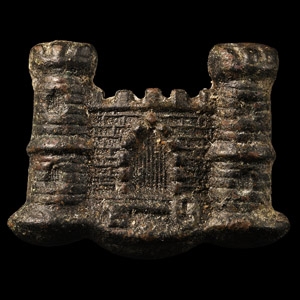
Medieval 'Thames' Castle Secular Badge with Key Below Draw Bridge
14th-16th century A.D.Sold for (Inc. bp): £78
A copper-alloy secular badge in the form of a turreted castle, with drawbridge below crenelated gateway, detailing to the windows and stonework; two attachment loops to the reverse. 3.6 grams, 25 mm
Found on the Thames foreshore, London, UK. Acquired 1960s-1990s. From the late Alison Barker collection, a retired London barrister. -
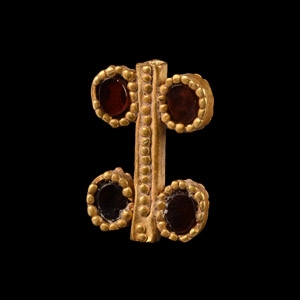
Medieval Gold Garnet Set Pendant
12th-15th century A.D.Sold for (Inc. bp): £117
A bifacial gold pendant of tubular form, four oval cells to the terminals with polished garnet inserts, granules to the body and cells. 1.15 grams, 14 mm
Acquired 1980-2015. Ex Abelita family collection. -
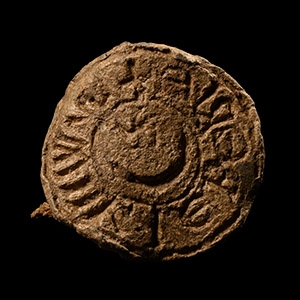
Medieval Lead Seal Matrix
13th-14th century A.D.Sold for (Inc. bp): £7
A discoid lead seal matrix with fixing lug to the reverse, central image of a crescent and Lombardic script legend "+[S]WIN[..]EBERVE". 13.4 grams, 27 mm
Found Suffolk, UK.
