
Loading, please wait...
LOT 2134
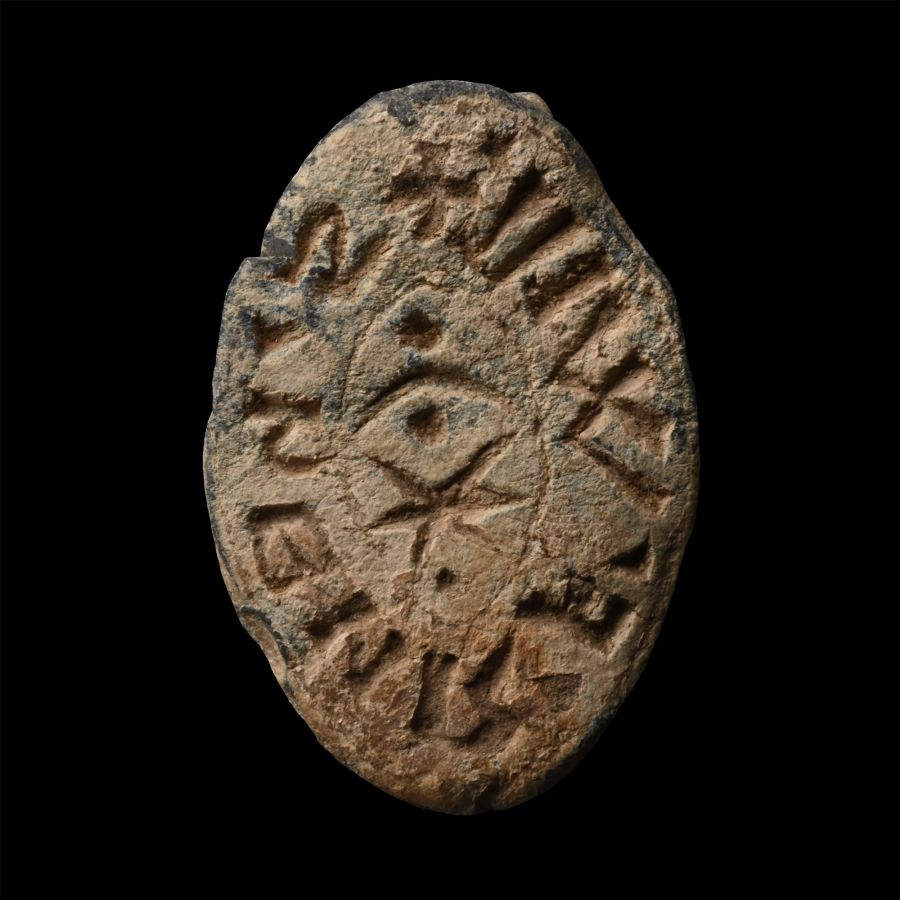
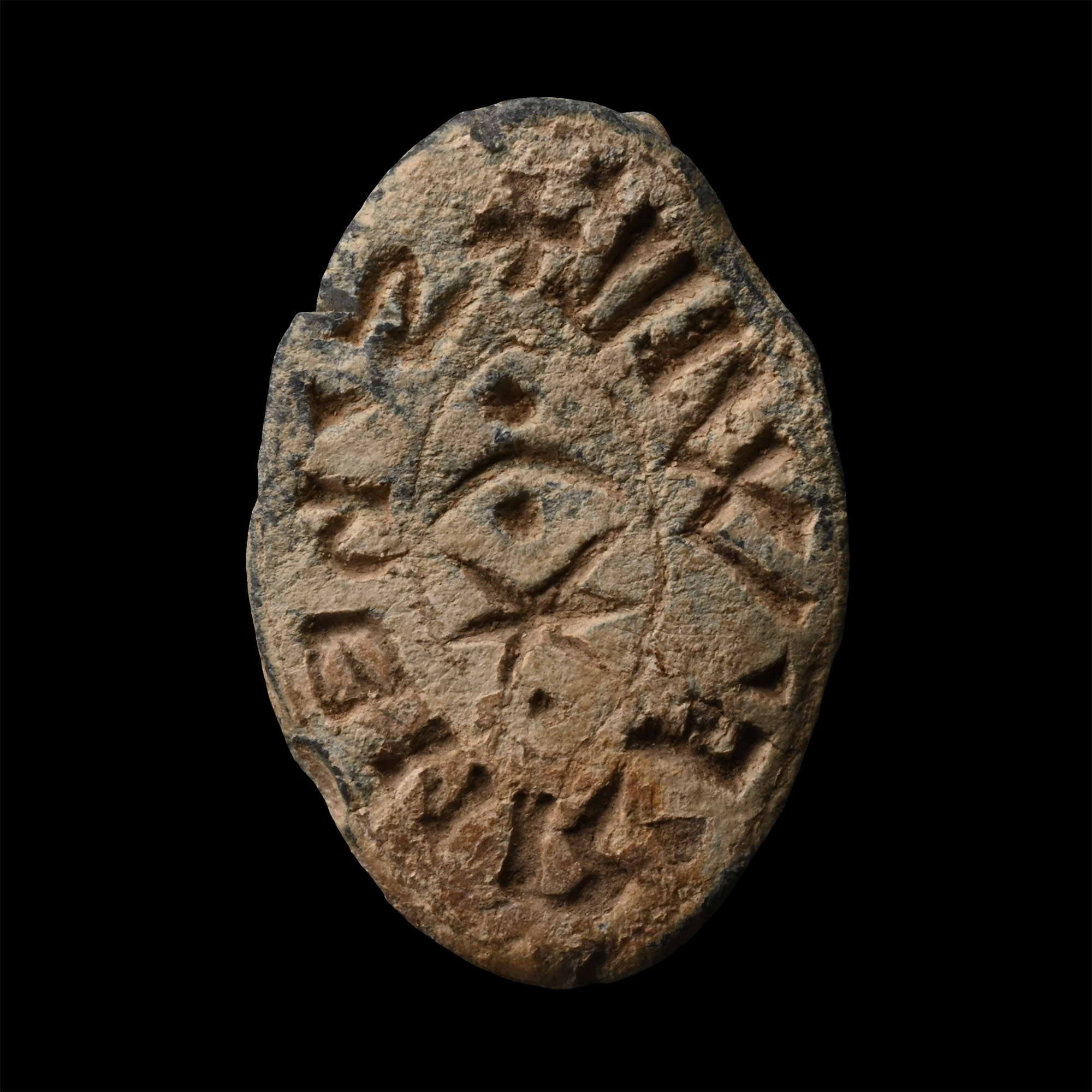
Medieval Lead Seal Matrix for Henry, son of William
14TH-15TH CENTURY A.D.
1 1/8 in. (9.4 grams, 28 mm).
Vesica-shaped with lug to reverse; obverse with star, crescent and pellets, border with incuse legend '+ S’ HENR’ F’ WILL’ (seal of Henry [son of] Will[iam]). [No Reserve]
ProvenanceFound Lincolnshire, UK.
CONDITIONTimeLine Auctions follows a vetting process to ensure the authenticity and legality of all items, reinforcing our commitment to integrity and responsible trading. Each antiquity, antique, and coin lot undergoes thorough examination by a vetting committee of at least ten external specialists, professional trade association members, scientists, and archaeologists: Our Vetting Process
AUCTIONS:
TimeLine is a leading auction house specialising in antiquities, ancient art, collectables, natural history, coins, medals, and books. Our auctions offer museums, collectors, historians, and enthusiasts the opportunity to acquire unique and historically significant pieces.
-
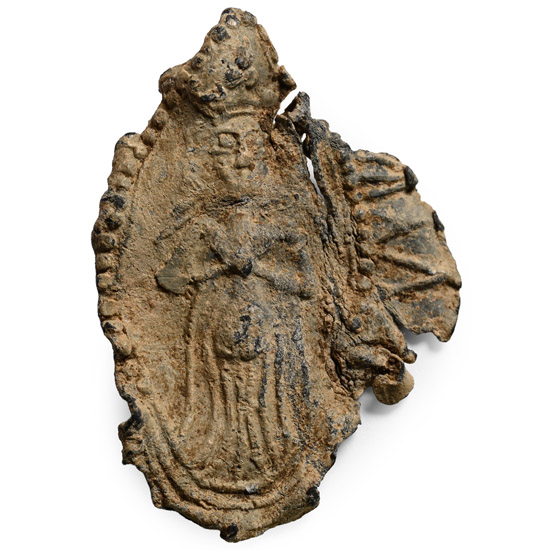
Medieval Pewter Thomas Beckett Pilgrim's Badge
Circa 14th-15th century A.D.Sold for (Inc. bp): £130
Vesica-shaped frame enclosing a standing figure of Becket wearing a mitre, with hands clasped in prayer. 3.03 grams, 28 mm
From a retired Lincolnshire, UK, gentleman's collection, a long time member of the Pewter Society. -
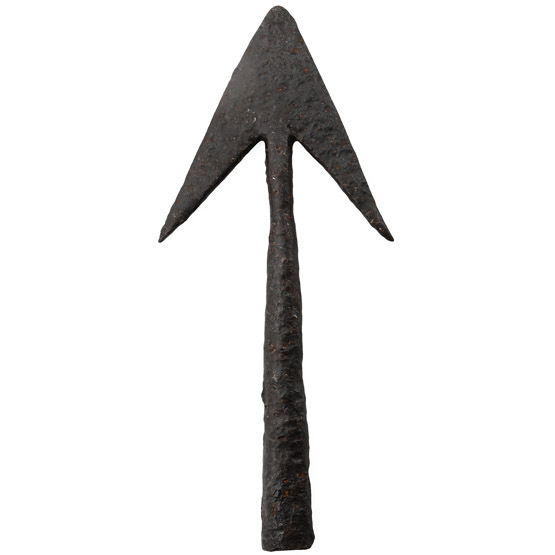
Large Medieval Socketted Iron Arrowhead
Circa 13th-15th century A.D.Sold for (Inc. bp): £117
With a triangular head and lateral barbs, a slender neck and a deep butted socket. 23.5 grams, 11 cm
Acquired from a USA private collector in the 1990s. Ex Buckinghamshire, UK, collection. -
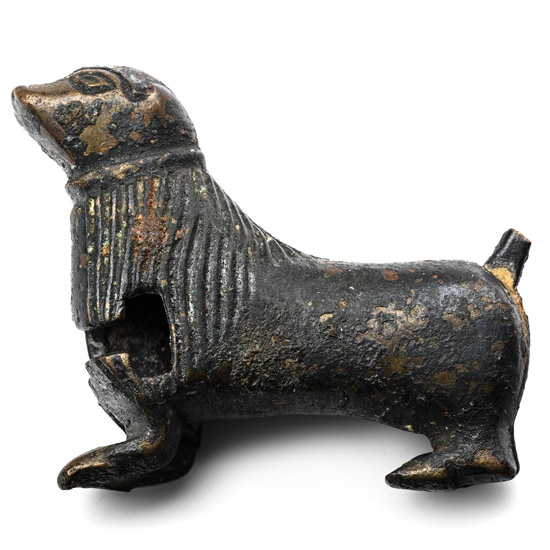
Medieval Bronze Dog-Shaped Padlock
Circa 14th-15th century A.D.Sold for (Inc. bp): £85
Formed as a standing dog with short legs and a linear fur design around the neck, socket to the chest, the now absent tail originally forming the bow. 26.2 grams, 39 mm
From the private collection of a European gentleman (1942-2024), formed since the 1970s.
