
Loading, please wait...
LOT 1350
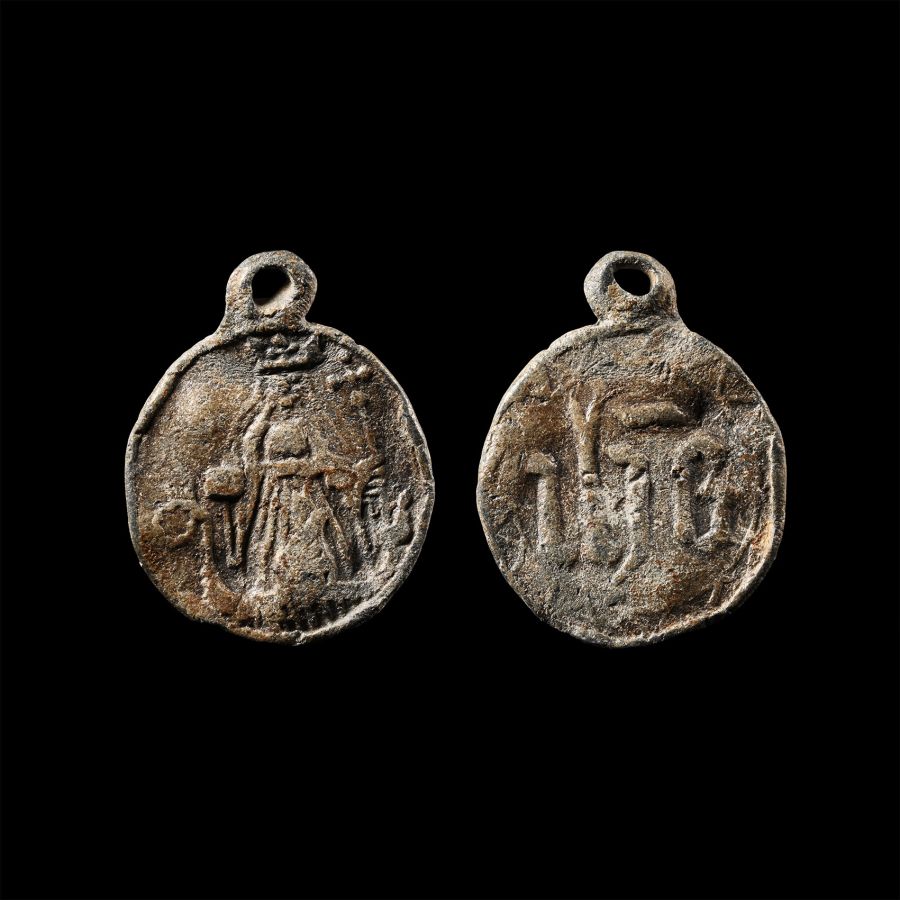
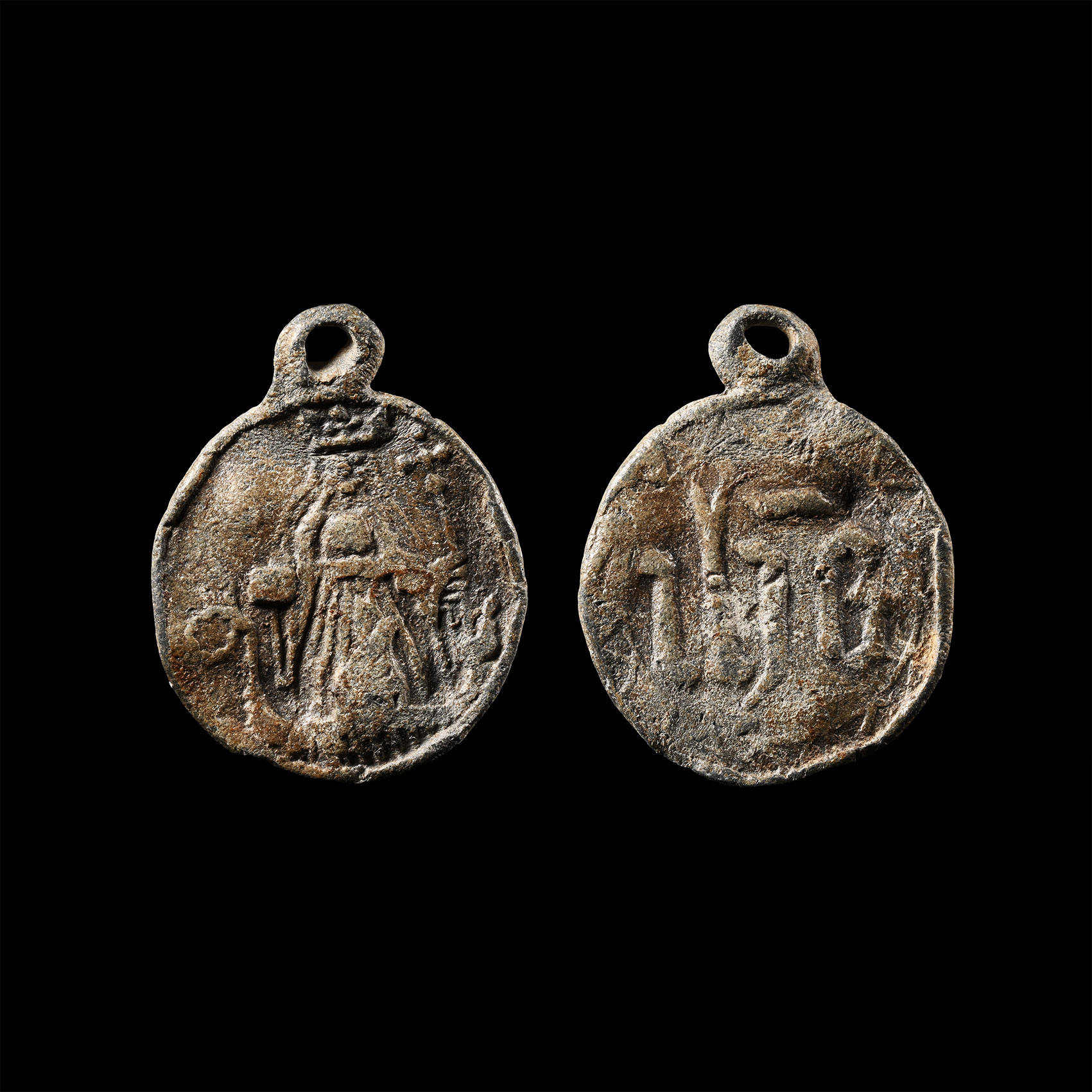
Medieval Lead Pilgrim's Pendant with Saint
CIRCA 14TH-15TH CENTURY A.D.
1 1/4 in. (7.21 grams, 32 mm).
Obverse with low-relief Christ enthroned holding orb and sceptre, regal crown; reverse with low-relief 'ihs' christogram. [No Reserve]
ProvenanceFound Southern England.
Acquired on the UK art market in the 1980s.
From an East Anglian private collection.
TimeLine Auctions follows a vetting process to ensure the authenticity and legality of all items, reinforcing our commitment to integrity and responsible trading. Each antiquity, antique, and coin lot undergoes thorough examination by a vetting committee of at least ten external specialists, professional trade association members, scientists, and archaeologists: Our Vetting Process
AUCTIONS:
TimeLine is a leading auction house specialising in antiquities, ancient art, collectables, natural history, coins, medals, and books. Our auctions offer museums, collectors, historians, and enthusiasts the opportunity to acquire unique and historically significant pieces.
-
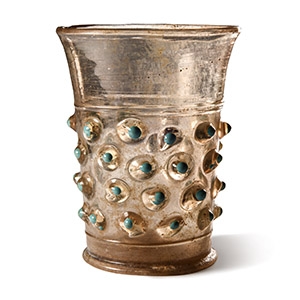
Medieval Glass Beaker with Prunts
13th-15th century A.D.Sold for (Inc. bp): £7,800
Of tubular form with flared rim and applied collar to the foot, applied trails to the sidewall and four rows of prunts with applied blue-glass ornament. 233 grams, 12.2 cm high
Acquired in the 1980s. with Christopher Sheppard, London, UK. Acquired from the above in 2007. This lot has been checked against the Interpol Database of stolen works of art and is accompanied by search certificate no.11978-210905. -
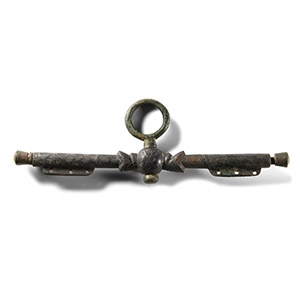
Medieval Bronze Purse Bar with Niello Inlay
Circa 15th-16th century A.D.Estimate: £200 - 300 (+bp*)
Opening Bid: £100
Articulate central swivel loop with remains of geometric niello inlay, addorsed zoomorphic head to either side of the central hub with round-section bar protruding from the mouth, hatched niello inlay, tabs below pierced for attachment of the purse bag; London type A1. 107 grams, 16.5 cm
Acquired early 1990s. From an East Anglian private collection. -
.jpg)
Medieval 'Thames' Bifacial Pewter Wine Tavern Token
Circa 14th-15th century A.D.Sold for (Inc. bp): £182
Disc token with bird-and-cross motif to the obverse, hatched reverse. 0.65 grams, 16 mm
Found Billingsgate spoil from the Thames foreshore, London, UK, circa 1984. Property of an Essex collector.
