
Loading, please wait...
LOT 2258
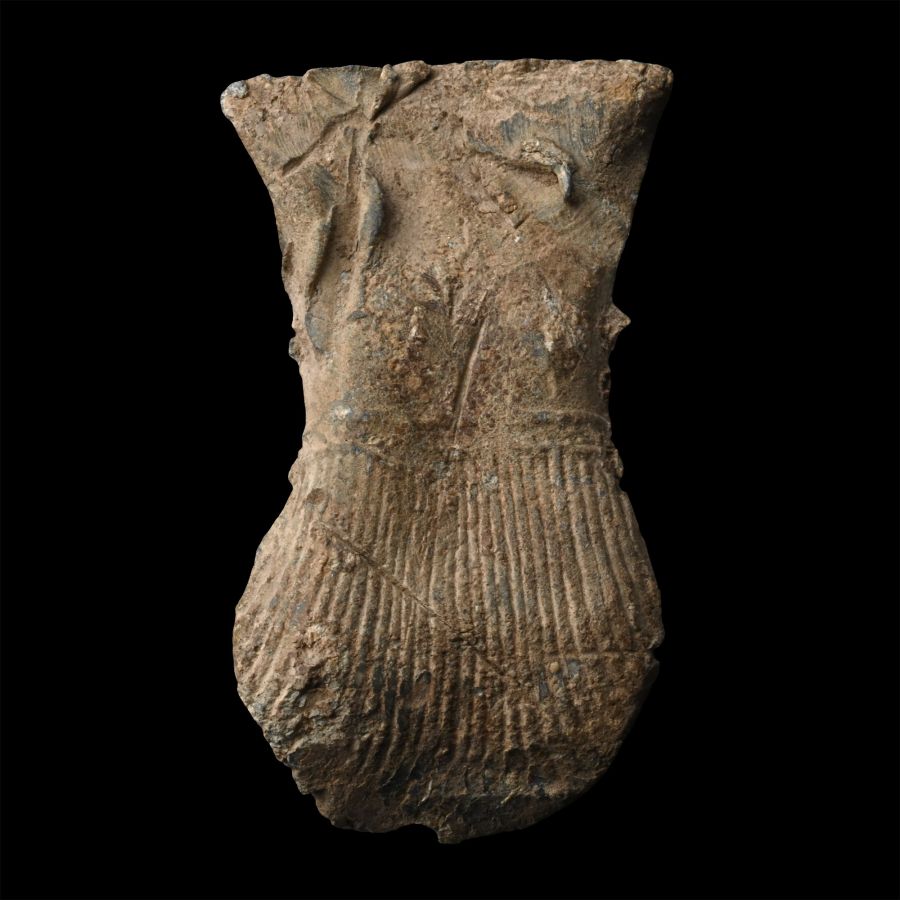
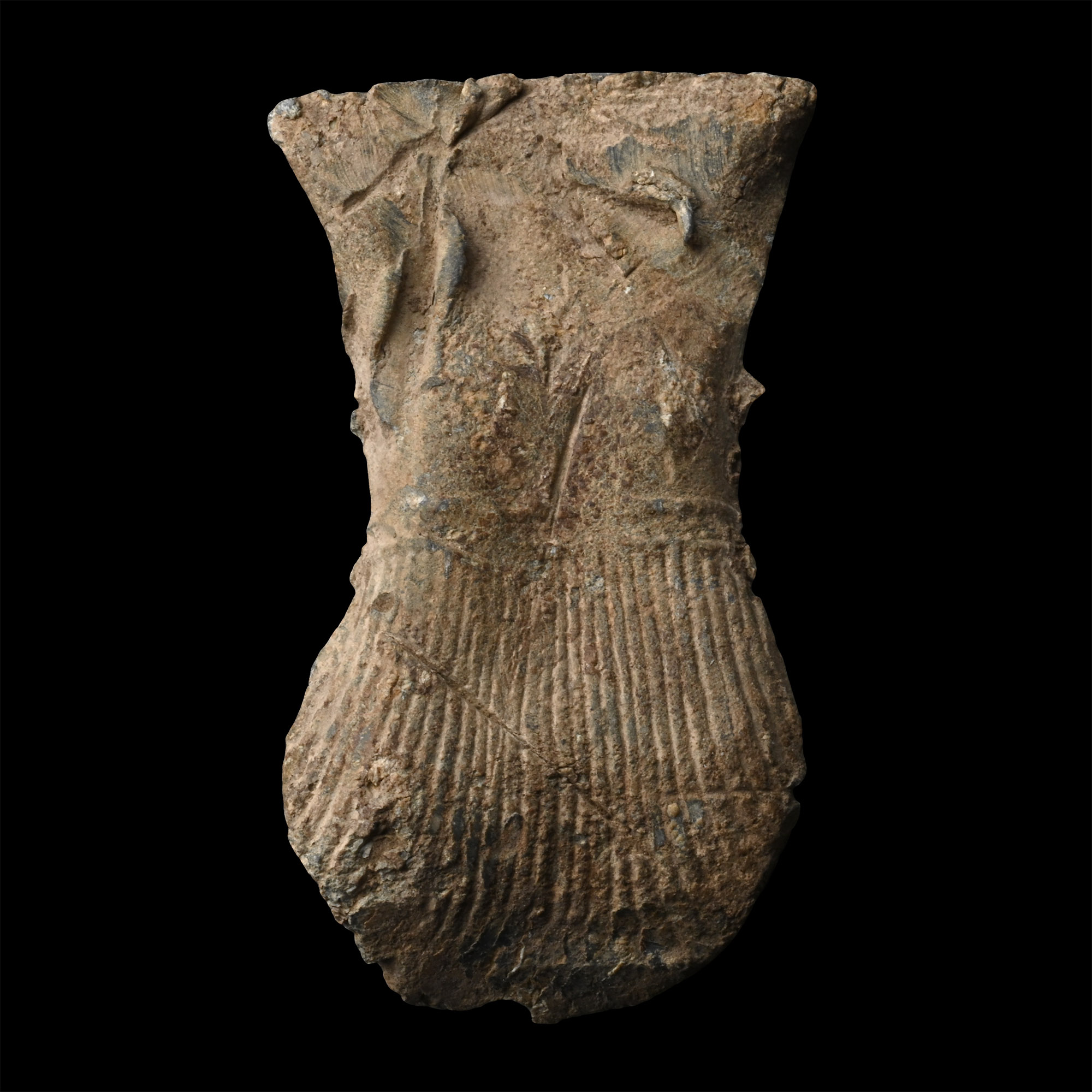
Medieval Lead Pilgrim's Holy Water Ampulla
CIRCA 15TH CENTURY A.D.
2 1/8 in. (49 grams, 54 mm).
With low-relief crowned rosette on a crosshatched field to obverse, vertical hatching to reverse. [No Reserve]
ProvenanceFound Lincolnshire, UK.
CONDITIONTimeLine Auctions follows a vetting process to ensure the authenticity and legality of all items, reinforcing our commitment to integrity and responsible trading. Each antiquity, antique, and coin lot undergoes thorough examination by a vetting committee of at least ten external specialists, professional trade association members, scientists, and archaeologists: Our Vetting Process
AUCTIONS:
TimeLine is a leading auction house specialising in antiquities, ancient art, collectables, natural history, coins, medals, and books. Our auctions offer museums, collectors, historians, and enthusiasts the opportunity to acquire unique and historically significant pieces.
-
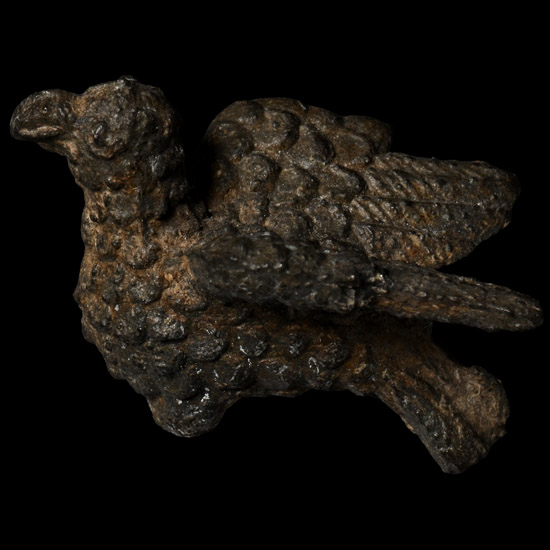
Medieval Bronze Bird Finial
14th-16th century A.D.Sold for (Inc. bp): £78
Modelled in the round with raised feather detailing, wings raised and open, an erect head with a curving beak. 18 grams, 33 mm
From the private collection of a European gentleman (1942-2024), formed since the 1970s. -
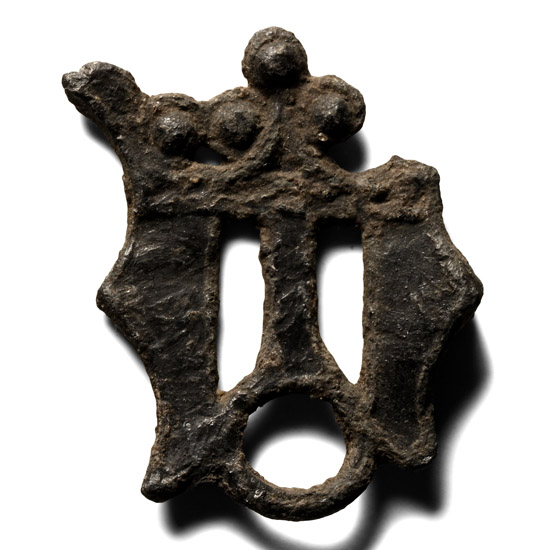
Medieval Pewter Pilgrim's Badge with 'M' for Maria
Circa 14th-15th century A.D.Sold for (Inc. bp): £13
Openwork capital 'M' with trefoil finials above forming a crown, ring at the base. 0.76 grams, 18 mm
From a retired Lincolnshire, UK, gentleman's collection, a long time member of the Pewter Society. -
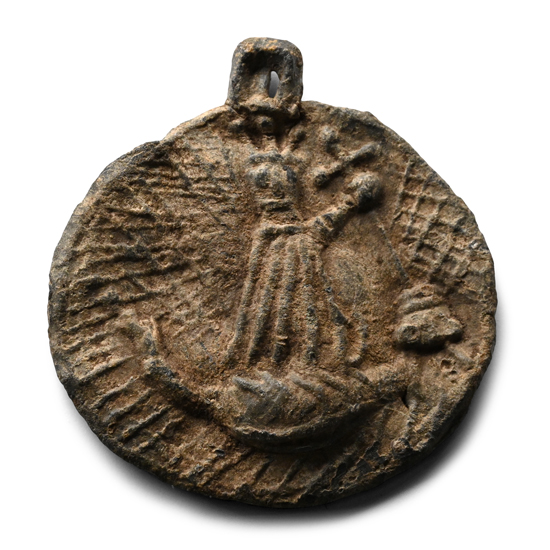
Medieval Lead Pilgrim's Pendant with Calvary and Dragon-Slaying
14th-15th century A.D.Sold for (Inc. bp): £85
Discoid in plan with bifacial low-relief imagery: Obverse - Calvary scene with Corpus Christi and flanking mourners; Reverse - hatched field with supine dragon, triumphant robed and crowned figure holding aloft a cross piercing the dragon's mouth. 5.63 grams, 28 mm
From a retired Lincolnshire, UK, gentleman's collection, a long time member of the Pewter Society.
The imagery may represent St George slaying the dragon, although he is usually pictured nimbate and on horseback. Alternatively, it may show Christ overcoming Satan in the form of a dragon in the Harrowing of Hell episode.
