
Loading, please wait...
LOT 1805
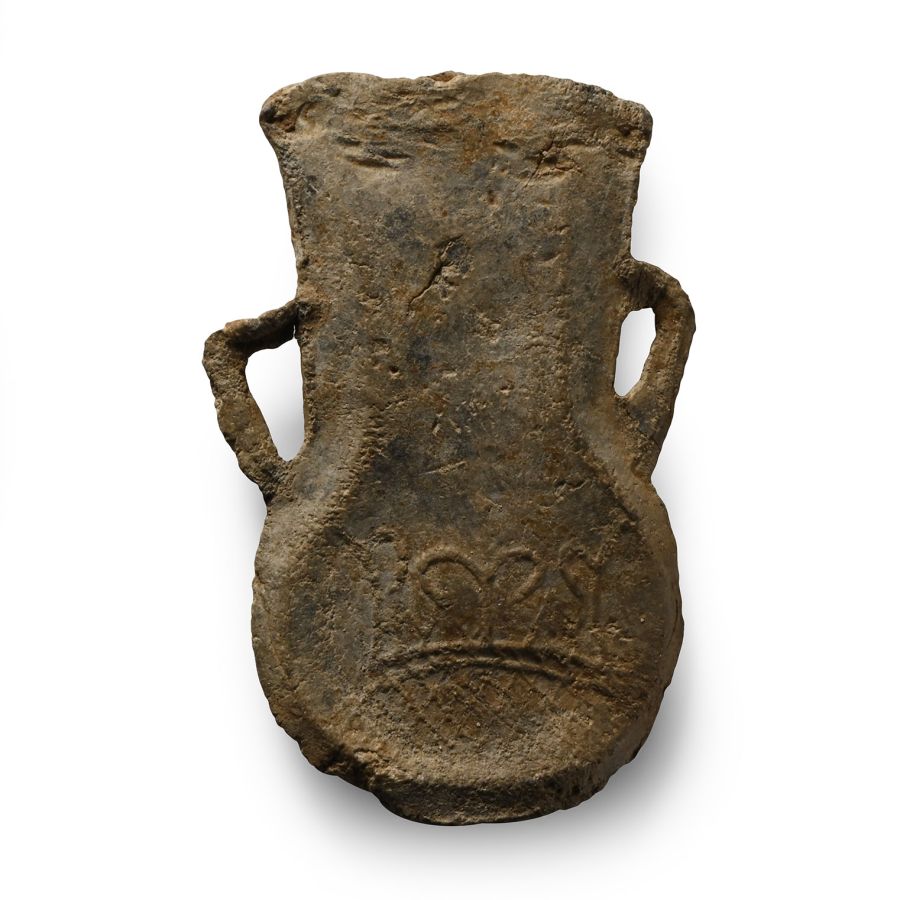
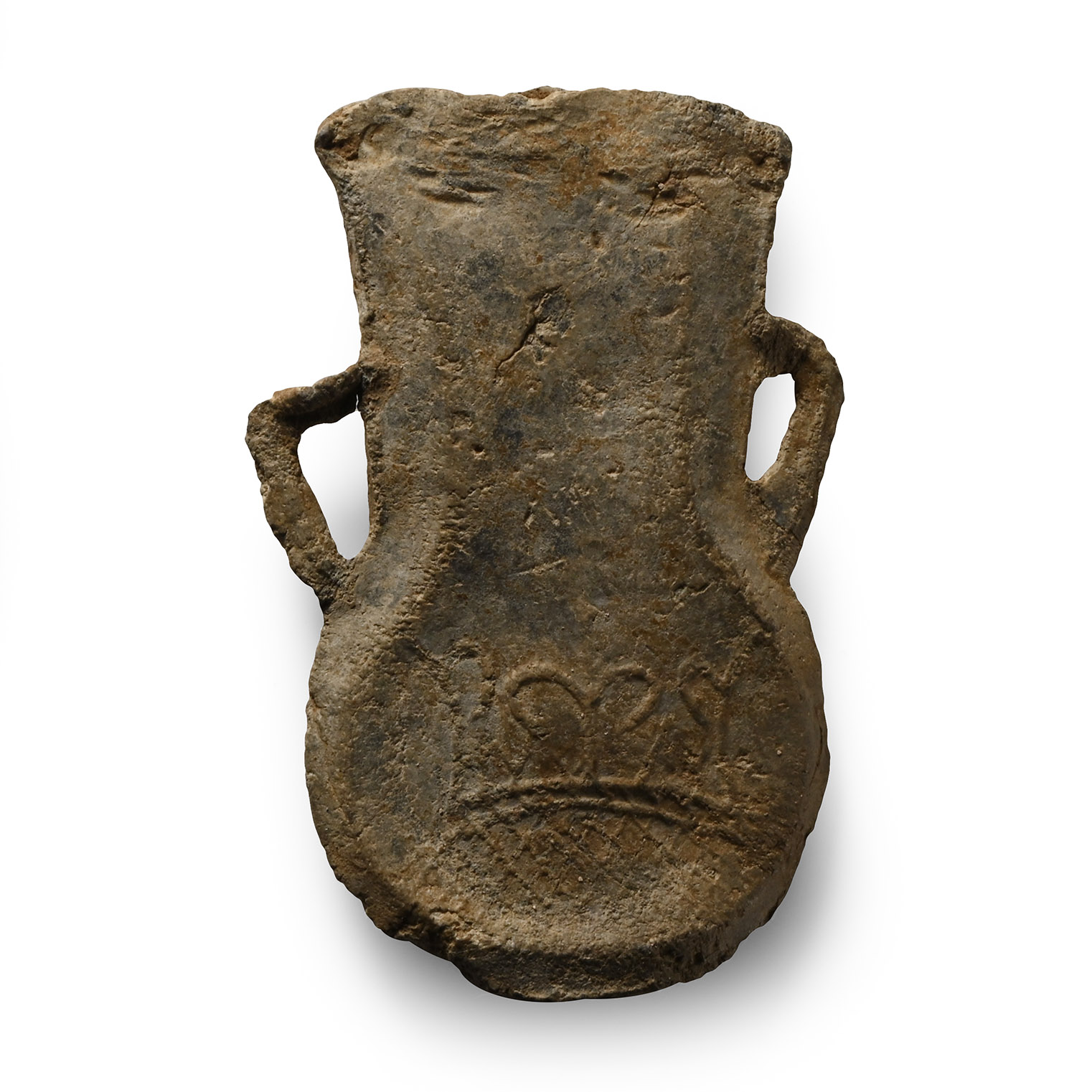
Medieval Lead Pilgrim's Holy Water Ampulla
14TH-15TH CENTURY A.D.
2 in. (32.3 grams, 53 mm).
With lateral loops and low-profile rosette detailing to one face of the the bulb, hatched band and crown to the other. [No Reserve]
ProvenanceFound Lincolnshire, UK.
LiteratureCf. Mitchiner, M., Medieval Pilgrim & Secular Badges, London, 1986, item 399, for type.
CONDITIONTimeLine Auctions follows a vetting process to ensure the authenticity and legality of all items, reinforcing our commitment to integrity and responsible trading. Each antiquity, antique, and coin lot undergoes thorough examination by a vetting committee of at least ten external specialists, professional trade association members, scientists, and archaeologists: Our Vetting Process
AUCTIONS:
TimeLine is a leading auction house specialising in antiquities, ancient art, collectables, natural history, coins, medals, and books. Our auctions offer museums, collectors, historians, and enthusiasts the opportunity to acquire unique and historically significant pieces.
-
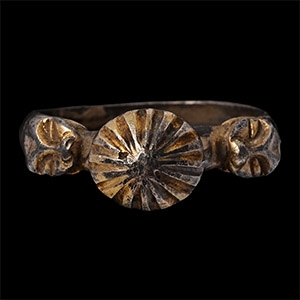
Medieval Silver Ring with Beast Heads
13th-14th century A.D.Sold for (Inc. bp): £247
D-section hoop with spur to each shoulder formed as a beast-head biting the shank, bezel triangular in profile with domed rosette. 5.21 grams, 26.81 mm overall, 18.62 mm internal diameter (approximate size British R, USA 8 1/2, Europe 18 3/4, Japan 18)
Acquired on the London art market in the late 1980s-1990s. From the family collection of an East London, UK, gentleman. -
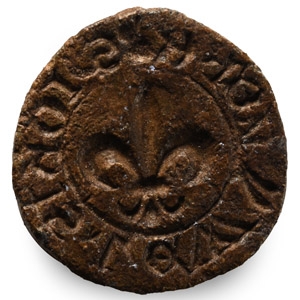
Large Medieval Personal Lead Seal Matrix of John Lewyns
Circa 13th century A.D.Sold for (Inc. bp): £33
Discoid matrix with central fleur-de-lys and legend to the border 'S' IOhIS LEWYNE[S]' (seal of John Lewyns). 20.7 grams, 34 mm
Ex Paul Moore collection, West Sussex, UK, 1990s-2000s. -
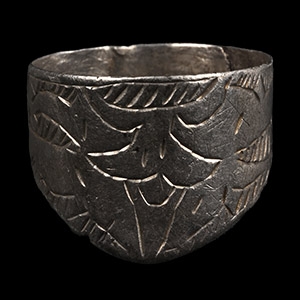
Medieval Silver Archer's Thumb Ring
Circa 14th century A.D.Sold for (Inc. bp): £221
Penannular with butted ends to the hoop, triangular extension with hatched fleur-de-lys motif in low relief; edge nicked. 4.82 grams, 21.06 mm overall, 19.05 mm internal diameter (approximate size British R, USA 8 1/2, Europe 18 3/4, Japan 18)
Private collection formed since the 1940s. UK art market. Property of an Essex, UK, gentleman.
