
Loading, please wait...
LOT 1654
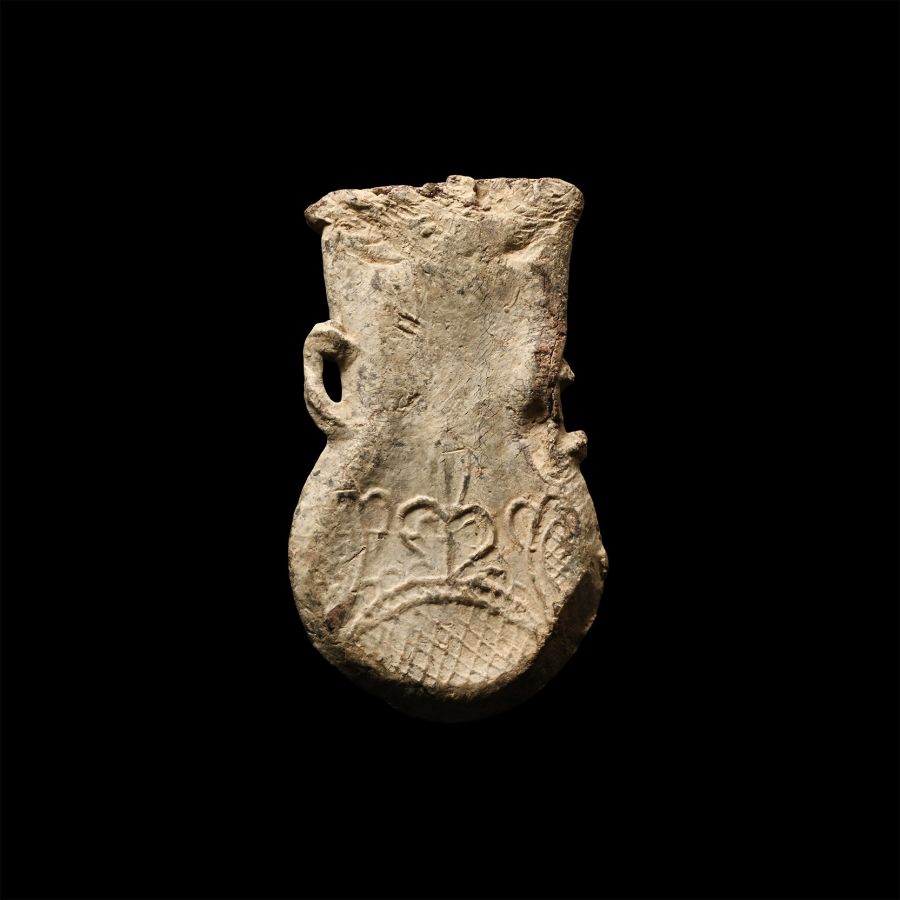
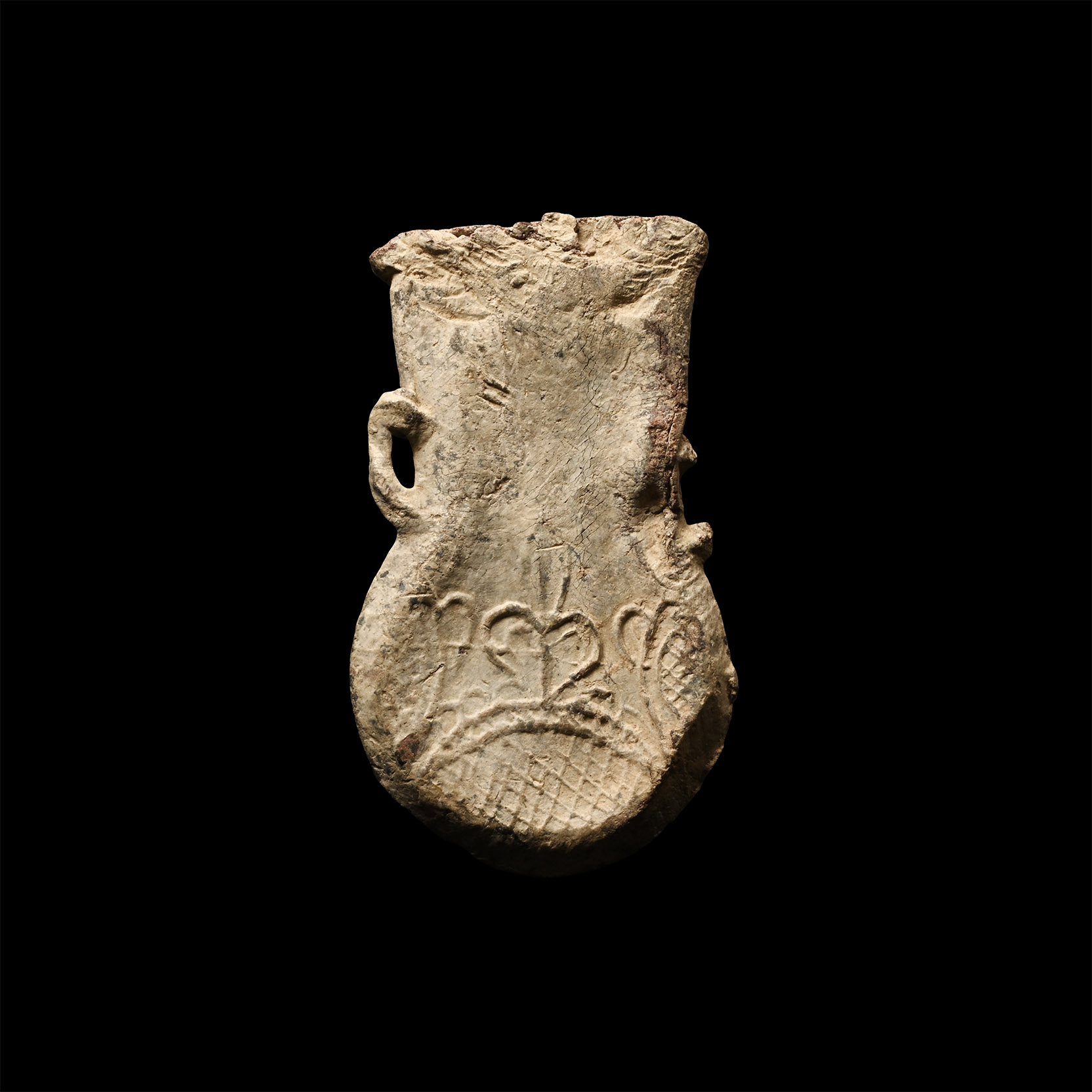
Medieval Lead Pilgrim's Holy Water Ampulla
15TH CENTURY A.D.
2 in. (32.7 grams, 51 mm).
Displaying a raised design to both faces: a four-petalled flower against a hatched field; a plant or heart on a mound; one remaining loop handle at the neck. [No Reserve]
ProvenanceFound Hampshire, UK.
CONDITIONTimeLine Auctions follows a vetting process to ensure the authenticity and legality of all items, reinforcing our commitment to integrity and responsible trading. Each antiquity, antique, and coin lot undergoes thorough examination by a vetting committee of at least ten external specialists, professional trade association members, scientists, and archaeologists: Our Vetting Process
AUCTIONS:
TimeLine is a leading auction house specialising in antiquities, ancient art, collectables, natural history, coins, medals, and books. Our auctions offer museums, collectors, historians, and enthusiasts the opportunity to acquire unique and historically significant pieces.
-
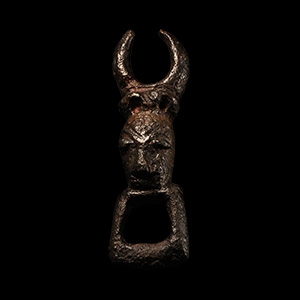
Anglo-Norman Zoomorphic Strap Junction
11th-12th century A.D.Estimate: £180 - 240 (+bp*)
Opening Bid: £90
Grotesque human head in relief to centre, crescentic remains of one loop above, trapezoidal lug below; trace remains of red enamelling. 17.9 grams, 51 mm
Found Romney Marsh area, 2023. Property of a Kent gentleman. -
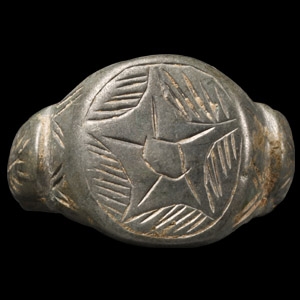
Medieval Base Silver Ring with Star
14th-16th century A.D.Sold for (Inc. bp): £98
With keeled hoop, the shoulders with a raised leaf-shaped plaque; round bezel with a stylised star motif on a textured field. 11.94 grams, 24.71 mm overall, 18.43 mm internal diameter (approximate size British Q 1/2, USA 8 1/4, Europe 18.12, Japan 17)
Acquired 1980-2015. Ex Abelita family collection. -
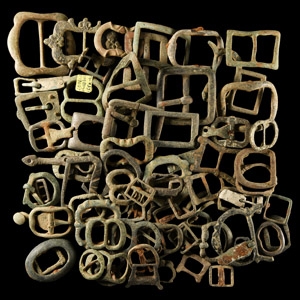
Medieval and Later Bronze Buckle Collection
Circa 12th-20th century A.D.Sold for (Inc. bp): £39
Comprising a variety of types and seizes from a broad range of timer periods, including decoratively shaped examples, incised ornament and examples retaining their tongues. 300 grams total, 13-44 mm
Found Berkshire, UK.
