
Loading, please wait...
LOT 1919
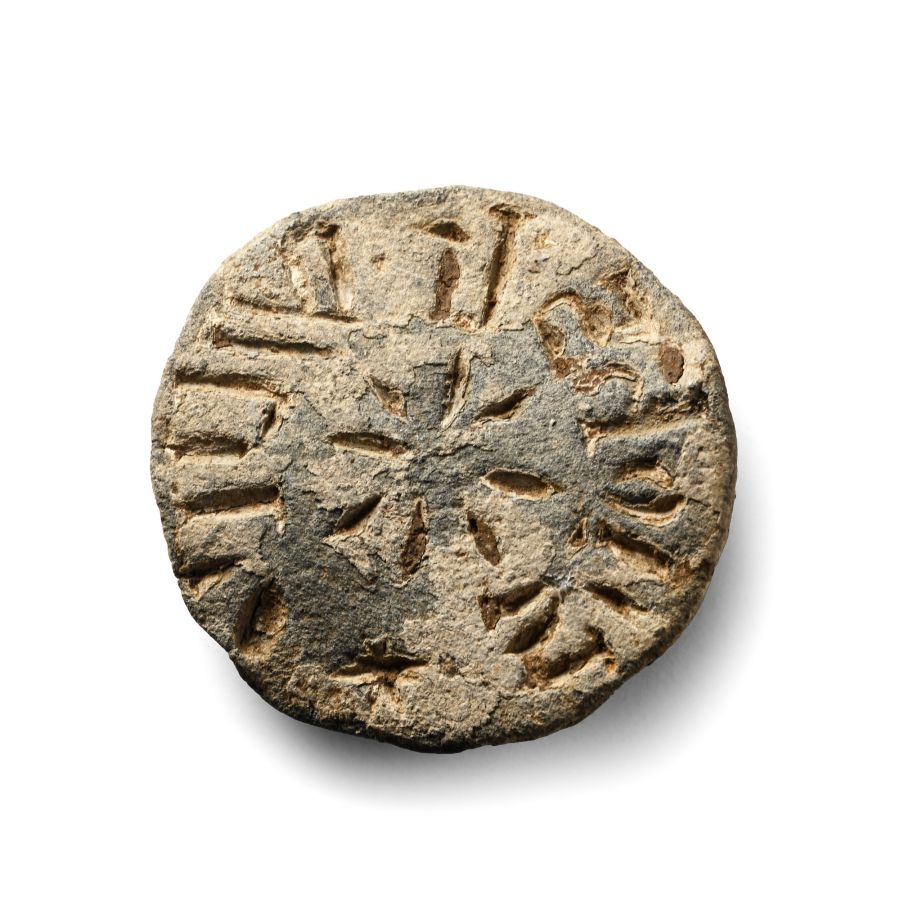
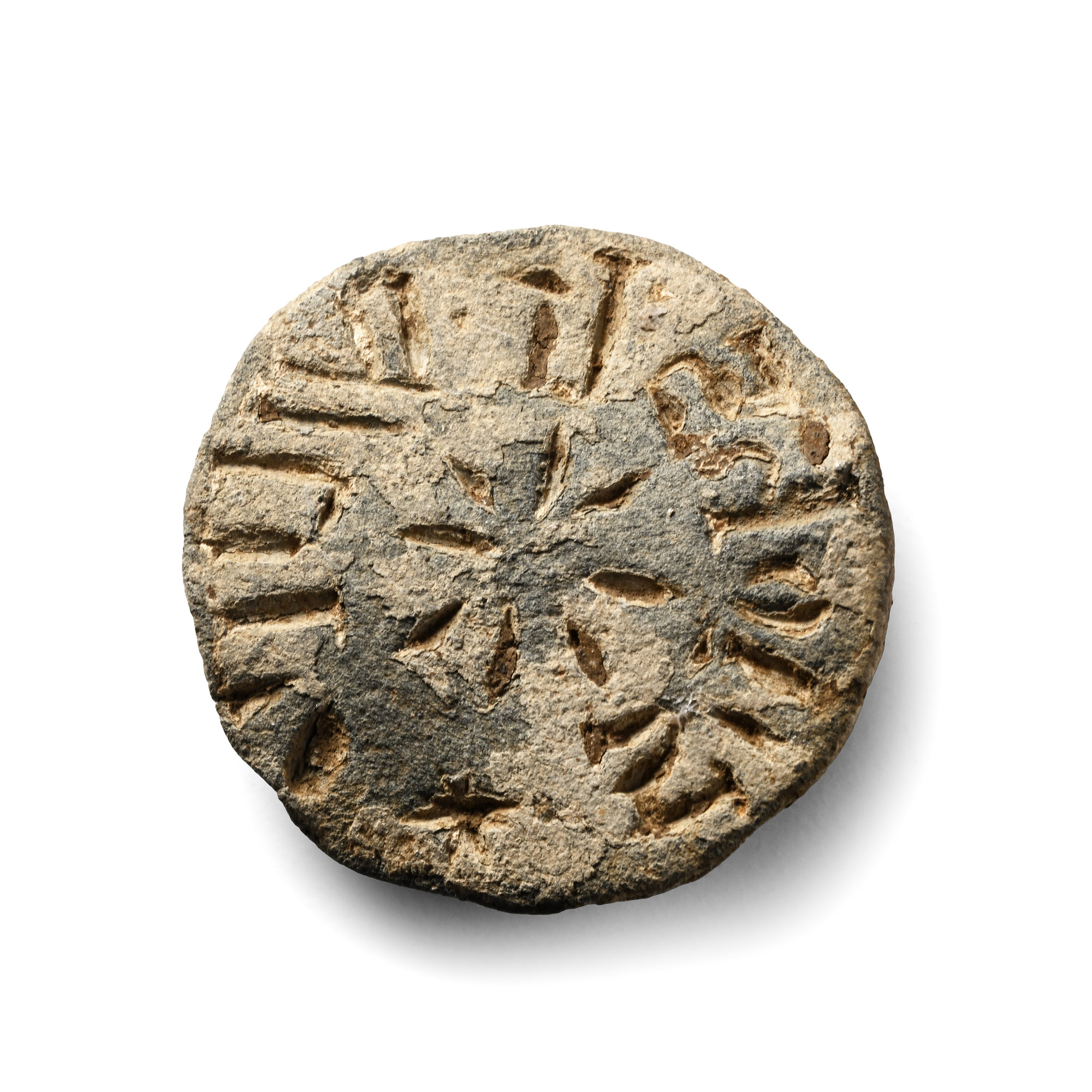
Medieval Lead Personal Seal Matrix for John
ENGLAND, 1100-1300 A.D.
1 in. (13.1 grams, 27 mm).
Discoid type with central intaglio eight-pointed star; Latin inscription to border '* S' IOH'S W[...]'; possibly '* S' IOH'S F WILL' for 'Sigillum Iohannis filii Willelmi' (Seal of John, son of William). [No Reserve]
ProvenanceFound Harrold, Bedfordshire, UK.
Recorded with UKDFD no.44886.
TimeLine Auctions follows a vetting process to ensure the authenticity and legality of all items, reinforcing our commitment to integrity and responsible trading. Each antiquity, antique, and coin lot undergoes thorough examination by a vetting committee of at least ten external specialists, professional trade association members, scientists, and archaeologists: Our Vetting Process
AUCTIONS:
TimeLine is a leading auction house specialising in antiquities, ancient art, collectables, natural history, coins, medals, and books. Our auctions offer museums, collectors, historians, and enthusiasts the opportunity to acquire unique and historically significant pieces.
-
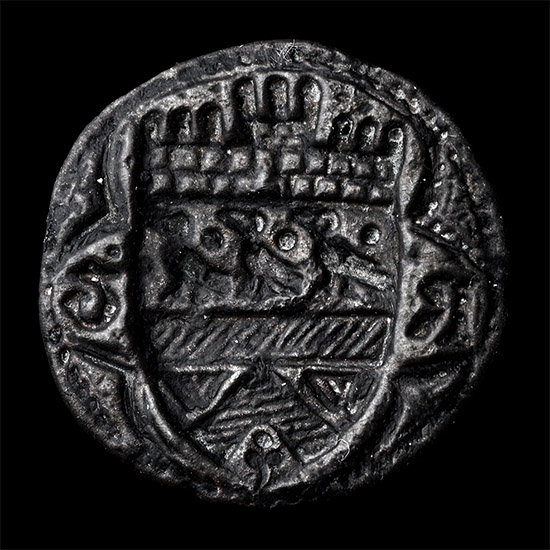
Large Medieval Knight's Heraldic Seal Matrix
Circa 14th-15th century A.D.Sold for (Inc. bp): £143
'Chessman' type with pierced trefoil knop and faceted shank; underside with heater shield and mural crown on a quatrefoil; shield bearing three martlets over a fess with chevron in base. 17.9 grams, 32 mm
From the private collection of a Sussex, UK, gentleman. -
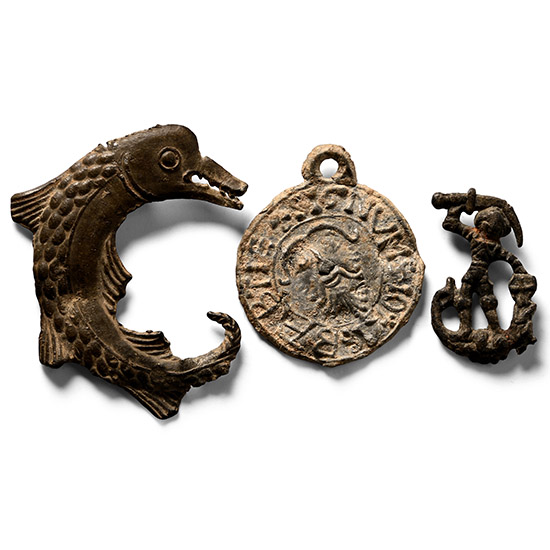
Three Pewter Pilgrim Badges
France, 14th-15th century A.D.Sold for (Inc. bp): £442
The first a circular badge of St John the Baptist, his severed head depicted on the circular plate with small loop for attachment at the top, inscription reading 'SIGNVM S’ IOhIS BABTIS' with a horizontal stroke to the 'h' so that it doesbles as a cross; a small badge of the Archangel Michael, shown fully armored and holding a sword above his head having bested Satan in personal combat; the final badge in the form of a dolphin, a secular piece likely worn by a follower of the French Dauphiné Charles V. 10.5 grams total, 24-38 mm
Former Forgeais (1822-1878) collection, France, thence by family descent. Arthur Forgeais was a noted 19th-century French archaeologist. Born in 1822 in the city of Paris, Forgeais held a special interest and specialism in the medieval history of his home city. When, in the mid-19th century, the Seine was dredged during Haussmann's renovation of the city, the scholar worked to recover a great number of archaeological remains from the silts of the river. He subsequently published his findings in the five-volume title Collection of Historiated Leaves Found in the Seine and Collected by Arthur Forgeais (published 1862-1866). The present collection of pewter pilgrim badges, all French in origin, is likely to have been recovered at this time. -
.jpg)
Medieval Wooden Bench Finial in the Form of an Elephant and Castle
England, 15th century A.D.Estimate: £3,000 - 4,000 (+bp*)
Opening Bid: £1,500
Carved stylised elephant with elongated ears supporting a palanquin in the form of a castle with a carved cross, foliage motif to the reverse; mounted on a velvet-covered stand. 1.31 kg total, 34.2 cm including stand
Private collection, Europe. Acquired on the English art market. This lot has been checked against the Interpol Database of stolen works of art and is accompanied by search certificate number no.13088-248391.
The image of an elephant carrying warriors in a howdah originated from Alexander the Great's battle against King Porus's war elephants at the Battle of Hydaspes in 326 BC. This motif became widely known in European art through the spread of Bestiaries which were medieval texts combining natural history with moralising Christian stories. One of the most well known was Matthew Paris’s imagined depictions of elephants, most notable in this case is his war elephant illustrated in Chronica maiora II, circa 1240-1255 (Cambridge, Corpus Christi College, MS 016II). Another well known manuscript - The Rochester Bestiary, circa 1230-1240 (British Library, London, Royal MS 12 F.xiii) contains a miniature with a war elephant in the midst of battle, above another image of elephants supposedly in their natural habitat. Since very few live elephants were seen in Europe during the medieval period, their representations were often more imaginative than realistic. Other Medieval bench end carvings of elephants in English churches are known, amongst them are: St Peter and St Paul, Tuttington, Norfolk; St Andrew, South Lopham, Norfolk; St Edmund, South Burlingham, Norfolk; St Andrew, Holme Hale, Norfolk. Elephants can also be found on misericords, some examples can be found at: Cathedral Church of Saint Peter, Exeter; Cathedral Church of St Peter, Gloucester; and St Mary's Church, Beverley.
