
Loading, please wait...
LOT 1866
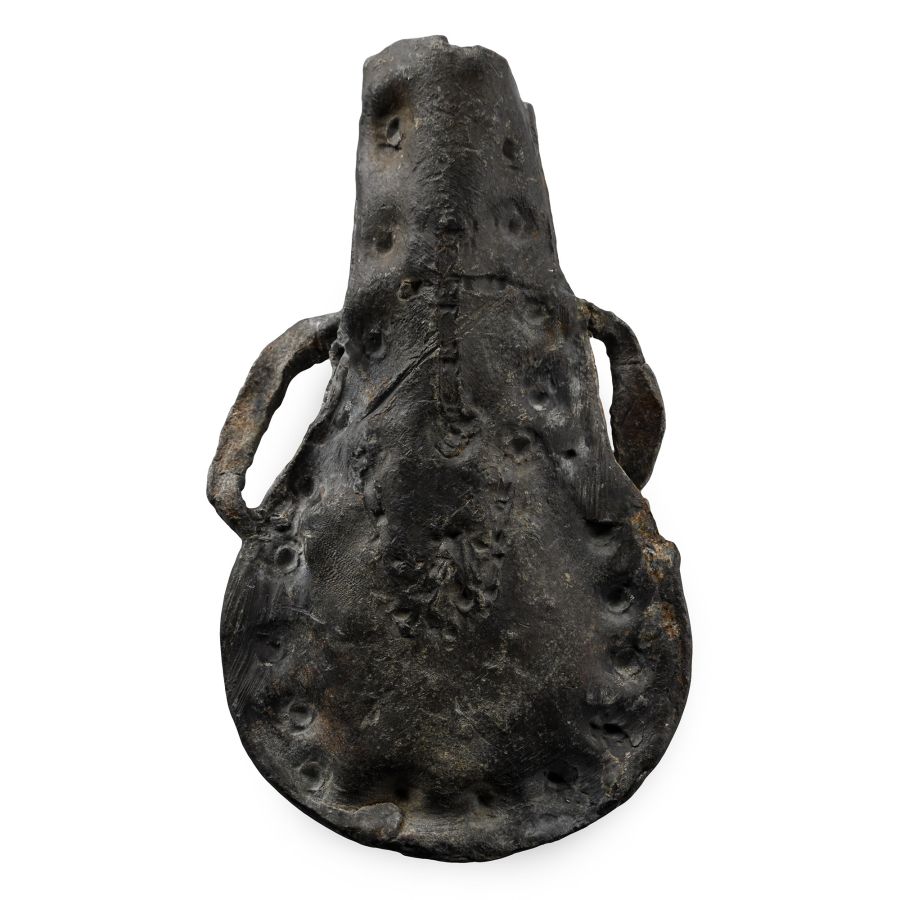
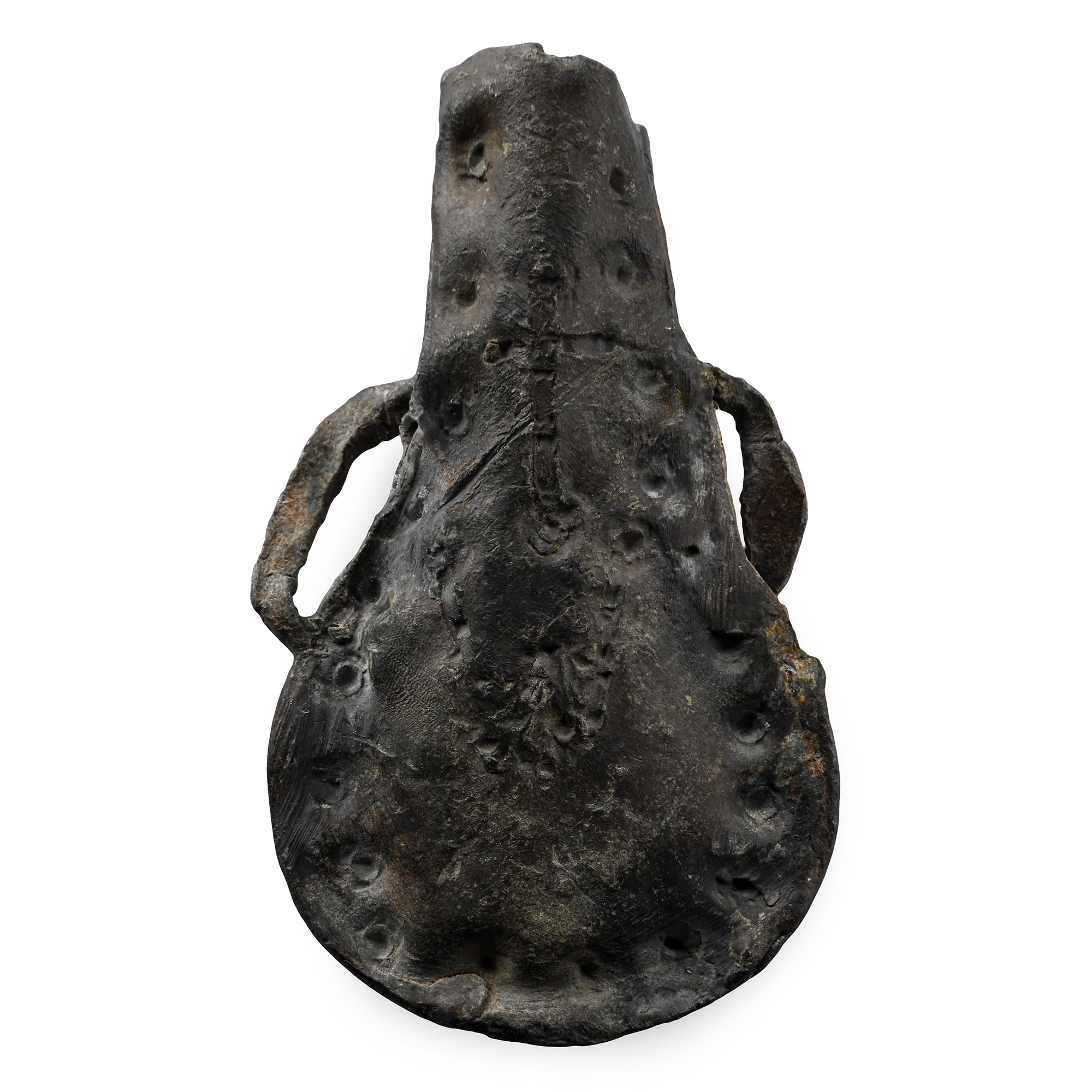
Medieval Lead Holy Water Pilgrim's Ampulla
14TH-15TH CENTURY A.D.
3 in. (52.5 grams, 78 mm).
With lateral loops and scallop detailing to one face of the bulb, punched 'W' and ring of pellets to the other, possibly for Walsingham shrine. [No Reserve]
ProvenanceFrom a Buckinghamshire collection, established from the 1990s.
This lot is accompanied by an illustrated lot declaration signed by the Head of the Antiquities Department, Dr Raffaele D'Amato.
Cf. Mitchiner, M., Medieval Pilgrim & Secular Badges, London, 1986, item 399, for type.
CONDITIONTimeLine Auctions follows a vetting process to ensure the authenticity and legality of all items, reinforcing our commitment to integrity and responsible trading. Each antiquity, antique, and coin lot undergoes thorough examination by a vetting committee of at least ten external specialists, professional trade association members, scientists, and archaeologists: Our Vetting Process
AUCTIONS:
TimeLine is a leading auction house specialising in antiquities, ancient art, collectables, natural history, coins, medals, and books. Our auctions offer museums, collectors, historians, and enthusiasts the opportunity to acquire unique and historically significant pieces.
-

Medieval Bronze Heraldic Seal Matrix
England, 1300-1400 A.D.Sold for (Inc. bp): £130
Chessman-type seal with heater shield motif within a rope border with fronds; heraldic design of three inverted acorns; supplied with a plaster impression. 11.7 grams, 28 mm
Found near Bottisham, Cambridgeshire, UK. Accompanied by a copy of the British Museum's Portable Antiquities Scheme Report no.SF-B3A1F6. This lot is accompanied by an illustrated lot declaration signed by the Head of the Antiquities Department, Dr Raffaele D'Amato. -

Medieval Enamelled Gilt Bronze Heraldic Limoges Buckleplate with Wyvern
Circa 1150-1300 A.D.Sold for (Inc. bp): £46
Buckle plate fragment comprising an ellipsoid plaque with two gilt pierced lugs to the trailing edge, gilt band to the forward edge, enamelled design of a swan with head drooping to the rear; notch to forward edge to accept the pin. 9.2 grams, 40 mm
Found whilst searching with a metal detector at Puddletown, West Dorset, UK, on 21 May 2023 by Charles Bullock. Accompanied by a copy of the British Museum's Portable Antiquities Scheme (PAS) report no.DOR-1026E6. This lot is accompanied by an illustrated lot declaration signed by the Head of the Antiquities Department, Dr Raffaele D'Amato. -

Medieval Gilt Plaques with Evangelists Holding Gospels
Serbia, 14th century A.D.Sold for (Inc. bp): £260
A pair of copper or brass gilt plaques with openwork representation of two nimbate Evangelists, holding a gospel with the left hand, the right hand raised for blessing and manifestation of the divine and human nature of God, appliques for a belt or a personal ornament, four fastening holes at the corners. 13.80 grams total, 61 mm each
Fine condition.
Ex central London gallery; acquired on the UK art market. From the private collection of John Meredith, acquired since the 1990s; thence by descent. This lot is accompanied by an illustrated lot declaration signed by the Head of the Antiquities Department, Dr Raffaele D'Amato.
The medieval Kingdom of Serbia was in its material culture strongly under the influence of Byzantium, but had also undergone cultural and artistic developments from western countries. The decoration - especially the technique of filigree and granulation, and the ornamental motifs and their composition - shows some similarities both to the Byzantine and to the Western gold work of the 11th–13th century. The openwork decoration of these objects is similar to the foliage represented on one sarcophagus positioned against the south wall of the church of St Demetrius, in the Patriarchate of Peć, dated to the 14th century AD.
