
Loading, please wait...
LOT 1822
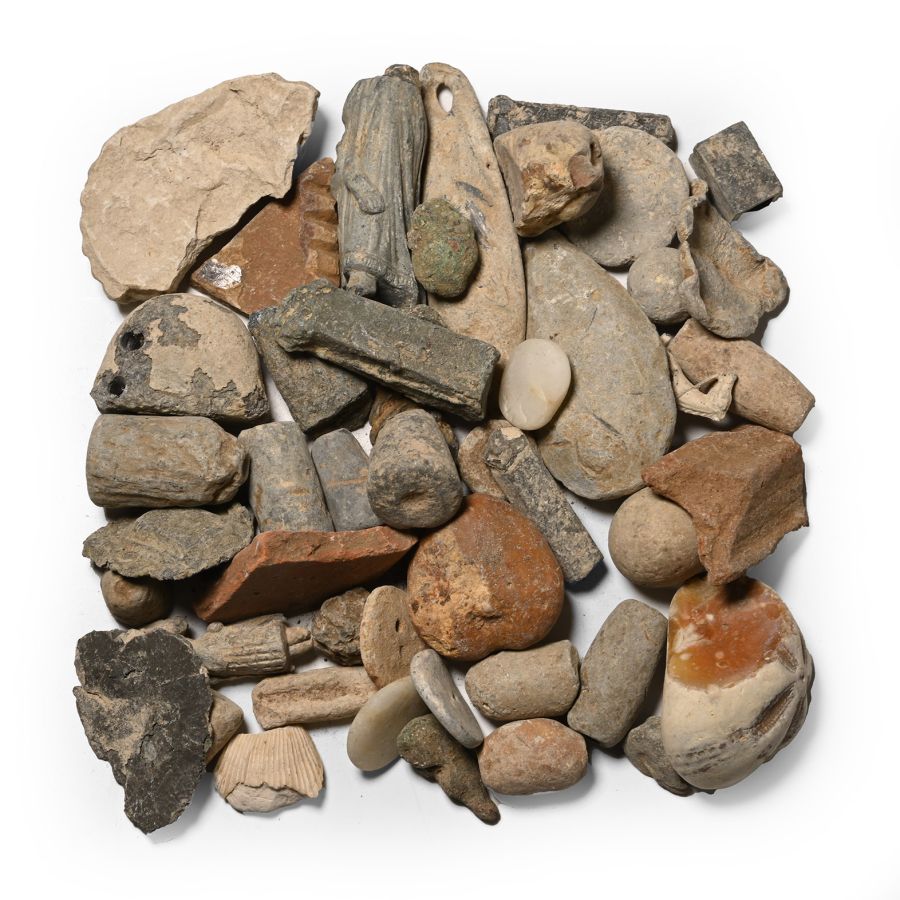
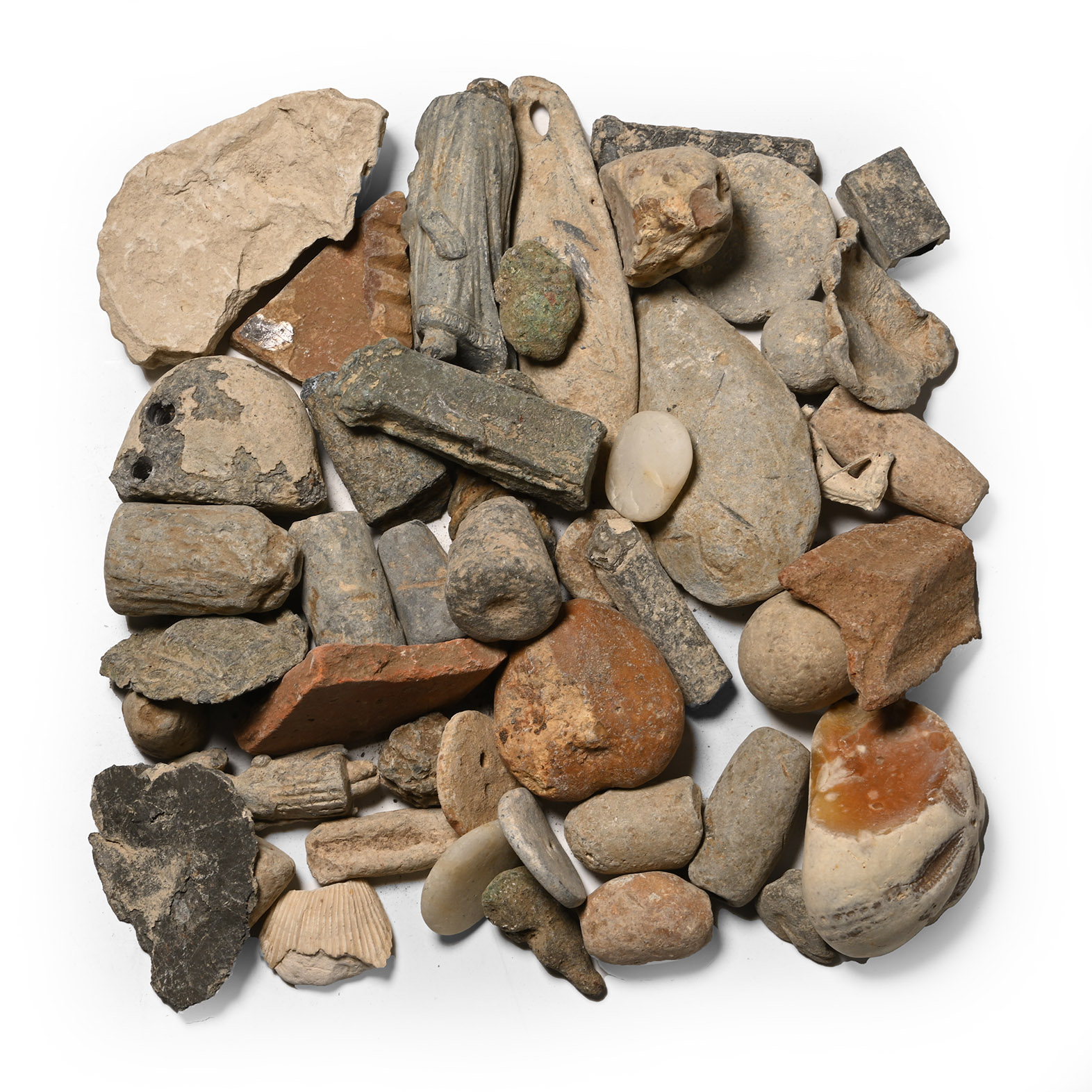
Medieval Lead Artefact and Other Finds Group
15TH CENTURY A.D. AND EARLIER
5/8 - 3 in. (1.35 kg total, 16-77 mm).
Including a figurine fragment, spindle whorl, fishing and other weights, and other items. [47, No Reserve]
ProvenanceEx Stocker collection, Kent, UK, 1955-early 2000s.
CONDITIONTimeLine Auctions follows a vetting process to ensure the authenticity and legality of all items, reinforcing our commitment to integrity and responsible trading. Each antiquity, antique, and coin lot undergoes thorough examination by a vetting committee of at least ten external specialists, professional trade association members, scientists, and archaeologists: Our Vetting Process
AUCTIONS:
TimeLine is a leading auction house specialising in antiquities, ancient art, collectables, natural history, coins, medals, and books. Our auctions offer museums, collectors, historians, and enthusiasts the opportunity to acquire unique and historically significant pieces.
-
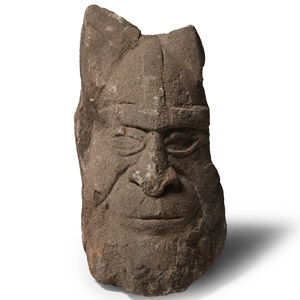
Medieval Sandstone Head
Circa 13th-14th century A.D.Sold for (Inc. bp): £780
Carved in high relief with grotesque facial detailing. 1.3 kg total, 14 cm
From a collection acquired on the UK art market from various auction houses and collections mostly before 2000. From an important Cambridgeshire estate; thence by descent. -
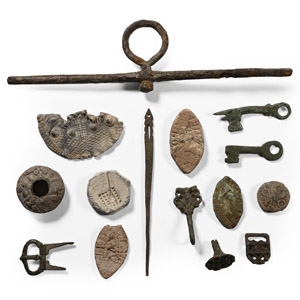
Medieval and Later Artefact Collection
13th-18th century A.D.Sold for (Inc. bp): £33
Including a lead spindle whorl, purse-bar, casket key, vesica seal and other items. 180 grams total, 17-16.5 cm
From a private Barnsley, UK, family collection. -
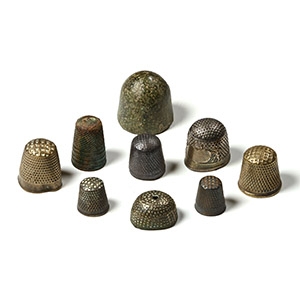
Medieval and Later Bronze Thimble Group
15th-20th century A.D.Sold for (Inc. bp): £65
Including beehive and other types. 34 grams total, 11-21 mm
Acquired since the 1970s. From the private collection of a Surrey, UK, gentleman.
