
Loading, please wait...
LOT 1585
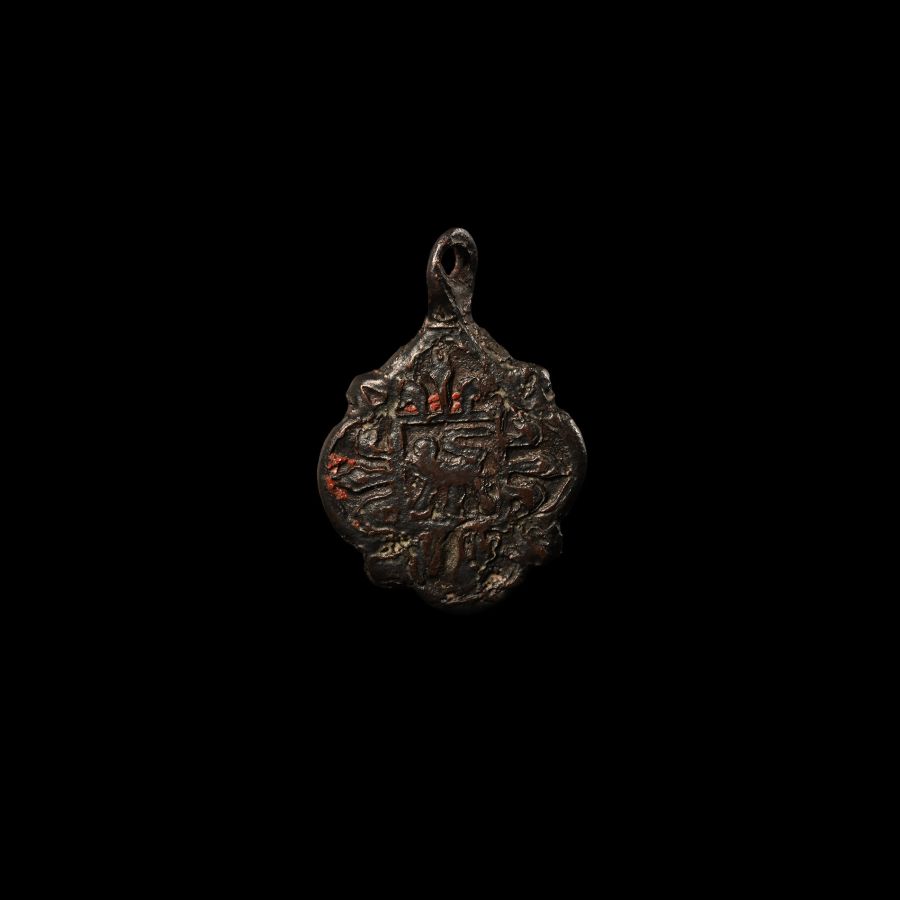
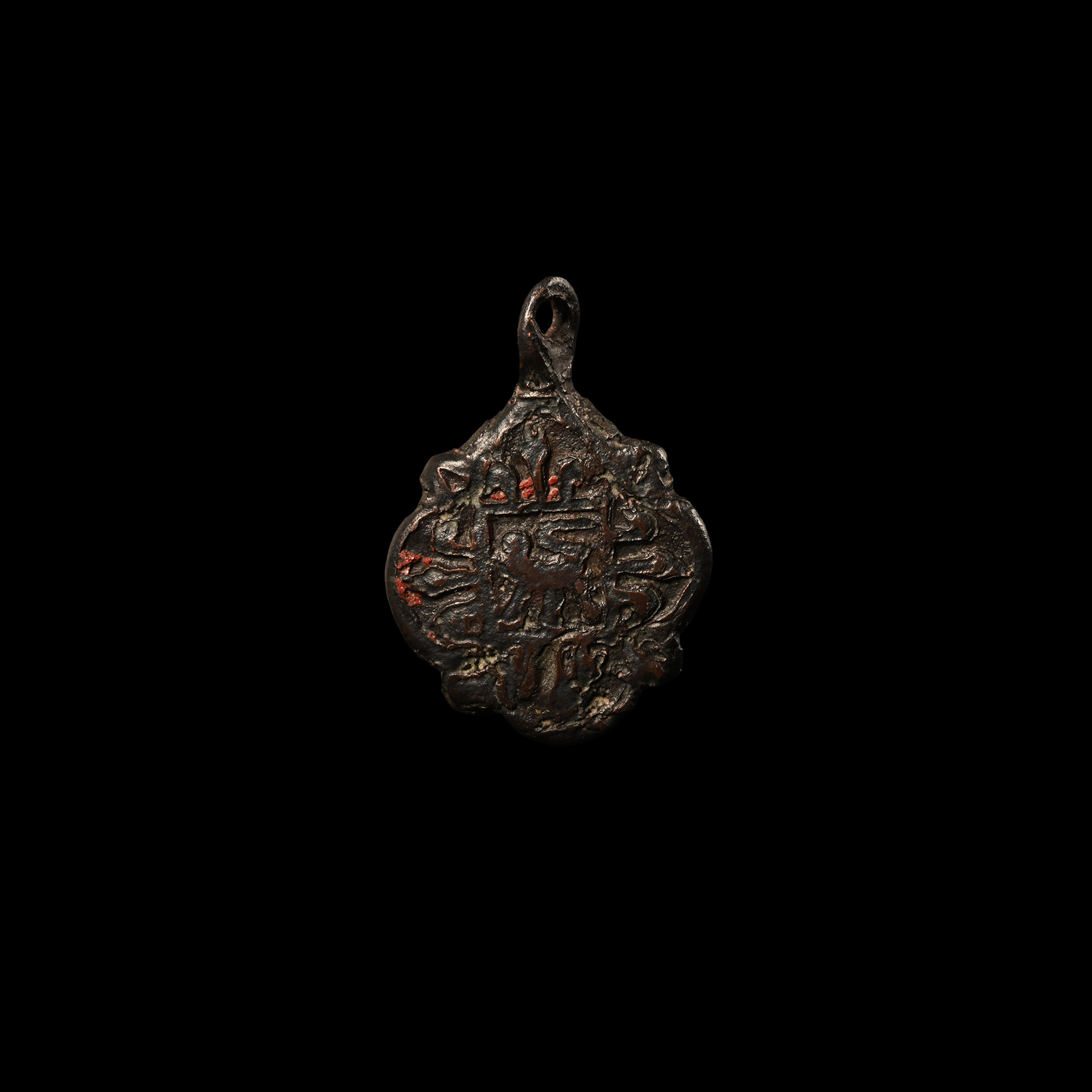
Medieval Knight's Heraldic Horse Harness Pendant
14TH-15TH CENTURY A.D.
1 in. (4.41 grams, 28 mm).
Quatrefoil-type with interstitial lobes, central square panel with lion rampant.
ProvenanceFound Romney Marsh area, 2023.
Property of a Kent gentleman.
Cf. Ashley, S., Medieval Armorial Horse Furniture in Norfolk, East Anglian Archaeology 101, Dereham, 2002, item 209.
CONDITIONTimeLine Auctions follows a vetting process to ensure the authenticity and legality of all items, reinforcing our commitment to integrity and responsible trading. Each antiquity, antique, and coin lot undergoes thorough examination by a vetting committee of at least ten external specialists, professional trade association members, scientists, and archaeologists: Our Vetting Process
AUCTIONS:
TimeLine is a leading auction house specialising in antiquities, ancient art, collectables, natural history, coins, medals, and books. Our auctions offer museums, collectors, historians, and enthusiasts the opportunity to acquire unique and historically significant pieces.
-
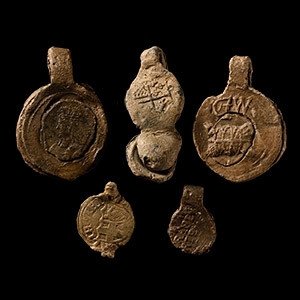
Medieval Lead Bag and Tax Seal Group
14th century A.D. and laterSold for (Inc. bp): £26
One bearing the bust of a crowned monarch; one with GW over a madder-bag, showing that he was a dyer; one with partial legend within beaded border to one face and coat of arms to the other; one with partial legend 'THE [COMMON WEA]LTH' and arms of the Commonwealth (1649- 1660); one bearing a cloth-worker's privy mark. 35.5 grams total, 18-32 mm
Acquired on the UK market, 1990s. Property of a retired academic.
Elton explains (p.269) that though similar in shape to a wool-sack, the madder-bag 'has a series of criss-crossing lines representing the cordage holding its contents in place during the vigorous dyeing process'. -
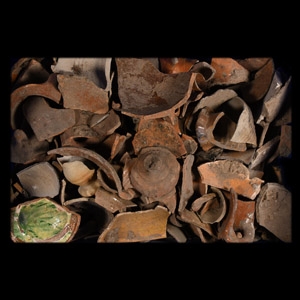
Medieval and Later Dutch Pottery Pit Dug Fragment Group
Circa 15th-17th century A.D.Sold for (Inc. bp): £7
Most glazed and from various vessel types, including examples with decoration. 15.5 kg total, 2-15 cm
Acquired 1990s-early 2000s. East Anglian private collection. -
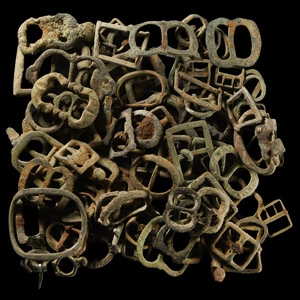
Medieval and Later Bronze Buckle Collection
Circa 12th-20th century A.D.Sold for (Inc. bp): £39
Comprising a variety of types and sizes from various time periods; including decoratively shaped examples. 316 grams total, 11-42 mm
Found Berkshire, UK.
