
Loading, please wait...
LOT 1861
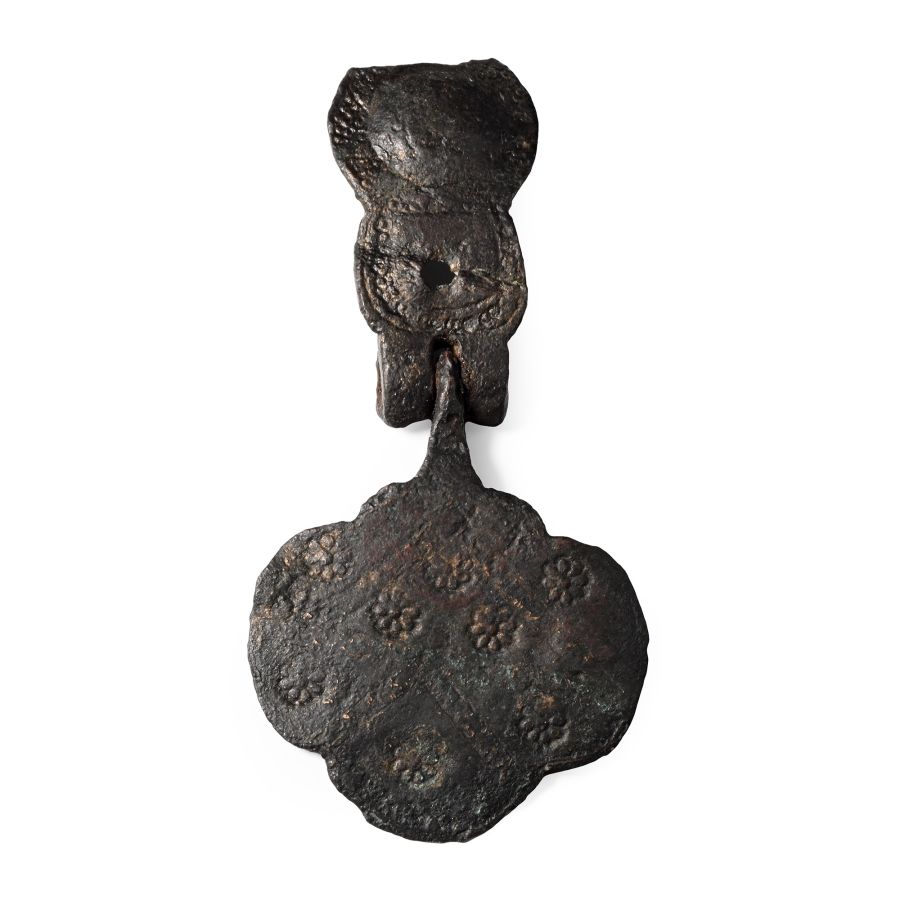
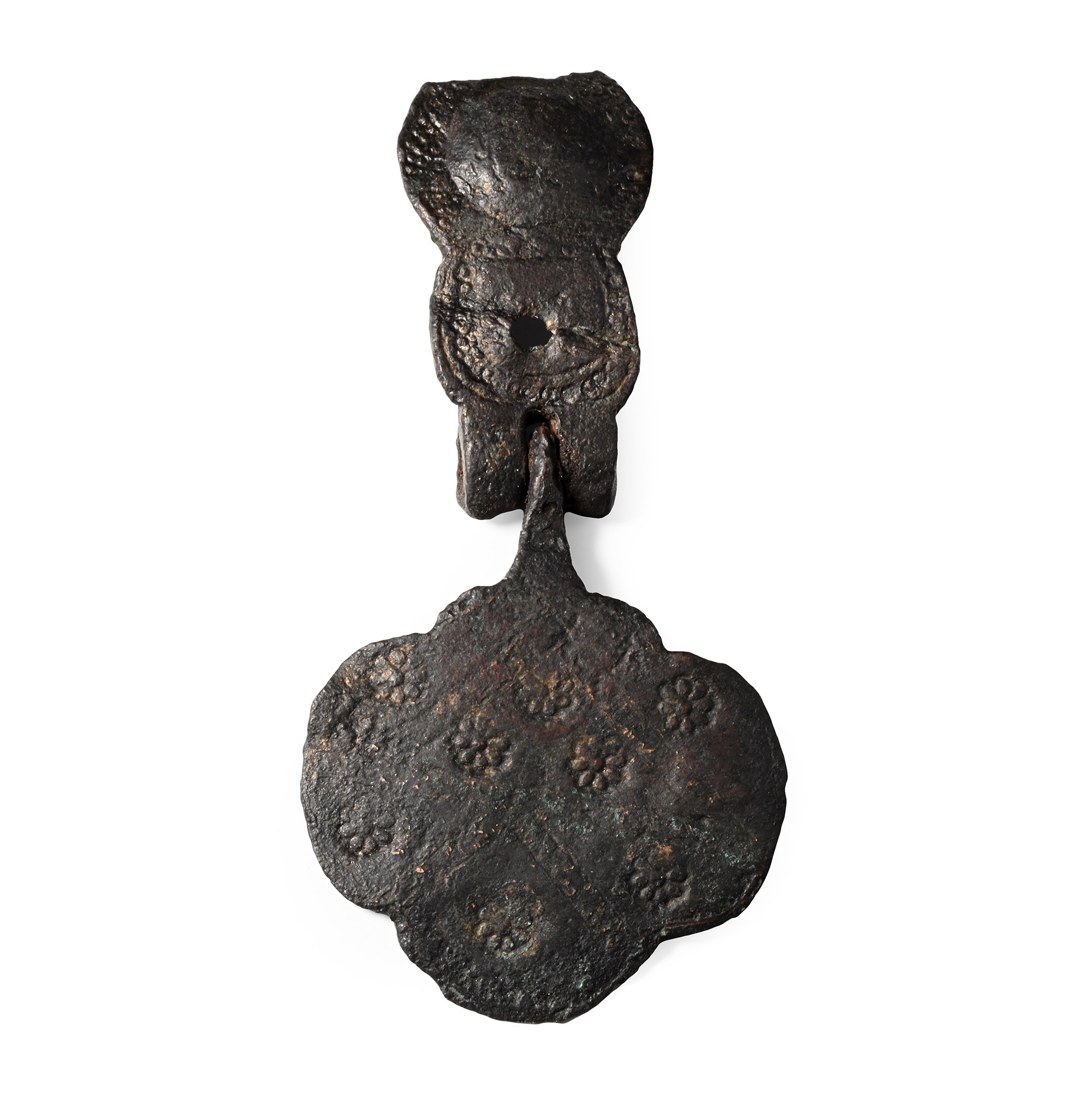
Medieval Knight's Heraldic Horse Harness Pendant with Hanger
13TH-15TH CENTURY A.D.
3 3/8 in. (16.4 grams, 87 mm).
Comprising: suspension strap formed as two roundels with stamped pellet clusters and returned end holding the bar of a hinge securing the pendant, a quatrefoil type with its surface divided by bilinear bars into triangular zones, with a stamped rosette in each angle. [No Reserve]
ProvenanceFrom a UK collection formed in the 1980s.
Property of an Essex, UK, gentleman.
TimeLine Auctions follows a vetting process to ensure the authenticity and legality of all items, reinforcing our commitment to integrity and responsible trading. Each antiquity, antique, and coin lot undergoes thorough examination by a vetting committee of at least ten external specialists, professional trade association members, scientists, and archaeologists: Our Vetting Process
AUCTIONS:
TimeLine is a leading auction house specialising in antiquities, ancient art, collectables, natural history, coins, medals, and books. Our auctions offer museums, collectors, historians, and enthusiasts the opportunity to acquire unique and historically significant pieces.
LOT 1861
Medieval Knight's Heraldic Horse Harness Pendant with Hanger
Sold for (Inc. bp): £26
-
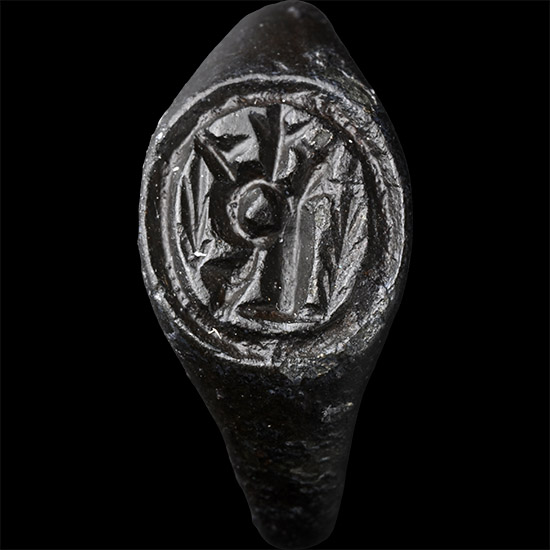
Medieval Bronze Ring with Crowned R
England, 15th-16th century A.D.Sold for (Inc. bp): £98
With D-section hoop and ellipsoid plaque; incuse motif of capital 'R' and crown above; supplied with an impression. 8.10 grams, 26.03 mm overall, 20.48 mm internal diameter (approximate size British V, USA 10 1/2, Europe 23.77, Japan 22)
Found Melchbourne, Bedfordshire, UK. Recorded with UKDFD no.34344.
The 'crowned R' motif appears on pilgrim badges in the 14th century, where it is often assumed to refer to King Edward the Confessor, or possibly Regina coeli 'Mary, Queen of Heaven'. -
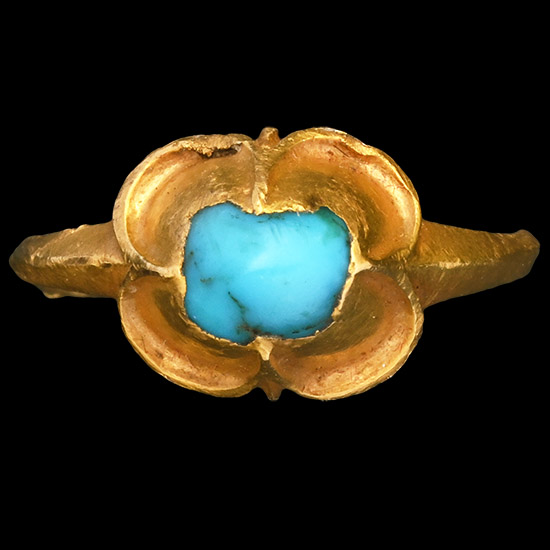
Medieval Gold Ring with Turquoise
1200-1500 A.D.Sold for (Inc. bp): £3,120
Comprising a slender hoop with a high pie-crust bezel with a cabochon turquoise within a rub-over setting. 3.46 grams, 22.77 mm overall, 16.01 mm internal diameter (approximate size British J, USA 4 3/4, Europe 8.69, Japan 8)
Acquired on the European art market. This lot has been checked against the Interpol Database of stolen works of art and is accompanied by search certificate number no.13328-257948.
This form of decorative ring with central stone setting is relatively common in the medieval period, when a focus on gemstones over metalwork became increasingly common. Several rings of this type are known and appear to have been popular in the 15th century. -
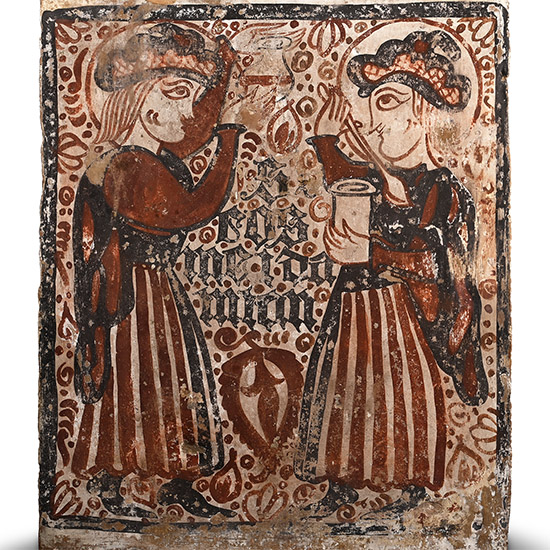
Spanish Medieval Socarrat Wall Tile Showing Saints Cosmas and Damian
Late 15th century A.D. or laterSold for (Inc. bp): £4,420
Showing two opposing surgeon saints, Cosmas and Damian, holding their medical attributes and shown nimbate, dressed in contemporary garments, with an inscription naming them at the centre, the background with densely arranged decorative motifs. 8.25 kg, 43 cm
Private collection, Spain. Private collection, London, UK.
Cosmas and Damian were two Arab physicians who were martyred in Syria during the persecutions under Emperor Diocletian.
