
Loading, please wait...
LOT 1879
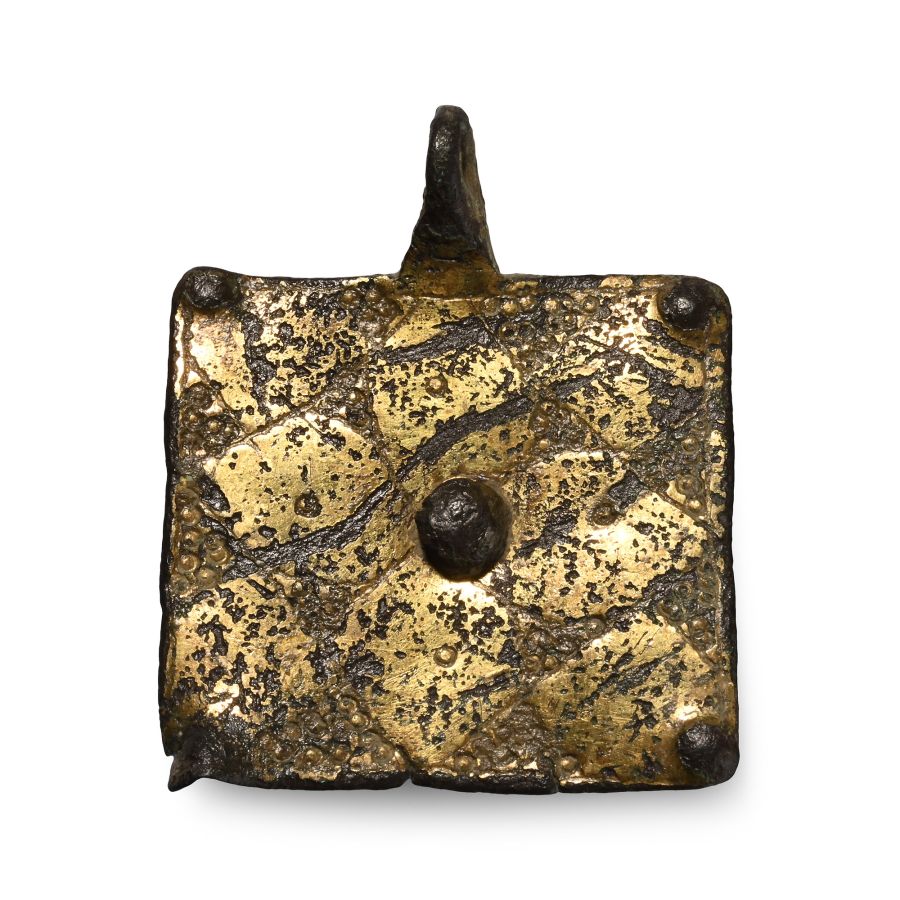
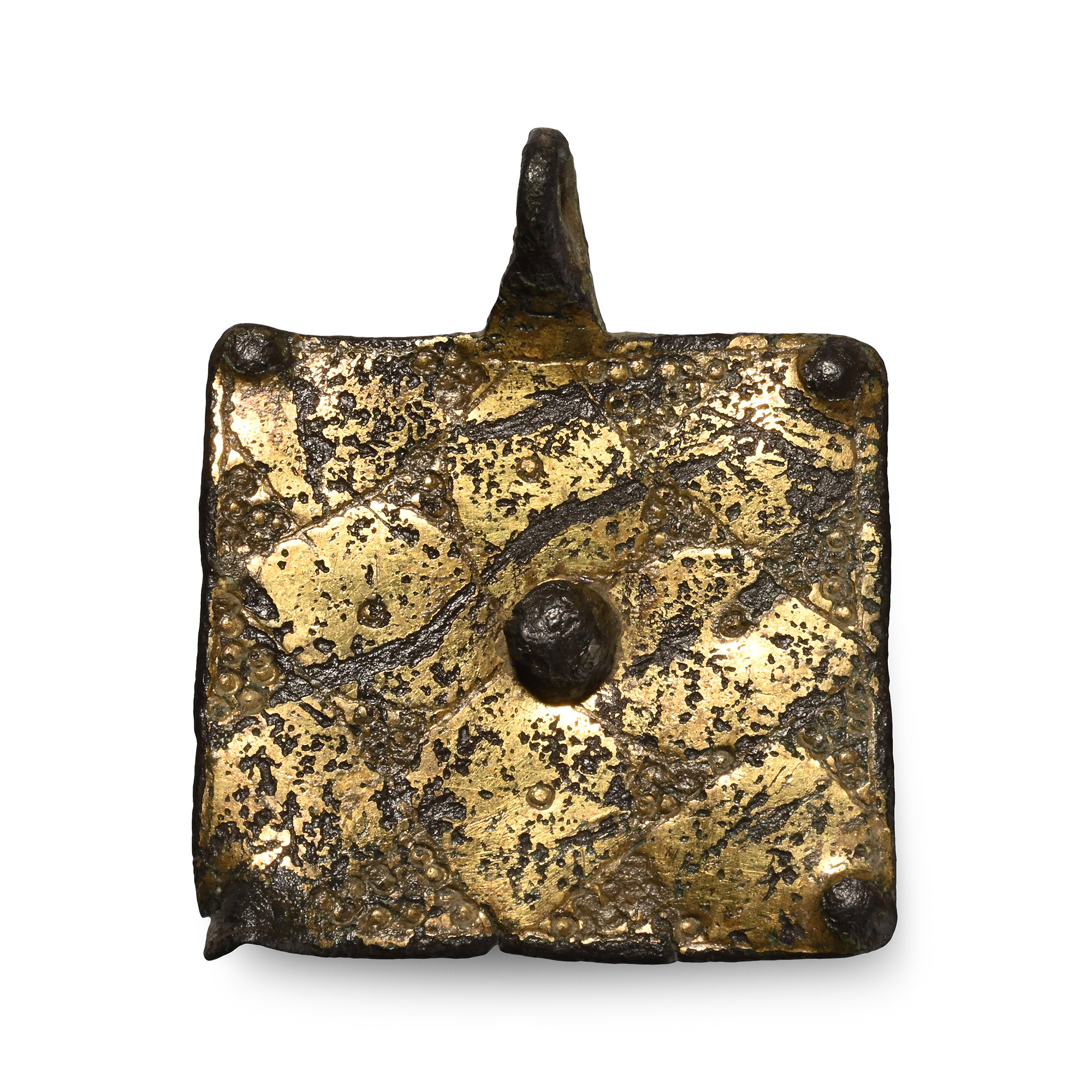
Medieval Knight's Gilt Bronze Heraldic Horse Harness Pendant
14TH-15TH CENTURY A.D.
1 1/2 in. (8.47 grams, 38 mm).
Rectangular with raised pellet in each corner and at the centre, gilded on obverse with suspension loop. [No Reserve]
ProvenanceFrom the private collection of the late Graham Slater (1927-2024), Cambridge, UK, acquired 1980s-1990s.
CONDITIONTimeLine Auctions follows a vetting process to ensure the authenticity and legality of all items, reinforcing our commitment to integrity and responsible trading. Each antiquity, antique, and coin lot undergoes thorough examination by a vetting committee of at least ten external specialists, professional trade association members, scientists, and archaeologists: Our Vetting Process
AUCTIONS:
TimeLine is a leading auction house specialising in antiquities, ancient art, collectables, natural history, coins, medals, and books. Our auctions offer museums, collectors, historians, and enthusiasts the opportunity to acquire unique and historically significant pieces.
LOT 1879
Medieval Knight's Gilt Bronze Heraldic Horse Harness Pendant
Sold for (Inc. bp): £39
-
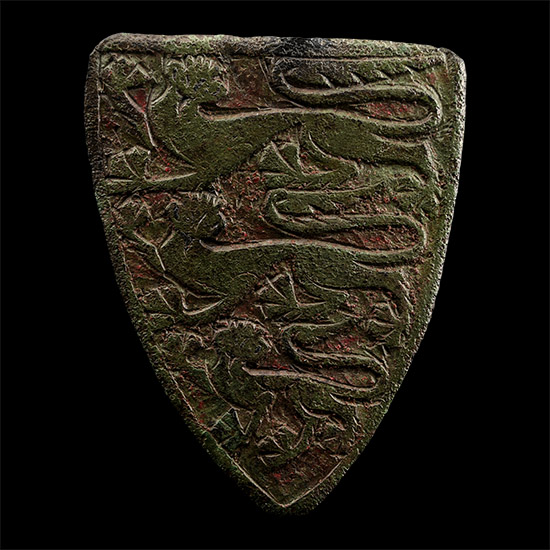
Large Medieval Knight's Bronze Royal Heraldic Horse Harness Mount
13th-15th century A.D.Sold for (Inc. bp): £2,340
Heater-shaped with low relief of three lions passant guardant. 34.6 grams, 70 mm
From the private collection of the late Graham Slater (1927-2024), Cambridge, UK, acquired 1980s-1990s. -
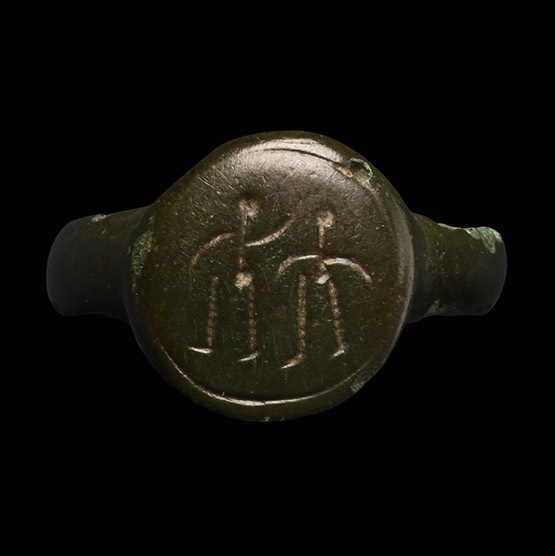
Eastern European Medieval Bronze Ring with Stylised Figures
11th-12th century A.D.Sold for (Inc. bp): £52
Comprising a D-section hoop and a discoid bezel with two stylised figures, one with a raised arm. 7.25 grams, 24.66 mm overall, 19.51 mm internal diameter (approximate size British R 1/2, USA 8 3/4, Europe 19.38, Japan 18)
Acquired on the UK and EU art market before 2000. From the private collection of a Surrey, UK, gentleman.
In these rings, a circular bezel with a stylised decoration of warriors is soldered onto a thin ribbon-shaped link, which is flat on the inside. The bezel of these rings was decorated with stylised images, very often military saints, who were asked for protection and blessing. -
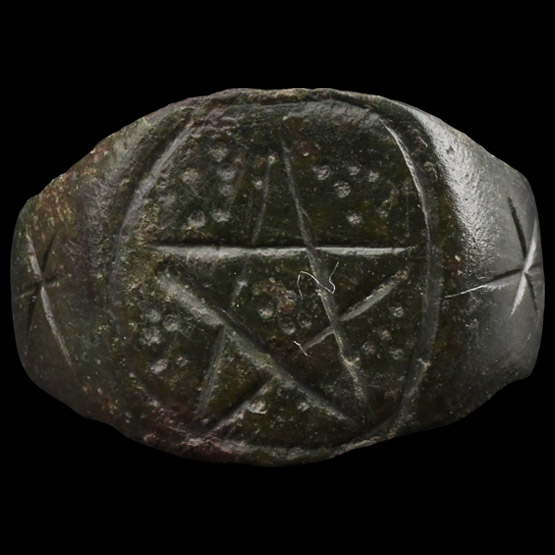
Medieval Bronze Ring with Pentagram
14th-16th century A.D.Sold for (Inc. bp): £91
Discoid bezel with incised pentagram motif on a pounced field. 5.19 grams, 22.10 mm overall, 19.65 mm internal diameter (approximate size British Q 1/2, USA 8 1/4, Europe 18.12, Japan 17)
Ex German art market, 2000s. Acquired from an EU collector living in London. From the collection of a Surrey, UK, gentleman.
