
Loading, please wait...
LOT 0384
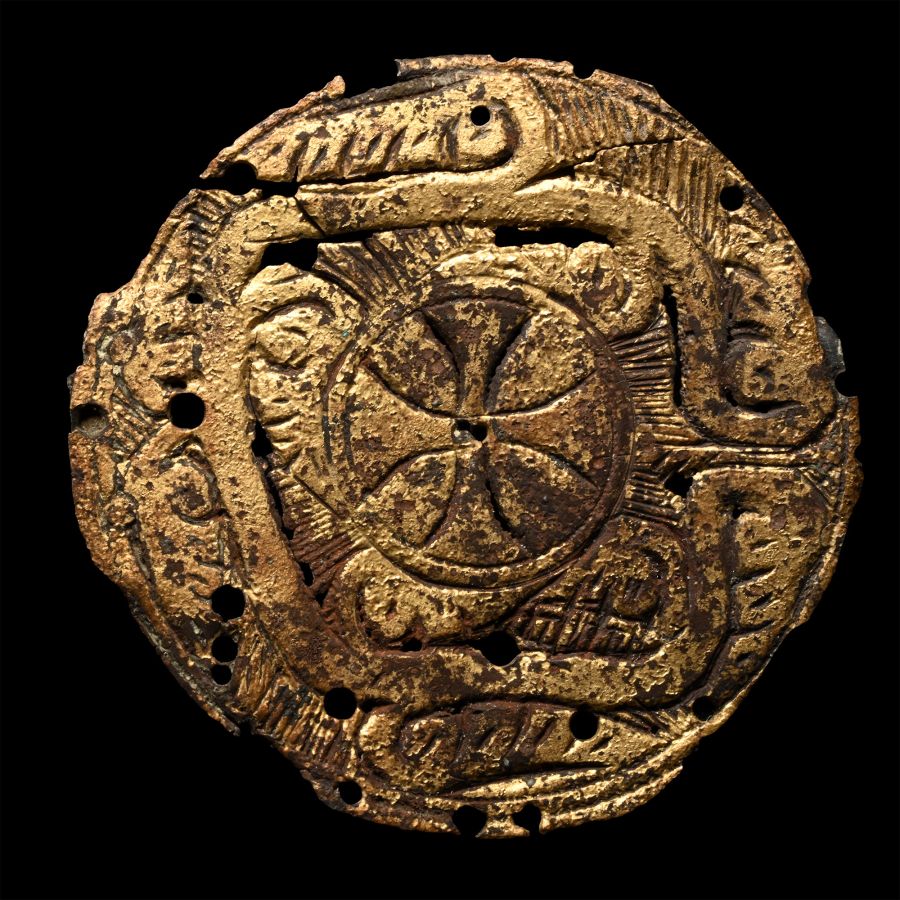
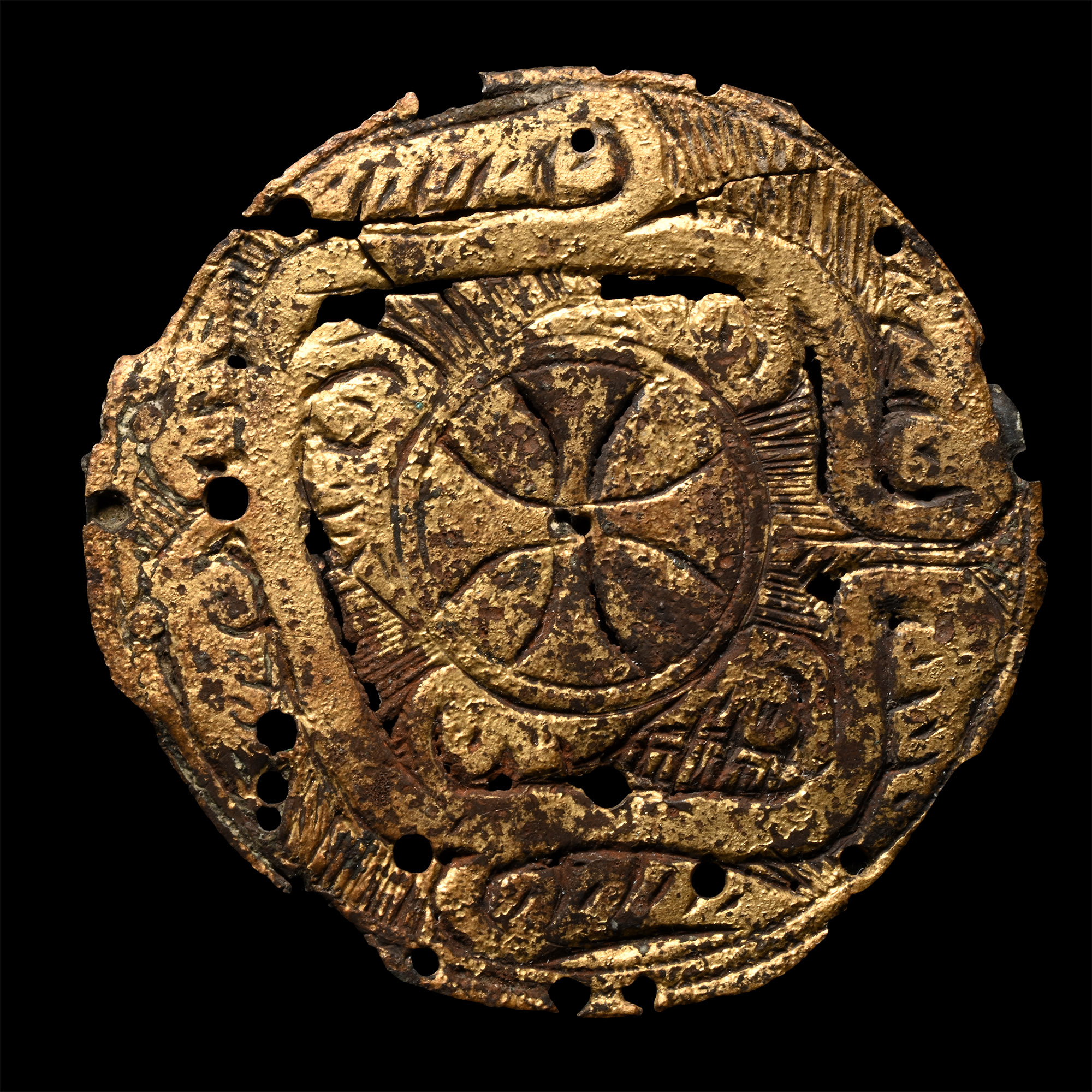
Medieval Knight's Gilt Bronze Heraldic Badge with Templar's Cross
14TH-16TH CENTURY A.D.
2 in. (7.61 grams, 52.59 mm).
Discoid in plan with openwork design of scrolled bands and hatched panels, central cross pattee; reinforcing strip to reverse. [No Reserve]
ProvenanceFrom the private collection of a European gentleman (1942-2024), formed since the 1970s.
CONDITIONTimeLine Auctions follows a vetting process to ensure the authenticity and legality of all items, reinforcing our commitment to integrity and responsible trading. Each antiquity, antique, and coin lot undergoes thorough examination by a vetting committee of at least ten external specialists, professional trade association members, scientists, and archaeologists: Our Vetting Process
AUCTIONS:
TimeLine is a leading auction house specialising in antiquities, ancient art, collectables, natural history, coins, medals, and books. Our auctions offer museums, collectors, historians, and enthusiasts the opportunity to acquire unique and historically significant pieces.
LOT 0384
Medieval Knight's Gilt Bronze Heraldic Badge with Templar's Cross
Sold for (Inc. bp): £572
-
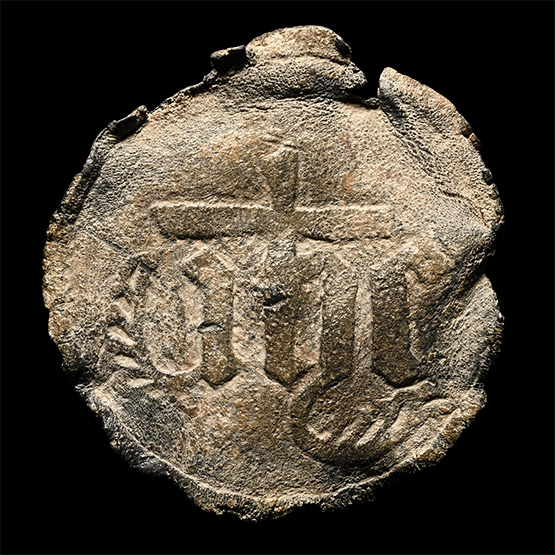
Medieval Pewter Pilgrim's Mount with Christogram
14th-15th century A.D.Sold for (Inc. bp): £33
Discoid mount with central cross forming part of the 'IHC' monogram. 23.7 grams, 48 mm
From a retired Lincolnshire, UK, gentleman's collection, a long time member of the Pewter Society. -
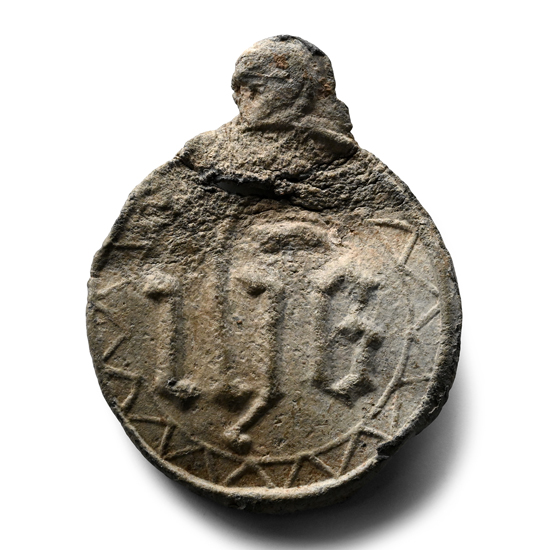
Medieval Lead Pilgrim's Pendant of Saint Margaret Slaying the Dragon
14th-15th century A.D.Sold for (Inc. bp): £46
Low-relief discoid pendant, on the obverse St. Margaret triumphant over a dragon slain with a cross piercing its mouth; on the reverse: 'IHS' Christogram. 8.43 grams, 34 mm
From a retired Lincolnshire, UK, gentleman's collection, a long time member of the Pewter Society.
The cult of St Margaret was celebrated at King's Lynn, Norfolk, as part of the pilgrim route to Walsingham. -
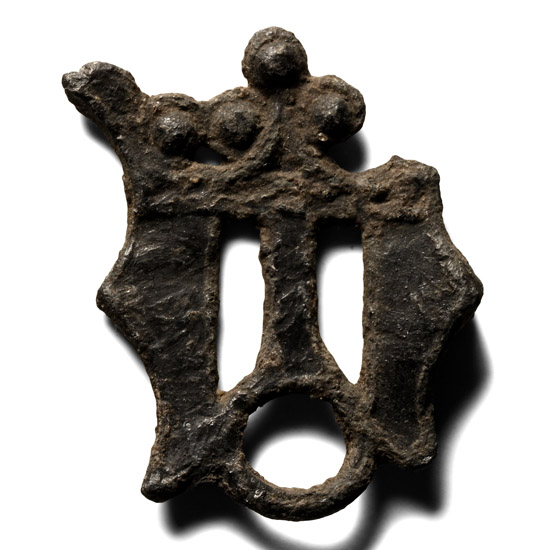
Medieval Pewter Pilgrim's Badge with 'M' for Maria
Circa 14th-15th century A.D.Sold for (Inc. bp): £13
Openwork capital 'M' with trefoil finials above forming a crown, ring at the base. 0.76 grams, 18 mm
From a retired Lincolnshire, UK, gentleman's collection, a long time member of the Pewter Society.
