
Loading, please wait...
LOT 1599
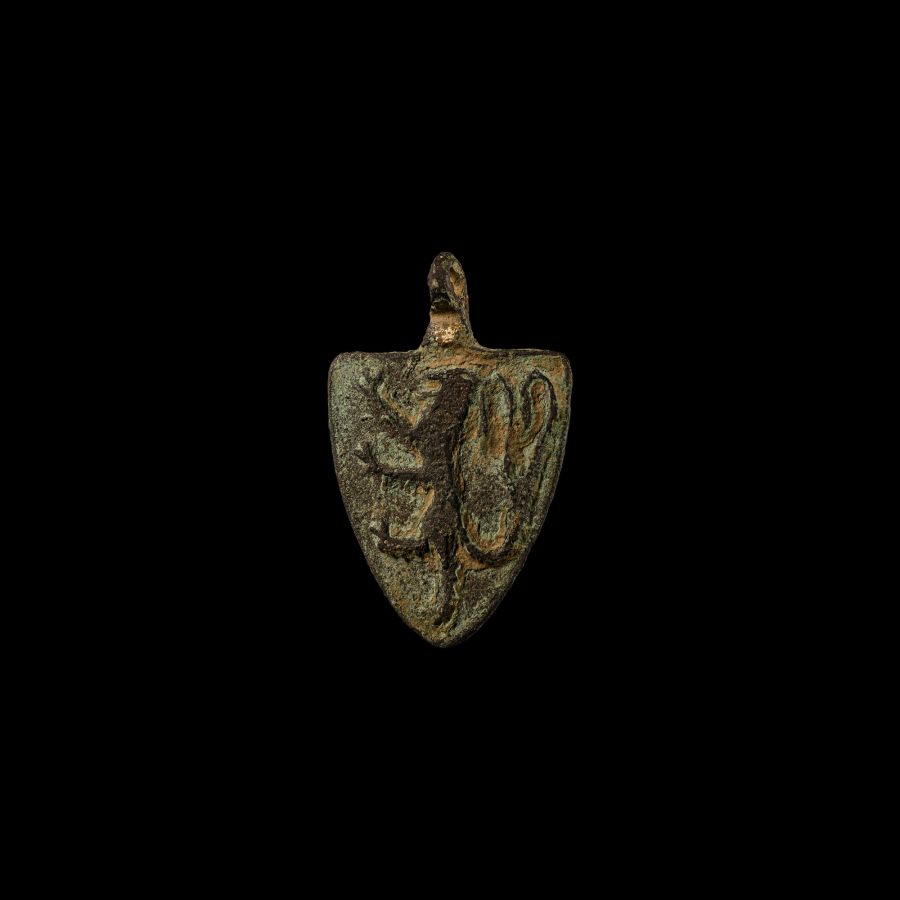
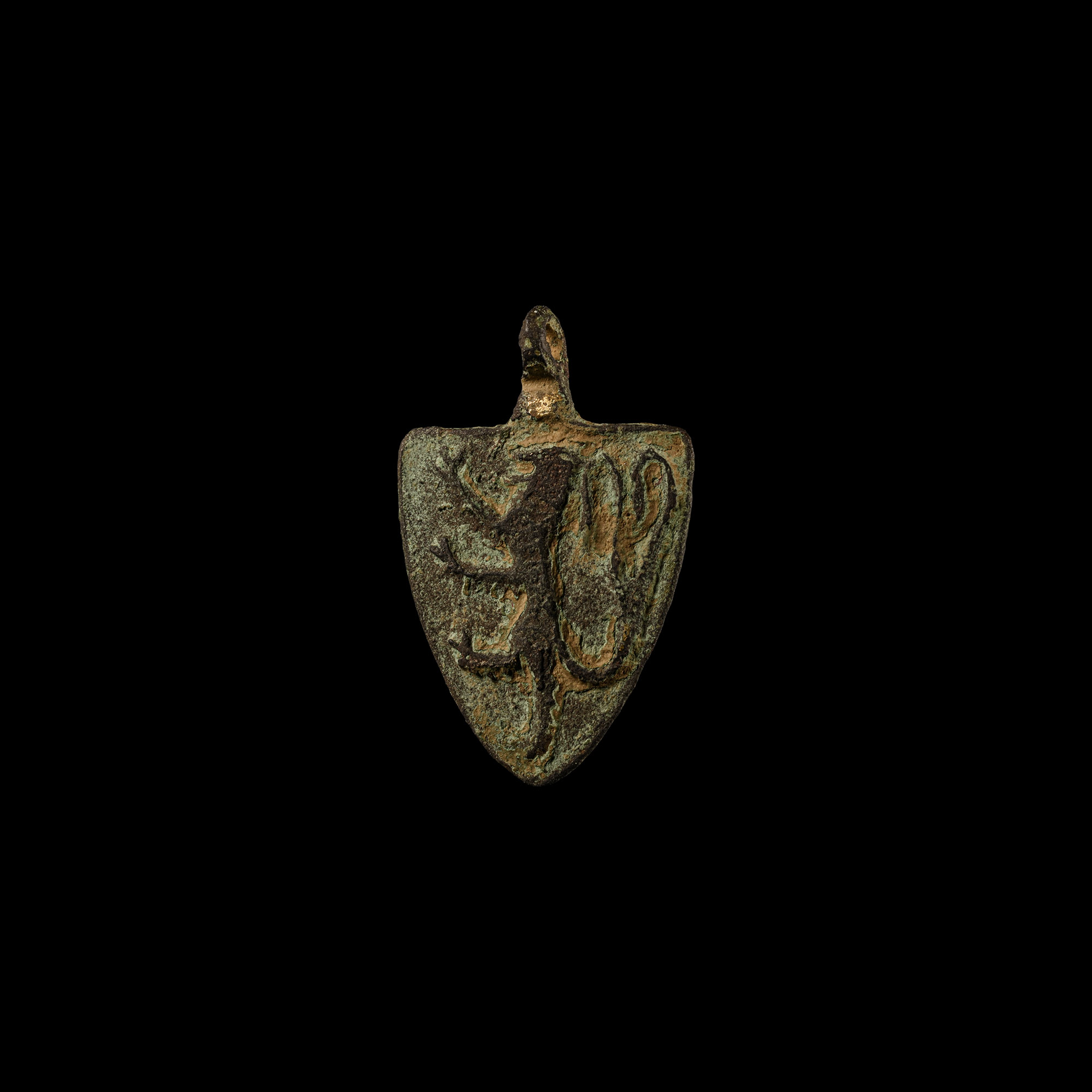
Medieval Knight's Gilt Bronze 'Havering Family' Heraldic Horse Harness Pendant
13TH-14TH CENTURY A.D.
1 3/8 in. (5.4 grams, 34 mm).
The heater-shield pendant with integral suspension loop and traces of gilding, bearing device of a 'lion rampant queue fourchy or' (a golden lion rampant with a doubled tail). [No Reserve]
ProvenanceFound near Fakenham, Norfolk, UK, circa 2000.
Property of a retired academic.
This device is associated with several families in the medieval period, including that of Havering (originating in Cornwall) and also with the Dukes of Limburg (of the house of Leuven, 1288-1406 AD), the family were also Dukes of Brabant and Lothier).
CONDITIONTimeLine Auctions follows a vetting process to ensure the authenticity and legality of all items, reinforcing our commitment to integrity and responsible trading. Each antiquity, antique, and coin lot undergoes thorough examination by a vetting committee of at least ten external specialists, professional trade association members, scientists, and archaeologists: Our Vetting Process
AUCTIONS:
TimeLine is a leading auction house specialising in antiquities, ancient art, collectables, natural history, coins, medals, and books. Our auctions offer museums, collectors, historians, and enthusiasts the opportunity to acquire unique and historically significant pieces.
LOT 1599
Medieval Knight's Gilt Bronze 'Havering Family' Heraldic Horse Harness Pendant
Sold for (Inc. bp): £104
-
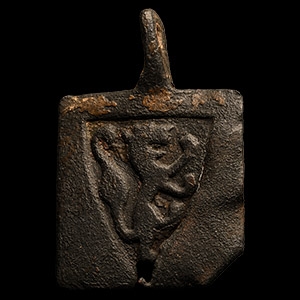
Medieval Knight's Bronze Heraldic Horse Harness Pendant
14th-15th century A.D.Sold for (Inc. bp): £111
Square with a suspension loop to the top edge; recessed heater-shield displaying a rampant lion facing right in relief. 11.05 grams, 45 mm
From the Sullivan family collection, UK; acquired since 2003. -
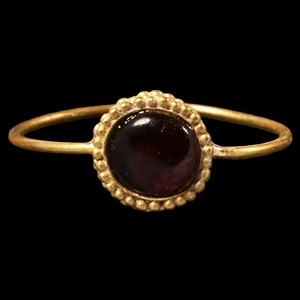
Medieval Gold Ring with Garnet
14th-16th century A.D.Sold for (Inc. bp): £208
With slender gold hoop, drum-shaped bezel with granulation to the outer face, inset garnet cabochon. 0.89 grams, 17.87 mm overall, 16.25 mm internal diameter (approximate size British I 1/2, USA 4 1/2, Europe 8.07, Japan 7)
From a late Japanese specialist collector, 1970-2000s. -
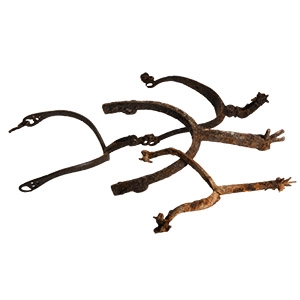
Medieval Iron Rowel Spur Collection
Circa 15th-16th century A.D.Estimate: £80 - 100 (+bp*)
Opening Bid: £40
Comprising examples of various types, including some retaining the rowel and fastening elements. 340 grams total, 11-19 cm
Acquired 1990s-early 2000s. East Anglian private collection.
These spurs belong to a type widespread in Western Europe with a six-pointed spur, often engraved, dating mostly between 1425 and 1450.
