
Loading, please wait...
LOT 0382
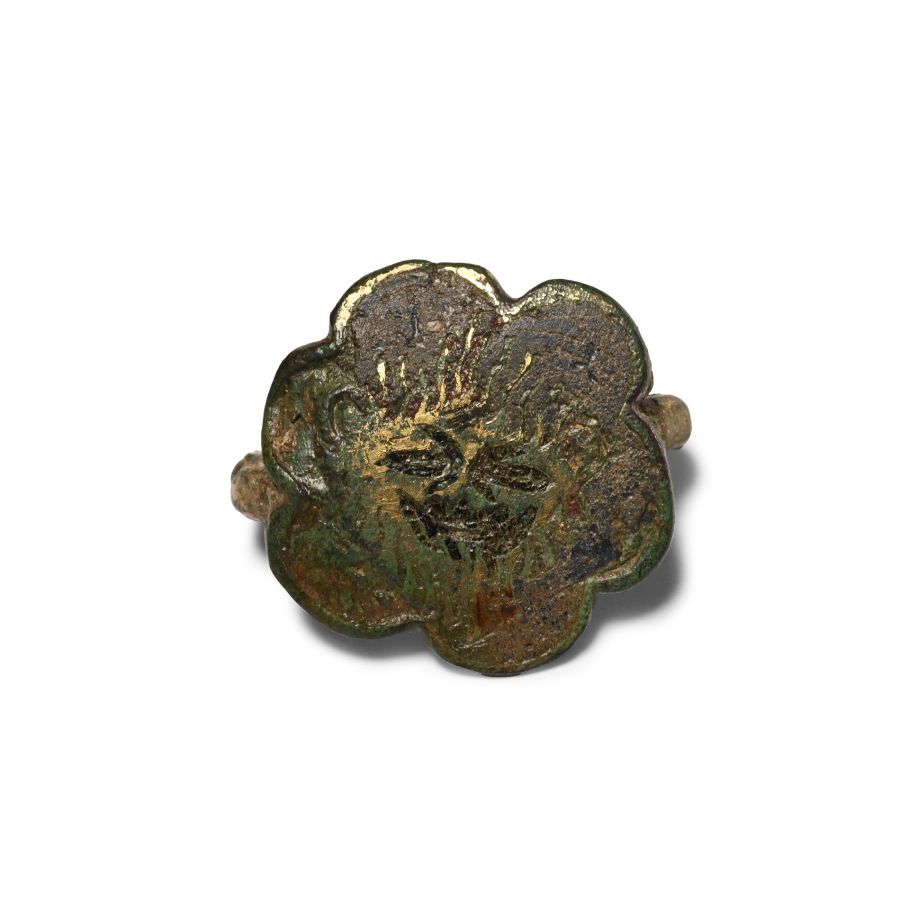
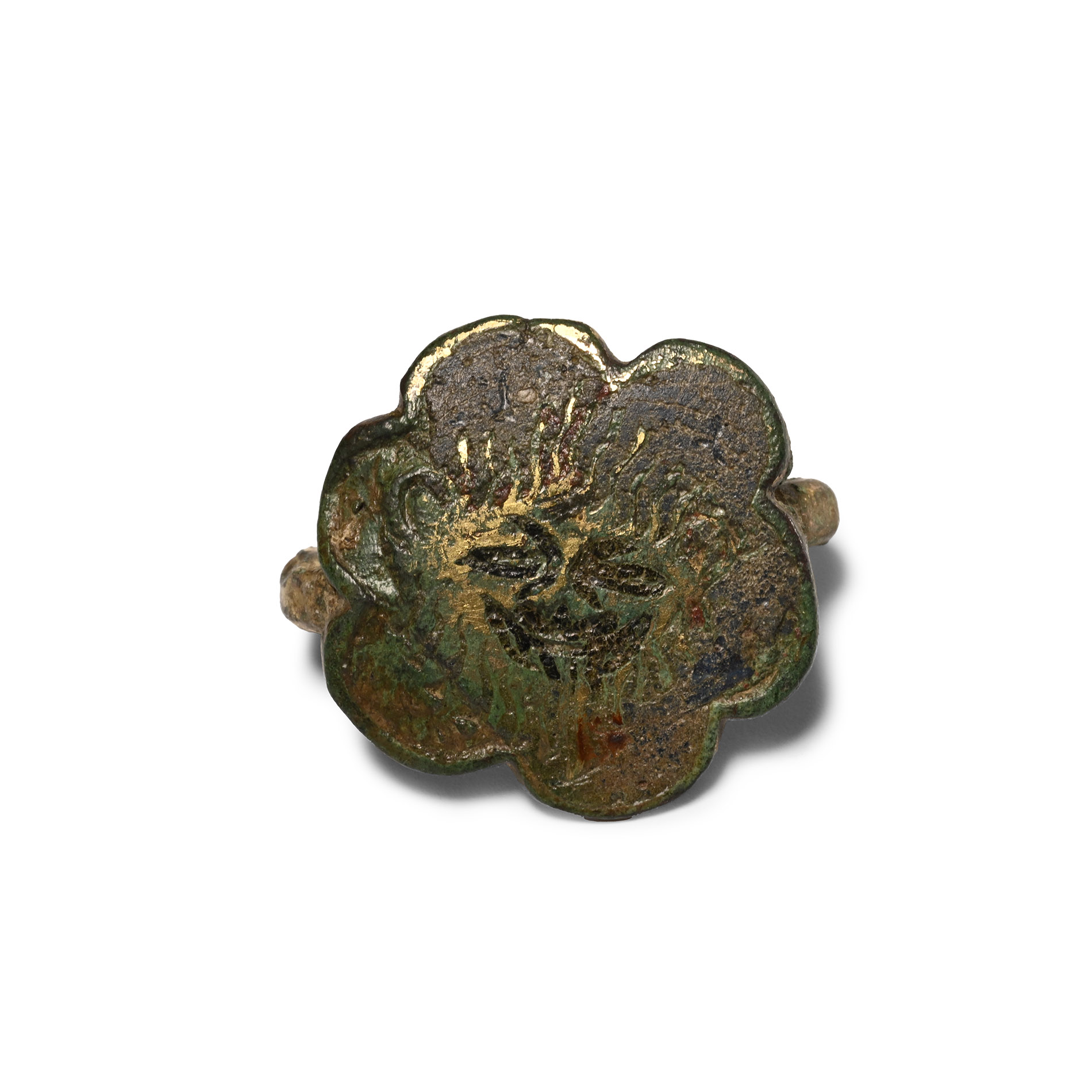
Medieval Knight's Gilt Bronze Enamelled Heraldic Horse Harness Belt Slide with Face
CIRCA 14TH-15TH CENTURY A.D.
1 1/8 in. (11.3 grams, 29 mm).
Gilt-bronze with hexafoil plaque, reserved grotesque grinning mask with beard.
ProvenanceFound Norfolk, Southern England.
Acquired on the UK art market in the 1980s.
From an East Anglian private collection.
TimeLine Auctions follows a vetting process to ensure the authenticity and legality of all items, reinforcing our commitment to integrity and responsible trading. Each antiquity, antique, and coin lot undergoes thorough examination by a vetting committee of at least ten external specialists, professional trade association members, scientists, and archaeologists: Our Vetting Process
AUCTIONS:
TimeLine is a leading auction house specialising in antiquities, ancient art, collectables, natural history, coins, medals, and books. Our auctions offer museums, collectors, historians, and enthusiasts the opportunity to acquire unique and historically significant pieces.
LOT 0382
Medieval Knight's Gilt Bronze Enamelled Heraldic Horse Harness Belt Slide with Face
Estimate £200 - 300€230 - 350 (for guidance only)$270 - 410 (for guidance only)
-
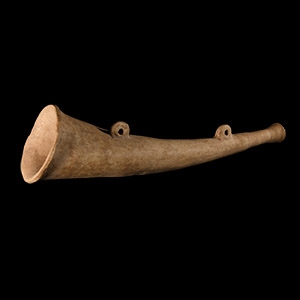
Medieval Terracotta Pilgrim's Horn
Circa 15th century A.D.Sold for (Inc. bp): £312
Formed with a slightly curved profile and with suspension loops; buff-coloured. 298 grams, 26.5 cm
Acquired 1990s-early 2000s. East Anglian private collection.
Apart from badges as souvenirs of visits to various saints’ shrines, pilgrims might also bear away with them various noise-making items such as horns, whistles, rattles and bells. The miniature horn-shaped lead whistles known from London and Salisbury bear various inscriptions including bla me [blow me] and ave maria. In the contemporary ‘morality’ play Mankind (c.1465-70) of East Anglian provenance, the character Nought says I kan pype in a Walsyngham wystyll, which suggests that such souvenir whistles were available from the shrine of Our Lady of Walsingham too, and that already such ‘tourist’ trinkets were regarded as a proverbial type of worthlessness, ‘not worth a whistle’, indeed. -
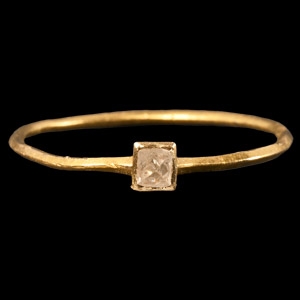
'The Fressingfield' Medieval Gold Ring with Diamond
Late 14th century A.D.Sold for (Inc. bp): £2,860
With plain circular hoop and square diamond-shaped bezel with replicant natural diamond crystal. 0.77 grams, 22.70 mm overall, 17.24 mm internal diameter (approximate size British N 1/2, USA 6 3/4, Europe 14.35, Japan 13)
Found whilst searching with a metal detector near Fressingfield, Suffolk, UK, in September 2020 by David Steadman. Accompanied by a copy of the British Museum's Portable Antiquities Scheme (PAS) report with reference no.SF-709FC0. Accompanied by a copy of the Treasure Report for H M Coroner with reference no.2020T788. Accompanied by a copy of a letter from the British Museum explaining that the Crown's interest in this find has been disclaimed. -
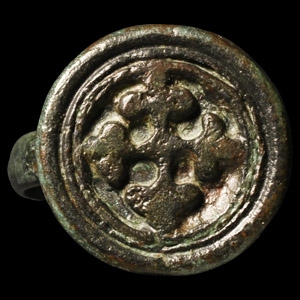
Medieval Bronze Ring with Cross Crosslet
Circa 12th-14th century A.D.Sold for (Inc. bp): £117
With a D-section hoop supporting a large circular bezel with raised rim, cross crosslet to the centre surrounded by concentric rings. 6.84 grams, 23.78 mm overall, 20.34 mm internal diameter (approximate size British T 1/2, USA 9 3/4, Europe 21.89, Japan 21)
From the collection of a High Wycombe, Buckinghamshire, UK, gentleman, circa 2000.
