
Loading, please wait...
LOT 1869
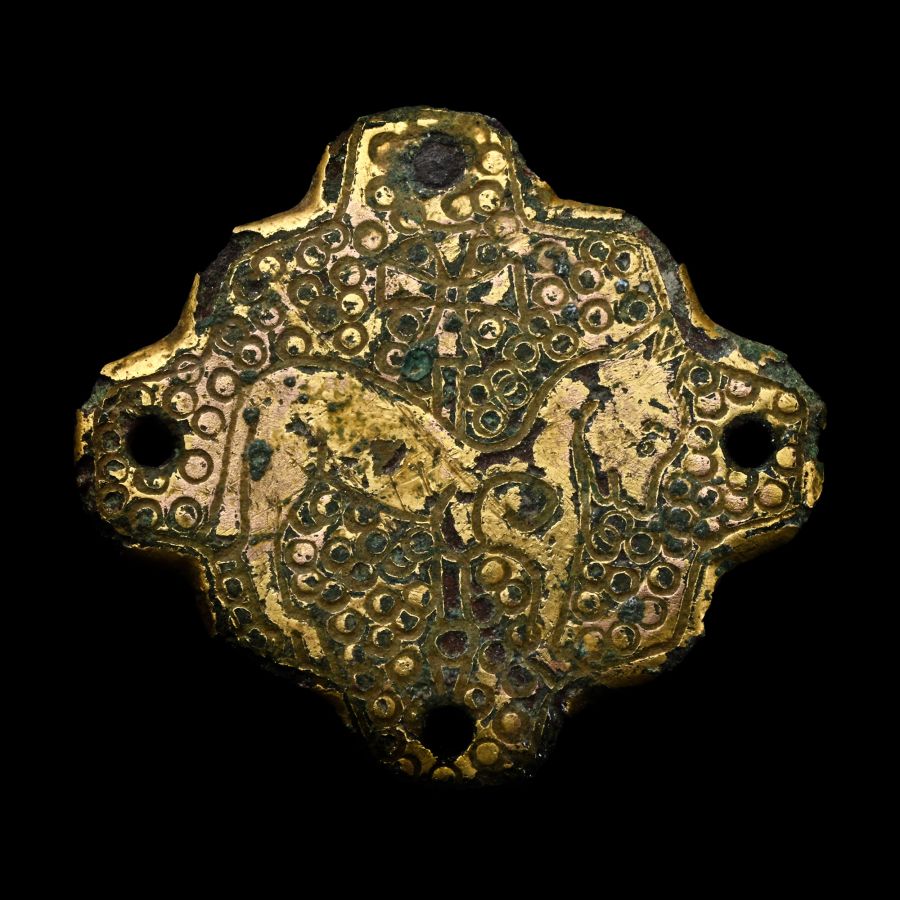
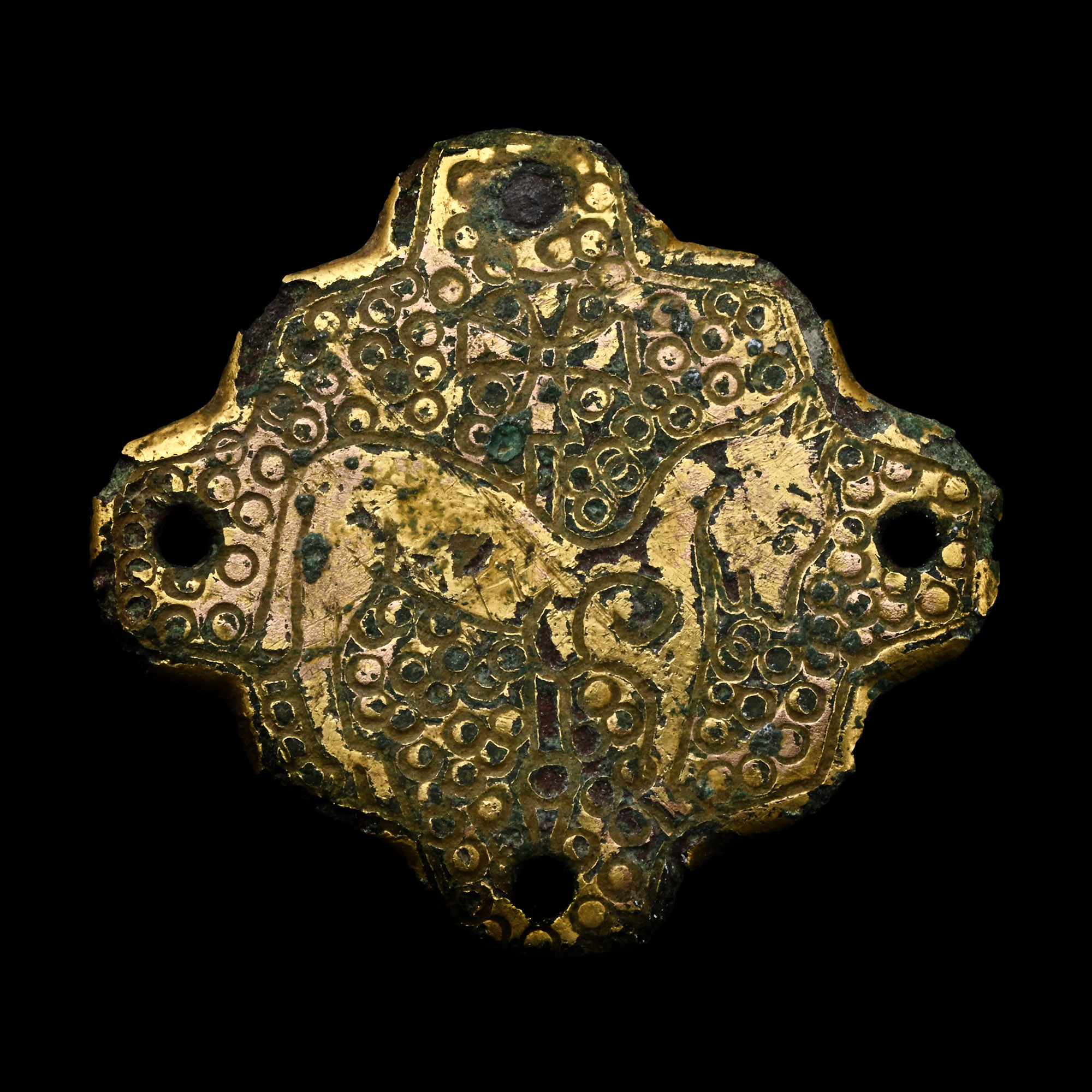
Medieval Knight's Gilt Bronze Agnus Dei Horse Harness Mount
CIRCA 1100 A.D.
1 5/8 in. (11.3 grams, 41 mm).
Octofoil mount with four attachment holes, agnus dei motif in profile reserved against a pounced field.
ProvenanceFound Shottesbrooke, Windsor and Maidenhead, UK.
Accompanied by a copy of the British Museum's Portable Antiquities Scheme (PAS) report no.SUR-D59AA0.
See the British Museum's Portable Antiquities Scheme (PAS) report no.SUR-D59AA0; see also, for a similar type PAS find ID 586271.
FootnotesThe image represents the Agnus Dei, a visual representation of Jesus as a lamb, which is more normally shown with a flag. The intensive use of punched annulets is often found on harness pendants of 12th-century date.
CONDITIONTimeLine Auctions follows a vetting process to ensure the authenticity and legality of all items, reinforcing our commitment to integrity and responsible trading. Each antiquity, antique, and coin lot undergoes thorough examination by a vetting committee of at least ten external specialists, professional trade association members, scientists, and archaeologists: Our Vetting Process
AUCTIONS:
TimeLine is a leading auction house specialising in antiquities, ancient art, collectables, natural history, coins, medals, and books. Our auctions offer museums, collectors, historians, and enthusiasts the opportunity to acquire unique and historically significant pieces.
LOT 1869
Medieval Knight's Gilt Bronze Agnus Dei Horse Harness Mount
Sold for (Inc. bp): £286
-
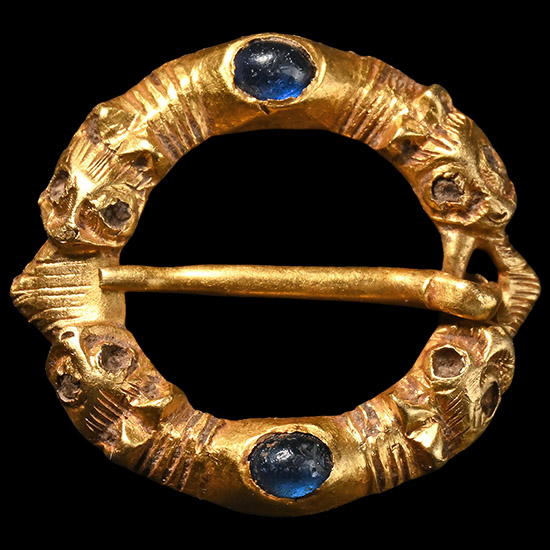
Medieval Gold Ring Brooch with Beast Heads
13th century A.D.Sold for (Inc. bp): £1,560
Annular brooch decorated with leopard heads, each originally with gem-set eyes, with two blue glass cabochons on each side of the pin. 1.18 grams, 14 mm
From the collection of Gordon Bailey, Essex, UK; formed since 1968.
An annular brooch is a type of brooch that is circular in shape, forming a complete ring. They were worn by both men and women of all social classes. The word 'annular' comes from the Latin word 'annulus', meaning ring. These brooches were popular in medieval Europe, particularly from the 13th to 15th centuries, and were used to fasten clothing such as tunics and cloaks. -
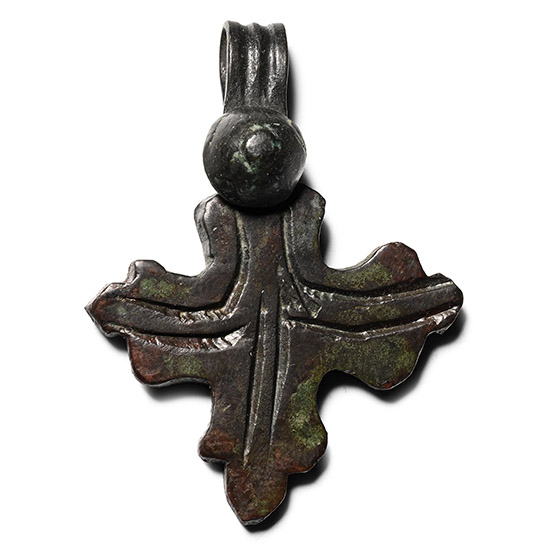
Medieval Bronze Cross Pendant
Eastern Europe, circa 14th century A.D.Sold for (Inc. bp): £39
The cross with deeply incised linear decoration on both sides and an applied ribbed suspension loop with a domed rivet. 15.4 grams, 46 mm
Ex German art market, 2000s. Acquired from an EU collector living in London. From the collection of a Surrey, UK, gentleman. -
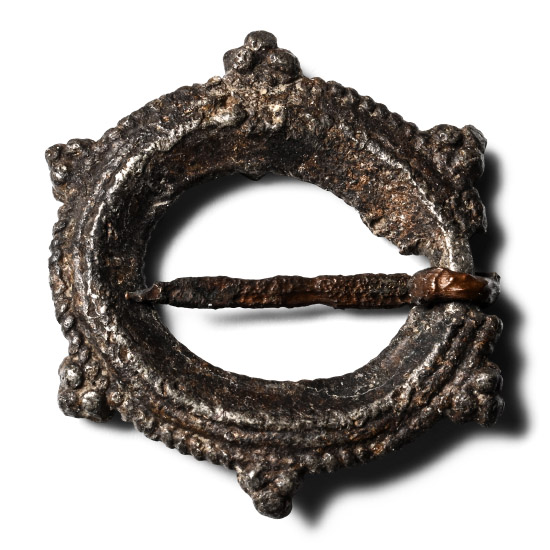
Medieval Pewter Ring Brooch
Circa 14th century A.D.Sold for (Inc. bp): £20
Annular brooch with fine ropework pattern and six projecting granulated pyramids on the outer edge, articulated pin. 2.32 grams, 19 mm
From the private collection of Graham Slater (1927-2024), Cambridge, UK; formed 1980s-1990s. Accompanied by a previous dealer's sales ticket.
