
Loading, please wait...
LOT 1849
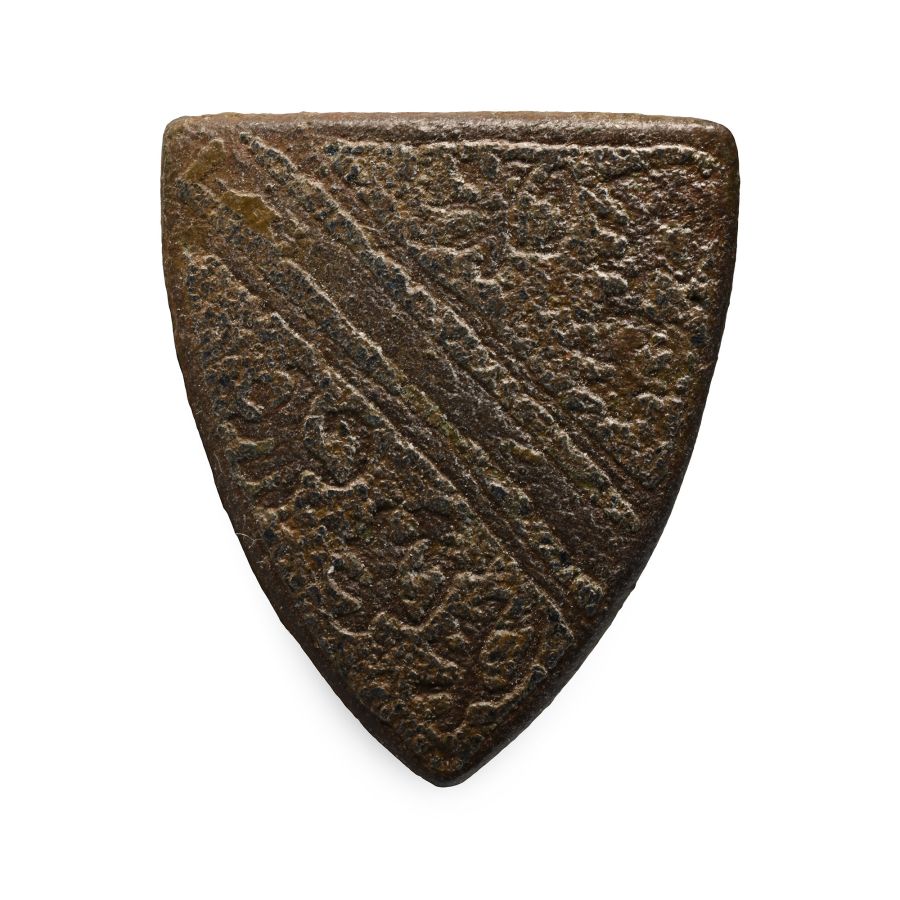
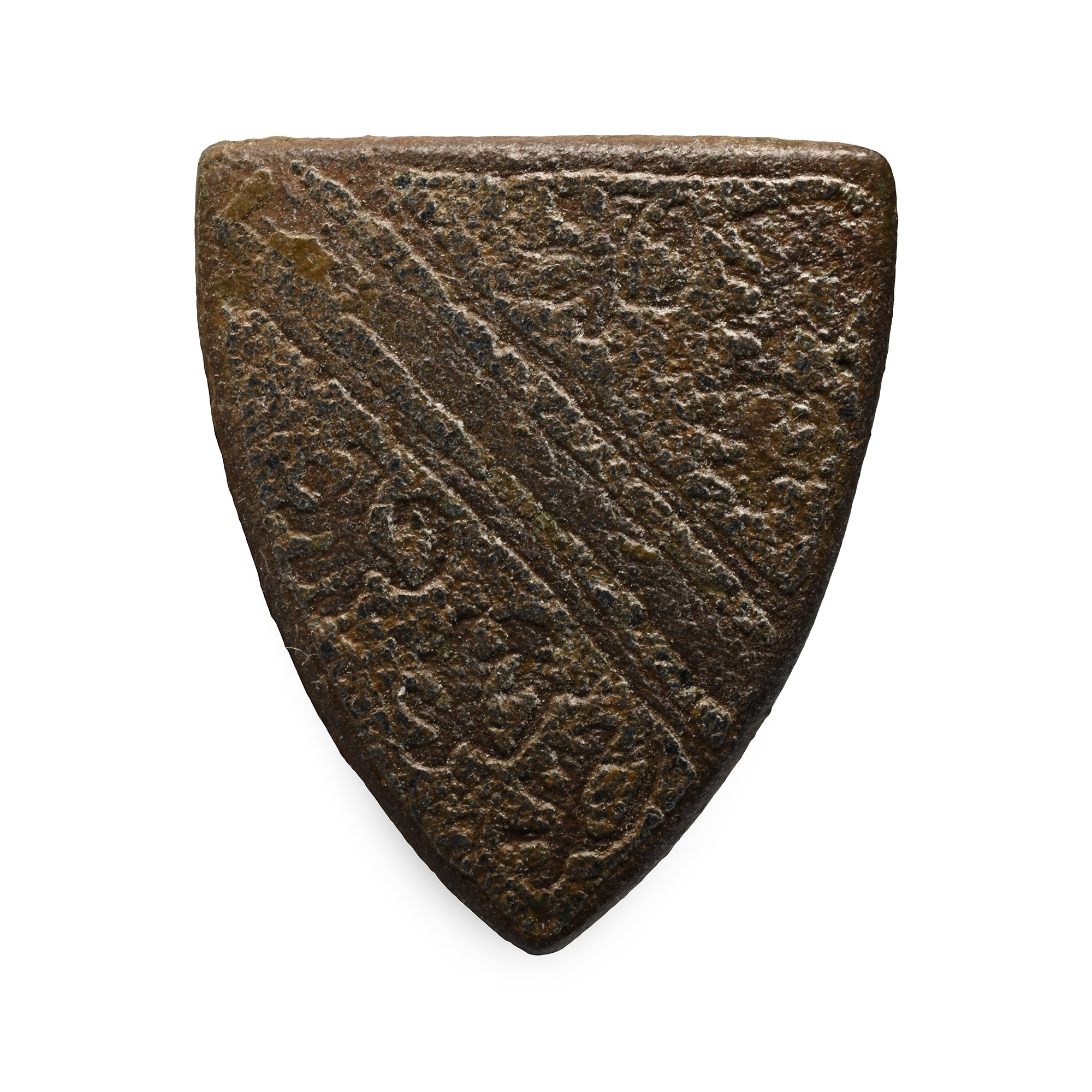
Medieval Knight's Enamelled Bronze Heraldic 'De Bohun, Earls of Hereford' Horse Harness Stud
CIRCA 14TH CENTURY A.D.
1 1/4 in. (16.8 grams, 31 mm).
Heater-shaped with fixing stud to reverse, heraldic design of two groups of three lions divided by two diagonal bands of blue enamel.
ProvenanceFound Shottesbrooke, Windsor and Maidenhead, UK.
Accompanied by a copy of the British Museum's Portable Antiquities Scheme (PAS) report no.SUR-D59AA0.
Cf. Ashley, S., Medieval Armorial Horse Furniture in Norfolk, East Anglian Archaeology 101, Dereham, 2002, no.80-81.
FootnotesThe arms are those of the Bohun family, Earls of Hereford.
CONDITIONTimeLine Auctions follows a vetting process to ensure the authenticity and legality of all items, reinforcing our commitment to integrity and responsible trading. Each antiquity, antique, and coin lot undergoes thorough examination by a vetting committee of at least ten external specialists, professional trade association members, scientists, and archaeologists: Our Vetting Process
AUCTIONS:
TimeLine is a leading auction house specialising in antiquities, ancient art, collectables, natural history, coins, medals, and books. Our auctions offer museums, collectors, historians, and enthusiasts the opportunity to acquire unique and historically significant pieces.
LOT 1849
Medieval Knight's Enamelled Bronze Heraldic 'De Bohun, Earls of Hereford' Horse Harness Stud
Sold for (Inc. bp): £351
-
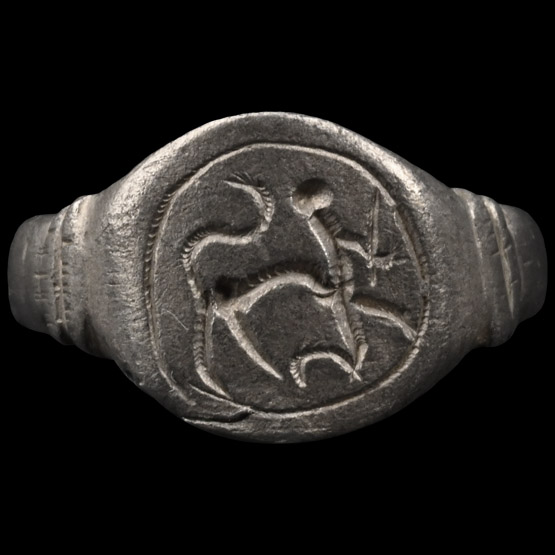
Medieval Silver Ring with Centaur
11th-15th century A.D.Sold for (Inc. bp): £208
Having a D-section hoop and discoid bezel with an incuse image of a walking centaur holding a sword. 3.26 grams, 22.16 mm overall, 18.07 mm internal diameter (approximate size British P 1/2, USA 7 3/4, Europe 16.86, Japan 16)
Acquired on the UK and EU art market before 2000. From the private collection of a Surrey, UK, gentleman.
A similar ring with a silver sheet, hammered and notched decoration, was found in the Necropolis of Hoca, Vojvodina, and dated 11th-15th century A.D. The necropolis was related to Hungarian settlers. -
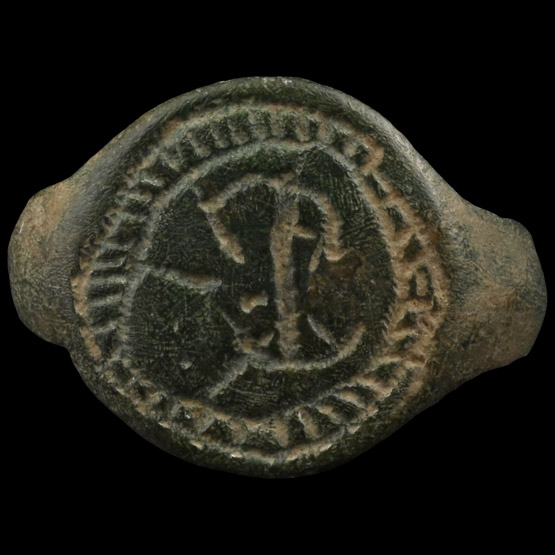
Eastern European Medieval Ring with Chrismon
14th century A.D.Sold for (Inc. bp): £39
Comprising a D-section hoop and a large discoid bezel with hatched border and geometric motifs, tracing a Christian symbol. 3.17 grams, 19.75 mm overall, 16.90 mm internal diameter (approximate size British K, USA 5 1/4, Europe 9.95, Japan 9)
Acquired on the UK and EU art market before 2000. From the private collection of a Surrey, UK, gentleman.
The ring, which gradually widens towards the shoulders, transitions into a slightly raised and circularly flattened bezel that seems to have been decorated with a roughly engraved Chrismon. This category of rings finds parallels in the Balkans and is dated 13th-14th century A.D. -
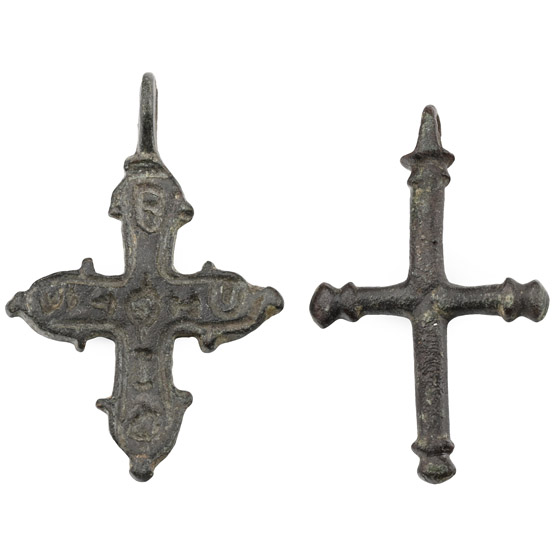
Late Medieval Bronze Cross Pendant Group
14th-16th century A.D.Sold for (Inc. bp): £111
Comprising: a cross pommee pendant with 'OMONIA' (harmony) impressed legend; narrow cross pendant with collared lobe finials. 7.98 grams total, 36-39 mm
Ex German art market, 2000s. Acquired from an EU collector living in London. From the collection of a Surrey, UK, gentleman.
