Loading, please wait...
Details
LOT 1876
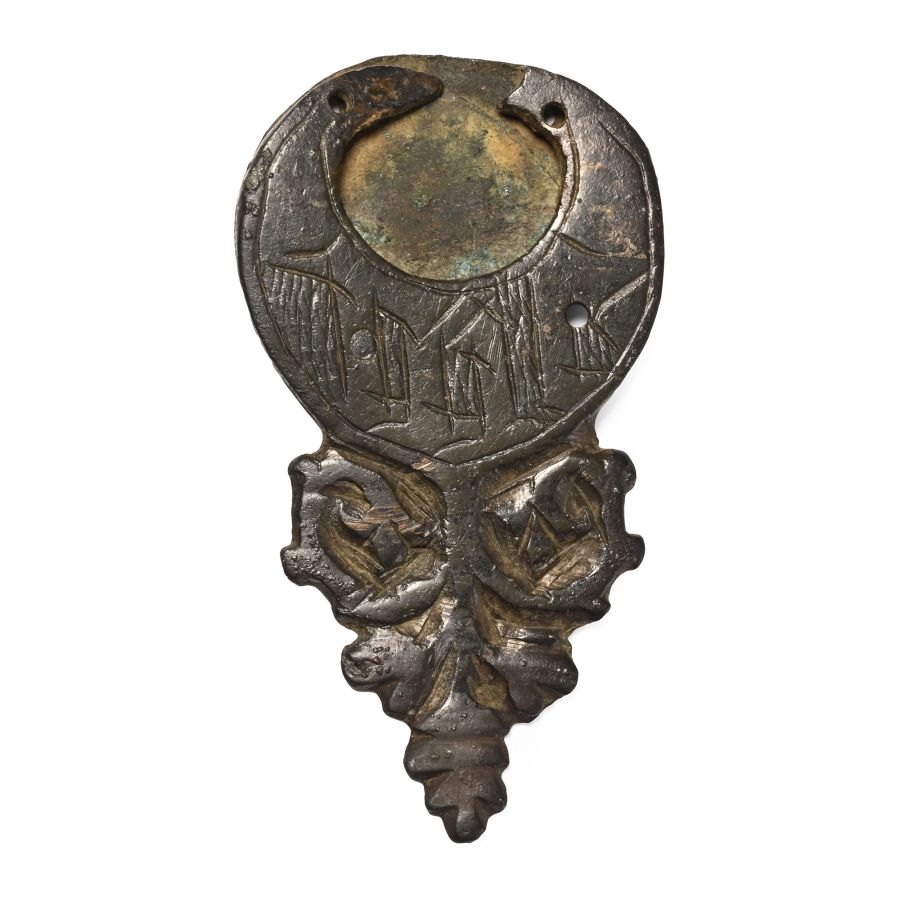
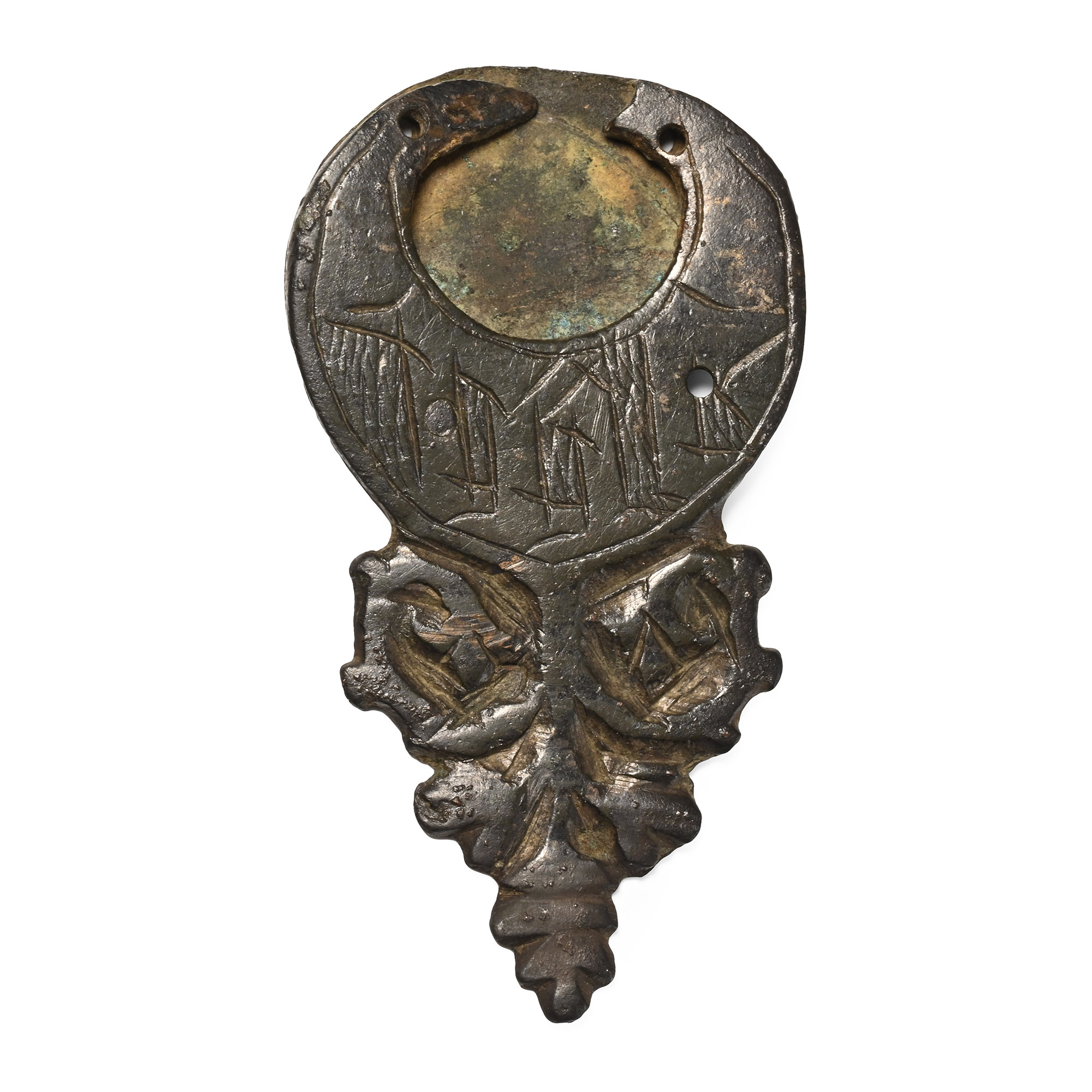
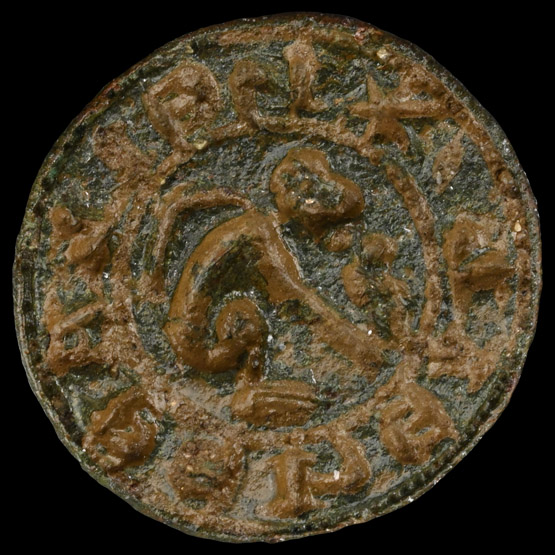
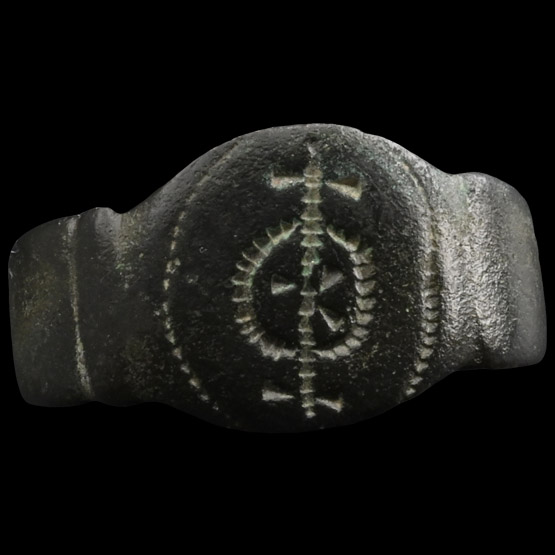
Medieval Knight's Bronze Strap End
15TH CENTURY A.D.
2 3/8 in. (19.2 grams, 60 mm).
Discoid plaque with incised decoration to obverse and foliage finial. [No Reserve]
Provenance
From the private collection of the late Graham Slater (1927-2024), Cambridge, UK, acquired 1980s-1990s.
CONDITIONVETTING:
TimeLine Auctions follows a vetting process to ensure the authenticity and legality of all items, reinforcing our commitment to integrity and responsible trading. Each antiquity, antique, and coin lot undergoes thorough examination by a vetting committee of at least ten external specialists, professional trade association members, scientists, and archaeologists: Our Vetting Process
AUCTIONS:
TimeLine is a leading auction house specialising in antiquities, ancient art, collectables, natural history, coins, medals, and books. Our auctions offer museums, collectors, historians, and enthusiasts the opportunity to acquire unique and historically significant pieces.
RELATED LOTS
-
Medieval Silver-Gilt Ring with Male Head Gemstone and Inscriptions
15th century A.D.Sold for (Inc. bp): £4,680
With applied outer layer of gold engraved with flowers and the words, “en bon an” (twice) (‘a good year’); the flat bezel with a recessed centre set with a medieval mother-of-pearl intaglio depicting a male bust in profile; supplied with a museum-quality impression. 4.72 grams, 23.64 mm overall, 20.45 mm internal diameter (approximate size British R 1/2, USA 8 3/4, Europe 19.38, Japan 18)
Found whilst searching with a metal detector in Dorset, UK, on Sunday, 30th December 2018. Acquired on the English art market. Accompanied by a copy of the British Museum's Portable Antiquities Scheme (PAS) report no.DEV-5E4EDA. This lot has been checked against the Interpol Database of stolen works of art and is accompanied by search certificate no.13069-248371.
The inscription is in black letter appears to read “en bon an”, a good year. The inscription is paralleled on a good number of 15th century rings, often also decorated with flowers and branches between the words, such as British Museum catalogue numbers AF.1057 and 1960,1103.1. -
Large Medieval Limoges Gilt Copper Processional Cross
France, early 13th century A.D. and laterSold for (Inc. bp): £13,000
A substantial and finely worked crucifix, of elongated proportions, the surface retaining traces of original mercury gilding, with the arms of the cross enriched by inset red, blue and green cabochons arranged in the manner of a crux gemmata; on the obverse, a slender corpus with clearly defined ribs, a gently inclined head, and a well-articulated drapery falling from the gathered perizonium, the face exhibiting serene, introspective expression, over the crowned head a rhomboid appliqué with Gothic inscription in red enamel 'HIS XRS' (Iesus Hominum Salvator Χριστός = The Saviour Jesus Christ), four lobed appliqués on the arms, each with a large central cabochon flanked by smaller cabochons in high settings; the reverse with the surface decorated with rosettes and other vegetal motifs enamelled in champlevé on the four arms, central circular appliqué with rich floral decoration and numerous cabochons. 3.55 kg, 74.6 cm
Maintained within a family’s ancestral country residence, where it formed part of a small group of inherited ecclesiastical objects retained in private hands throughout the 19th and 20th centuries, thence by descent to the present owner. Accompanied by an academic report by Dr Raffaele D'Amato. This lot has been checked against the Interpol Database of stolen works of art and is accompanied by search certificate number no.13030-247521.
A distinguished item of enduring Northumbrian heritage, preserved within the same local family household for several generations. By established family tradition, the crucifix is thought to possess early devotional associations with the Raymes Chapel of St Andrew’s Church, Bolam, a site historically connected with notable gentry of the district. The cross is an exceptional example of Late Romanesque art, combining champlevé enamel appliqués - flat panels with geometric ornament – and the arms of the cross decorated in champlevé. However, this piece is a composite artwork: the circular floral plaque from Limoges, on the reverse, dates from the second quarter of the 13th century, while the facade plaques, of similar origin, come from the end of that same century; the figure of Christ from Central France seems to belong to a later medieval period. -
Medieval Bronze Archer's Thumb Ring
13th-14th century A.D.Sold for (Inc. bp): £72
With narrow triangular flange, incuse geometric designs and reserved rosette to centre. 5.63 grams, 28.77 mm overall, 19.99 x 18.19 mm internal diameter (approximate size British R, USA 8 1/2, Europe 18 3/4, Japan 18)
Acquired on the UK art market in the 1980s. From the private collection of an Essex gentleman.