
Loading, please wait...
LOT 1671
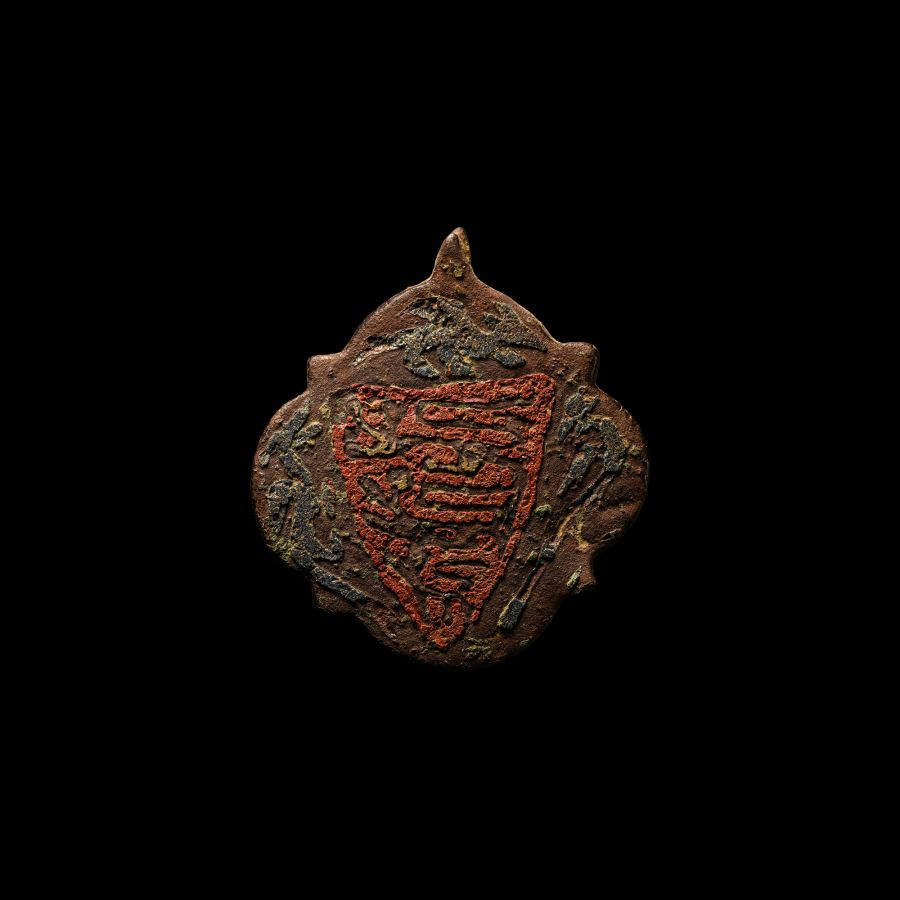
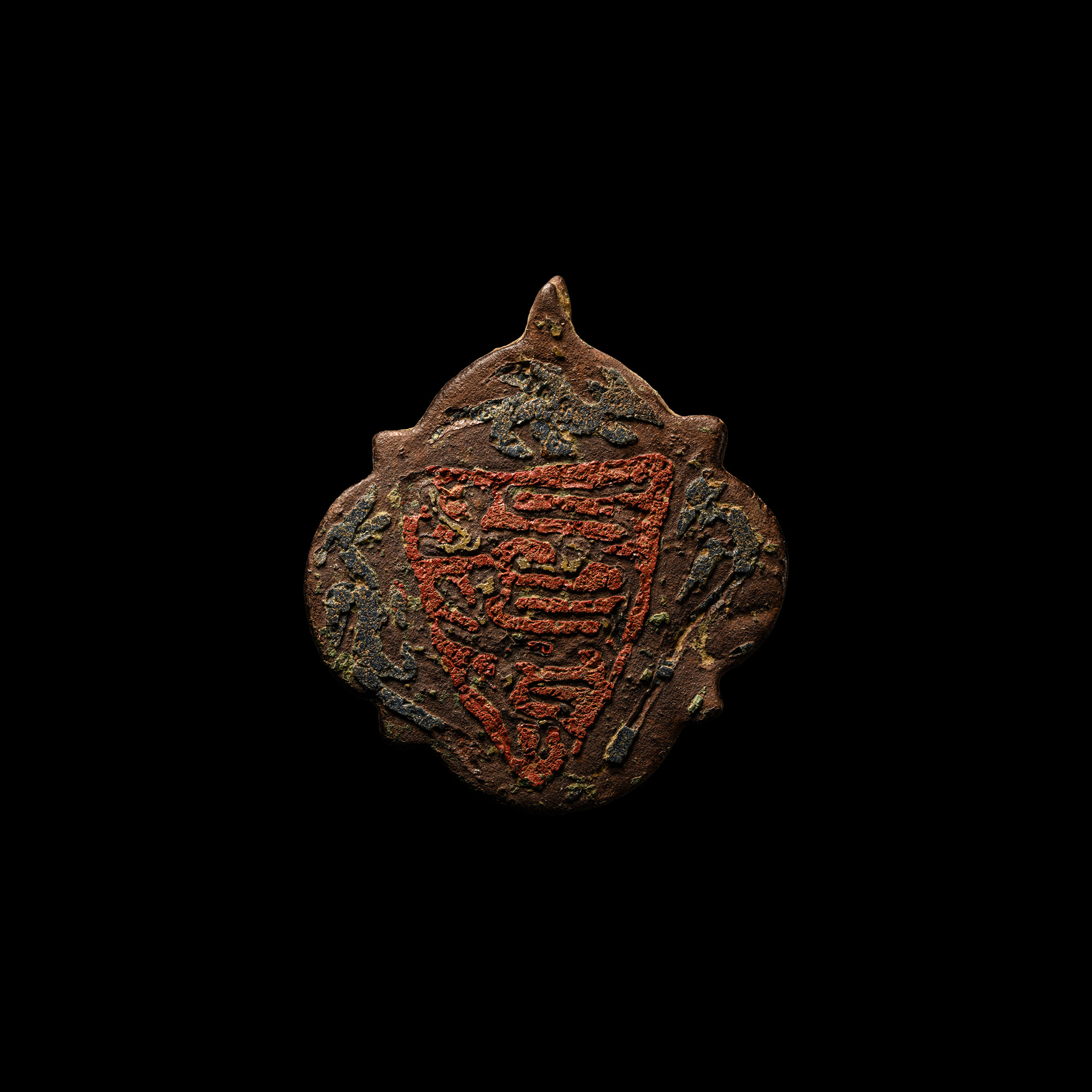
Medieval Knight's Bronze Heraldic Horse Harness Pendant with Royal Arms
13TH-14TH CENTURY A.D.
1 3/8 in. (8.99 grams, 35 mm).
An elaborate quatrefoil with remains of base of suspension loop; shield gules three lions passant gardant in pale or; trace remains of gilding. [No Reserve]
ProvenanceAcquired on the UK market, 1990s.
Property of a retired academic.
Cf. Clark, J. ed., The Medieval Horse And Its Equipment, Museum of London, 2004, item 64.
FootnotesThe heraldry references the medieval royal arms of England prior to 1340, when the arms of France were added to those of England. It should, however, be noted that the use of these former arms continued in use on small portable items for some period of time after 1340.
CONDITIONTimeLine Auctions follows a vetting process to ensure the authenticity and legality of all items, reinforcing our commitment to integrity and responsible trading. Each antiquity, antique, and coin lot undergoes thorough examination by a vetting committee of at least ten external specialists, professional trade association members, scientists, and archaeologists: Our Vetting Process
AUCTIONS:
TimeLine is a leading auction house specialising in antiquities, ancient art, collectables, natural history, coins, medals, and books. Our auctions offer museums, collectors, historians, and enthusiasts the opportunity to acquire unique and historically significant pieces.
LOT 1671
Medieval Knight's Bronze Heraldic Horse Harness Pendant with Royal Arms
Sold for (Inc. bp): £130
-
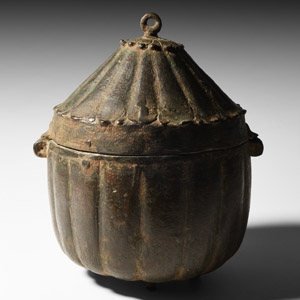
Medieval Bronze Ribbed Lidded Vessel
12th century A.D. or laterEstimate: £300 - 400 (+bp*)
Opening Bid: £150
On four short feet with a domed lid consisting of ribbed lappets, suspension loop finial. 1.1 kg, 18 cm
Fair condition, hole in lid.
Acquired on the UK art market, 2000s. Property of a Suffolk gentleman. -
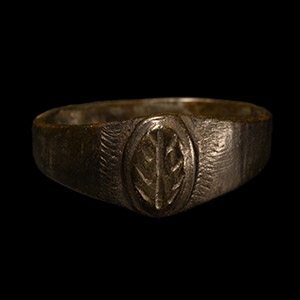
Medieval Bronze Ring with Olive Branch
Circa 15th-16th century A.D.Sold for (Inc. bp): £78
Composed of a roughly flat-section hoop with expanded shoulders and stepped oval bezel engraved with a stylised olive branch, flanking shallow zigzags. 3.86 grams, 24.84 mm overall, 22.88 mm internal diameter (approximate size British W, USA 11, Europe 25, Japan 24)
Private collection formed since the 1940s. UK art market. Property of an Essex gentleman. -
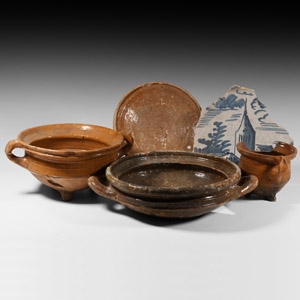
Medieval Ceramic Vessel Group
15th century A.D. and laterSold for (Inc. bp): £46
Including glazed vessels of various types: tripod pots, dishes, platters, together with a decorated fragment; chipped and cracked. 4.15 kg total, 14.5-33.5 cm
Acquired 1990s-early 2000s. East Anglian private collection.
The majority of ceramics here presented are kitchen wares. Usually cooking pots are the most numerous forms in the majority of medieval contexts. They are mostly related to domestic functions, cooking pots being used to boil food or fry it. They come in different sizes and have globular bodies, everted rims and one or two handles. Ceramics from Dundee, Scotland, and Southampton, confirm that one of the most common vessel types employed among 1490-1510 A.D. was the tripod pipkin, with globular body, rounded base, three legs and a single or double handle, like the specimen here visible. These specimens were very often redware pottery imported from the Low Countries.
