
Loading, please wait...
LOT 1291
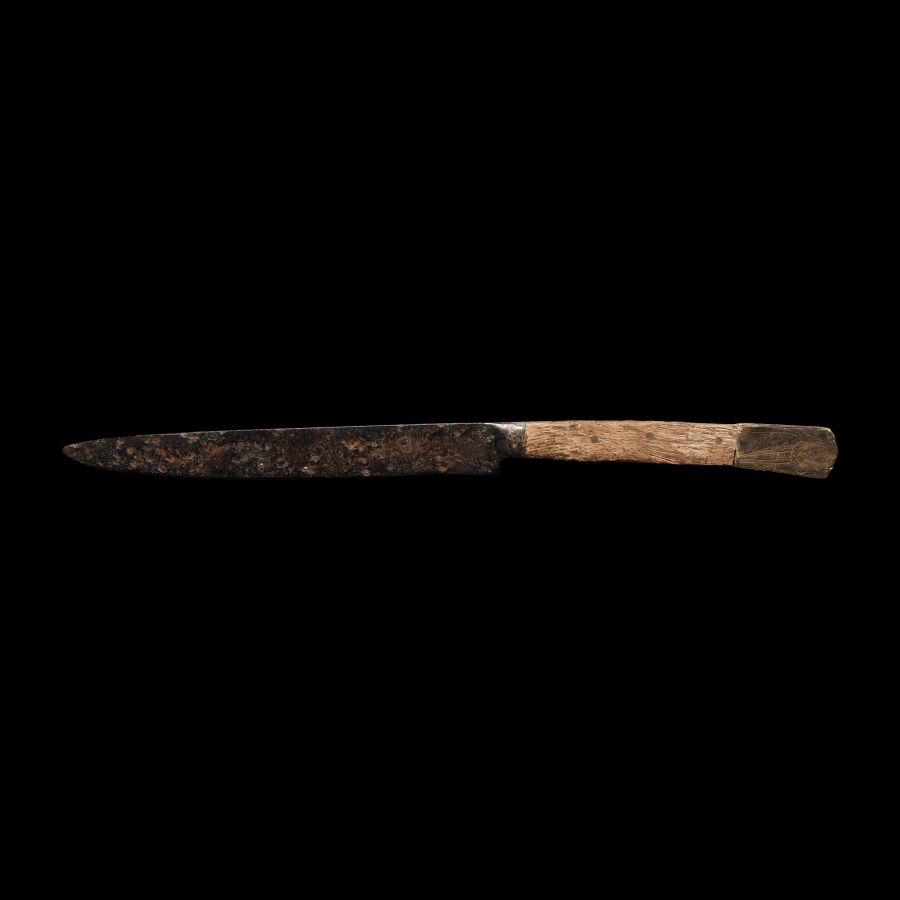
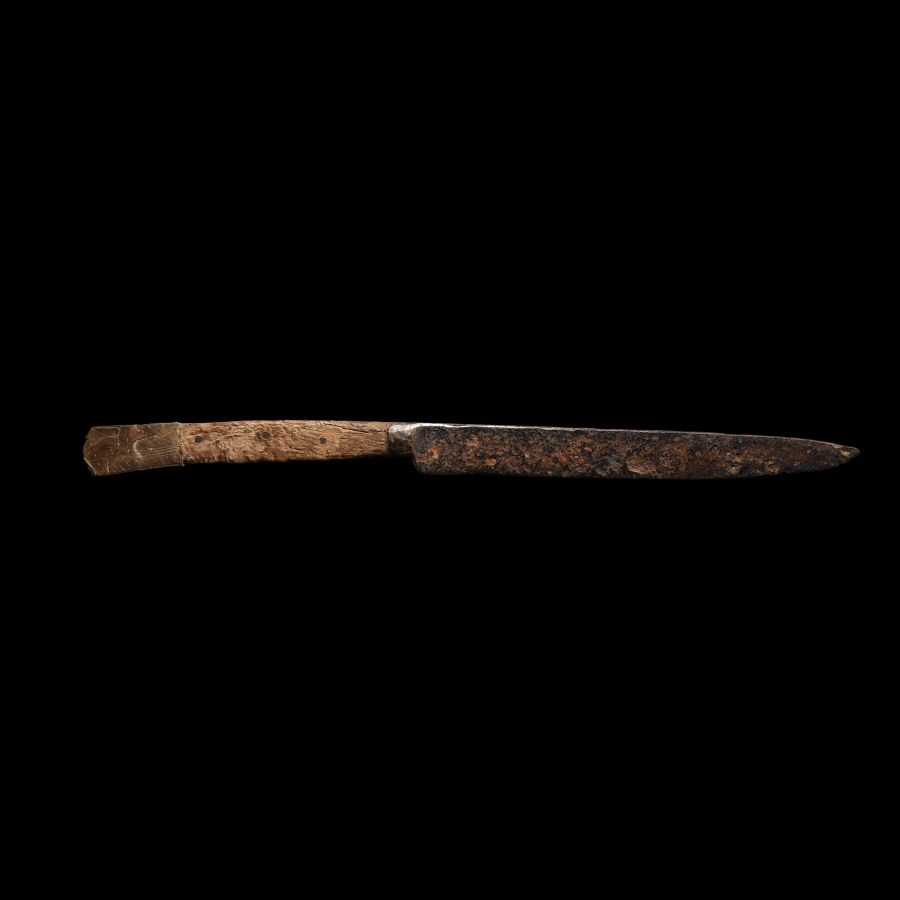
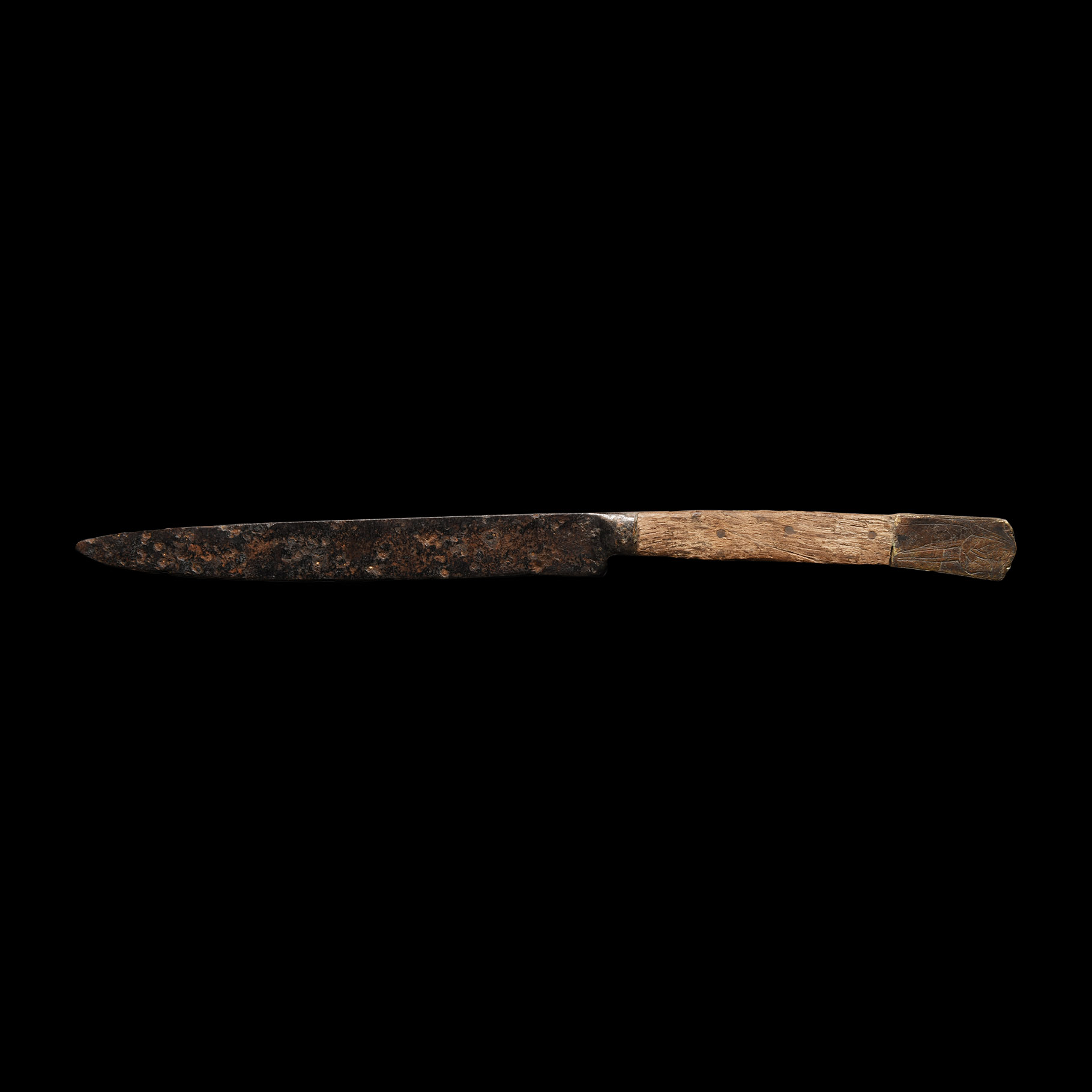
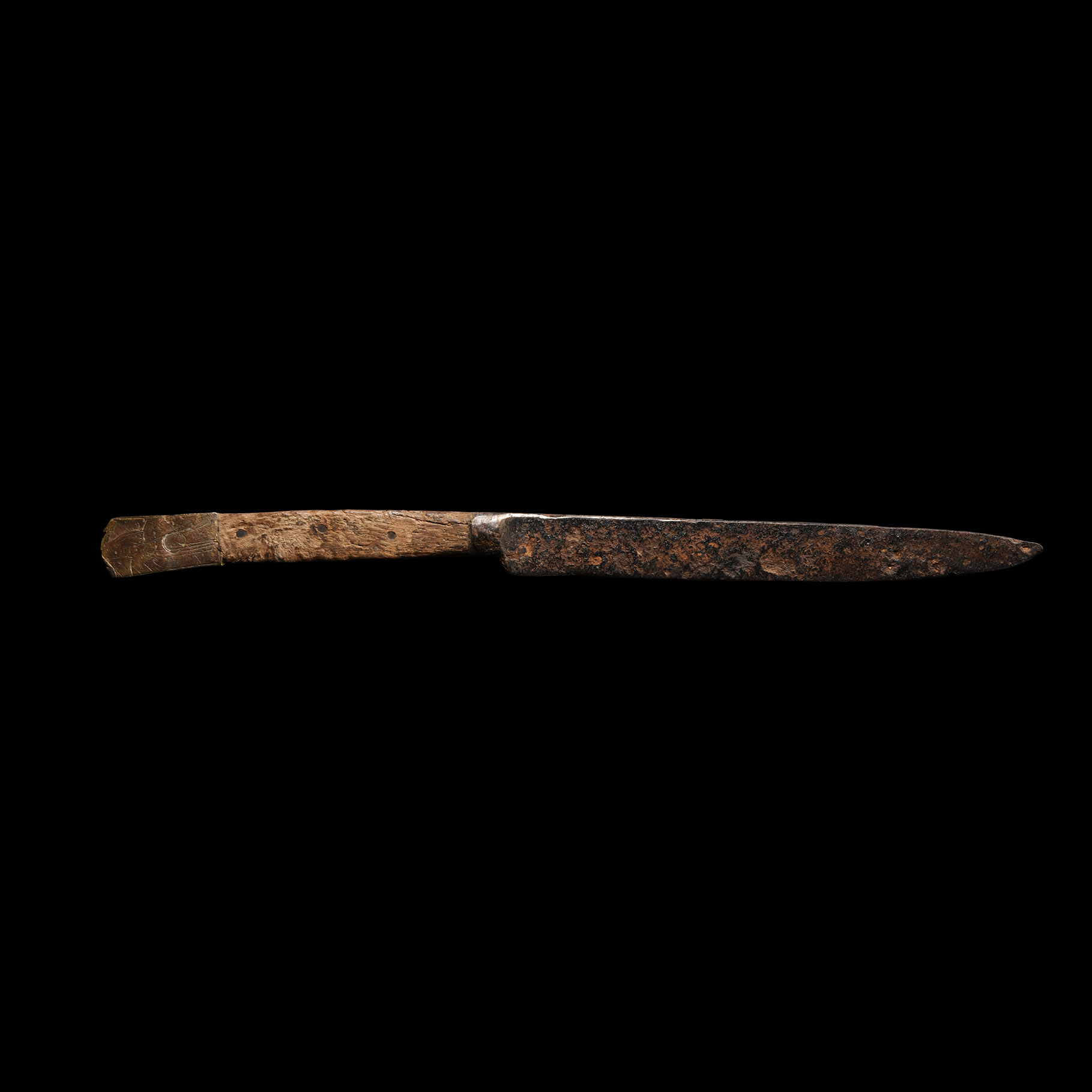
Medieval Knife with Bronze Pommel and Veiled Figure
CIRCA 1500 A.D.
8 1/4 in. (37.4 grams, 21 cm long).
A scale tanged knife with iron blade and single cutting edge, wooden scales, bronze pommel seemingly decorated with an incised veiled female figure to one face and a Mendicant beggar holding staff and pouch to the other.
ProvenanceAcquired 1960s-1990s.
Late Alison Barker collection, a retired London barrister.
TimeLine Auctions follows a vetting process to ensure the authenticity and legality of all items, reinforcing our commitment to integrity and responsible trading. Each antiquity, antique, and coin lot undergoes thorough examination by a vetting committee of at least ten external specialists, professional trade association members, scientists, and archaeologists: Our Vetting Process
AUCTIONS:
TimeLine is a leading auction house specialising in antiquities, ancient art, collectables, natural history, coins, medals, and books. Our auctions offer museums, collectors, historians, and enthusiasts the opportunity to acquire unique and historically significant pieces.
LOT 1291
Medieval Knife with Bronze Pommel and Veiled Figure
Estimate £200 - 300€230 - 350 (for guidance only)$270 - 410 (for guidance only)
-
Large Medieval Crusader Period Carved Capital
12th-13th century A.D.Estimate: £800 - 1,000 (+bp*)
Opening Bid: £444
A large stone architectural column capital modelling curled acanthus leaves, rising from a narrow stem, curving outwards and away from each other 118.4 kg, 46 cm high
Fine condition.
Acquired 1970s-1996. Property of a North American collector. London collection, 2016. Accompanied by an academic report by Dr Raffaele D’Amato. -
Medieval Knife with Bronze Pommel and Veiled Figure
Circa 1500 A.D.Estimate: £200 - 300 (+bp*)
Opening Bid: £100
A scale tanged knife with iron blade and single cutting edge, wooden scales, bronze pommel seemingly decorated with an incised veiled female figure to one face and a Mendicant beggar holding staff and pouch to the other. 37.4 grams, 21 cm long
Acquired 1960s-1990s. Late Alison Barker collection, a retired London barrister. -
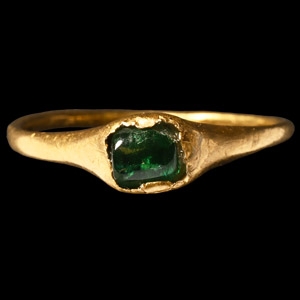
Medieval Gold Ring with Emerald Cabochon
13th-14th century A.D.Sold for (Inc. bp): £2,860
A slender gold finger ring with inset emerald cabochon to the bezel. 1.25 grams, 19.54 mm overall, 14.93 mm internal diameter (approximate size British H, USA 3 3/4, Europe 6.18, Japan 6)
Acquired on the French art market. English private collection.
