
Loading, please wait...
LOT 1381
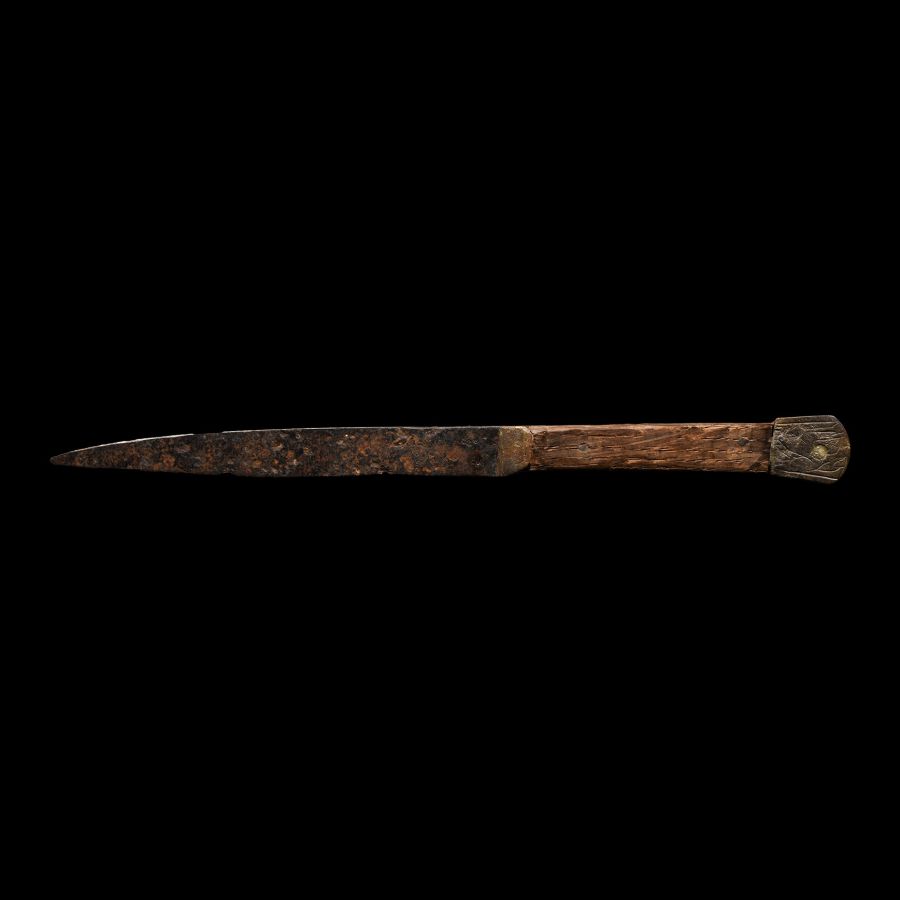
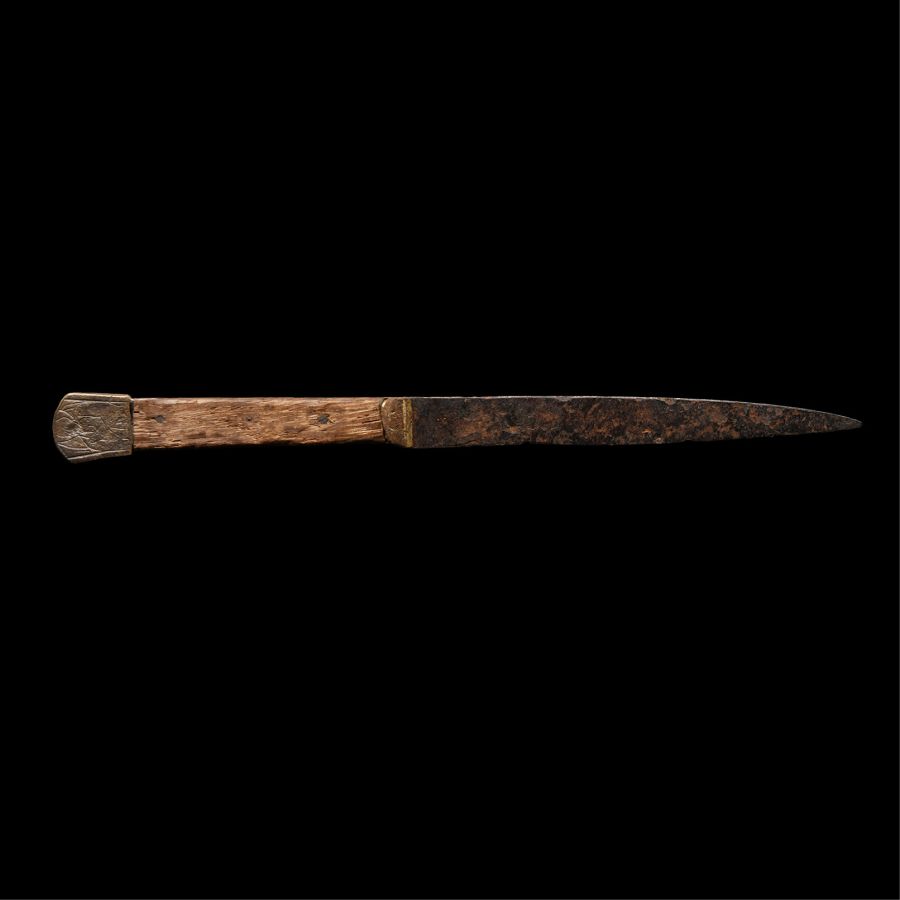
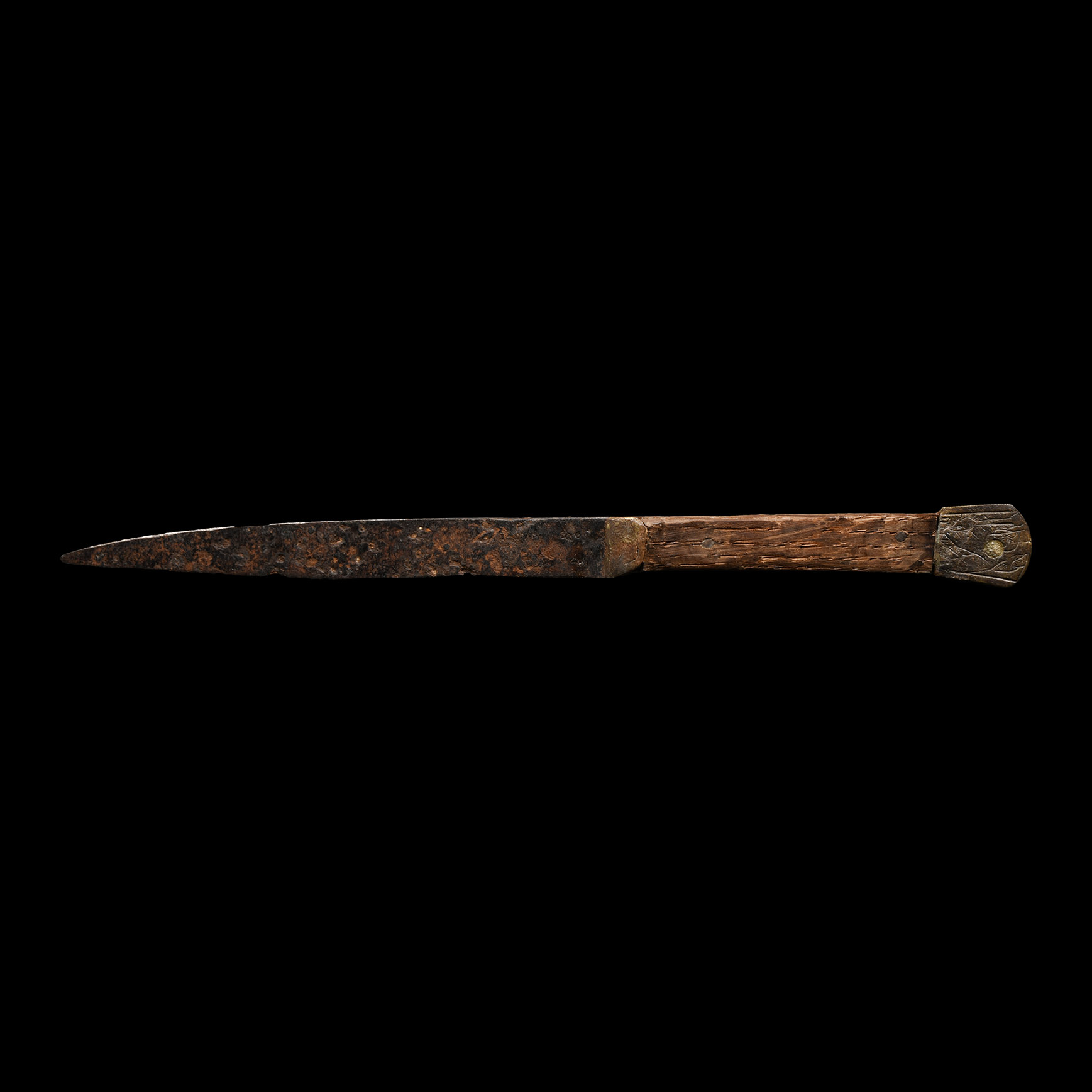
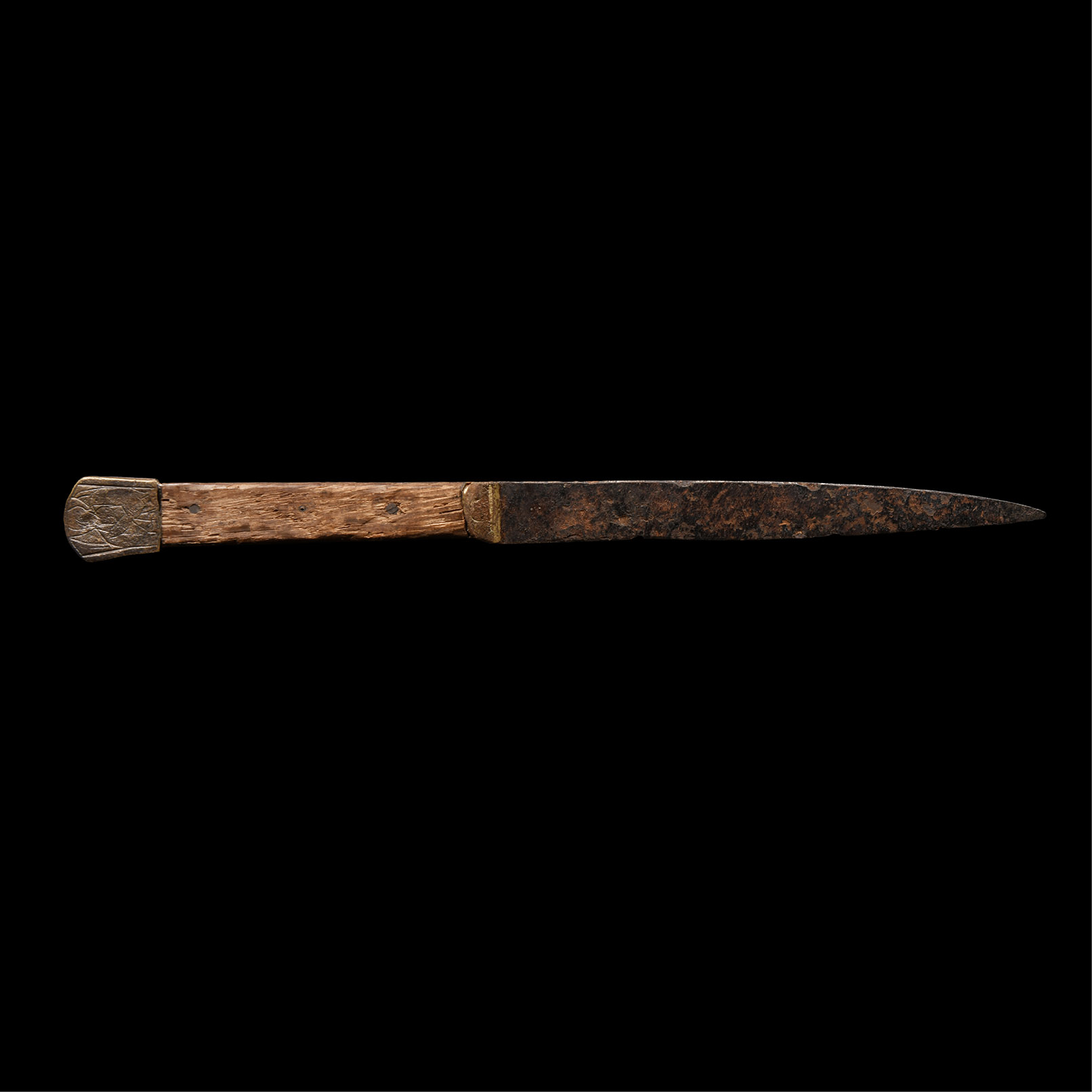
Medieval Knife with Bronze Pommel and Veiled Figure
CIRCA 1500 A.D.
7 1/8 in. (22.7 grams, 18.2 cm long).
A scale tanged knife with iron blade and single cutting edge, wooden scales, bronze pommel incised with a veiled female figure to one face and a male figure to the other; remains of gilding to the neck of the handle.
ProvenanceAcquired 1960s-1990s.
Late Alison Barker collection, a retired London barrister.
TimeLine Auctions follows a vetting process to ensure the authenticity and legality of all items, reinforcing our commitment to integrity and responsible trading. Each antiquity, antique, and coin lot undergoes thorough examination by a vetting committee of at least ten external specialists, professional trade association members, scientists, and archaeologists: Our Vetting Process
AUCTIONS:
TimeLine is a leading auction house specialising in antiquities, ancient art, collectables, natural history, coins, medals, and books. Our auctions offer museums, collectors, historians, and enthusiasts the opportunity to acquire unique and historically significant pieces.
LOT 1381
Medieval Knife with Bronze Pommel and Veiled Figure
Estimate £200 - 300€230 - 350 (for guidance only)$270 - 410 (for guidance only)
-
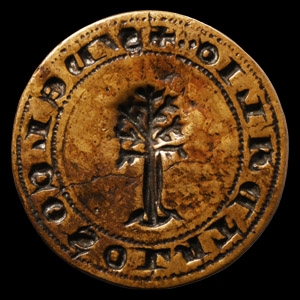
Large Italian Medieval Round Seal Matrix with Tree for Consulate d'Alio
14th century A.D.Estimate: £400 - 600 (+bp*)
Opening Bid: £200
A bronze discoid seal matrix with strap and pierced lug to the reverse; central incuse motif of an uprooted tree; border with poinitllé edges and incuse text "+ S' DEL COSOLAT DALIO :' (seal of the consulate of Alio); Italian workmanship. 13.5 grams, 28 mm
The Matrix Collection, formed by David Morris since the late 1980s. Ex Du Cogner Archives, published 1940, no.12. Matrix Collection catalogue no.1112. Many of the seals within the collection were published in a book titled 'The Matrix Collection', by David Morris in 2012. Accompanied by a copy of the relevant catalogue and title pages from: Chappee, J., Archives Du Cogner, Le Mans, 1940. -
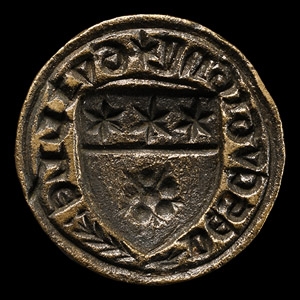
French Medieval Heraldic Chessman Type Seal Matrix for Guillaume de Sautigny
Early 15th century A.D.Sold for (Inc. bp): £468
A bronze chessman-type seal matrix with pierced quatrefoil and pierced lug above with link from the fixing chain; asterisk on the outer edge of the base to align the design; central heraldic heater shield with three stars above a cinquefoil, Lombardic script legend to the border '*DESAVTIGNY * GVILLE' and frond to complete the circle (for Guille[lm] de Sautigny). 15 grams, 41 mm
The Matrix Collection, formed by David Morris since the late 1980s. Ex Hermann Historica, 14 October 2003, lot 319. Matrix Collection catalogue no.945. Many of the seals within the collection were published in a book titled 'The Matrix Collection', by David Morris in 2012. Accompanied by a copy of the illustrated collection notes. Accompanied a copy of a Hermann Historica auction page print out.
In 1502 a nobleman named Jean Courtin IV, squire and lord of Sautigny, married Catherine Cottereau, daughter of Pierre Cottereau, lord of the viscounty of Vaupréau: see M. de Sait Allais Nobiliaire Universel de France, vol. 6, Paris 1874. -
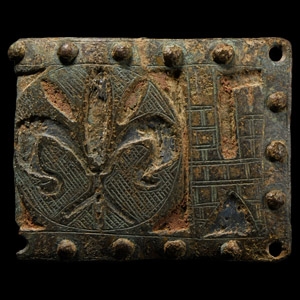
Medieval Heraldic Horse Harness Mount with Castle and Fleur
14th-15th century A.D.Estimate: £150 - 200 (+bp*)
Opening Bid: £60
A copper-alloy horse harness mount of sub-rectangular form, border of raised knops to three sides, central recessed fleur-de-lis within a crosshatched roundel, stylised turreted castle; remains of enamelling; pierced in two corners for attachment. 29.5 grams, 55 mm
Acquired early 2000s. Property of a Suffolk, UK, gentleman. Property of an Essex, UK, gentleman.
