Loading, please wait...

Medieval Knife with Bronze Bird Pommel Medieval Knife with Bronze Bird Pommel Medieval Knife with Bronze Bird Pommel Medieval Knife with Bronze Bird Pommel Medieval Knife with Bronze Bird Pommel Medieval Knife with Bronze Bird Pommel
Use mousewheel to zoom in and out, click to enlarge
Details

LOT 1292

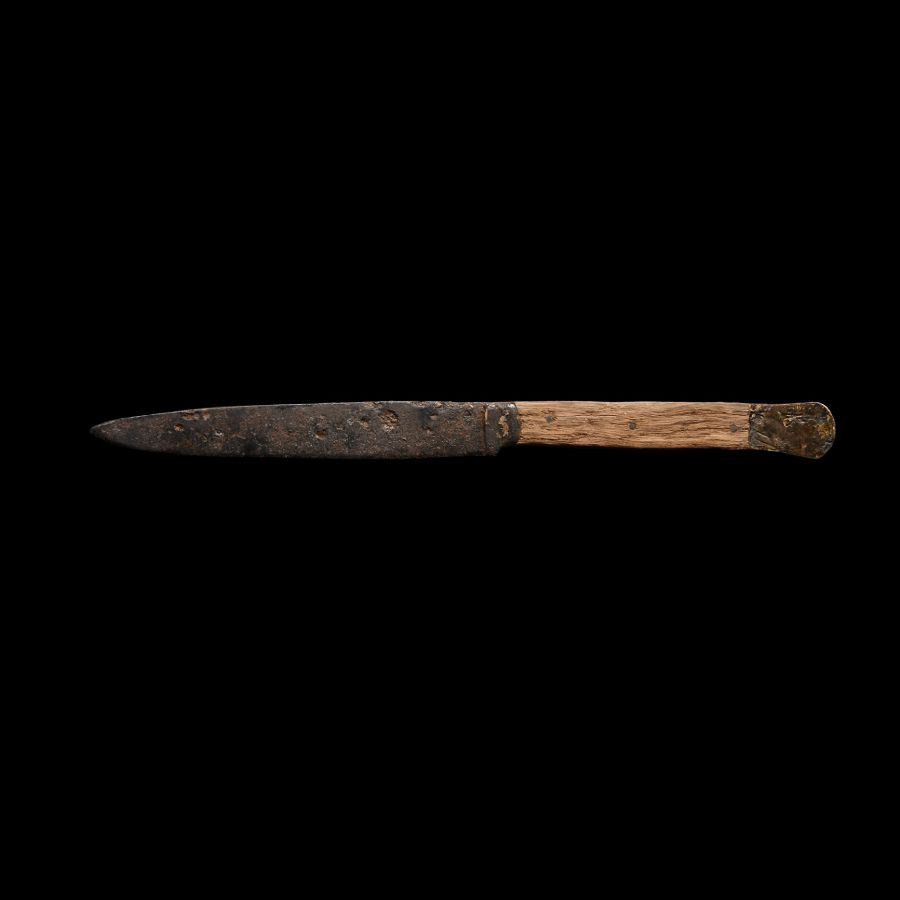
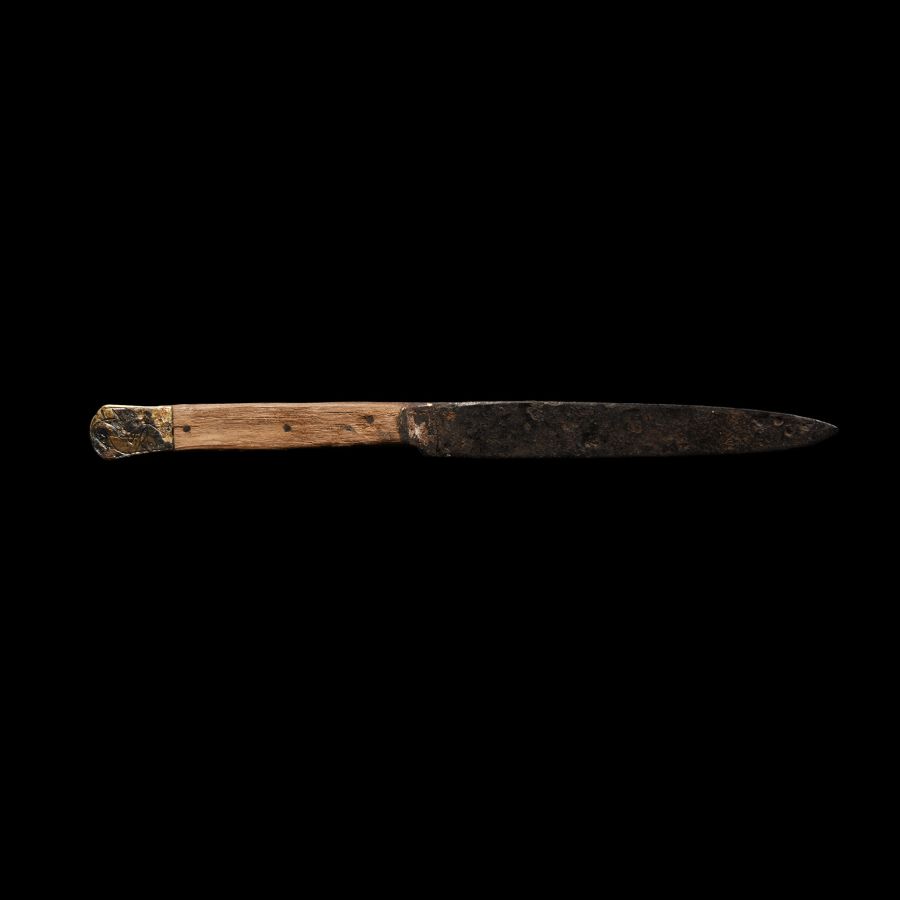
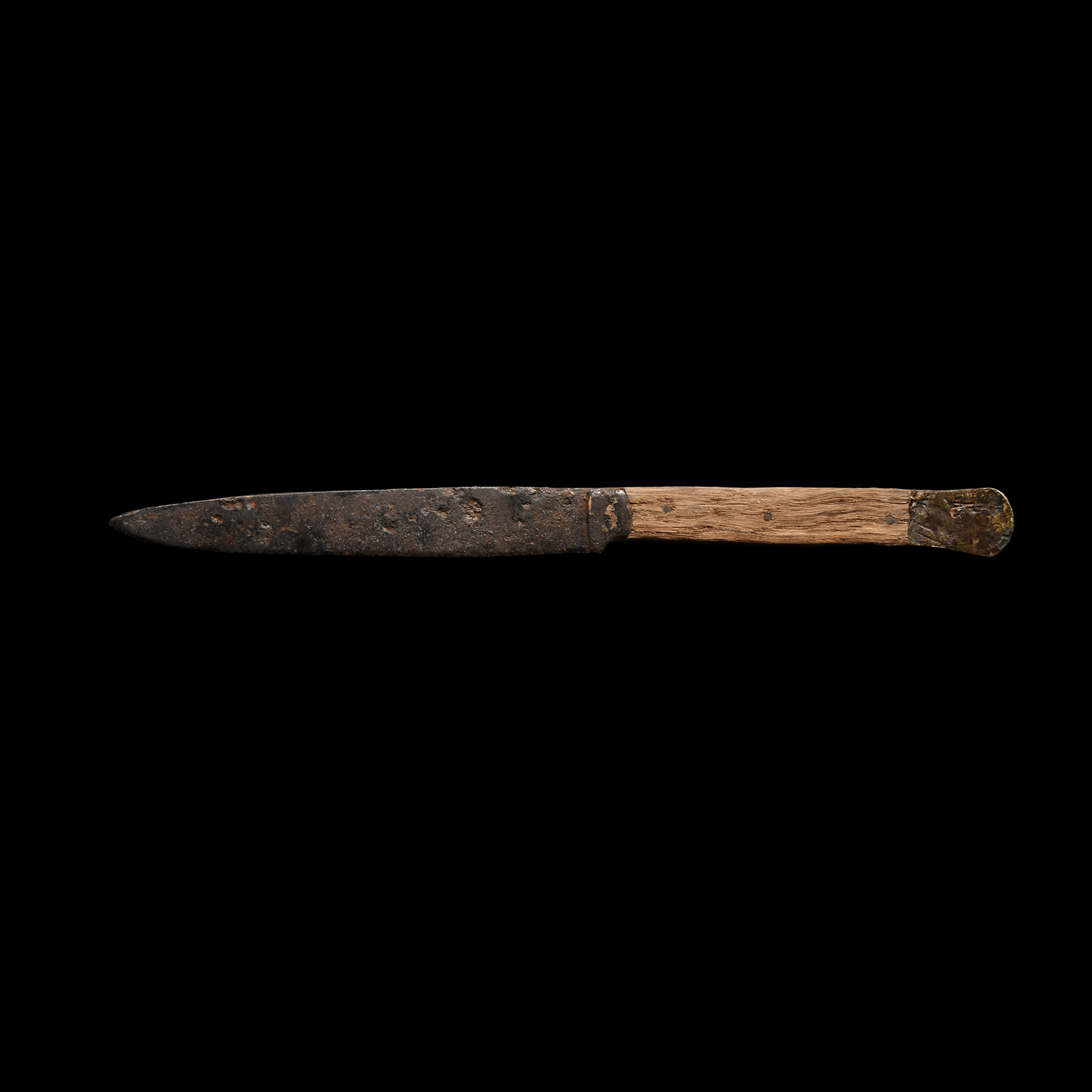
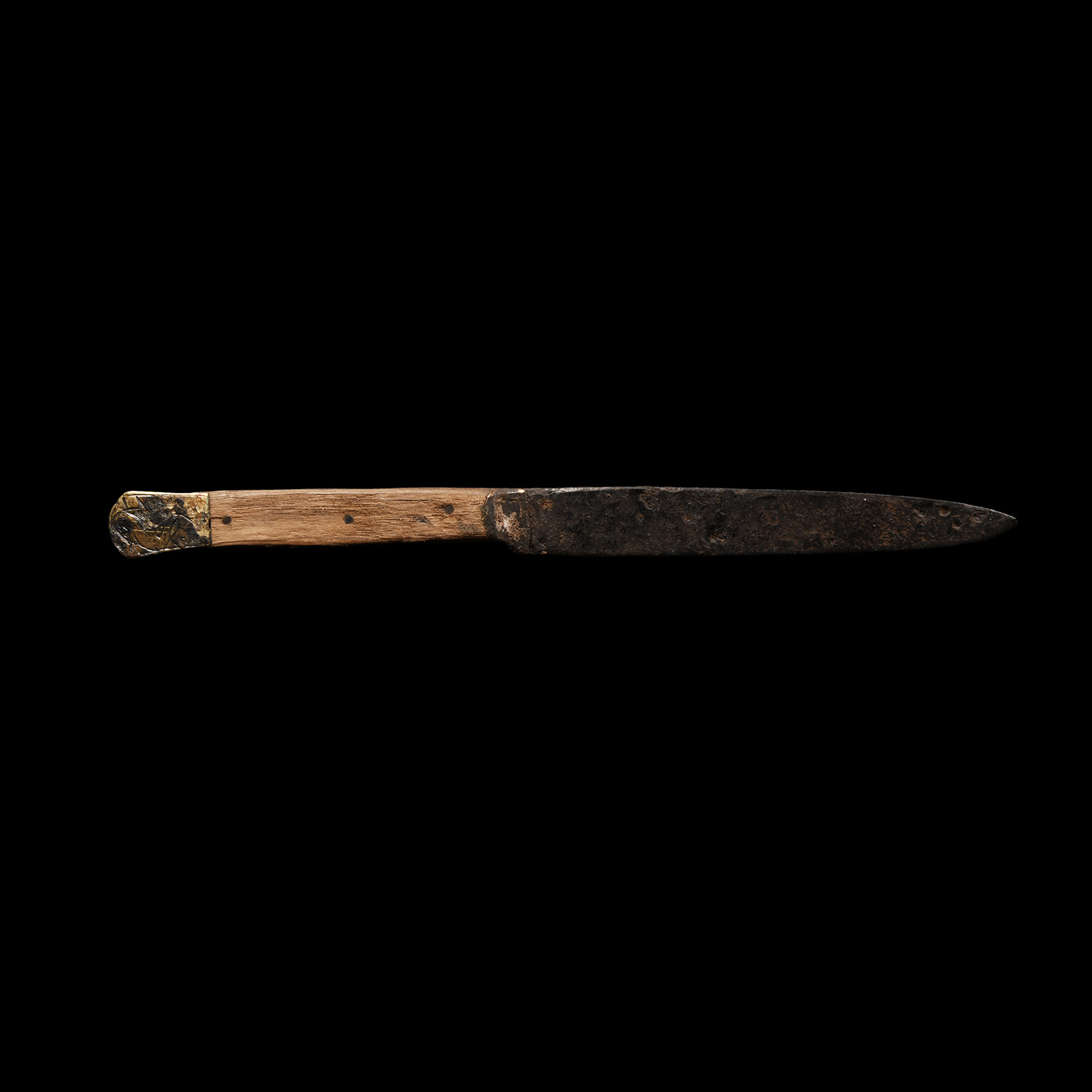
Medieval Knife with Bronze Bird Pommel

CIRCA 1500 A.D.

7 in. (29.5 grams, 18 cm long).

A scale tanged knife with iron blade and single cutting edge, wooden scales, bronze pommel displaying an incised bird to one face and a second, worn motif to the other.

Provenance

Acquired 1960s-1990s.
Late Alison Barker collection, a retired London barrister.

CONDITION
VETTING:

TimeLine Auctions follows a vetting process to ensure the authenticity and legality of all items, reinforcing our commitment to integrity and responsible trading. Each antiquity, antique, and coin lot undergoes thorough examination by a vetting committee of at least ten external specialists, professional trade association members, scientists, and archaeologists: Our Vetting Process


AUCTIONS:

TimeLine is a leading auction house specialising in antiquities, ancient art, collectables, natural history, coins, medals, and books. Our auctions offer museums, collectors, historians, and enthusiasts the opportunity to acquire unique and historically significant pieces.

LOT 1292

Medieval Knife with Bronze Bird Pommel

Estimate £200 - 300€230 - 350 (for guidance only)$270 - 410 (for guidance only)

Print page

RELATED LOTS
  • Medieval Thames Artefact Collection
    Medieval 'Thames' Artefact Collection
    Circa 14th-16th century A.D.

    Sold for (Inc. bp): £39

    A group of four metallic artefacts including a bell (minus clanger), small scoop with twisted neck and needles of different types. 7.6 grams total, 15-95 mm


    Found on the Thames foreshore, London, UK. Acquired on the UK antiques market between 1974-1985. Albert Ward collection, Essex, UK.

    Lot Details

  • English Medieval Heraldic Chessman Type Tax Collectors Seal Matrix for Customs Duty on Cloth
    English Medieval Heraldic Chessman Type Tax Collector's Seal Matrix for Customs Duty on Cloth
    Circa 14th century A.D.

    Sold for (Inc. bp): £845

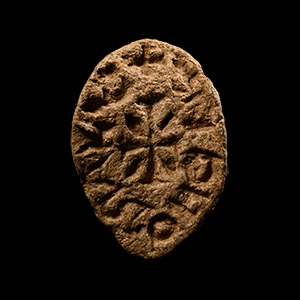
    A bronze chessman-type seal matrix with pierced trefoil finial; hatched field with reserved heater shield bearing a Lombardic capital 'G', band to the rim with incuse legend "* S' : CVSTVME : PANNORVM:". 28.1 grams, 37 mm


    The Matrix Collection, formed by David Morris since the late 1980s. Found Romney Marsh, Kent, UK, on Monday 1st December 2008 by Graham Collard. Matrix Collection catalogue no.4604. Many of the seals within the collection were published in a book titled 'The Matrix Collection', by David Morris in 2012. Accompanied by a copy of the illustrated collection notes. Accompanied by a copy of the UK Detector Finds Database record entry no.16201.

    The seal relates to the payment of duty (custume) on imported cloth, and was presumably used by a customs official.

    Lot Details

  • Cretan Icon of Saint Francis of Assisi
    Cretan Icon of Saint Francis of Assisi
    15th century A.D.

    Sold for (Inc. bp): £1,170

    An icon from a possible triptych of Veneto-Cretan School depicting nimbate Saint Francis of Assisi, wearing the brown habit of the Franciscan order, fitted with a hood, facing towards the right, a red book in his left hand with the inscription Vera S. Francisci effigies(true portrait of Saint Francis); mounted in a perspex display frame. 152 grams, 20 cm high


    Property of a London lady, part of her family's collection.

    With the conquest of Crete by the Venetians, Latin saints were introduced to Byzantine iconography. Saint Francis was one of the most beloved Latin saints among the Cretan faithful, depicted in the iconography of Cretan Orthodox churches, including the Panaghia Kera of Kritsa (13th-14th century A.D.). This figure was probably part of a triptych, having at the centre the image of the Mother of God with the Child, or a Desis. The placement of Francis in this icon would suggests the owner’s strong affiliation with the Franciscan order, which had a strong presence on Crete from the 13th century onwards. It was believed that Saint Francis himself stopped on the island on his way to the Holy Land in 1219.

    Lot Details

Stay up-to-date with the latest from TimeLine Auctions by joining our mailing list