
Loading, please wait...
LOT 1893
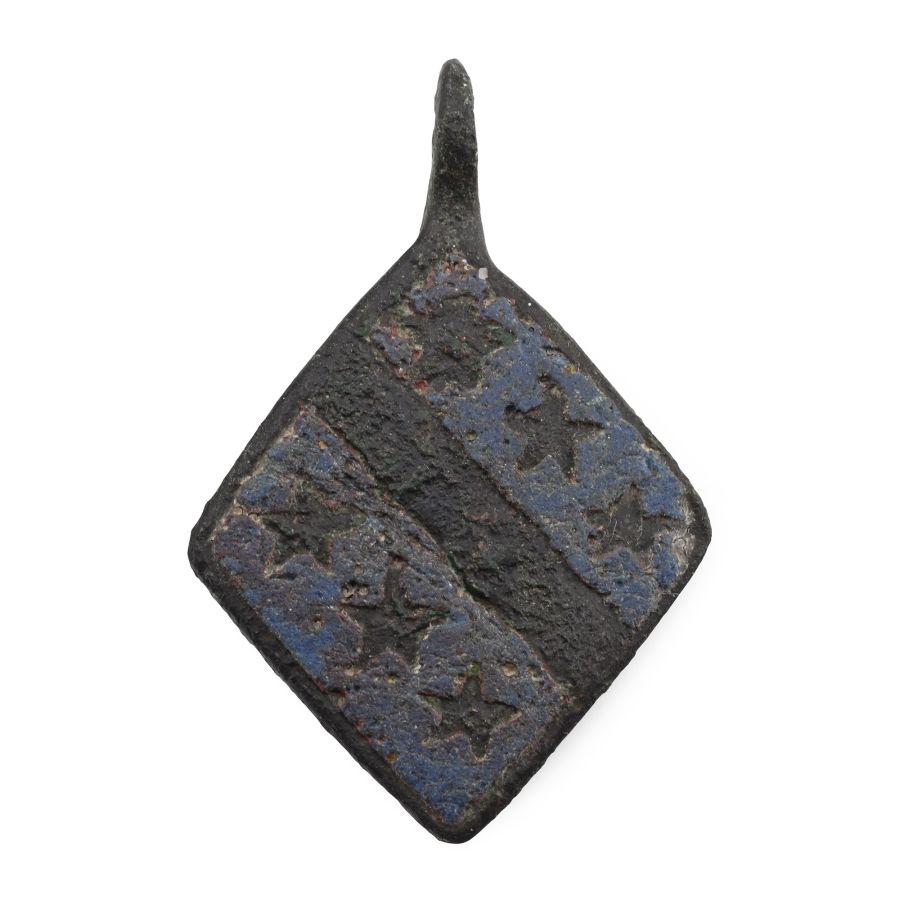
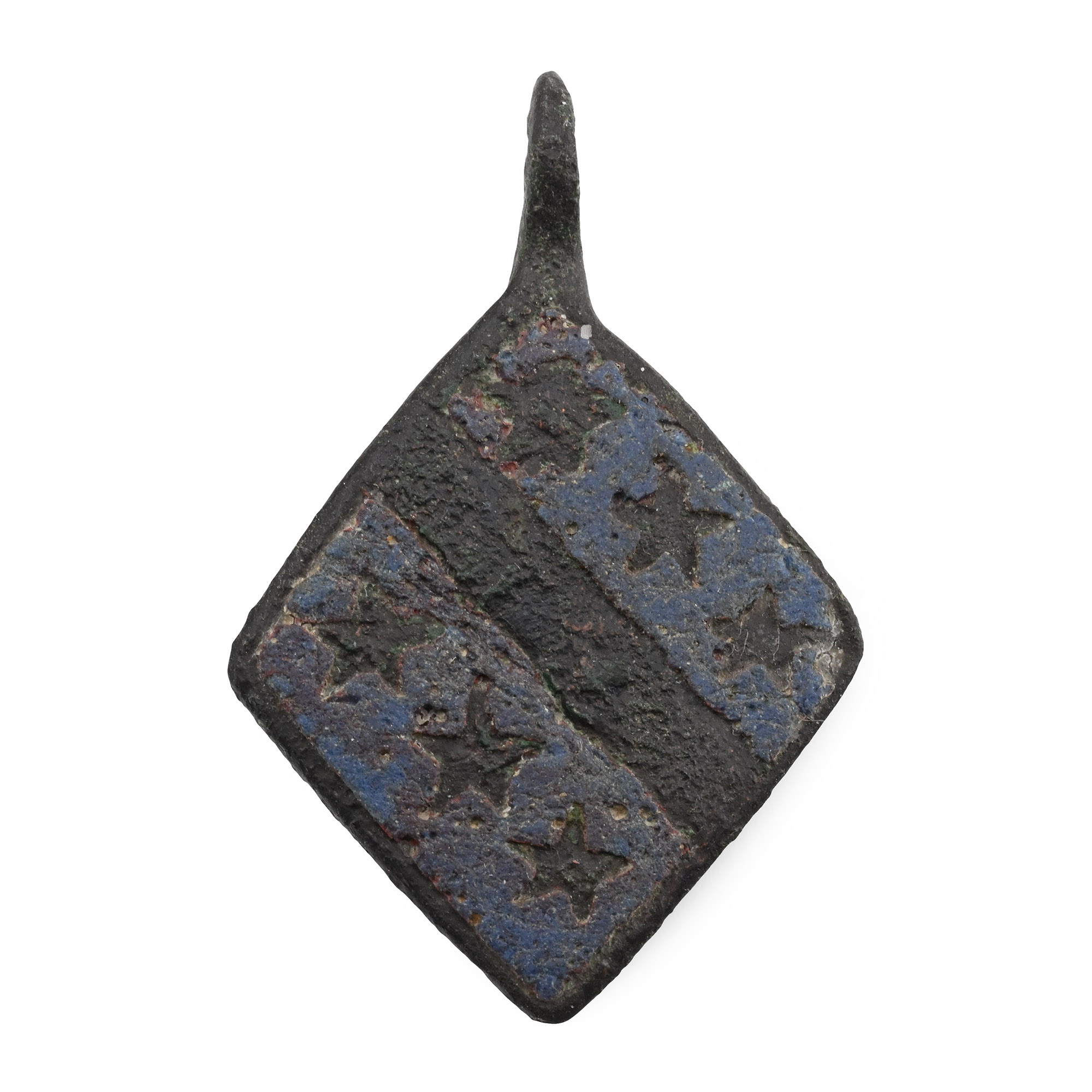
Medieval Kight's Enamelled Bronze Horse Harness Pendant
CIRCA 14TH-15TH CENTURY A.D.
1 5/8 in. (10.7 grams, 41 mm).
Lozengiform type with heraldic design 'aure a bend or between six mullets or'. [No Reserve]
ProvenanceAcquired from Essex Coin Auctions, Essex, UK.
Ex Buckinghamshire, UK, collection.
TimeLine Auctions follows a vetting process to ensure the authenticity and legality of all items, reinforcing our commitment to integrity and responsible trading. Each antiquity, antique, and coin lot undergoes thorough examination by a vetting committee of at least ten external specialists, professional trade association members, scientists, and archaeologists: Our Vetting Process
AUCTIONS:
TimeLine is a leading auction house specialising in antiquities, ancient art, collectables, natural history, coins, medals, and books. Our auctions offer museums, collectors, historians, and enthusiasts the opportunity to acquire unique and historically significant pieces.
LOT 1893
Medieval Kight's Enamelled Bronze Horse Harness Pendant
Sold for (Inc. bp): £247
-
.jpg)
Medieval Gold Ring with Cabochon
Circa 12th-14th century A.D.Sold for (Inc. bp): £572
Slender round-section hoop with bezel formed as a cup with claw setting for a dark blue gemstone. 3.3 grams, 23.81 mm overall, 15.35x18.64 mm internal diameter (approximate size British L, USA 5 3/4, Europe 1.24, Japan 10)
Ex German art market, 2000s. Acquired from an EU collector living in London. From the collection of a Surrey, UK, gentleman. -
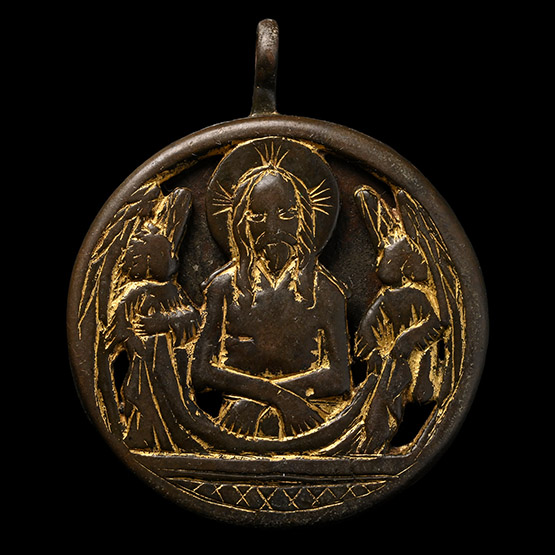
Medieval Gilt Copper Devotional Reliquary Pendant
Germany, 15th century A.D.Sold for (Inc. bp): £572
A large circular openwork pendant with a fitted lid, the lid depicting Christ between two angels holding a shroud; the reverse with seated and crowned Virgin Mary holding infant Jesus on her lap. 57.2 grams, 57 mm
Private collection, UK. -
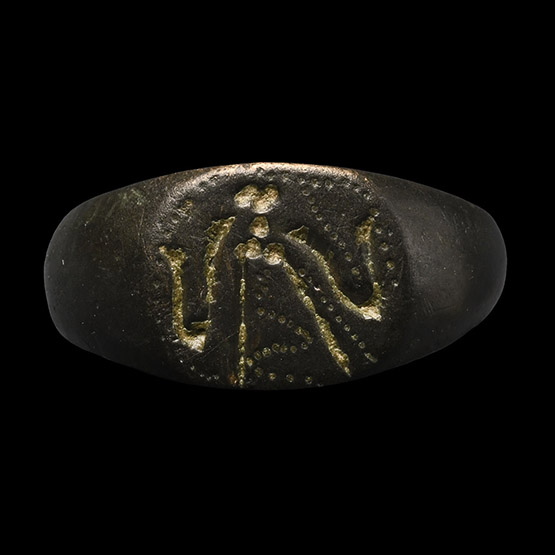
Medieval Bronze Ring with Mother Goddess
12th-13th century A.D.Sold for (Inc. bp): £59
Comprising an expanding D-section hoop and an oval bezel with a stylised female figure with long curving arms. 7.12 grams, 24.84 mm overall, 20.90 mm internal diameter (approximate size British R 1/2, USA 8 3/4, Europe 19.38, Japan 18)
Acquired on the UK and EU art market before 2000. From the private collection of a Surrey, UK, gentleman.
In these rings, dated 12th-13th century A.D., the semicircular cross-section link on the front side transitions into an elongated and flattened, elliptical bezel. The carved decoration on the bezel is very rough, borrowing themes from the Celtic Age.
