
Loading, please wait...

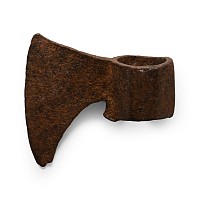
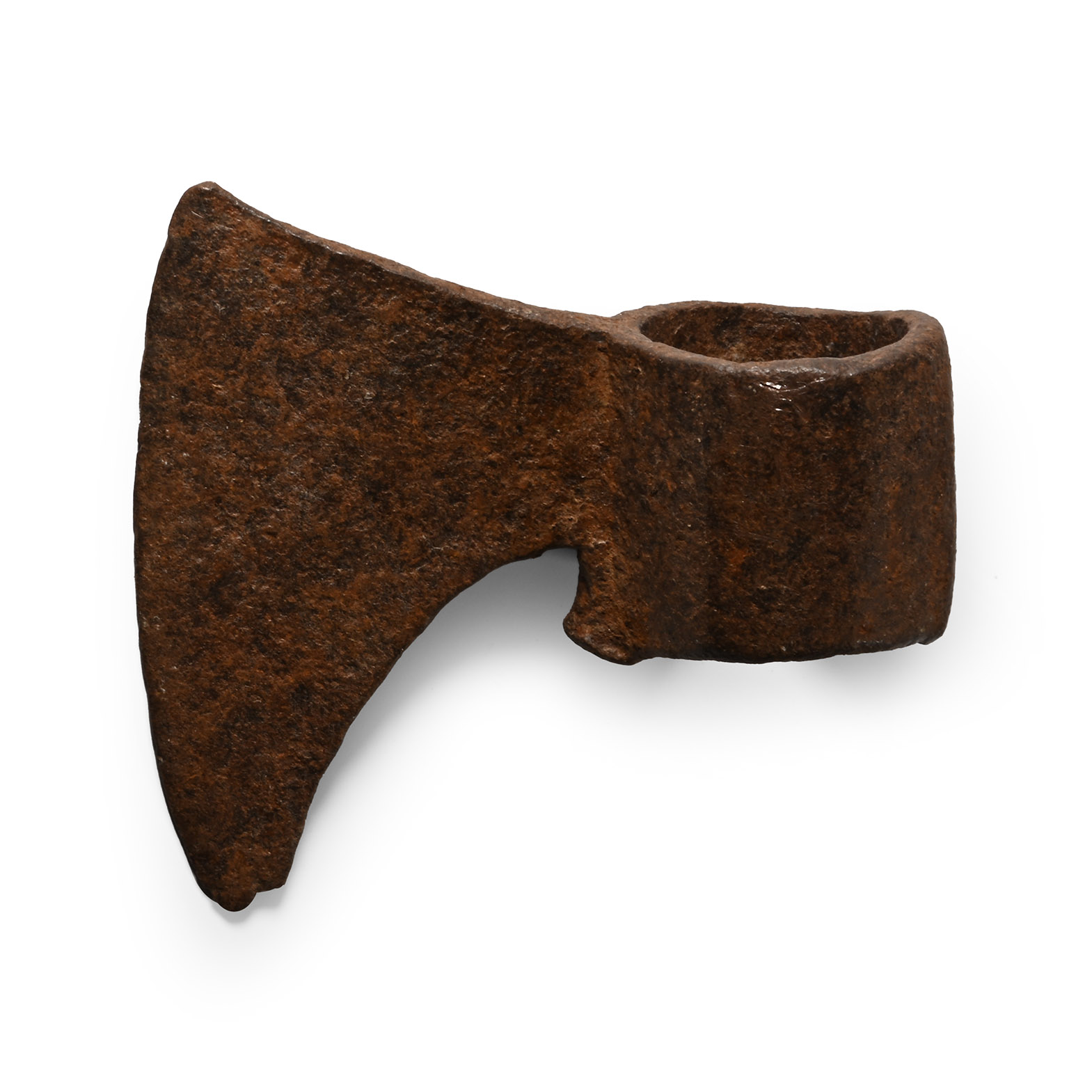
LOT 1665
Medieval Iron Triangular Axehead
CIRCA 15TH-16TH CENTURY A.D.
3 3/8 in. (163 grams, 85 mm).
A small axe with a gently curving blade and circular socket. [No Reserve]
ProvenanceEx North American private collection, 1970s-1990s.
This lot is accompanied by an illustrated lot declaration signed by the Head of the Antiquities Department, Dr Raffaele D’Amato.
TimeLine Auctions follows a vetting process to ensure the authenticity and legality of all items, reinforcing our commitment to integrity and responsible trading. Each antiquity, antique, and coin lot undergoes thorough examination by a vetting committee of at least ten external specialists, professional trade association members, scientists, and archaeologists: Our Vetting Process
AUCTIONS:
TimeLine is a leading auction house specialising in antiquities, ancient art, collectables, natural history, coins, medals, and books. Our auctions offer museums, collectors, historians, and enthusiasts the opportunity to acquire unique and historically significant pieces.
-
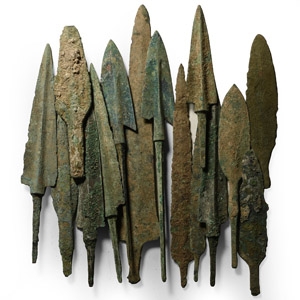
Luristan Bronze Arrowhead Group
13th-6th century B.C.Sold for (Inc. bp): £260
Including leaf-shaped, triangular and other tanged types. 370 grams total, 9.6-19 cm
Acquired 1980-2015. Ex Abelita family collection. This lot is accompanied by an illustrated lot declaration signed by the Head of the Antiquities Department, Dr Raffaele D’Amato. -
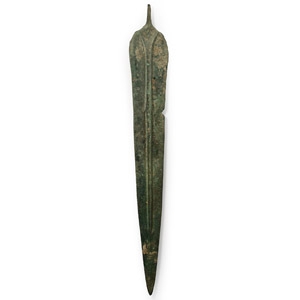
Luristan Bronze Short Sword with Blood Channels
2nd-1st millennium B.C.Sold for (Inc. bp): £390
A two-edged leaf-shaped blade with short rectangular tang, corrugated midrib extending almost to the tip and flared at the shoulder. 342 grams, 48 cm
Acquired 1980-2015. Ex Abelita family collection. This lot is accompanied by an illustrated lot declaration signed by the Head of the Antiquities Department, Dr Raffaele D’Amato.
Luristan was hardly an ethnic or political entity, but the people of Luri had relations through warfare and trade with Sumerians, Lullubi, Assyrians, Babylonians and Elamites in a large time period, spanning from the 3rd to the 2nd millennium B.C. The ruling elites of warrior horsemen were buried in the graves with their weapons and horses. -
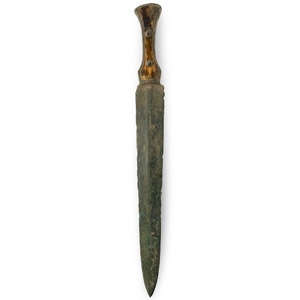
Luristan Bronze Dirk
10th century B.C.Sold for (Inc. bp): £390
A short sword with lentoid-section triangular blade, rhomboid guard, hilt with later organic filling to each face. 228 grams, 34 cm
Acquired 1980-2015. Ex Abelita family collection. This lot is accompanied by an illustrated lot declaration signed by the Head of the Antiquities Department, Dr Raffaele D’Amato.
The type Dirk I according to the classification of Medvedskaya is common among dirks and daggers attributed to Luristan. The hilt is flanged and accepts inlays remnants of organic material on the handle. There are also two angular indentations on each side of the guard.
