
Loading, please wait...
LOT 1588
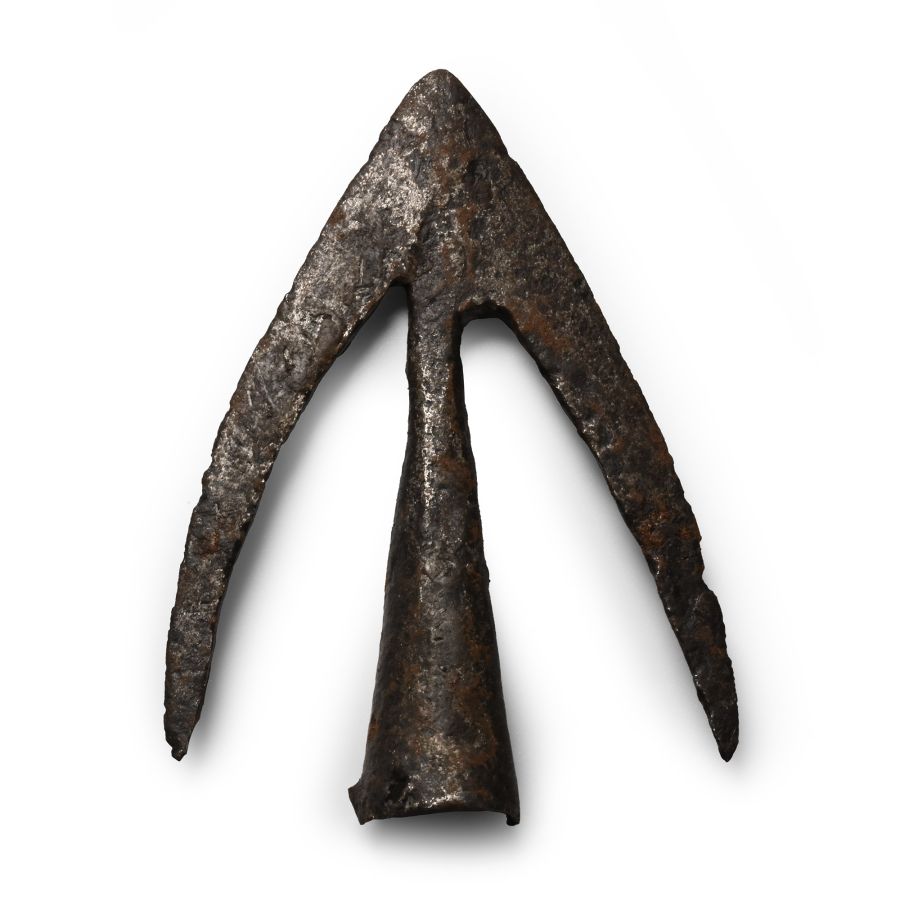
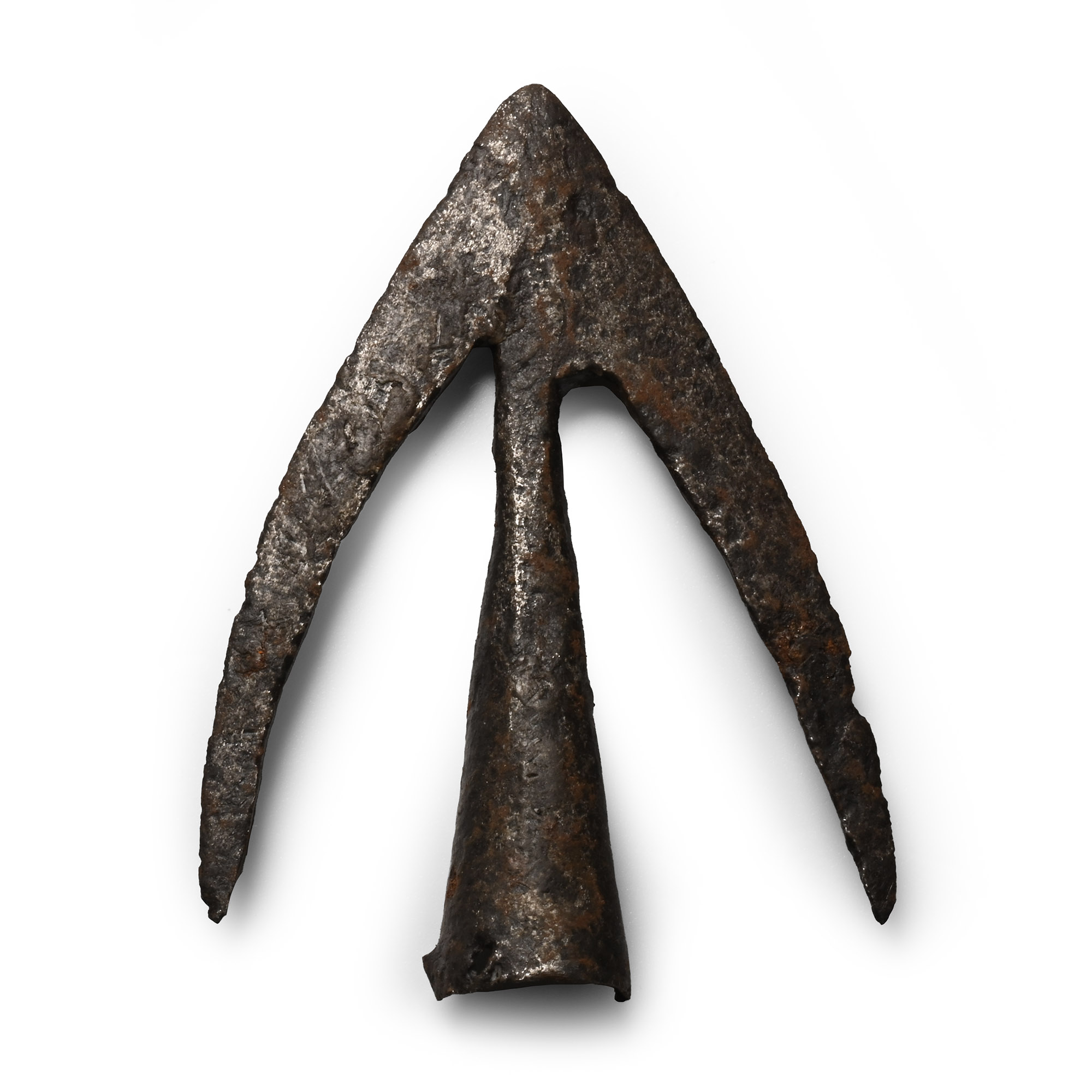
Medieval Iron Swallow-Tailed Arrowhead
14TH CENTURY A.D.
2 in. (8.08 grams, 52 mm).
With narrow curved edges and tapering socket. [No Reserve]
ProvenanceAcquired from Coincraft, London, UK.
From the private collection of Kenneth Machin (1936-2020), Buckinghamshire, UK; with collection no.M36; his collection of antiquities and natural history was formed since 1948; thence by descent.
Accompanied by an original certificate of authenticity from Coincraft.
This lot is accompanied by an illustrated lot declaration signed by the Head of the Antiquities Department, Dr Raffaele D’Amato.
See Jessop, O., Medieval Arrowheads, Finds Research Group datasheet 22, Lincoln, 1997.
CONDITIONTimeLine Auctions follows a vetting process to ensure the authenticity and legality of all items, reinforcing our commitment to integrity and responsible trading. Each antiquity, antique, and coin lot undergoes thorough examination by a vetting committee of at least ten external specialists, professional trade association members, scientists, and archaeologists: Our Vetting Process
AUCTIONS:
TimeLine is a leading auction house specialising in antiquities, ancient art, collectables, natural history, coins, medals, and books. Our auctions offer museums, collectors, historians, and enthusiasts the opportunity to acquire unique and historically significant pieces.
-
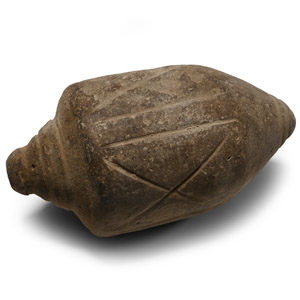
Turco-Mongol 'Greek Fire' Ceramic Fire Bomb or Hand Grenade
14th-15th century A.D.Sold for (Inc. bp): £59
A hollow vessel with cylindrical body, short neck and domed mouth, band of X-motifs and vertical lines to the body; intended to be filled with explosive liquid and a wick, and used as a hand grenade. 1.05 kg, 18 cm
From an important specialist collection, London, UK, 1990s onwards. This lot is accompanied by an illustrated lot declaration signed by the Head of the Antiquities Department, Dr Raffaele D’Amato. -
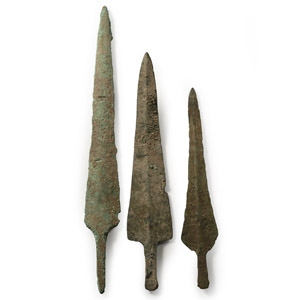
Luristan Bronze Short Spearhead Group
12th-11th century B.C.Estimate: £100 - 140 (+bp*)
Opening Bid: £50
Three spearheads with a short tang and triangular blade, squared or slightly rounded shoulders. 241 grams total, 17.5-26 cm
Acquired 1980-2015. Ex Abelita family collection. This lot is accompanied by an illustrated lot declaration signed by the Head of the Antiquities Department, Dr Raffaele D’Amato.
The spearheads belong to type 2 of spearheads according to the Khorasani classification. A similar specimen was excavated by Negahban in Marlik. -
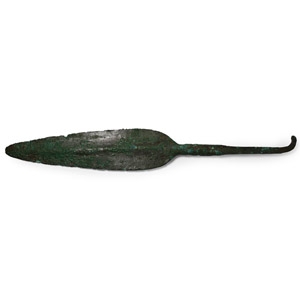
Large Marlik Bronze Spearhead
Early 1st millennium B.C.Sold for (Inc. bp): £52
With a leaf-shaped blade and raised midrib extending to a rectangular section tang with a right angle turn. 528 grams, 41.5 cm
Acquired 1980-2015. Ex Abelita family collection. This lot is accompanied by an illustrated lot declaration signed by the Head of the Antiquities Department, Dr Raffaele D’Amato.
