
Loading, please wait...
LOT 1151
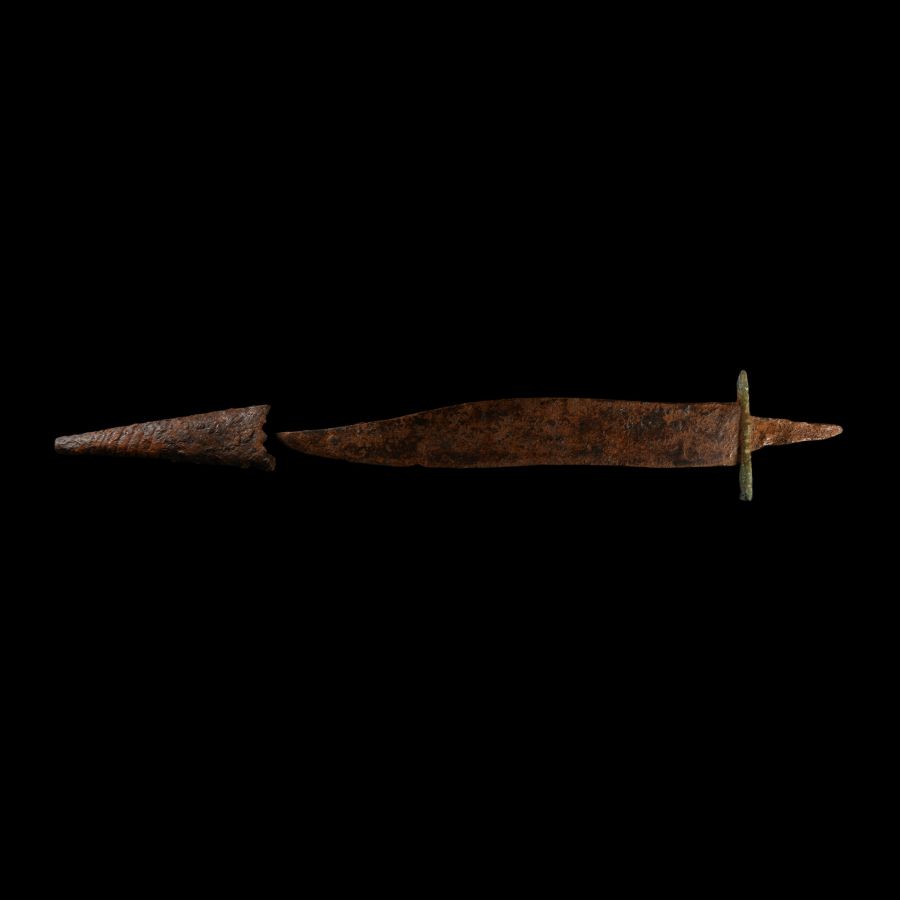
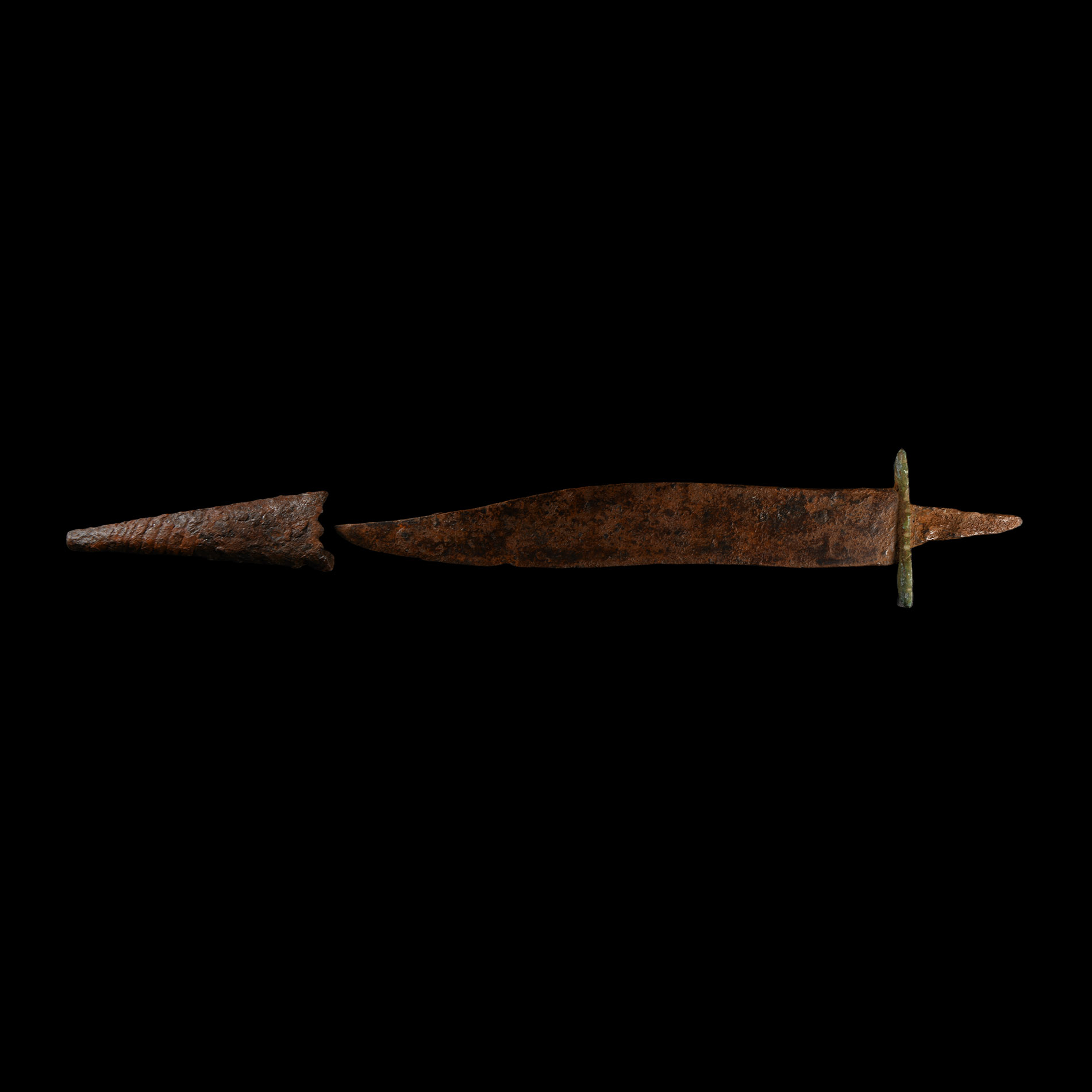
Medieval Iron Knife with Chape
CIRCA 14TH-16TH CENTURY A.D.
10 1/4 in. (159 grams, 26 cm).
The undulating blade with a single cutting edge, guard and tang, together with a chape (belonging) with decorative incising. [No Reserve]
ProvenanceAcquired on the UK art market.
Property of a Ruislip, UK, gentleman, by inheritance.
TimeLine Auctions follows a vetting process to ensure the authenticity and legality of all items, reinforcing our commitment to integrity and responsible trading. Each antiquity, antique, and coin lot undergoes thorough examination by a vetting committee of at least ten external specialists, professional trade association members, scientists, and archaeologists: Our Vetting Process
AUCTIONS:
TimeLine is a leading auction house specialising in antiquities, ancient art, collectables, natural history, coins, medals, and books. Our auctions offer museums, collectors, historians, and enthusiasts the opportunity to acquire unique and historically significant pieces.
-
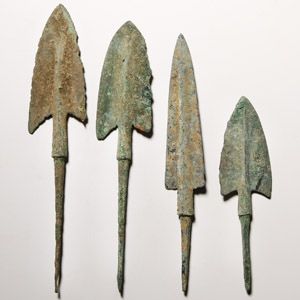
Marlik Bronze Arrowhead Group
12th-10th century B.C.Sold for (Inc. bp): £156
Comprising four tanged arrowheads, with large bronze elongated triangular blades and raised midrib, sharp central groove, cylindrical stem with handle for the shaft; three with barbed shoulders and convex sides. 106 grams total, 10.2-15.2 cm
Acquired 1980-2015. Ex Abelita family collection.
Some of these arrowheads seem to belong to the type V, subcategory type C, according to the classification of Khorasani and Negahban. In the four categories of triangular bronze arrowheads from Luristan, Marlik and Northern Iran individuated by Negahban, subtypes C and D of type V are larger arrow or javelin heads, C with barbed shoulders and D with round shoulders. -
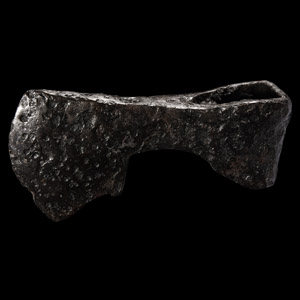
Viking Iron Bearded Axehead
10th-12th century A.D.Sold for (Inc. bp): £208
Featuring a sub-triangular socket, rectangular butt and bearded head with convex cutting edge. 563 grams, 14.6 cm
From the private collection of a London gentleman, from his grandfather's collection formed before the early 1970s. -
.jpg)
Sassanian Bronze Spangenhelm
6th-7th century A.D.Sold for (Inc. bp): £3,380
Multi-segmented with an ogival profile, rivetted conical finial and riveted straps running vertically around the circumference; some restoration. 1.14 kg, 23 cm high
UK private collection before 2000. UK art market. Property of a London gentleman. Accompanied by an academic report by Dr Raffaele D'Amato. This lot has been checked against the Interpol Database of stolen works of art and is accompanied by searcher certificate no.11589-199700.
The Spangenhelm is a protective headgear made up from segments or plates held together by a frame. As a popular form of helmet it came to prominence in western Europe in the later Roman Empire, and remained in use for some centuries until replaced by helmets formed from a single sheet.
