
Loading, please wait...
LOT 1873
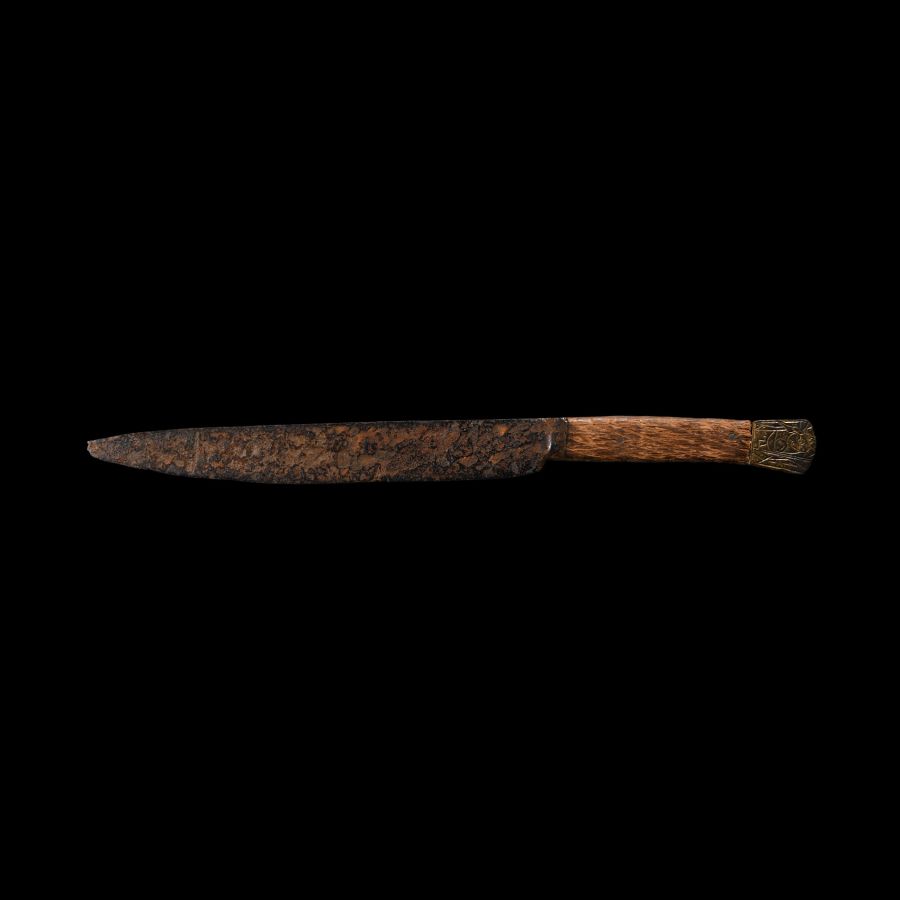
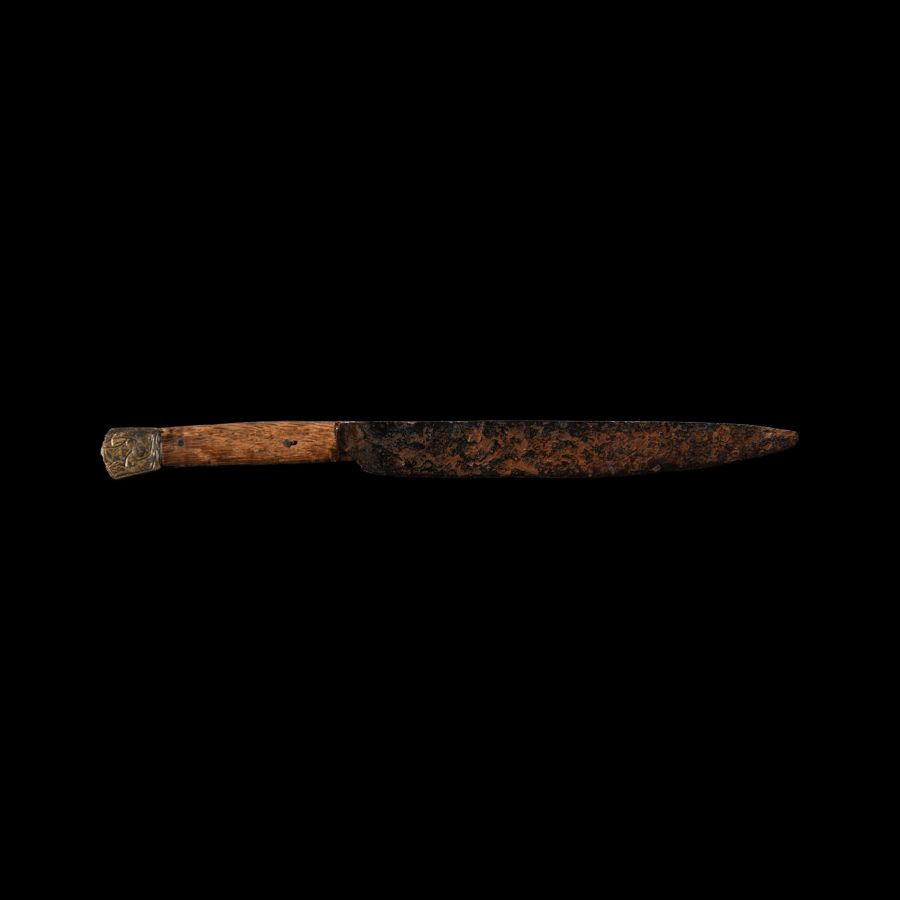
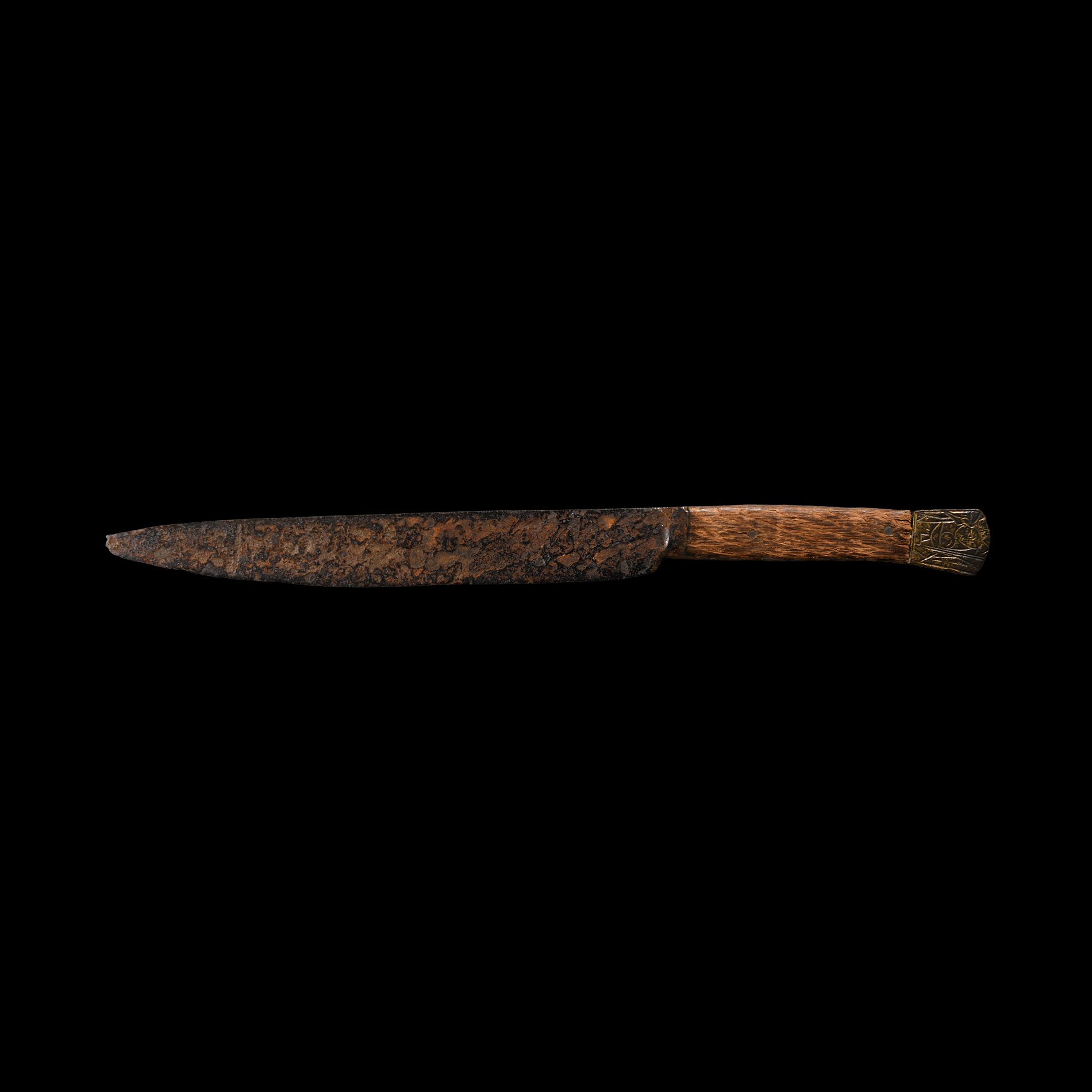
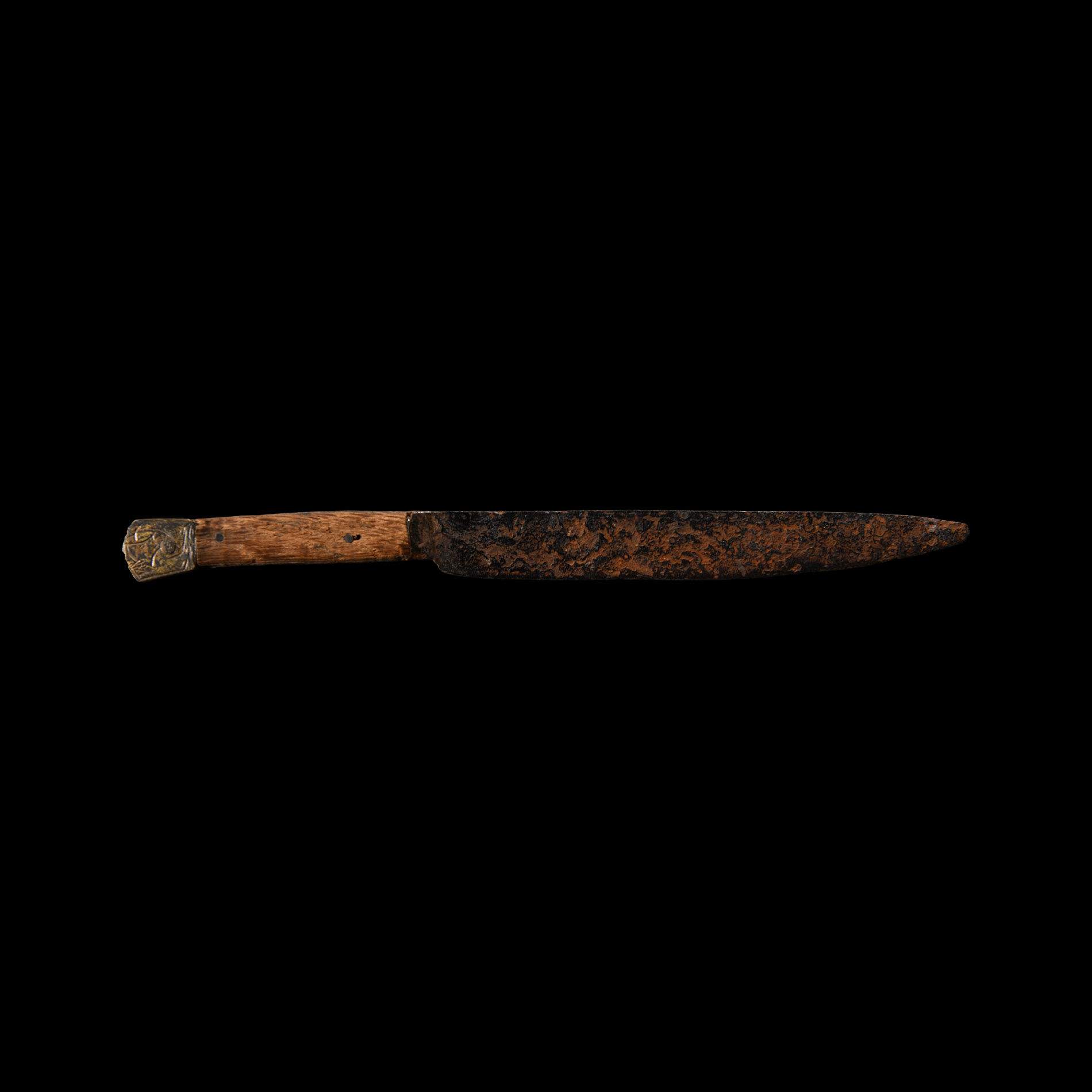
Medieval Iron Knife with Bronze Pommel
CIRCA 1500 A.D.
7 3/8 in. (23 grams, 18.7 cm).
Comprising a single cutting edge and scale tang, bifacial pommel incised with a female figure possibly holding an arrow to one face and what is apparently a mythical beast or other animal to the other.
ProvenanceAcquired 1960s-1990s.
Late Alison Barker collection, a retired London barrister.
Cf. Marquardt, K., Eight Centuries of European Knives, Forks and Spoons: an Art Collection, Europe, 1997, pp.29-31, for similar.
FootnotesExamining the medieval miniatures, the knives were diagonally suspended, but the vertical suspension was the most common method in all periods. With the contrivance of an additional inner scabbard it was possible to carry more than one knife.
CONDITIONTimeLine Auctions follows a vetting process to ensure the authenticity and legality of all items, reinforcing our commitment to integrity and responsible trading. Each antiquity, antique, and coin lot undergoes thorough examination by a vetting committee of at least ten external specialists, professional trade association members, scientists, and archaeologists: Our Vetting Process
AUCTIONS:
TimeLine is a leading auction house specialising in antiquities, ancient art, collectables, natural history, coins, medals, and books. Our auctions offer museums, collectors, historians, and enthusiasts the opportunity to acquire unique and historically significant pieces.
-
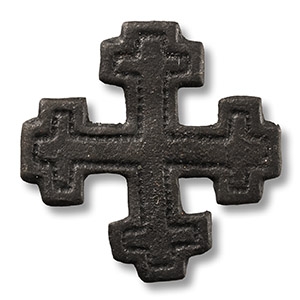
Medieval Bronze Knight's Holy Sepulchre Badge
Circa 13th-14th century A.D.Sold for (Inc. bp): £143
Formed as a cross-crosslet, the symbol of the Knights of the Holy Sepulchre, with punched-point border. 1.06 grams, 22 mm
Found on various UK sites since 1974. Property of an Essex collector.
The 'Equestrian Order of the Holy Sepulchre of Jerusalem' was an order of knighthood under the protection of the Pope, formed around 1099 AD by Duke Godfrey of Bouillon, the leader of the First Crusade. It was established for the protection of pilgrims travelling to the Holy Land and was recognised by a Papal Bull in about 1113 AD. -
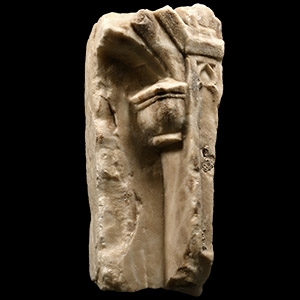
Romanesque Marble Architectural Stele Fragment
10th-11th century A.D.Sold for (Inc. bp): £351
Lateral edge fragment from an architectural panel with vertical jamb, corbel and end of an arch with cooped leading edge; jamb with recessed lancet detailing, vertical orientation. 2.1 kg, 21.5 cm
Assembled by family members in the mid 20th century. From a private West Sussex, UK, family collection. -
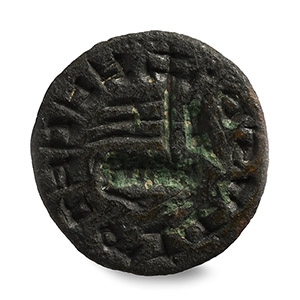
Medieval Bronze Seal Matrix with Lamb of God
12th-14th century A.D.Sold for (Inc. bp): £39
Chessman type matrix with central agnus dei motif and surrounding legend 'Ecce Agnus D[ei]' (here is the lamb of God'). 5.08 grams, 23 mm
Acquired from TimeLine Originals, Essex, UK, in 2004. Ex Stocker collection, Kent, UK, 1955-early 2000s. Accompanied by a copy of the on line listing.
