
Loading, please wait...
LOT 1757
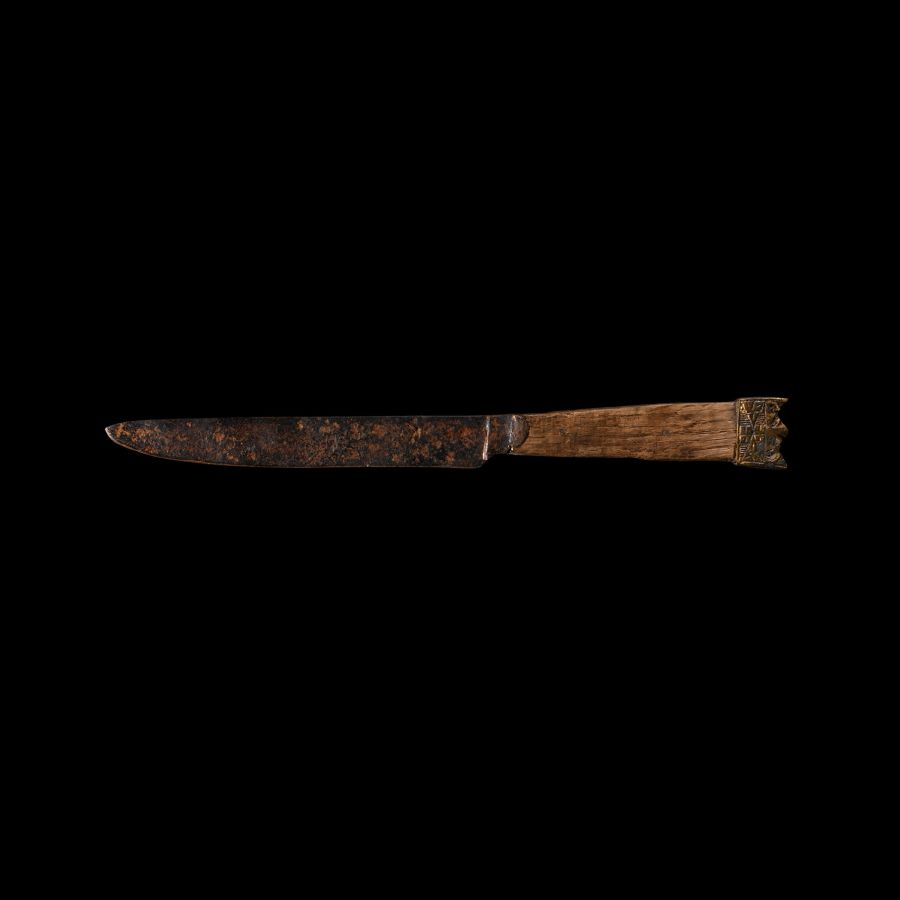
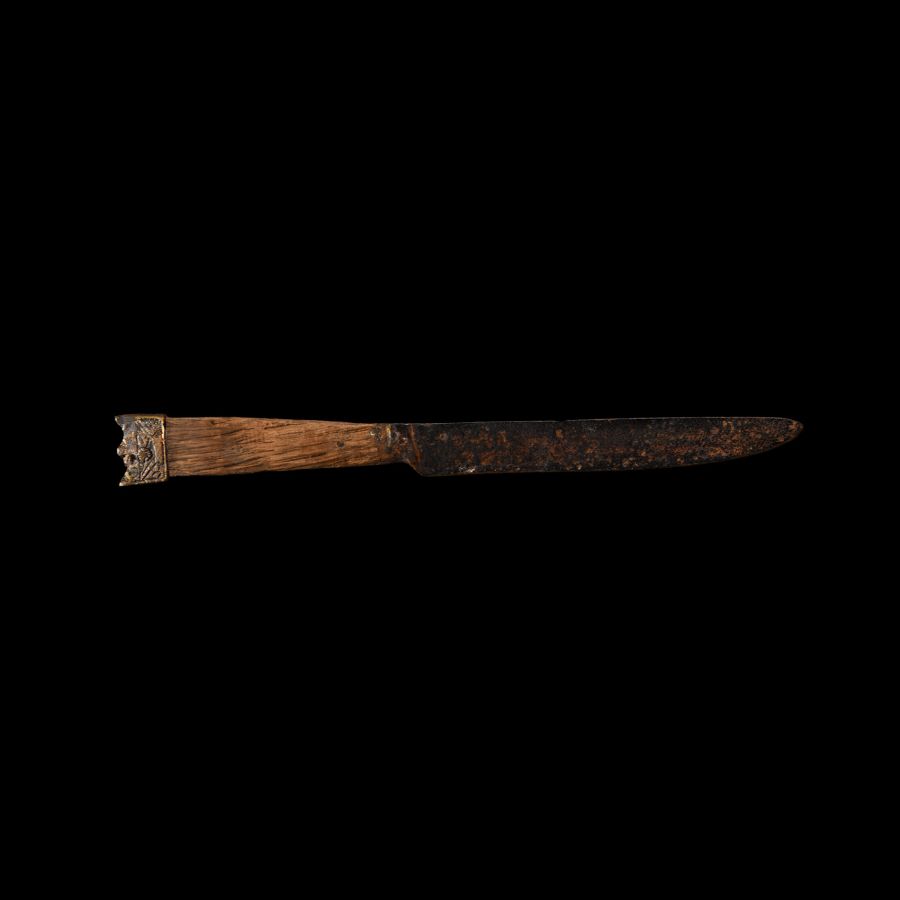
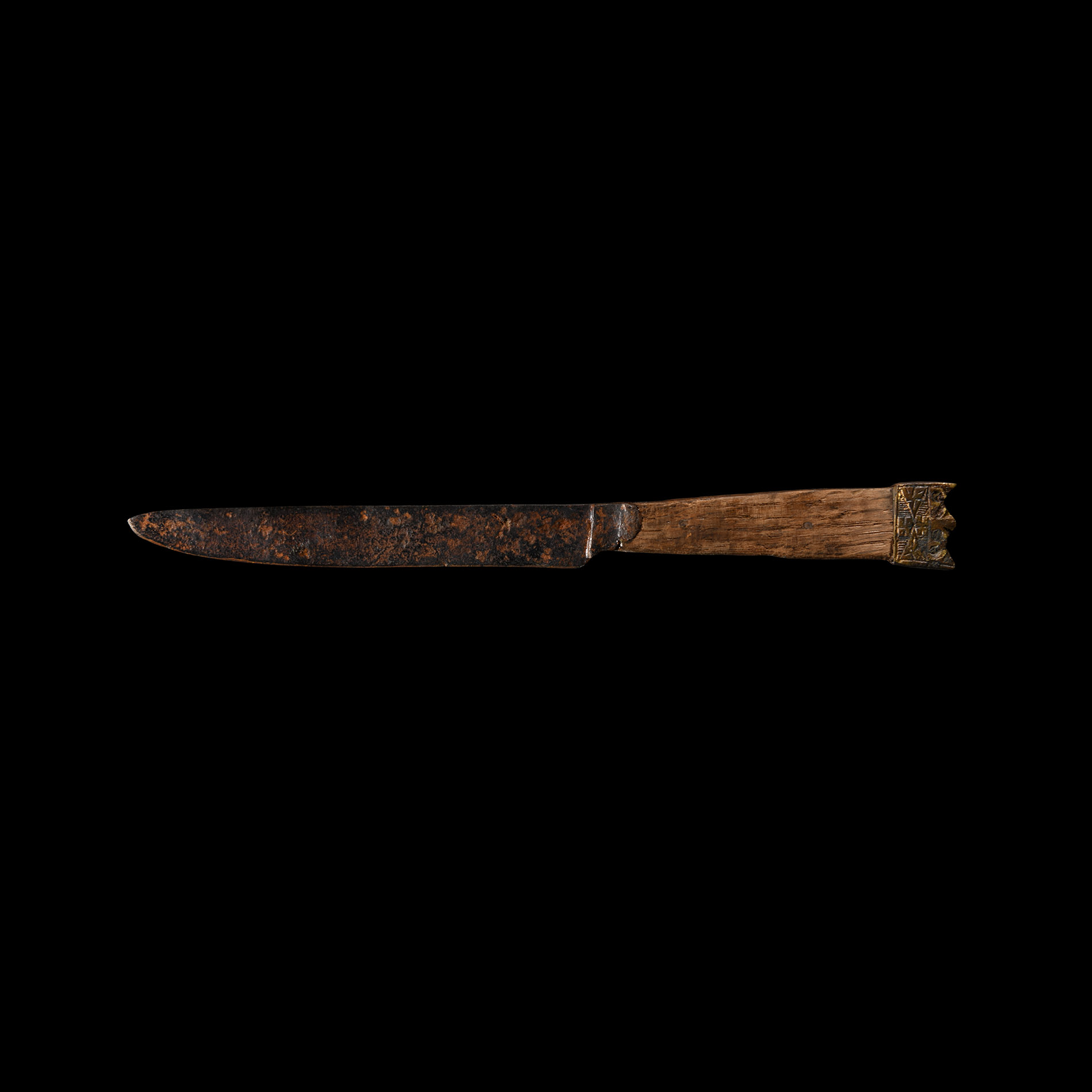
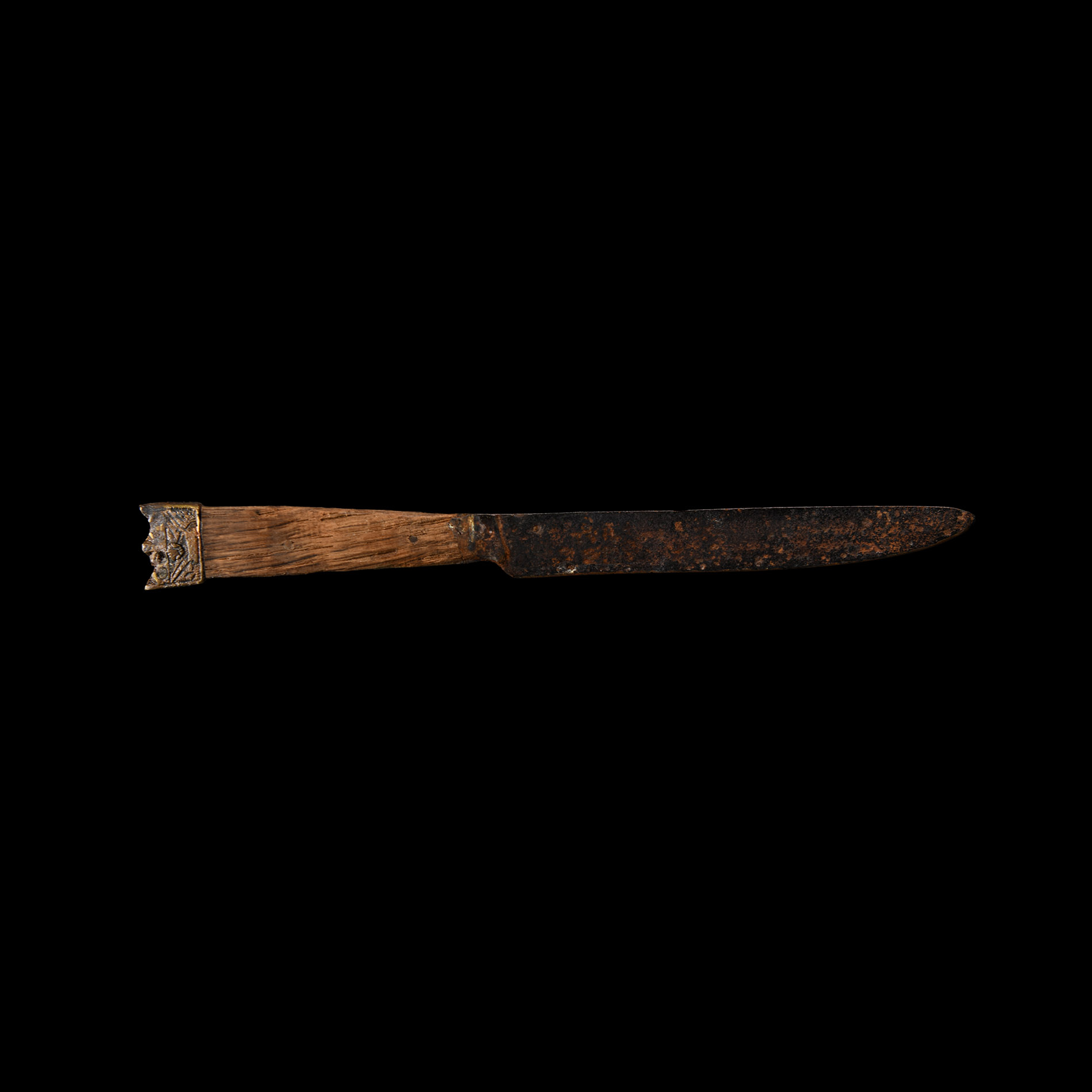
Medieval Iron Knife with Bronze Pommel
LATE 14TH CENTURY A.D.
7 1/4 in. (31 grams, 18.3 cm).
Comprising a single cutting edge; scale tang with pommel formed as a bifacial crown with incised detailing; Netherlands.
ProvenanceAcquired 1960s-1990s.
Late Alison Barker collection, a retired London barrister.
Marquardt, K., Eight Centuries of European Knives, Forks and Spoons: an Art Collection, Europe, 1997, p.32, item 69, for type.
FootnotesKnife handles can be classified according to their method of attachment into whittle and scale-tang handles. Whittle-tang handles were the most common type used in the early medieval period. Whittle tang handles (like here) were more common later and fixed by pushing the pointed end of the knife tang into the handle.
CONDITIONTimeLine Auctions follows a vetting process to ensure the authenticity and legality of all items, reinforcing our commitment to integrity and responsible trading. Each antiquity, antique, and coin lot undergoes thorough examination by a vetting committee of at least ten external specialists, professional trade association members, scientists, and archaeologists: Our Vetting Process
AUCTIONS:
TimeLine is a leading auction house specialising in antiquities, ancient art, collectables, natural history, coins, medals, and books. Our auctions offer museums, collectors, historians, and enthusiasts the opportunity to acquire unique and historically significant pieces.
-
.jpg)
Medieval 'The Rodings' Bronze Seal Matrix with Cockerel
Circa 14th century A.D.Sold for (Inc. bp): £33
Discoid with central intaglio cockerel in a beaded border,Lombardic script legend '* S' NICOLI . LATIIII . SCNIII'; loop to the reverse. 9.77 grams, 25 mm
Found The Rodings, Essex, UK. -
Medieval Ceramic Group
15th century A.D. and laterSold for (Inc. bp): £20
Including a jar with scalloped foot, a piriform juglet, footed pot with handle, small jar with remaining handle, likely bird water feeder and a stamped tripod dish; most glazed; most chipped or cracked. 3.3 kg total, 10-18 cm
Acquired 1990s-early 2000s. East Anglian private collection.
The salt-glazed stoneware jugs, like some of the specimens here presented, had a distinctive pitted ‘orange-skin’ surface. These tall jugs often have grooves around their bodies to support them during the high-temperature firing which was necessary to achieve the hard fabric. First imported into Britain in the early 14th century stone wares became common in the 16th and 17th centuries. Most came from production centres in the Rhineland, notably Cologne, Frechen, Langerwehe, Raeren and Westerwald. -

Medieval Stained Glass Panel with Bishop Hearing Disputes Beneath Gold Reliquary Caskets
Northern France, circa 1525 A.D.Sold for (Inc. bp): £598
Rectangular, with lead came frame and later suspension loop to each corner; painted scene depicting a bishop wearing his mitre and chasuble and holding his crozier standing among a group of disputants in a gallery with reliquary caskets above. 436 grams, 26 x 19.5 cm
These panels come from a Parisian flat in the 7th arrondissement, very close to the Rodin Museum. The family owning the panels lived in the flat for several generations. Ex central London gallery.
