
Loading, please wait...
LOT 1851
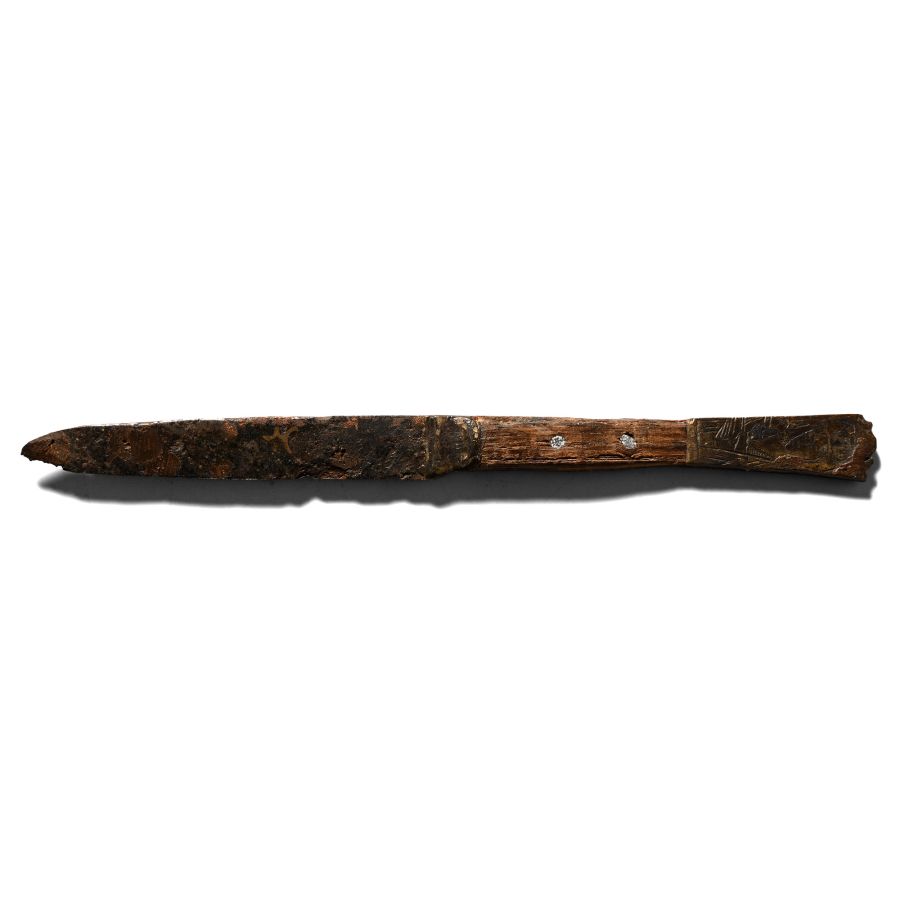
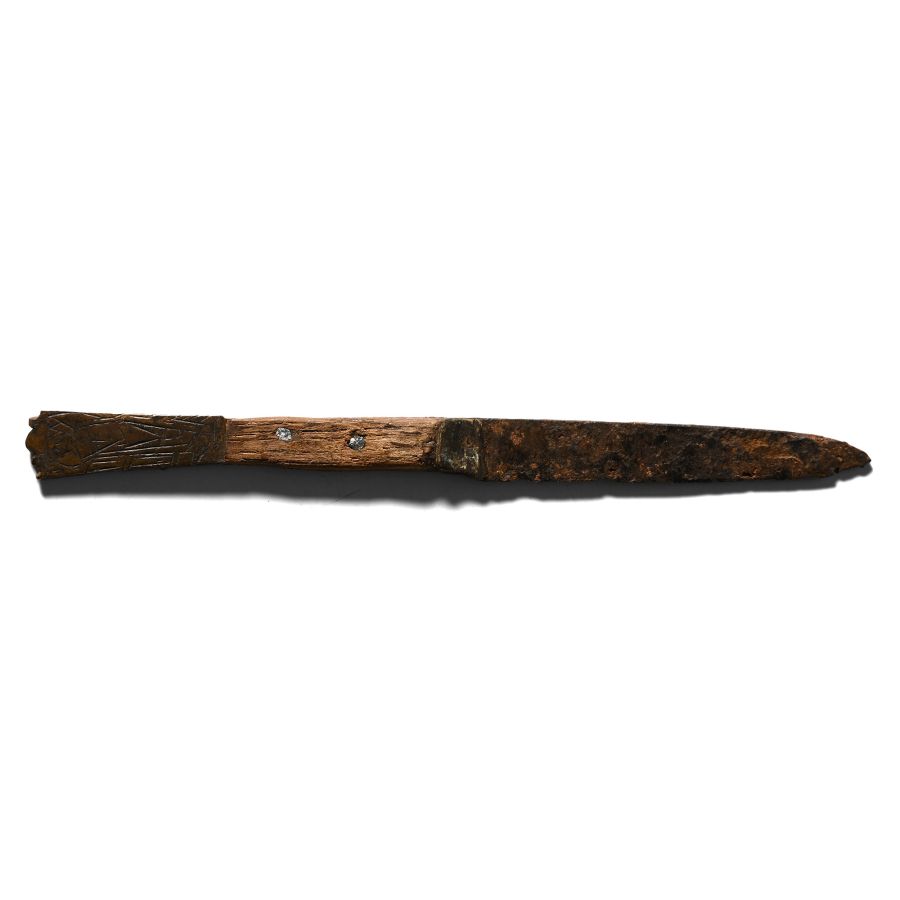
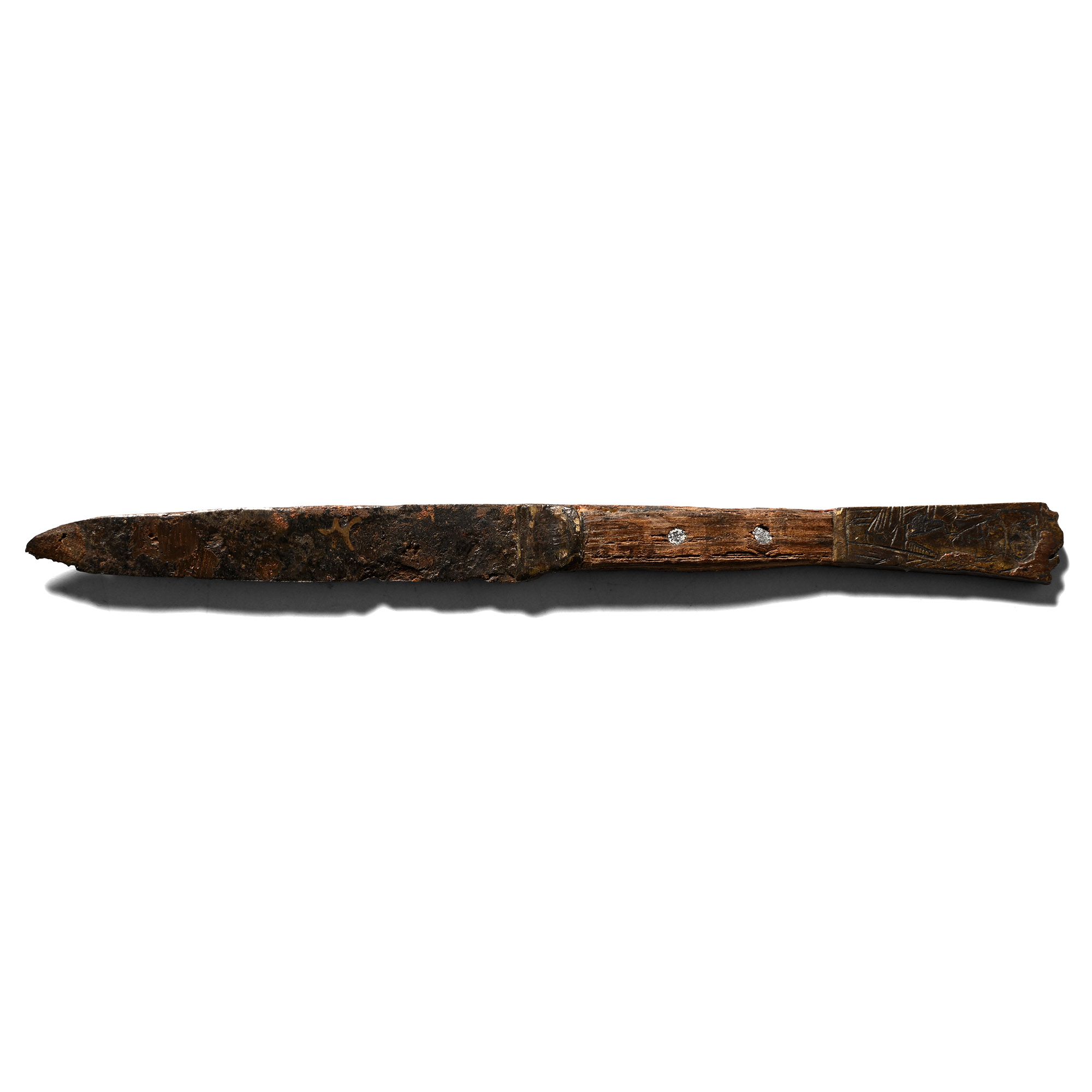
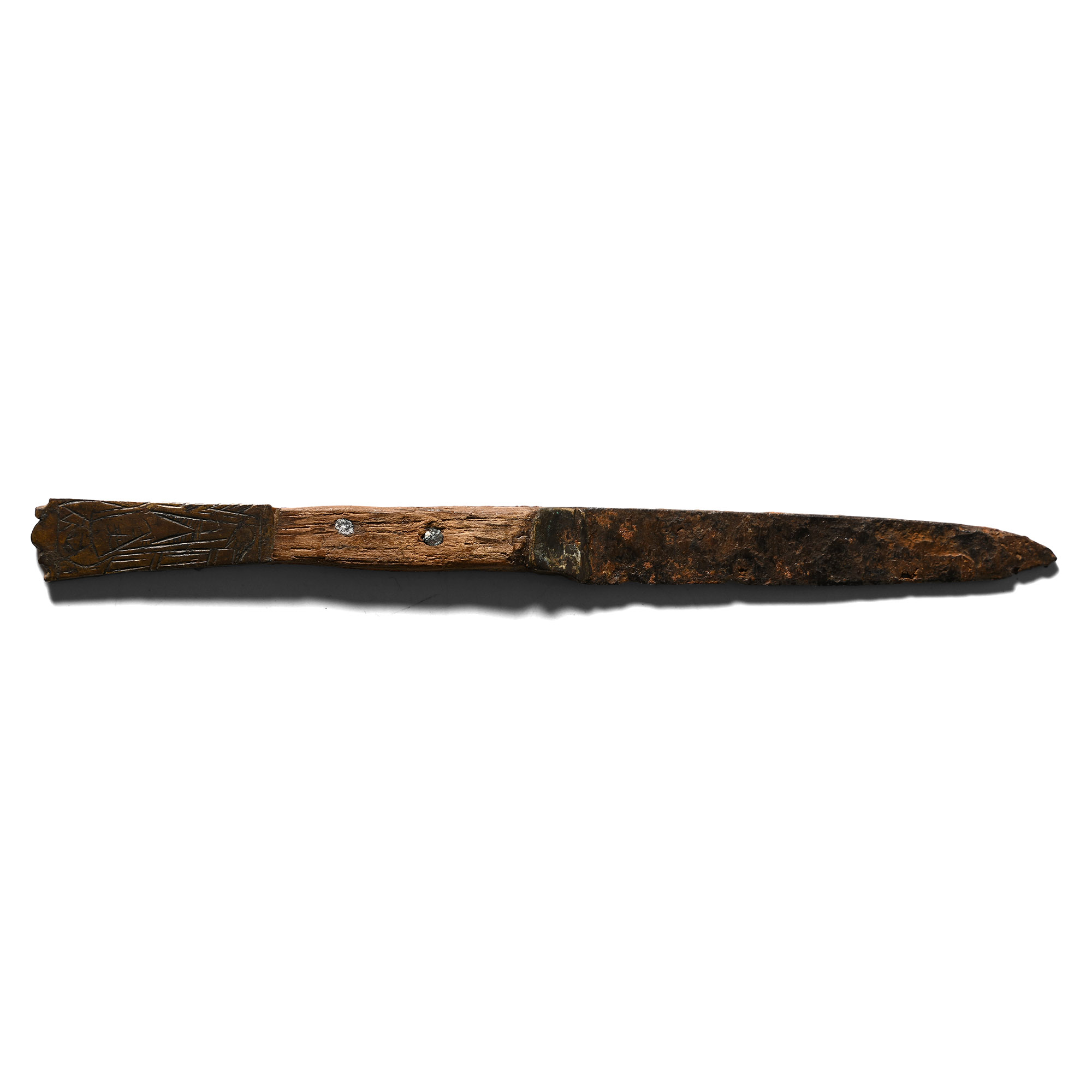
Medieval Iron Knife with Bronze Figural Pommel
CIRCA 1500 A.D.
4 3/4 in, (11.2 grams, 12.1 cm).
Narrow single-edged blade with integral bolster, scale-tang hilt; pommel with low-relief image of crowned Mary to each face.
ProvenanceAcquired on the UK art market before 2000.
Property of an Essex, UK, gentleman.
Cf. Marquardt, K., Eight Centuries of European Knives, Forks and Spoons: an Art Collection, Europe, 1997, pp.28-32, for similar.
CONDITIONTimeLine Auctions follows a vetting process to ensure the authenticity and legality of all items, reinforcing our commitment to integrity and responsible trading. Each antiquity, antique, and coin lot undergoes thorough examination by a vetting committee of at least ten external specialists, professional trade association members, scientists, and archaeologists: Our Vetting Process
AUCTIONS:
TimeLine is a leading auction house specialising in antiquities, ancient art, collectables, natural history, coins, medals, and books. Our auctions offer museums, collectors, historians, and enthusiasts the opportunity to acquire unique and historically significant pieces.
-
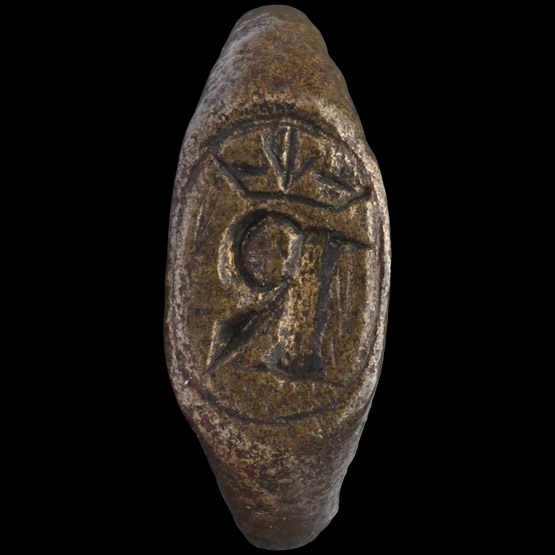
Large Medieval Bronze Signet Ring with Crowned R for Richard
15th-16th century A.D.Sold for (Inc. bp): £91
D-section hoop and ellipsoid bezel with crowned 'R' inside a cartouche. 6.39 grams, 25.21 mm overall, 20.28 x 19.83mm internal diameter (approximate size British U, USA 10, Europe 22.52, Japan 21)
From the collection of Dame Joan Evans (1893-1977), thence gifted during her lifetime to a gentleman collector friend from South East England.
Dame Joan Evans, DBE, FSA, FRHistS, enjoyed a long and distinguished career as an author and historian. She was appointed the president of the Society of Antiquaries in 1959, the first woman to hold this position, serving until 1964. From 1948 to 1951, Joan Evans served as President of the Royal Archaeological Institute. She received the Society’s gold medal in 1973. Joan Evans was honoured with a host of honorary degrees and fellowships, as well as fellowships of the Royal Historical Society and the Royal Society of Literature. She was a Chevalier of the Légion d’Honneur, and was appointed a Dame of the British Empire in 1976. She served as a trustee of both the London and the British museums, and as a member of the advisory council of the Victoria and Albert Museum. -
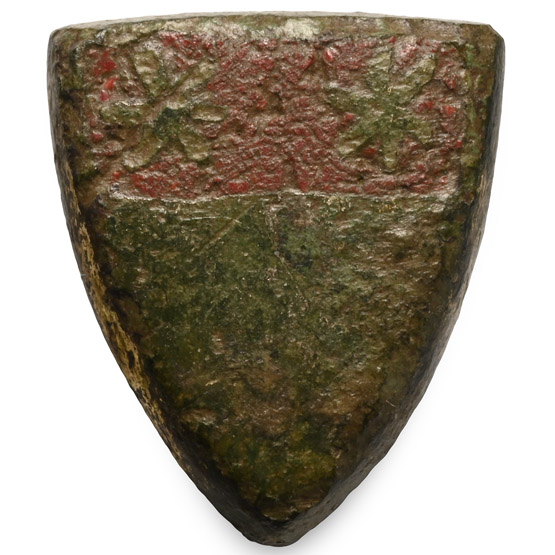
Medieval Knight's Enamelled Bronze Heraldic Horse Harness Stud
Circa 14th century A.D.Sold for (Inc. bp): £46
Heater-shaped with clubbed stud to the reverse; red enamelled band above (in chief) with two reserved mullets (stars); some gilding remaining. 4.22 grams, 16 mm
Found Waltham St. Lawrence, Windsor and Maidenhead, UK. Accompanied by a copy of the British Museum's Portable Antiquities Scheme (PAS) report no.SUR-0A67E3. -
.jpg)
Medieval Knight's Bronze Openwork Heraldic Horse Harness Pendant
14th-15th century A.D.Sold for (Inc. bp): £338
Comprising a circular frame with punched-point ornament and integral loop; low-relief advancing wolf with gaping jaws and raised tail. 21.4 grams, 56 mm
Acquired on the UK art market in the 1980s. From the private collection of an Essex gentleman.
