
Loading, please wait...
LOT 1685
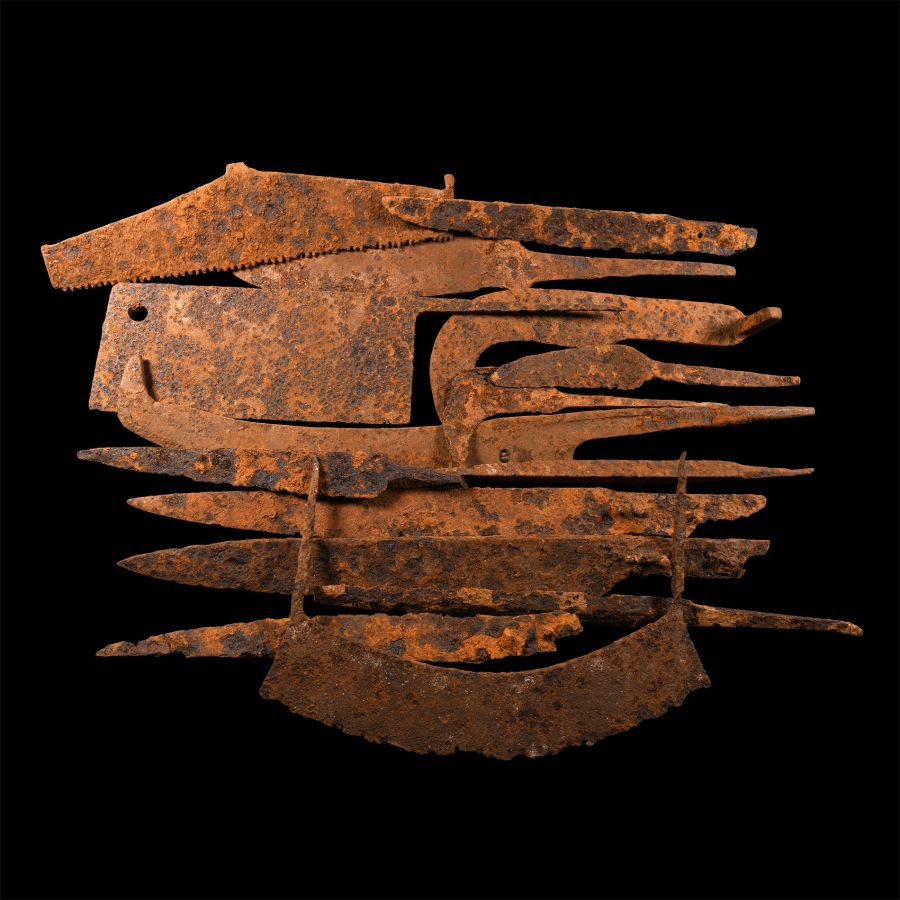
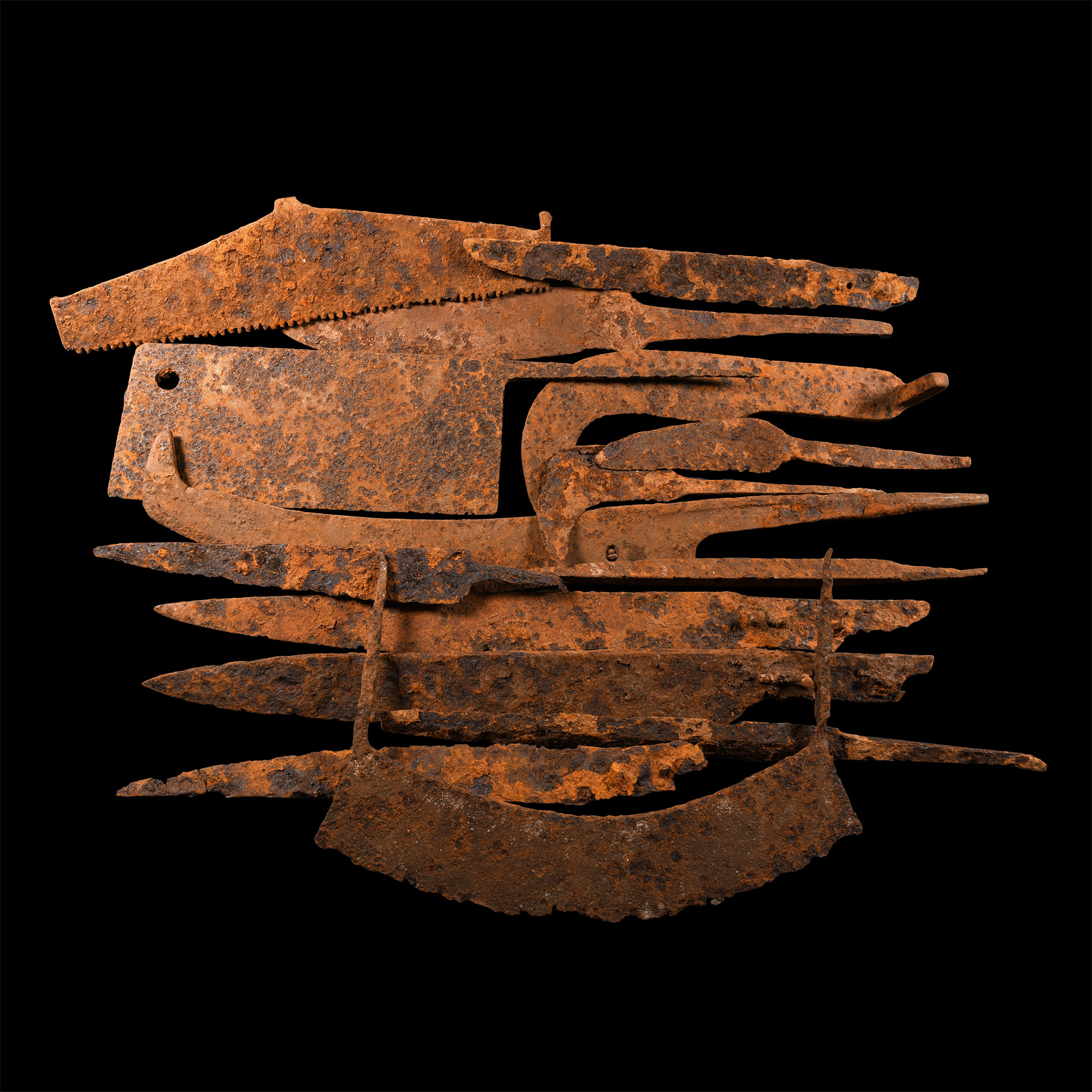
Medieval Iron Knife Blade Group
14TH-16TH CENTURY A.D.
7 - 16 1/2 in. (3.1 kg total, 18-42 cm).
Comprising hunting, butcher's domestic and other blade types, including examples with serrated blades and sickles. [15, No Reserve]
ProvenanceAcquired 1990s-early 2000s.
East Anglian private collection.
Cf. Cowgill, J. et al., Knives and Scabbards. Medieval Finds from Excavations in London, London, 1987, figs.57-63, for similar 14th century A.D. examples of knives.
FootnotesAside from the actual cut marks that are observed on animal bones following archaeological excavation, the butchery implements found from the medieval period are of considerable importance. The cut marks seem to indicate a more refined style of butchery with less use of the cleaver for disarticulation and a greater reliance on knives. The defining characteristic of the butchery knives is that they were sharp-edged and likely to have been made in much the same way as the cleavers, i.e. with a steel edge to maintain sharpness.
CONDITIONTimeLine Auctions follows a vetting process to ensure the authenticity and legality of all items, reinforcing our commitment to integrity and responsible trading. Each antiquity, antique, and coin lot undergoes thorough examination by a vetting committee of at least ten external specialists, professional trade association members, scientists, and archaeologists: Our Vetting Process
AUCTIONS:
TimeLine is a leading auction house specialising in antiquities, ancient art, collectables, natural history, coins, medals, and books. Our auctions offer museums, collectors, historians, and enthusiasts the opportunity to acquire unique and historically significant pieces.
-
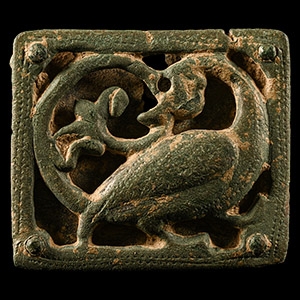
Medieval Bronze Openwork Belt Mount with Bird
12th-13th century A.D.Sold for (Inc. bp): £247
Rectangular in plan with openwork design displaying a bird standing right, its head turned upside down, holding a scrolling tendril in its beak; plain reverse plate with one rolled lip and rivets. 13.4 grams, 34 mm
Found Berkshire, UK. Accompanied by a copy of the British Museum's Portable Antiquities Scheme (PAS) report no.BERK-700C61. -
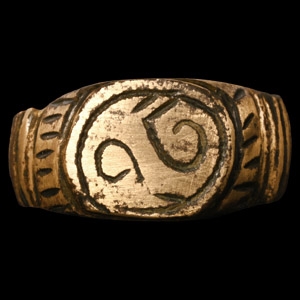
Medieval Bronze Ring with Scrolls
14th-15th century A.D.Sold for (Inc. bp): £78
With bands and hatching to the shoulders, ellipsoid bezel with scroll motifs. 8.52 grams, 25.20 mm overall, 20.79 mm internal diameter (approximate size British U 1/2, USA 10 1/4, Europe 23.15, Japan 22)
Acquired on the UK art market. Ex private Merseyside, UK, collection. -
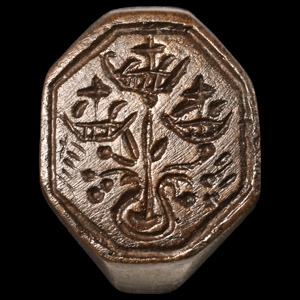
Medieval Bronze Merchant's Signet Ring
Circa 15th century A.D.Sold for (Inc. bp): £416
Hoop with expanded and facetted shoulders, octagonal bezel engraved with three stylised ships over a highly stylised plant motif. 11.12 grams, 24.41 mm overall, 20.25 mm internal diameter (approximate size British U, USA 10, Europe 22.52, Japan 21)
Private collection formed since the 1940s. UK art market. Property of an Essex gentleman.
