
Loading, please wait...
LOT 1652
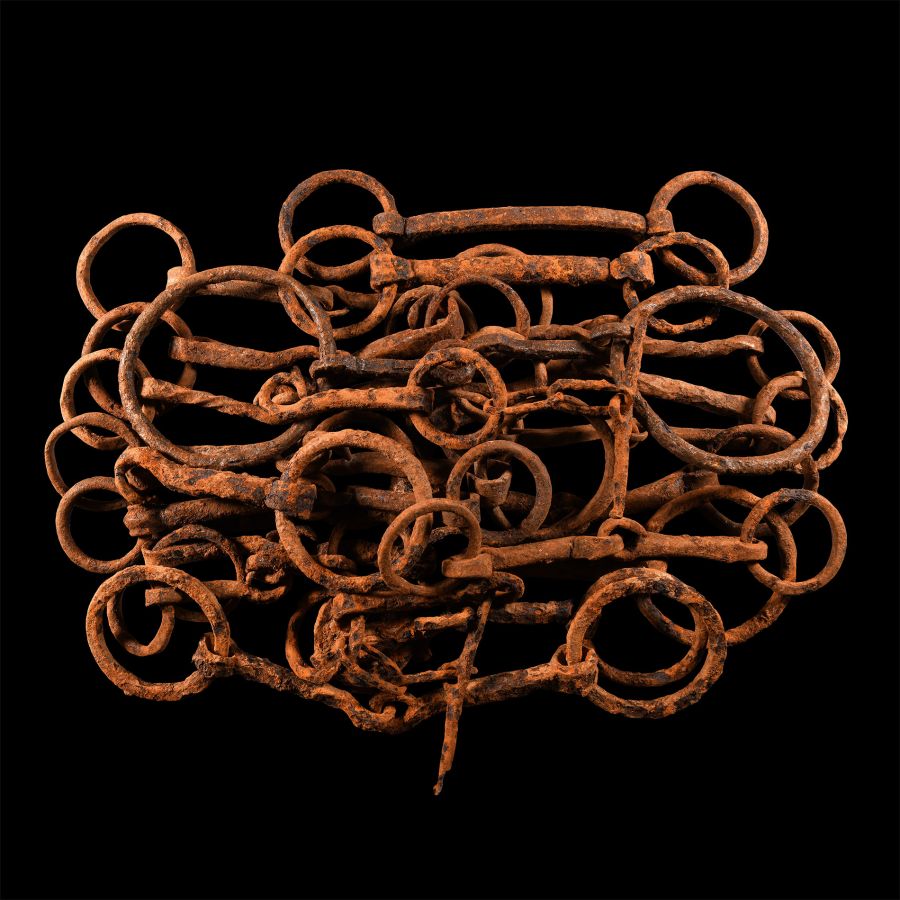
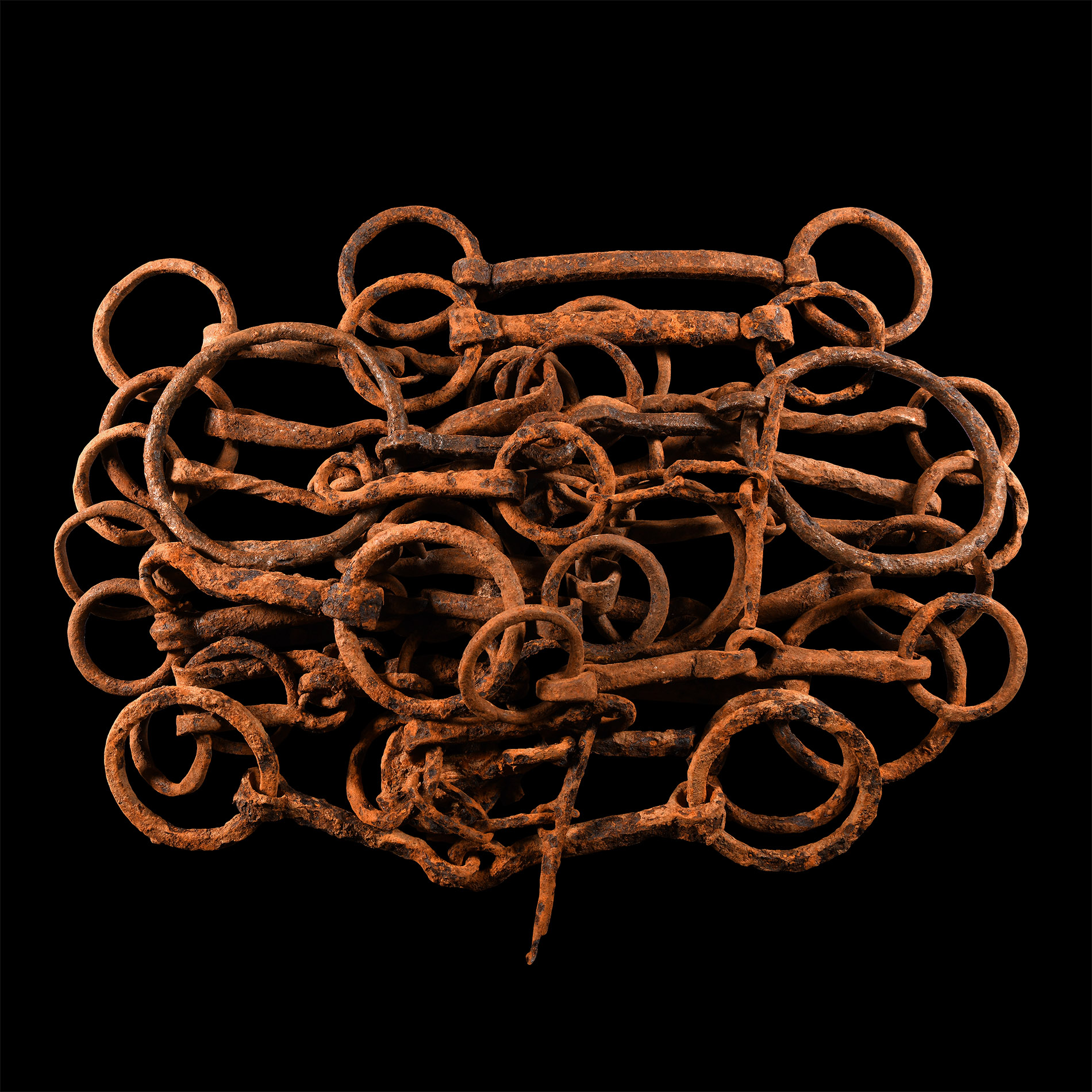
Medieval Iron Horse Bit Group
14TH-16TH CENTURY A.D.
8 1/4 -12 3/4 in. (2.85 kg total, 21-32.5 cm).
Comprising bits of various types and sizes, including articulate elements. [18, No Reserve]
ProvenanceAcquired 1990s-early 2000s.
East Anglian private collection.
Cf. similar specimen in PAS, PUBLIC-DEB4D3, in Leahy, K. and Lewis, M., Finds Identified II, London, 2020, p.295.
FootnotesThis kind of iron snaffle bits were commonly used in late Medieval or Renaissance period. The mouth piece was made in two linked sections, to which big rings were attached at the extremities. Reins and bridles were both fastened to the rings.
CONDITIONTimeLine Auctions follows a vetting process to ensure the authenticity and legality of all items, reinforcing our commitment to integrity and responsible trading. Each antiquity, antique, and coin lot undergoes thorough examination by a vetting committee of at least ten external specialists, professional trade association members, scientists, and archaeologists: Our Vetting Process
AUCTIONS:
TimeLine is a leading auction house specialising in antiquities, ancient art, collectables, natural history, coins, medals, and books. Our auctions offer museums, collectors, historians, and enthusiasts the opportunity to acquire unique and historically significant pieces.
-
.jpg)
Medieval Limestone Finial with Scenes from the Nativity
12th-13th century A.D.Sold for (Inc. bp): £3,900
An architectural structural element, carved in two pieces: the upper section formed as a tulip with rounded base, the Nativity scene depicted on all sides comprising: the Virgin and Child seated on a throne, surrounded by divine light; the three wise men bearing gifts to her right, the foremost man kneeling next to the throne; behind the wise men a scene depicting Mary resting on a bed with Joseph beside her, the Child in his cradle with a donkey and an ox looking over him bathed in divine light; the last scene representing the meeting between Mary and Saint Elizabeth; the square base with spandrels. 812 grams total, 70-78 mm
Acquired in the early 2000s. Ex Norfolk, UK, collection. Accompanied by an academic report by Dr Raffaele D’Amato. This lot has been checked against the Interpol Database of stolen works of art and is accompanied by search certificate no.11782-205862.
The treatment of the faces is similar to various English Romanesque ecclesiastical sculpture; see for example Christ in Majesty in St Andrew's Church in Bugthorpe or a loose corbel from the St Bees Priory Church of Saint Mary and Saint Bega (Cumbria). -
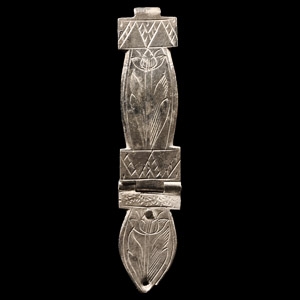
Medieval Complete Silver Vellum Manuscript Clasp
1400-1600 A.D.Sold for (Inc. bp): £117
The baluster-shaped plate with hooked clasp to one edge and engraved with a tulip-like design with chevrons either side; articulate leaf-shaped terminal engraved with a similar floral motif; two rivet holes with one remaining rivet; maker's mark 'II' or 'H' stamped to reverse. 4.97 grams, 59 mm
Found whilst searching with a metal detector near Deighton, Yorkshire, UK, on 1st October 2017 by Mr David Brooks. Accompanied by a copy of the British Museum's Portable Antiquities Scheme (PAS) report no.YORYM-C84DCC. Declared and disclaimed as Treasure with reference no.2017 T908. Accompanied by a copy of the Report for HM Coroner with reference no.2017 T908. Accompanied by a copy of a letter from the British Museum regarding the proposed return of the find.
A Howsam clasp type A.5.1. -
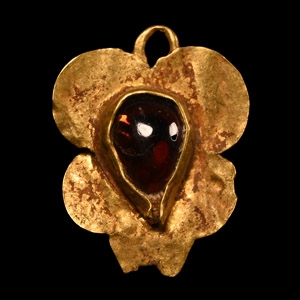
Medieval Gold Leaf-Shaped Pendant with Garnet
14th-16th century A.D.Sold for (Inc. bp): £140
A sheet-gold leaf with suspension loop and raised central cell inlaid with a polished garnet cabochon. 0.25 grams, 12 mm
From a late Japanese specialist collector, 1970-2000s.
