
Loading, please wait...
LOT 1651
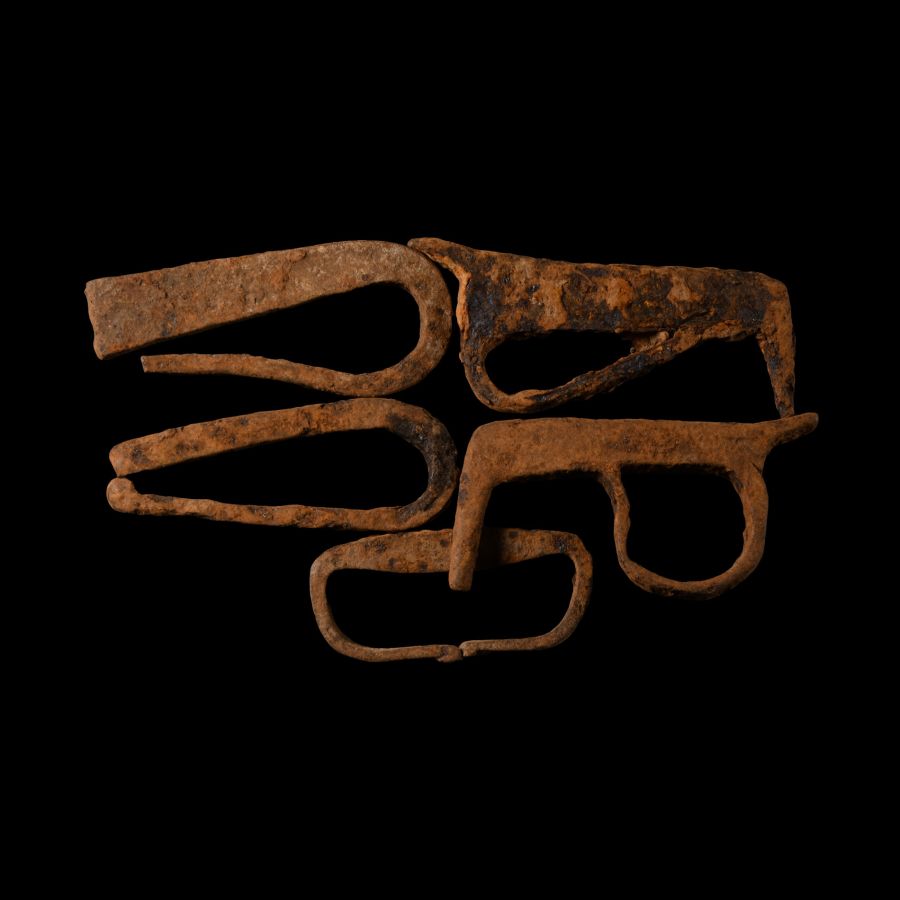
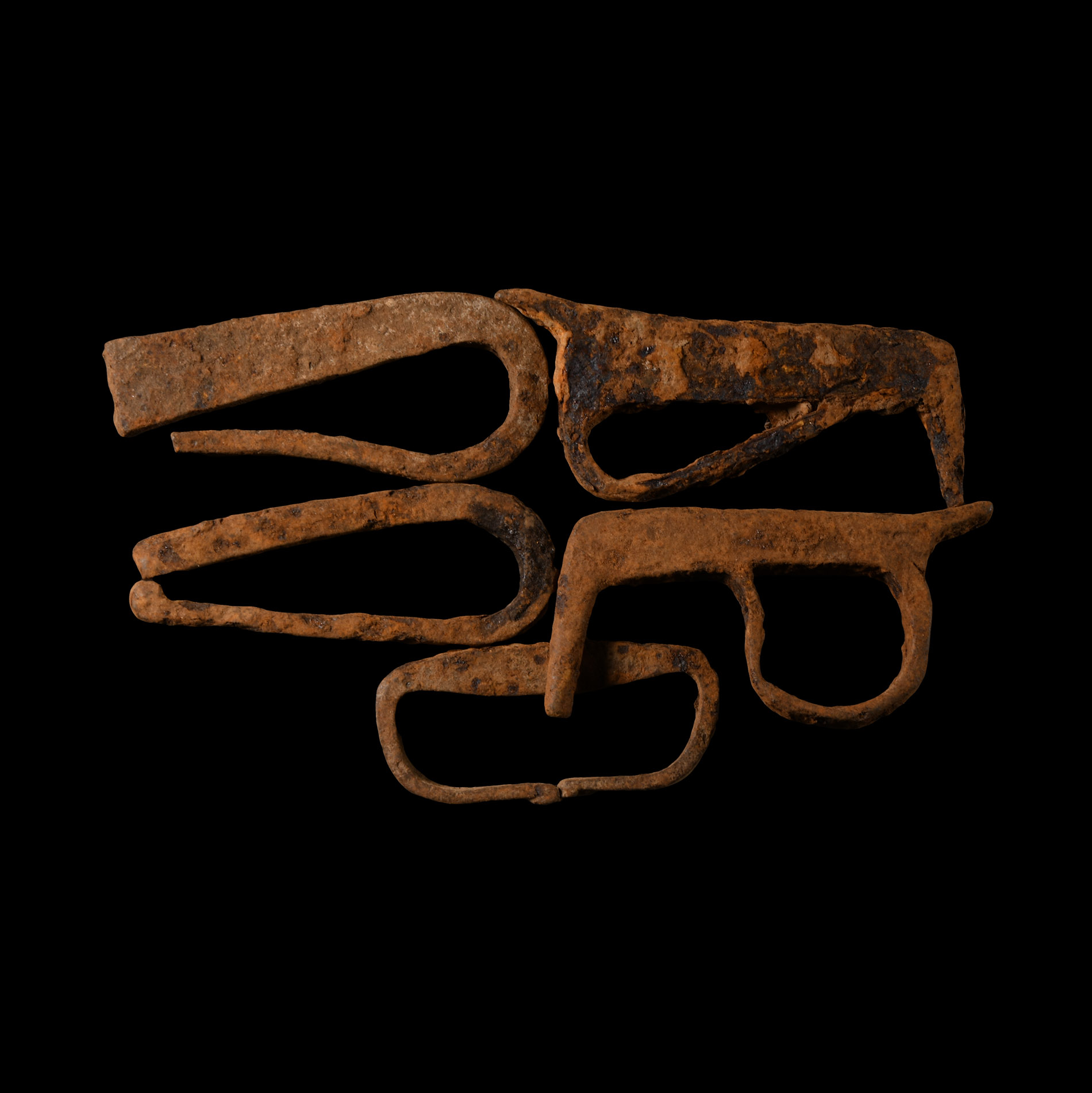
Medieval Iron Fire Starter Group
CIRCA 15TH CENTURY A.D.
2 - 3 in. (198 grams total, 54-76 mm).
Including fire steels of various types with ornamental shaping. [5]
ProvenanceAcquired 1990s-early 2000s.
East Anglian private collection.
TimeLine Auctions follows a vetting process to ensure the authenticity and legality of all items, reinforcing our commitment to integrity and responsible trading. Each antiquity, antique, and coin lot undergoes thorough examination by a vetting committee of at least ten external specialists, professional trade association members, scientists, and archaeologists: Our Vetting Process
AUCTIONS:
TimeLine is a leading auction house specialising in antiquities, ancient art, collectables, natural history, coins, medals, and books. Our auctions offer museums, collectors, historians, and enthusiasts the opportunity to acquire unique and historically significant pieces.
-
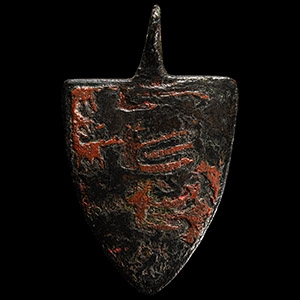
Medieval Knight's Bronze Royal Heraldic Horse Harness Pendant with the Arms of England
14th-15th century A.D.Sold for (Inc. bp): £143
Of a heater shield form with the three lions of England reserved against a red enamel background, with suspension loop. 10 grams, 44 mm
Found Cambridgeshire, before 1990. Acquired on the UK market, 1999. Property of a retired academic. -
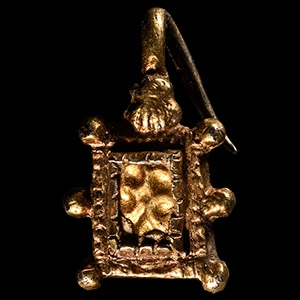
Medieval Silver-Gilt Dress Hook Fastener
14th-15th century A.D.Sold for (Inc. bp): £49
Rectangular bodied with raised central panel and knops to the perimeter, shell to top centre; hook and rectangular loop to reverse. 3.6 grams, 23 mm
Acquired on the UK market, 1990s. Property of a retired academic. -
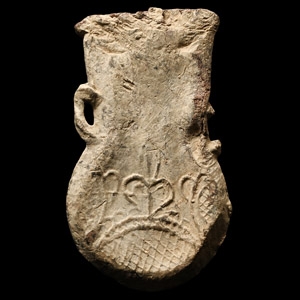
Medieval Lead Pilgrim's Holy Water Ampulla
15th century A.D.Sold for (Inc. bp): £104
Displaying a raised design to both faces: a four-petalled flower against a hatched field; a plant or heart on a mound; one remaining loop handle at the neck. 32.7 grams, 51 mm
Found Hampshire, UK.
