
Loading, please wait...

LOT 1446
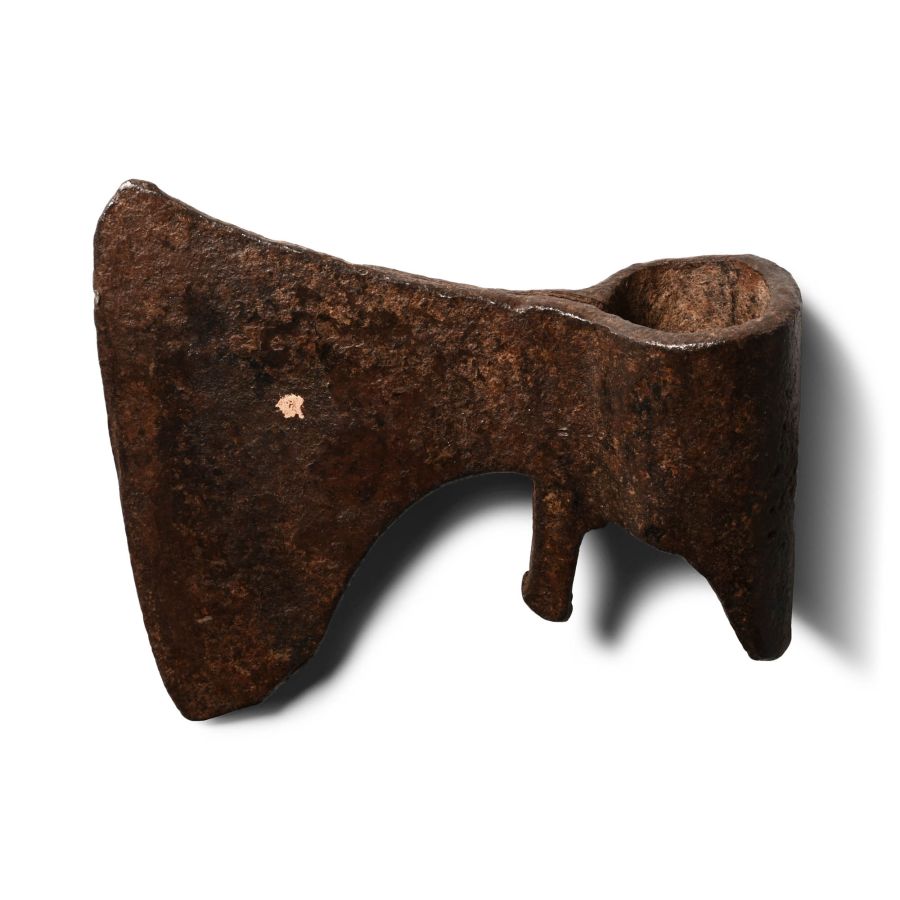
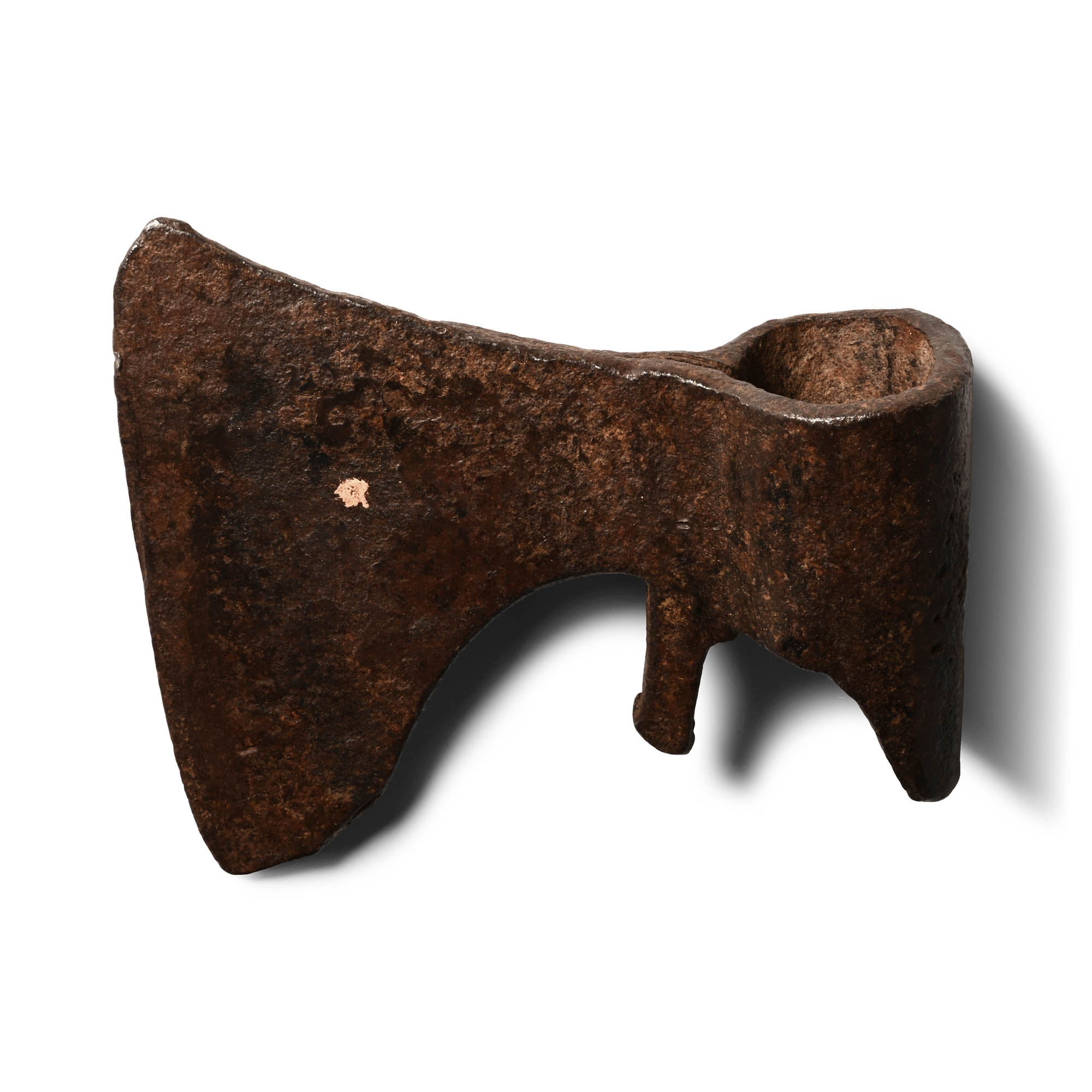
Medieval Iron Broad Axehead
CIRCA 14TH-16TH CENTURY A.D. OR LATER
3 3/4 in. (230 grams, 97 mm).
With D-shaped socket broad edge with chin below and languet. [No Reserve]
ProvenanceEx North American collection, 1970s-1990s.
CONDITIONTimeLine Auctions follows a vetting process to ensure the authenticity and legality of all items, reinforcing our commitment to integrity and responsible trading. Each antiquity, antique, and coin lot undergoes thorough examination by a vetting committee of at least ten external specialists, professional trade association members, scientists, and archaeologists: Our Vetting Process
AUCTIONS:
TimeLine is a leading auction house specialising in antiquities, ancient art, collectables, natural history, coins, medals, and books. Our auctions offer museums, collectors, historians, and enthusiasts the opportunity to acquire unique and historically significant pieces.
-
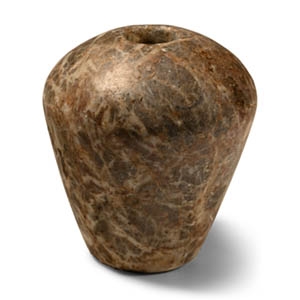
Western Asiatic White Flecked Grey Stone Mace Head
3rd-2nd millennium B.C.Sold for (Inc. bp): £338
Piriform in profile with vertical socket expanding towards the base. 351 grams, 70 mm
Ex London gentleman's collection, 1990s. -
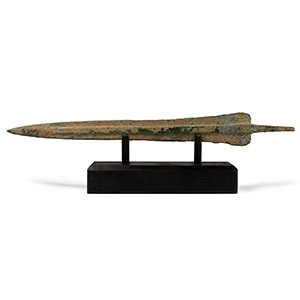
Luristan Bronze Dagger Blade
Circa 1st millennium B.C.Sold for (Inc. bp): £221
Comprising a slender blade with a raised midrib extending towards the short tang, broad rounded shoulders; mounted on a custom-made stand. 420 grams total, blade: 39 cm long
From the private collection of H. Norry, 1980s-1990s.
The Luri people produced a quantity of fine metalwork, which according to Dr. Khorasani, could be due to a settled period which arose as a result of the defeat of the Elamites by the Babylonians, leaving the Luristani people in relative peace for a period of time after 1200 B.C. According to Khorasani 'A culture of innovation and experimentation flourished, and the repertoire of the Luristan smiths expanded in the period between 1150–1050 BC.' -
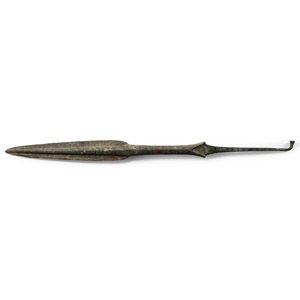
Luristan Bronze Spearhead
Late 2nd millennium B.C.Estimate: £100 - 140 (+bp*)
Opening Bid: £50
With ovate blade, central round rib and curved shoulders, the cylindrical long shaft widening towards the end, encasing a rectangular tang with bent tip. 351 grams, 44 cm
Acquired 1980-2015. Ex Abelita family collection.
Similar spearheads were excavated in Marlik. Negahban stated that based upon the evidence on archaeological finds from West-North Iran, this type of spearhead may be dated to the final centuries of 2nd millennium B.C.
