
Loading, please wait...
LOT 1187
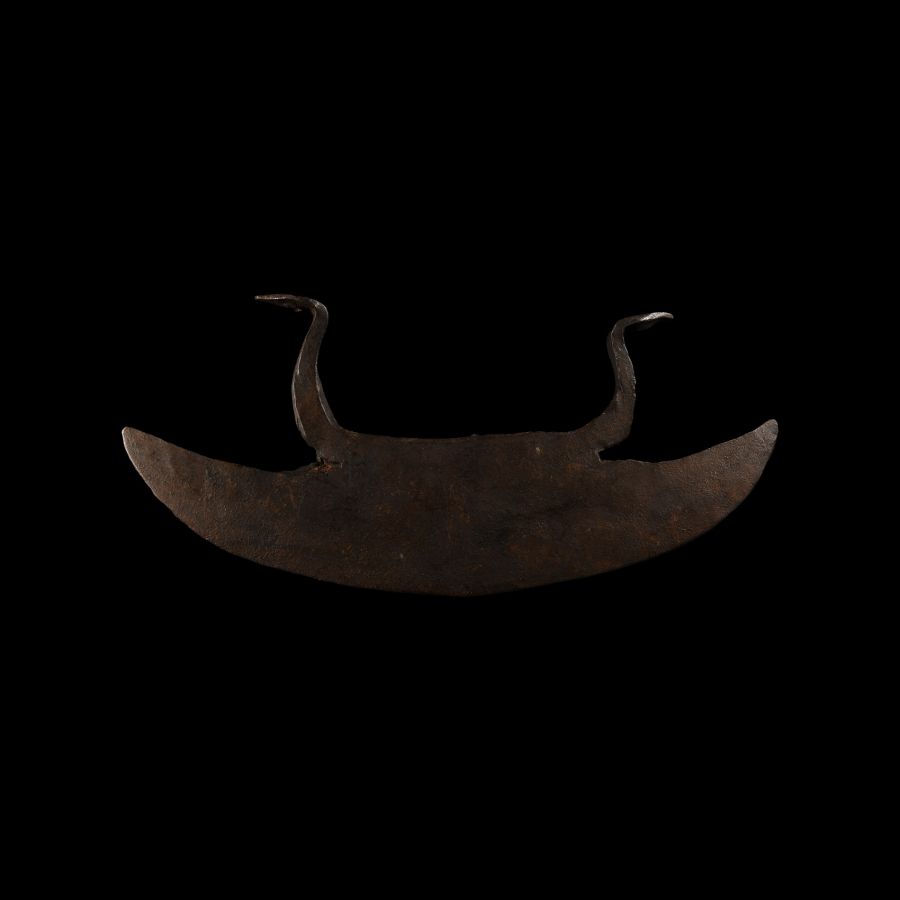
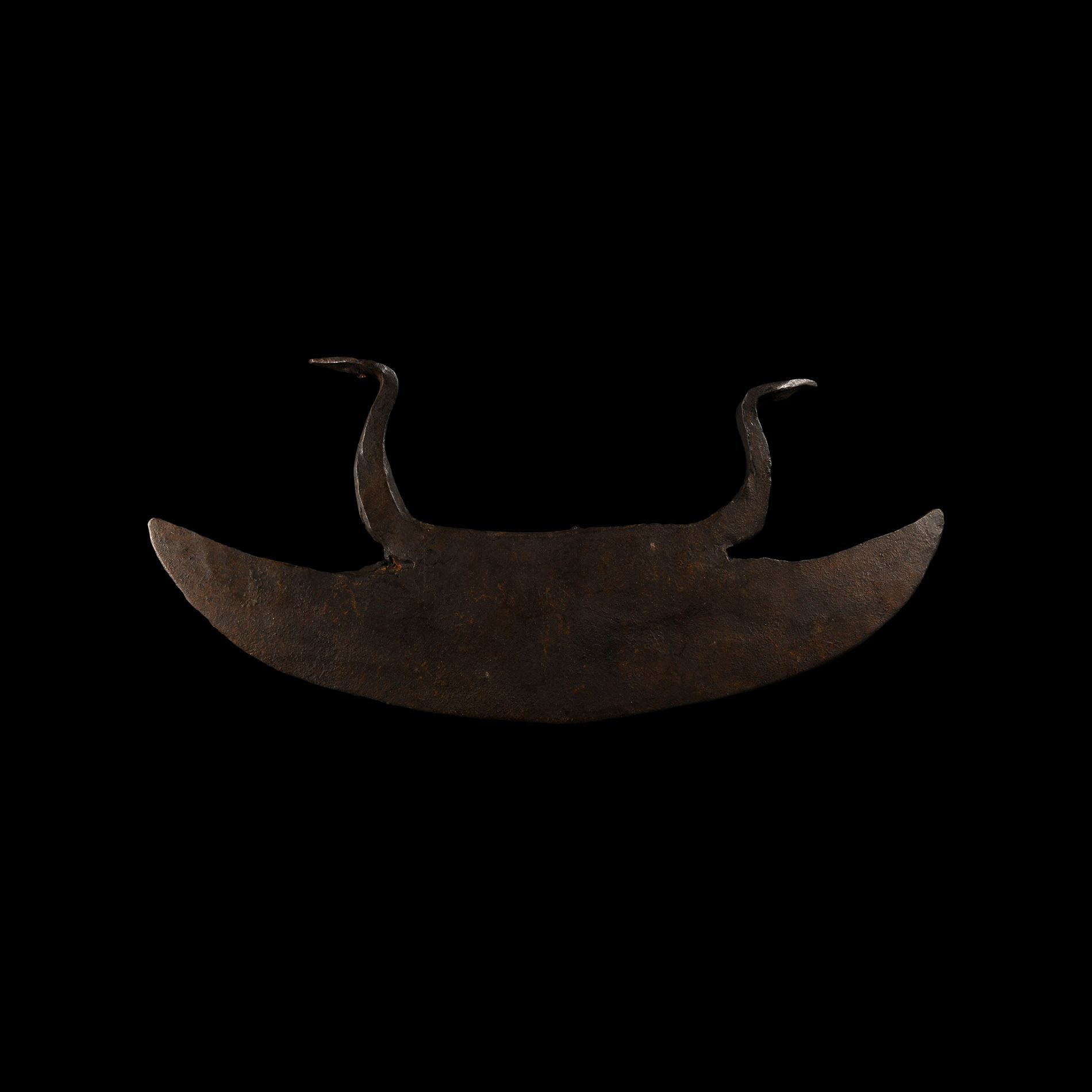
Medieval Iron Blade
CIRCA 14TH-16TH CENTURY A.D.
10 1/4 in. (418 grams, 26 cm).
A slender crescentic axehead with attachment arms, single rivet hole to each terminal. [No Reserve]
ProvenanceEx property of B.C., previously in a 1970s collection.
Property of a Ruislip, UK, gentleman, by inheritance.
Accompanied by a copy of a previous dealer's certificate of authenticity.
TimeLine Auctions follows a vetting process to ensure the authenticity and legality of all items, reinforcing our commitment to integrity and responsible trading. Each antiquity, antique, and coin lot undergoes thorough examination by a vetting committee of at least ten external specialists, professional trade association members, scientists, and archaeologists: Our Vetting Process
AUCTIONS:
TimeLine is a leading auction house specialising in antiquities, ancient art, collectables, natural history, coins, medals, and books. Our auctions offer museums, collectors, historians, and enthusiasts the opportunity to acquire unique and historically significant pieces.
-
Roman Iron Gladius
1st-2nd century A.D.Estimate: £1,300 - 1,600 (+bp*)
Opening Bid: £722
Or semi-spatha blade with parallel-sided lentoid-section body and a long rectangular-section tang; Mainz type, Wederath-Canterbury-Kopki variant; repaired and surface treated. 557 grams, 83 cm
Ex South London collection, acquired 1970-1990. The Kusmirek Collection, UK. Accompanied by an academic report by Dr Raffaele D'Amato.
In contrast to the average length of the Roman Pompeii type gladius, some Roman swords, continuing the typology of the Mainz gladius, tend to be longer and transform themselves into a semi-spatha. Both the weapon from Eich (Miks, 2001, AI43), and especially a gladius from Korytnica with approximate blade length of 548mm (total length 762mm) is very close to the length limit of a semi-spatha. The same can be said of a blade from Godmanchester (Miks, 2001, no.A824) for its dimensions and proportions, where the tip of the blade already gives a significantly shorter impression, showing a certain relationship to 'Lauriacum-Hrornöwka', 'Mainz-Canterbury' variant type spathae. -
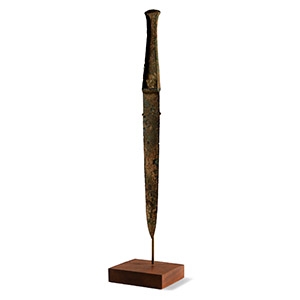
Canaanite Bronze Dirk
13th-12th century B.C.Estimate: £700 - 900 (‡+bp*)
Opening Bid: £375
With lentoid-section blade, tongue-shaped in plan, integral tapering hilt with flared finial, lateral flanges to accept a panel of bone or wood to each face forming the grip. 289 grams total, 39.5 cm high including stand
Ex Joseph J. Gancie (1923-2010), Washington, Silver Spring, Maryland. with Alex Cooper Auctioneers Inc., sale 1035, 27 January 2013, lot 162a.
The dirk belongs to the type III in the Medvedskaya classification, used in Near East from the 13th to the 6th century B.C. The type is the 32a of the Maxwell-Hyslop study. The Asiatic daggers of this type are confined to Syria and Persia, but Transcaucasia also provides an interesting analogy from Kalekent on the Baku peninsula, where a pointed straight-sided dagger blade has a flanged hilt with the whole of the side flanges bent over the centre. -
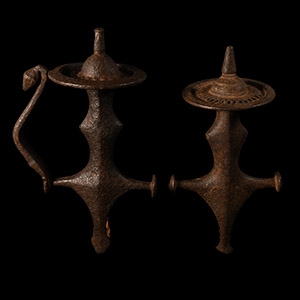
Indian Tulwar Iron Sword Hilt Pair
19th century A.D.Sold for (Inc. bp): £33
Both with lozenge-section quillon block, shaped langet and scalloped grip, quillon with discoid terminals; one with knuckle guard with conical terminal. 528 grams total, 18-18.5 cm
Acquired on the UK art market. Property of a Ruislip, UK, gentleman, by inheritance.
