
Loading, please wait...
LOT 1735
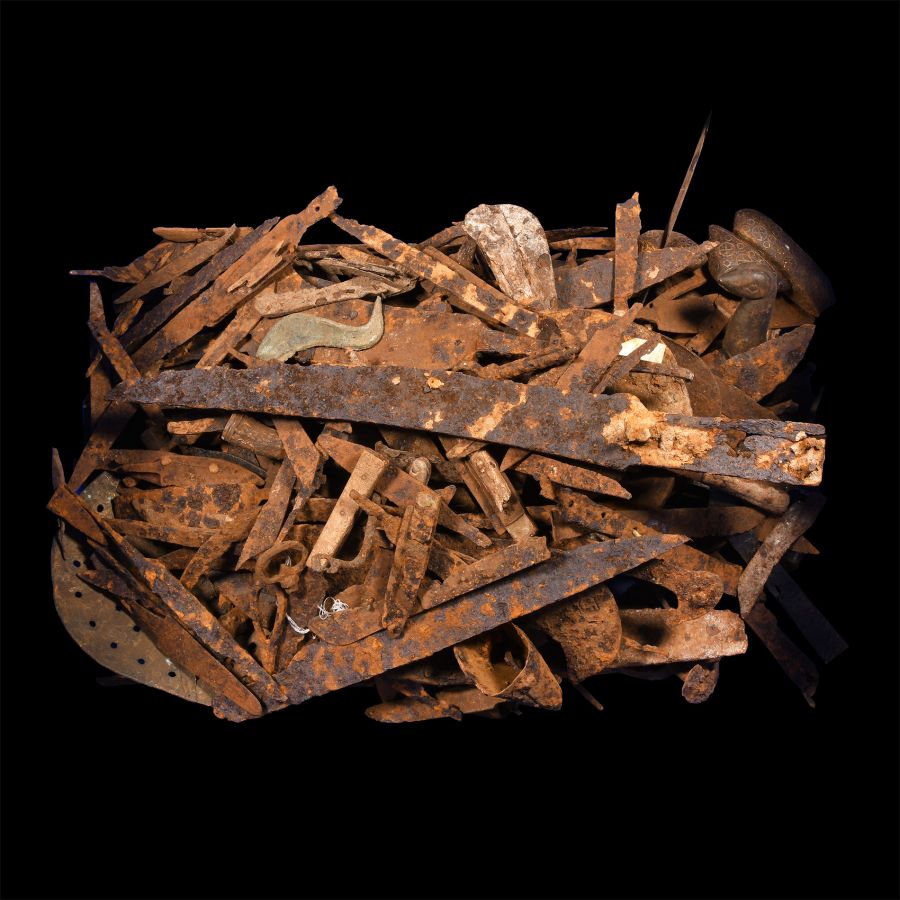
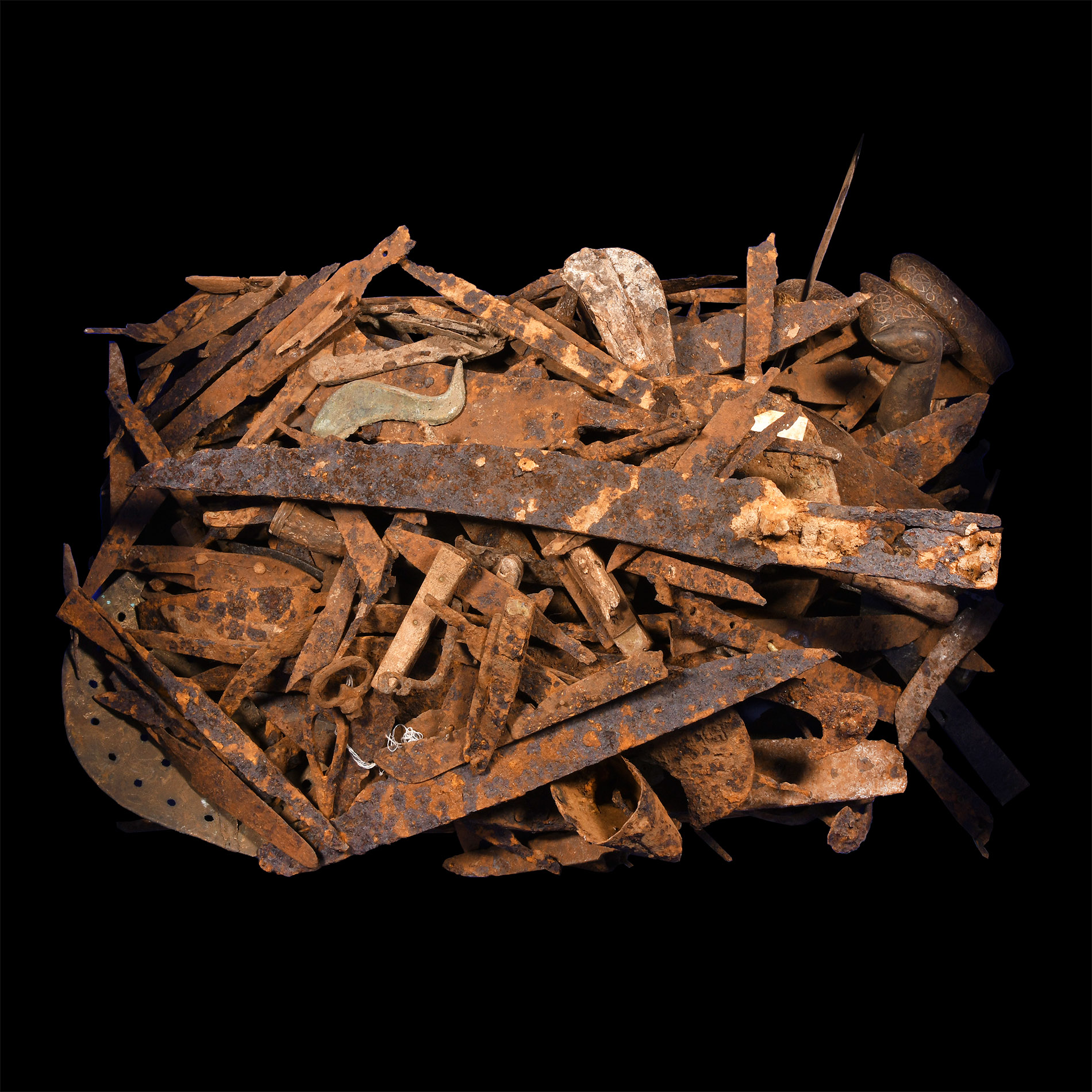
Medieval Iron Blade Group
CIRCA 15TH-16TH CENTURY A.D.
2 1/4 - 18 1/4 in. (16 kg total, 6-46.5 cm).
Comprising knives and knife blades, stirrups, cleavers, keys and other miscellaneous items, including some decorated examples. [212]
ProvenanceAcquired 1990s-early 2000s.
East Anglian private collection.
TimeLine Auctions follows a vetting process to ensure the authenticity and legality of all items, reinforcing our commitment to integrity and responsible trading. Each antiquity, antique, and coin lot undergoes thorough examination by a vetting committee of at least ten external specialists, professional trade association members, scientists, and archaeologists: Our Vetting Process
AUCTIONS:
TimeLine is a leading auction house specialising in antiquities, ancient art, collectables, natural history, coins, medals, and books. Our auctions offer museums, collectors, historians, and enthusiasts the opportunity to acquire unique and historically significant pieces.
-
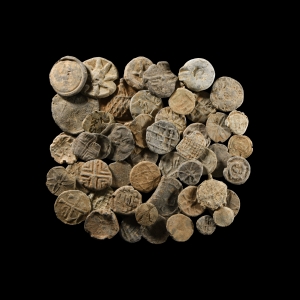
Medieval and Later Lead Token and Bag Seal Collection
Circa 13th-19th century A.D.Sold for (Inc. bp): £156
Comprising bag seals and tokens displaying various designs, including examples with lettering, stars, flowers, crosses and other motifs. 304 grams total, 13-31 mm
Found Berkshire, UK. -
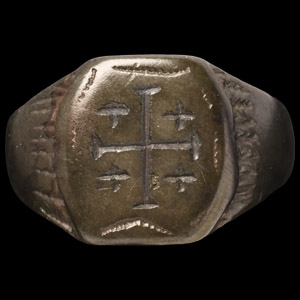
Medieval Bronze Ring with Jerusalem Cross
12th-15th century A.D.Sold for (Inc. bp): £442
The hoop with a convex outer face, splayed shoulders displaying decorative notching and a barrel-shaped bezel engraved with a Jerusalem cross. 4.76 grams, 21.54 mm overall, 19.52 mm internal diameter (approximate size British Q 1/2, USA 8 1/4, Europe 18.12, Japan 12)
Acquired on the German art market around 2000s. From the collection of an EU gentleman living in the UK. -
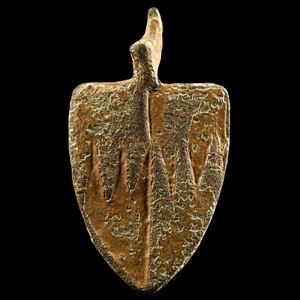
Medieval Knight's Bronze 'Boroughbridge Roll' Heraldic Horse Harness Pendant
14th-15th century A.D.Sold for (Inc. bp): £46
Heater-shaped with suspension loop; low-relief armorial design blazoned 'quarterly per fess indented' attributed to the Sandford family of Gloucestershire. 7.48 grams, 36 mm
Acquired on the UK market, 1990s. Property of a retired academic.
The attribution of these arms appears in the Boroughbridge roll of arms, an armorial of knights in the host collected for the siege of Berwick in September 1319.
