
Loading, please wait...
LOT 1393
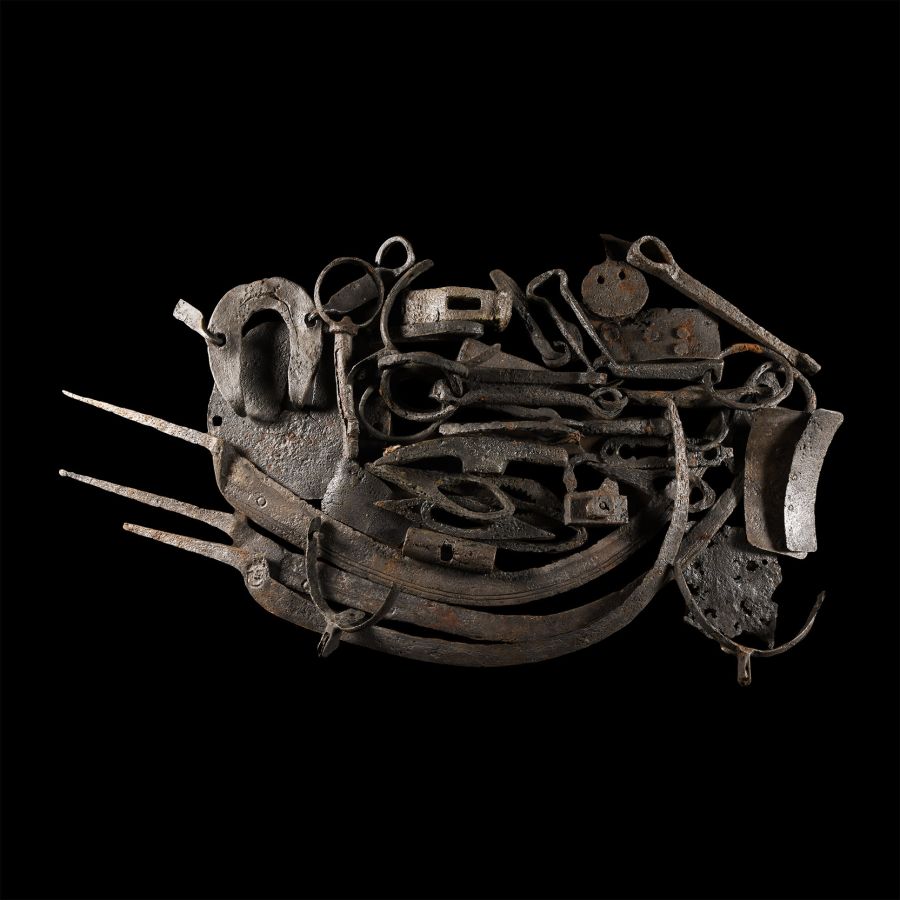
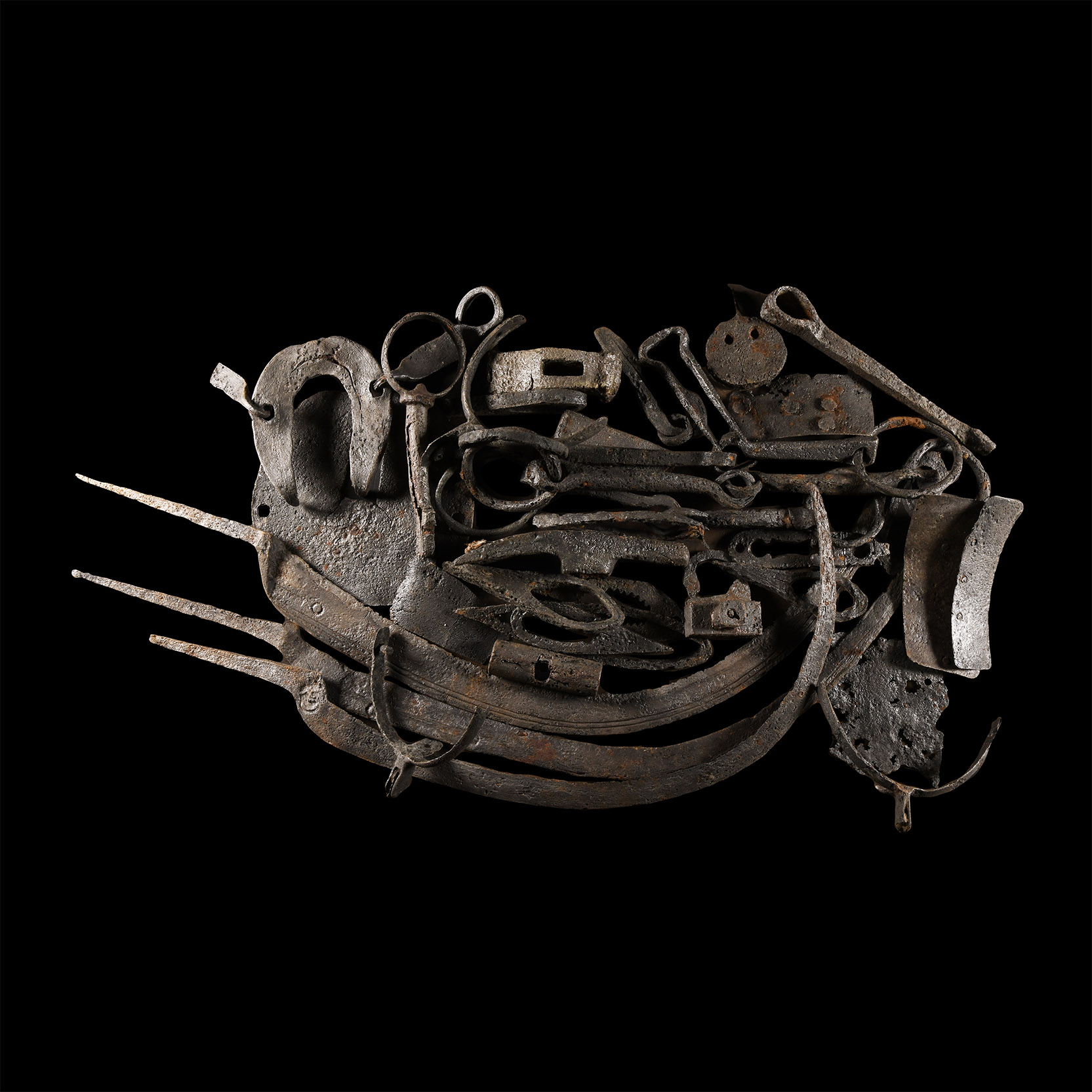
Medieval Iron Artefact Group
CIRCA 15TH CENTURY A.D.
2 - 16 1/4 in. (1.8 kg total, 5-41.4 cm).
Mainly comprising fire steels, sickles, tools and other miscellaneous objects; cleaned and conserved. [35]
ProvenanceAcquired 1990s-early 2000s.
East Anglian private collection.
TimeLine Auctions follows a vetting process to ensure the authenticity and legality of all items, reinforcing our commitment to integrity and responsible trading. Each antiquity, antique, and coin lot undergoes thorough examination by a vetting committee of at least ten external specialists, professional trade association members, scientists, and archaeologists: Our Vetting Process
AUCTIONS:
TimeLine is a leading auction house specialising in antiquities, ancient art, collectables, natural history, coins, medals, and books. Our auctions offer museums, collectors, historians, and enthusiasts the opportunity to acquire unique and historically significant pieces.
-
Medieval Iron Artefact Group
Circa 15th century A.D.Sold for (Inc. bp): £91
Mainly comprising fire steels, sickles, tools and other miscellaneous objects; cleaned and conserved. 1.8 kg total, 5-41.4 cm
Acquired 1990s-early 2000s. East Anglian private collection. -
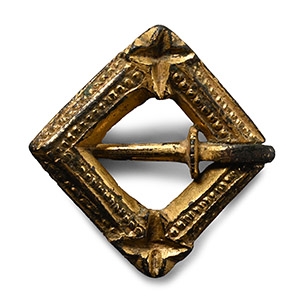
Medieval Gilt Bronze Lozenge-Shaped Ring Brooch with Inscription Verso
Circa 14th-15th century A.D.Sold for (Inc. bp): £72
With quatrefoil at the upper and lower angles, pelletted detailing, sword-shaped pin; uncertain legend to reverse 'mAN + AVE' perhaps an attempt at the common AVE MARIA. 2.76 grams, 21.5 mm
Found Southern England. Acquired on the UK art market in the 1980s. From an East Anglian private collection. -
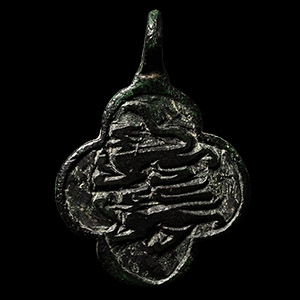
Medieval Royal Knight's Enamelled Bronze Heraldic Horse Harness Pendant
12th century A.D.Sold for (Inc. bp): £143
On a quatrefoil shield with pierced lug above, two lions passant gardant facing left, originally gilded, the field once containing red enamel. 6.93 grams, 33 mm
Found Norfolk, UK, circa 1990s.
The Royal Arms of England feature three lions passant gardant from the late 12th century, but there is a suspicion that an earlier version comprised only two such beasts, and that the third was added when Henry II married Eleanor Duchess of Aquitaine in 1152.
