
Loading, please wait...
LOT 1637
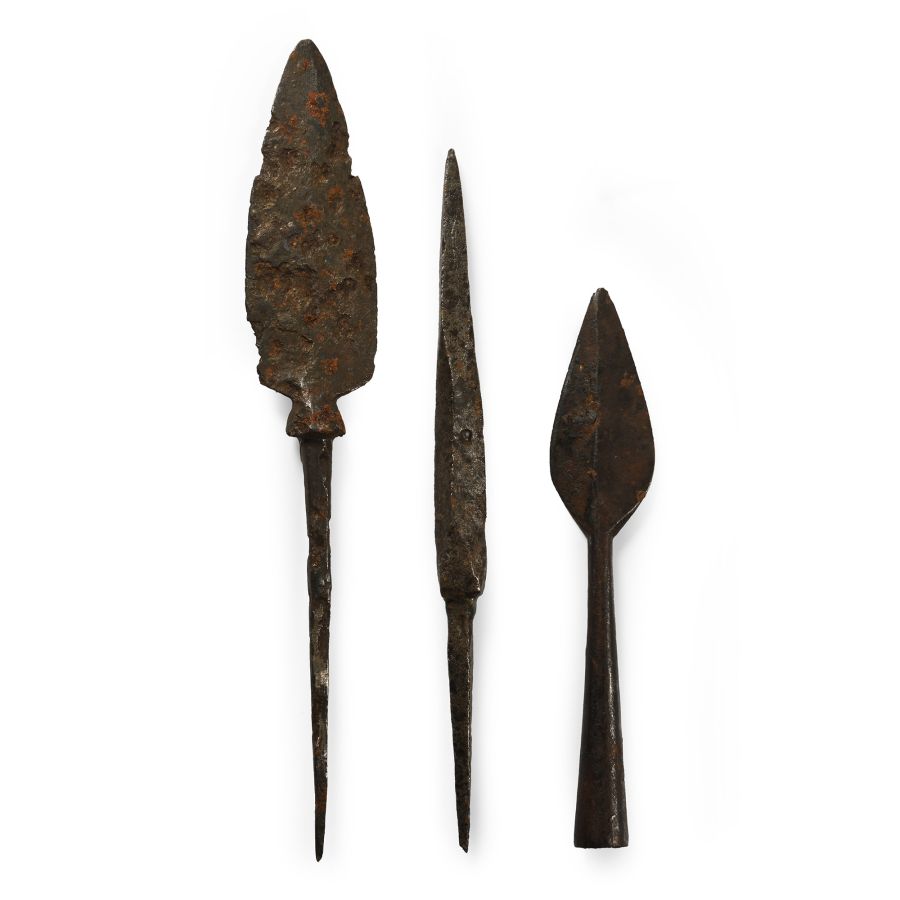
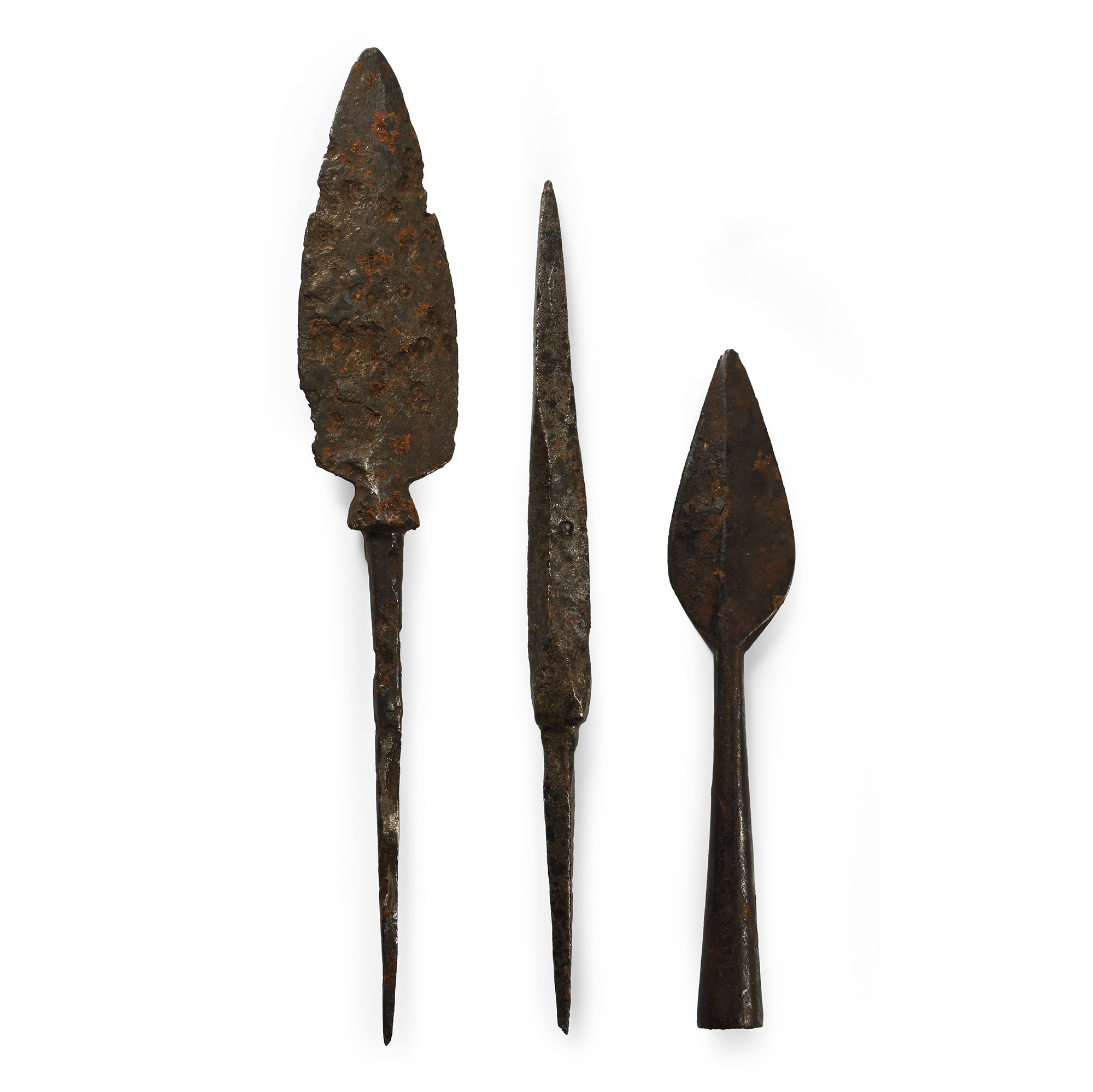
Medieval Iron Arrowhead Collection
12TH-16TH CENTURY A.D.
3 3/8 - 5 in. (40.9 grams total, 8.6-12.6 mm).
Including a square-section bodkin type with spiked tang. [3, No Reserve]
ProvenanceFrom the private collection of Kenneth Machin (1936-2020), Buckinghamshire, UK; his collection of antiquities and natural history was formed since 1948; thence by descent.
This lot is accompanied by an illustrated lot declaration signed by the Head of the Antiquities Department, Dr Raffaele D’Amato.
TimeLine Auctions follows a vetting process to ensure the authenticity and legality of all items, reinforcing our commitment to integrity and responsible trading. Each antiquity, antique, and coin lot undergoes thorough examination by a vetting committee of at least ten external specialists, professional trade association members, scientists, and archaeologists: Our Vetting Process
AUCTIONS:
TimeLine is a leading auction house specialising in antiquities, ancient art, collectables, natural history, coins, medals, and books. Our auctions offer museums, collectors, historians, and enthusiasts the opportunity to acquire unique and historically significant pieces.
-
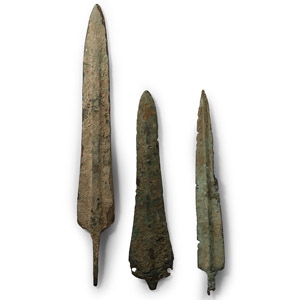
Western Asiatic Bronze Blade Group
25th-11th century B.C.Sold for (Inc. bp): £143
Comprising two bronze spearheads with a short tang and flat midrib, a dagger pointed blade with short tang and two rivets in the shoulders which slope to a narrow tang. 207 grams total, 18-26 cm
Acquired 1980-2015. Ex Abelita family collection. This lot is accompanied by an illustrated lot declaration signed by the Head of the Antiquities Department, Dr Raffaele D’Amato.
The spearheads belongs to type 2 of spearhead according to the classification of Khorasani. A similar specimen was excavated by Negahban in Marlik. The dagger blade belongs to the type 5 of Maxwell-Hyslop classification, with pointed blade, straight sides and curved section. -
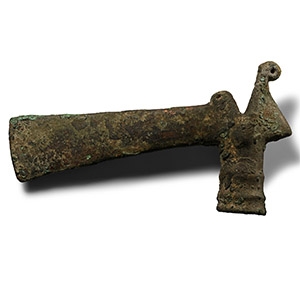
Luristan Decorated Bronze Axehead
Circa 12th-8th century B.C.Sold for (Inc. bp): £156
Wedge-shaped blade and a cylindrical socket with collared base and an upper face of stylised zoomorphic form, possibly representing a moufflon with jutting muzzle and horns above represented by a single scroll; the blade long, with a slightly convex blunt edge. 236 grams, 14.1 cm
Acquired 1980-2015. Ex Abelita family collection. Ex TimesAncient, Bristol, UK. Accompanied by a copy of a previous catalogue entry. This lot is accompanied by an illustrated lot declaration signed by the Head of the Antiquities Department, Dr Raffaele D’Amato.
The moufflon is a regularly used symbol in Luristan art. -
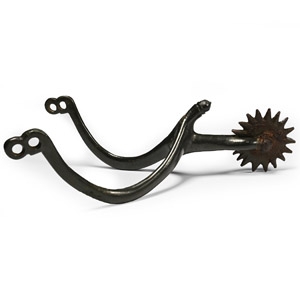
Medieval Bronze Spur with Rowel
12th-14th century A.D.Sold for (Inc. bp): £455
With D-section curved arms with figure-of-eight finials, long spur with a rowel and a shorter spur below. 126 grams, 15.4 cm
From the private collection of a London gentleman, from his grandfather's collection formed before the early 1970s. This lot is accompanied by an illustrated lot declaration signed by the Head of the Antiquities Department, Dr Raffaele D’Amato.
