
Loading, please wait...
LOT 1986
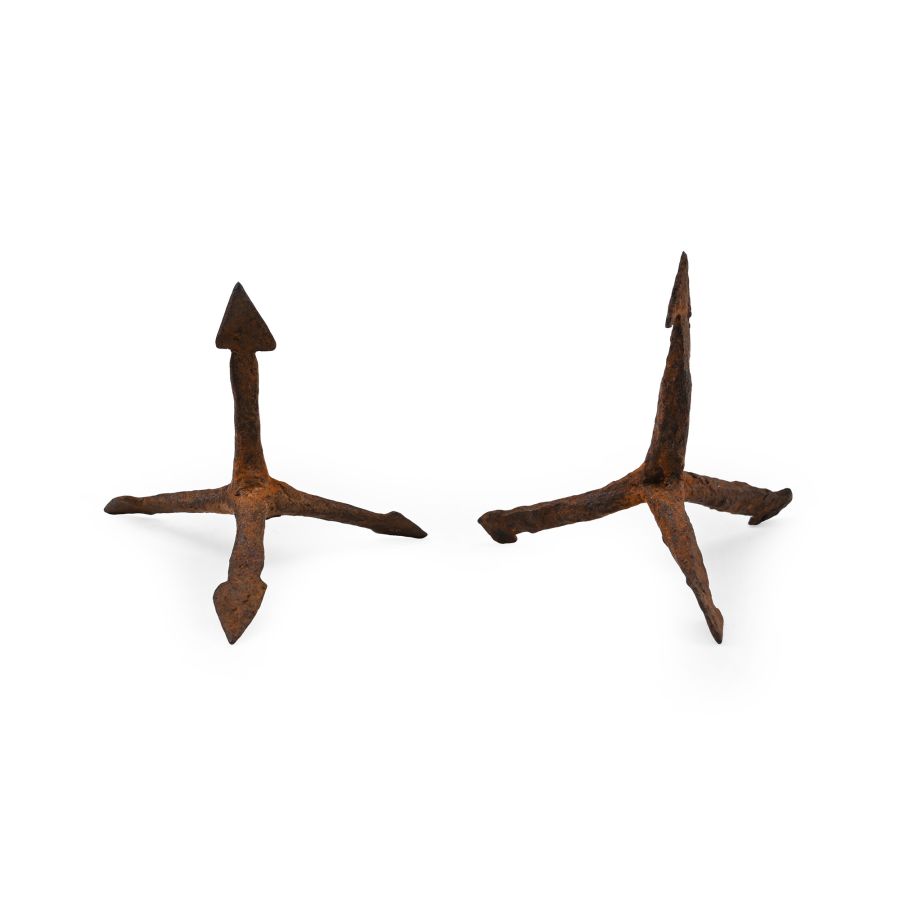
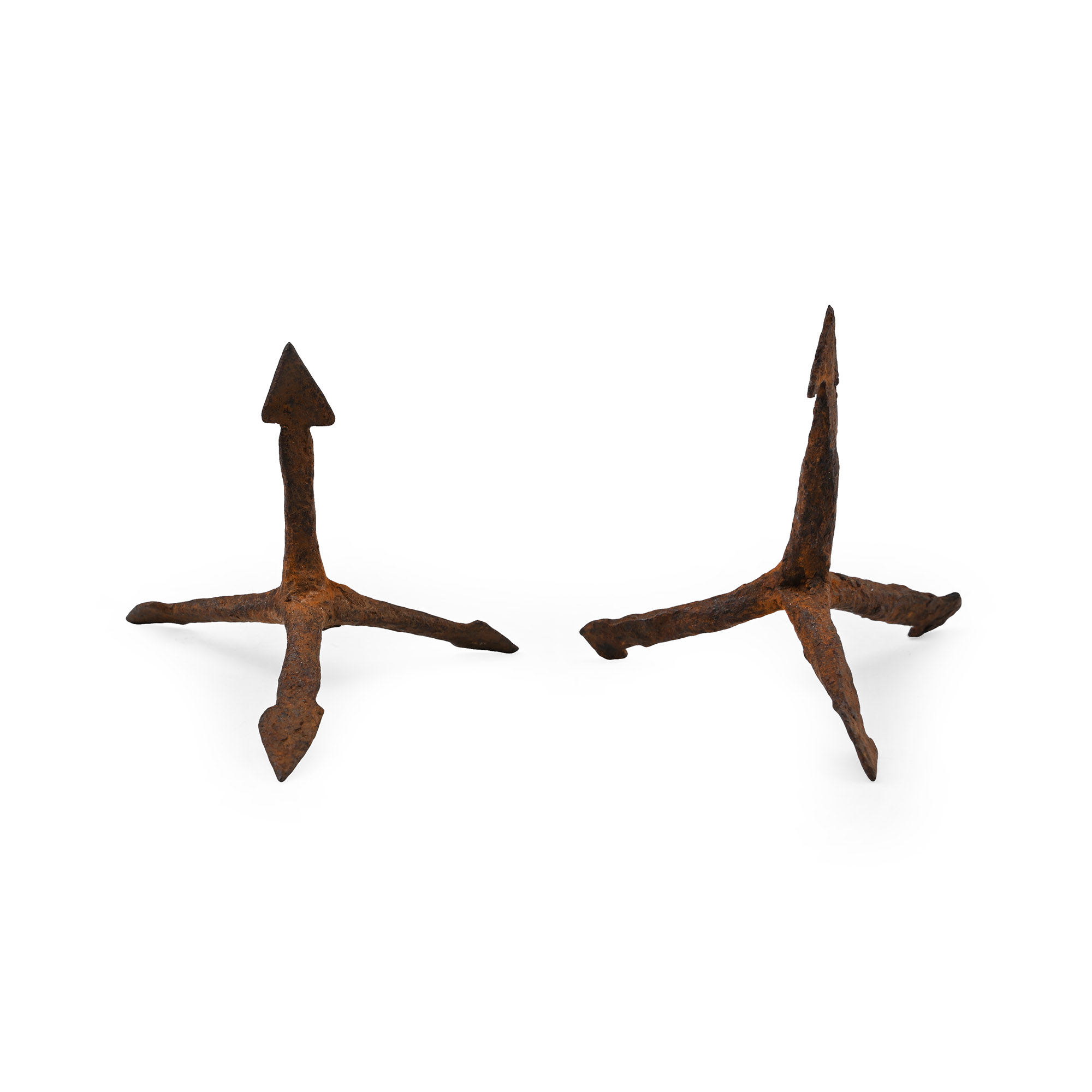
Medieval Iron Anti-Cavalry Caltrop Pair
11TH-14TH CENTURY A.D.
2 3/8 in. (30 grams total, 60-62 mm).
Each with four arms tipped with triangular spikes. [2]
ProvenanceAcquired on the German art market before 2000.
Property of a Surrey, UK, collector.
Caltrops were scattered on battlefields in an effort to stop or slow advancing enemy cavalry or foot soldiers; regardless of how a caltrop lands, one spike is always facing upwards. Caesar used them widely at Alesia (Caes., BG 7.73; 82): 'Stakes a foot long, with iron hooks attached to them, were entirely sunk in the ground before these, and were planted in every place at small intervals; these they called spurs'.
CONDITIONTimeLine Auctions follows a vetting process to ensure the authenticity and legality of all items, reinforcing our commitment to integrity and responsible trading. Each antiquity, antique, and coin lot undergoes thorough examination by a vetting committee of at least ten external specialists, professional trade association members, scientists, and archaeologists: Our Vetting Process
AUCTIONS:
TimeLine is a leading auction house specialising in antiquities, ancient art, collectables, natural history, coins, medals, and books. Our auctions offer museums, collectors, historians, and enthusiasts the opportunity to acquire unique and historically significant pieces.
LOT 1986
Medieval Iron Anti-Cavalry Caltrop Pair
Estimate £100 - 140€120 - 160 (for guidance only)$140 - 190 (for guidance only)
Opening Bid
£50 (EUR 58; USD 68) +BP*
-
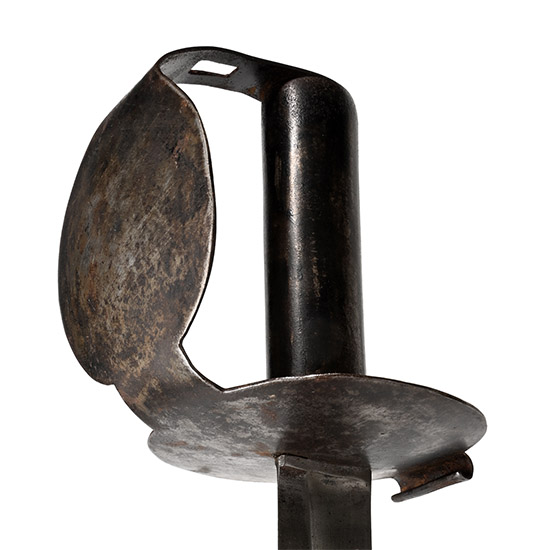
British Napoleonic 'Battle of Trafalgar Period' Naval Boarding Cutlass
1801-1840 A.D.Estimate: £500 - 700 (+bp*)
Bids: 1 | Current Bid: £5
Broad slightly curved blade with thick back and shallow fuller, narrow pointed tip; hollow iron grip with 'figure-of-eight' guard protecting the gripping hand and the knuckles; 1801-4 patent type; with old collector's tag 'British Figure of Eight Naval boarding cutlass - smooth grip pattern 1801-4 (then corrugated grip 1840)' 883 grams, 83 cm
From the private collection of Peter Clayton, FCILIP, Dip, Arch, FSA, FRNS, Hemel Hempstead, Hertfordshire, UK; formed since the late 1950s.
The hilt pattern was replaced in 1840 by a type with similar guard but with a ribbed grip. -
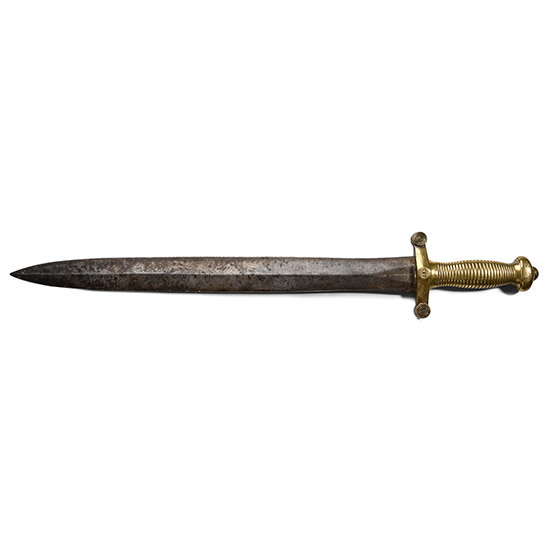
French Artillery Infantry Short Sword
Circa 1830-1848 A.D.Estimate: £100 - 140 (+bp*)
Bids: 1 | Current Bid: £5
Model 1831 double-edged short sword with slightly waisted lentoid-section blade, solid bronze hilt with ribbed grip, roundel finials to the crossguard, stamped '717' to one face and 'X' to underside; blade with asterisk proofing stamp, copperplate legend 'Shre...'; reverse with 'Châtellerault,1832'; edges notched. 1.11 kg, 63.7 cm
From the private collection of Peter Clayton, FCILIP, Dip, Arch, FSA, FRNS, Hemel Hempstead, Hertfordshire, UK; formed since the late 1950s. -
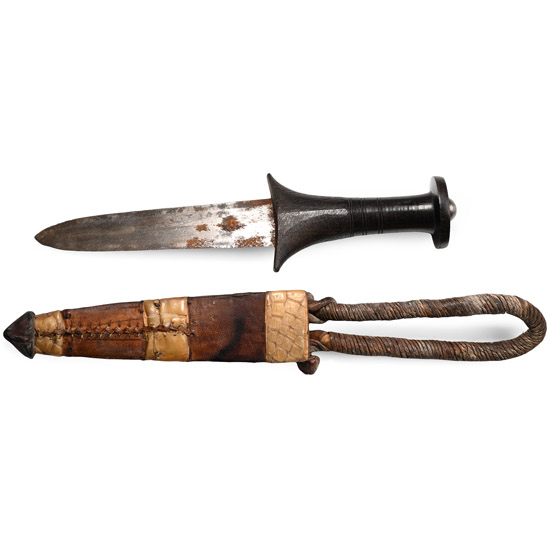
Mahdi Arm Dagger with Sheath
Sudan, late 19th-early 20th century A.D.Estimate: £70 - 90 (+bp*)
Opening Bid: £5
Comprising a tongue-shaped two-edged blade and carved wooden hilt with bands of horizontal ribbing, integral crossguard and disc pommel with a domed button; leather sheath with crocodile-skin panels and twisted leather thong forming a thick suspension loop; leather-covered knop forming a chape. 172 grams, 27.5 cm
From the private collection of Peter Clayton, FCILIP, Dip, Arch, FSA, FRNS, Hemel Hempstead, Hertfordshire, UK; formed since the late 1950s.
