
Loading, please wait...
LOT 1018
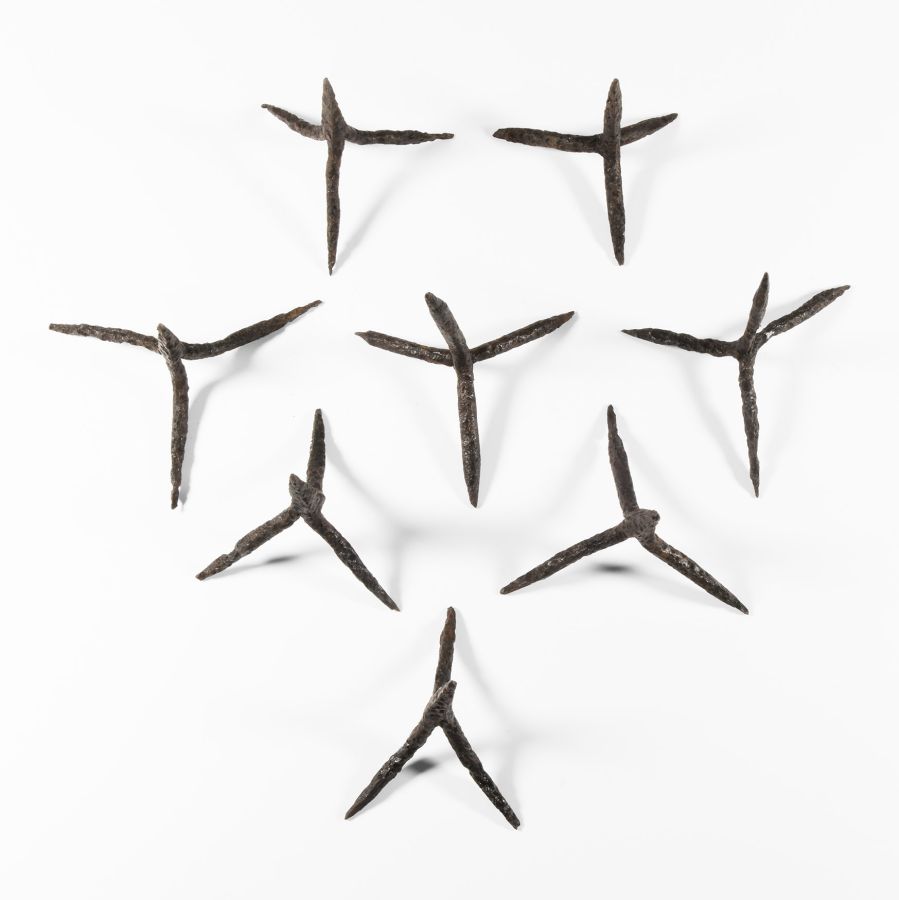
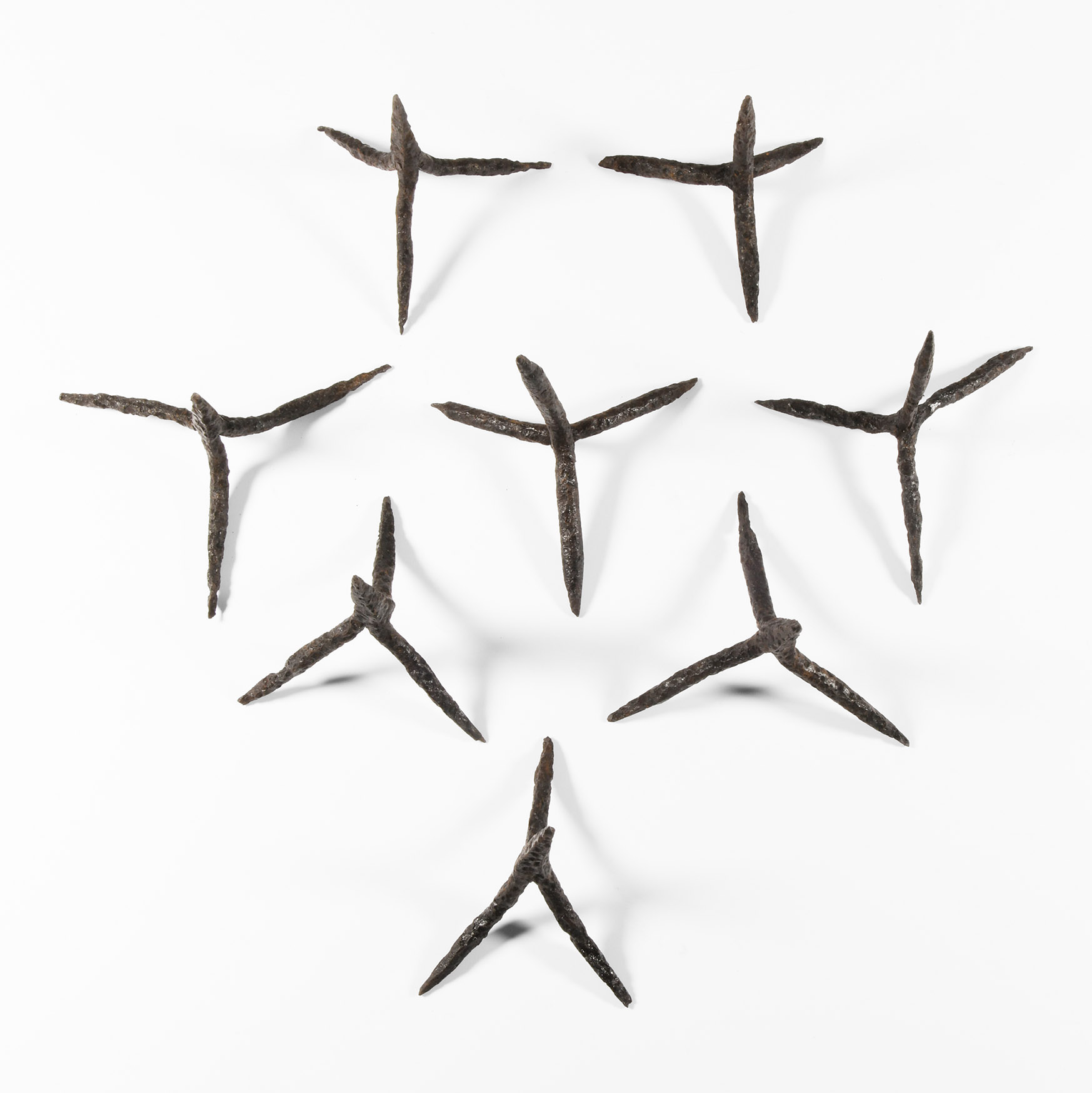
Medieval Iron Anti-Cavalry Caltrop Group
13TH-15TH CENTURY A.D.
3 - 3 3/4 in. (298 grams total, 77-95 mm).
Comprising eight anti-cavalry caltrops, hand-forged with square-section spikes. [8, No Reserve]
ProvenanceFrom the private collection of a London gentleman, from his grandfather's collection formed before the early 1970s.
LiteratureCf. Žákovský, P., ‘Caltrop. Contribution to the knowledge of one neglected weapon’ in Studia Minora Facultatis Philosophicae Universitatis Brunensis, M 12-13, 2007-2008, pp.115-132, fig.9, no.6 (type III of Žákovský classification).
CONDITIONTimeLine Auctions follows a vetting process to ensure the authenticity and legality of all items, reinforcing our commitment to integrity and responsible trading. Each antiquity, antique, and coin lot undergoes thorough examination by a vetting committee of at least ten external specialists, professional trade association members, scientists, and archaeologists: Our Vetting Process
AUCTIONS:
TimeLine is a leading auction house specialising in antiquities, ancient art, collectables, natural history, coins, medals, and books. Our auctions offer museums, collectors, historians, and enthusiasts the opportunity to acquire unique and historically significant pieces.
-
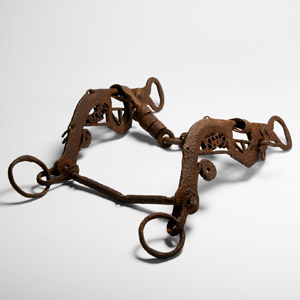
Byzantine Iron Horse Bit
14th-15th century A.D.Estimate: £150 - 200 (+bp*)
Opening Bid: £83
Composed of arched openwork shanks with looped terminals; one end fitted with large hoops and bar between; one end with a tripartite mouthpiece comprising two collared bars connected by a central hoop; Byzantine or early Ottoman. 340 grams, 19.5 cm
Fine condition.
Collection of Dr. Hanns-Ulrich Haedeke (1928-2017), author of ‘Schmuck Aus Drei Jahrtausenden’ and who became the director of the Museum of Klingenmuseum in Solingen, Germany, in 1968; the collection was formed in the early 1960s. From an important private Dutch collection.
This type of horse bit is visible on one of the most important equestrian artworks of the 15th century - the Cappella dei Magi by Benozzo Gozzoli, a painting representing the Three Kings visiting Christ, depicted in costumes belonging to the early quarter of the 15th century. All the cavalrymen in the artwork had heavy curb-bits (with short and curved shanks, as in our specimen) and heavy, single reins. -
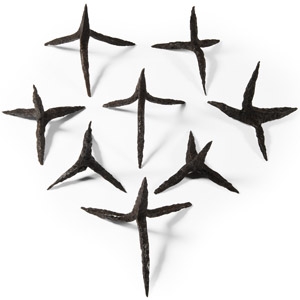
Medieval Iron Anti-Cavalry Caltrop Group
13th-15th century A.D.Sold for (Inc. bp): £221
Comprising eight caltrops, hand-forged with square-section spikes. 398 grams total, 76-95 mm
From the private collection of a London gentleman, from his grandfather's collection formed before the early 1970s. -
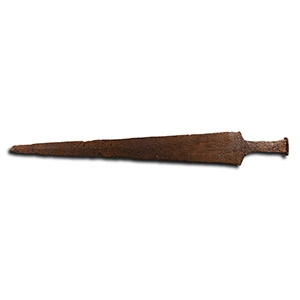
Scythian Iron Akinakes Sword with Decorations
4th century B.C.Estimate: £1,500 - 2,000 (+bp*)
Opening Bid: £750
Of Central Asian typology, strong hilt and narrow ogival guard with Steppe style ornamentation, tipped hilt, triangular tapering blade fitted with a central triangular blood channel with sixteen grooves. 481 grams, 58.5 cm
Ex private collection of Mr M.B., Mainz, Germany, since the 1980s. Acquired from the above, 2004.
The akinakes was a characteristic Scythian type of weaponry, which was used throughout their history (7th-3rd centuries B.C.). With the departure of the Scythians from the steppe in the 3rd century B.C., and the appearance of the Sarmatian tribes in the Northern Black Sea region in the 2nd-1st centuries B.C., Sarmatian types of bladed weapons spread in the region. This particular shape of akinakes belongs to the nomadic cultures of Central Asia.
