
Loading, please wait...
LOT 1082
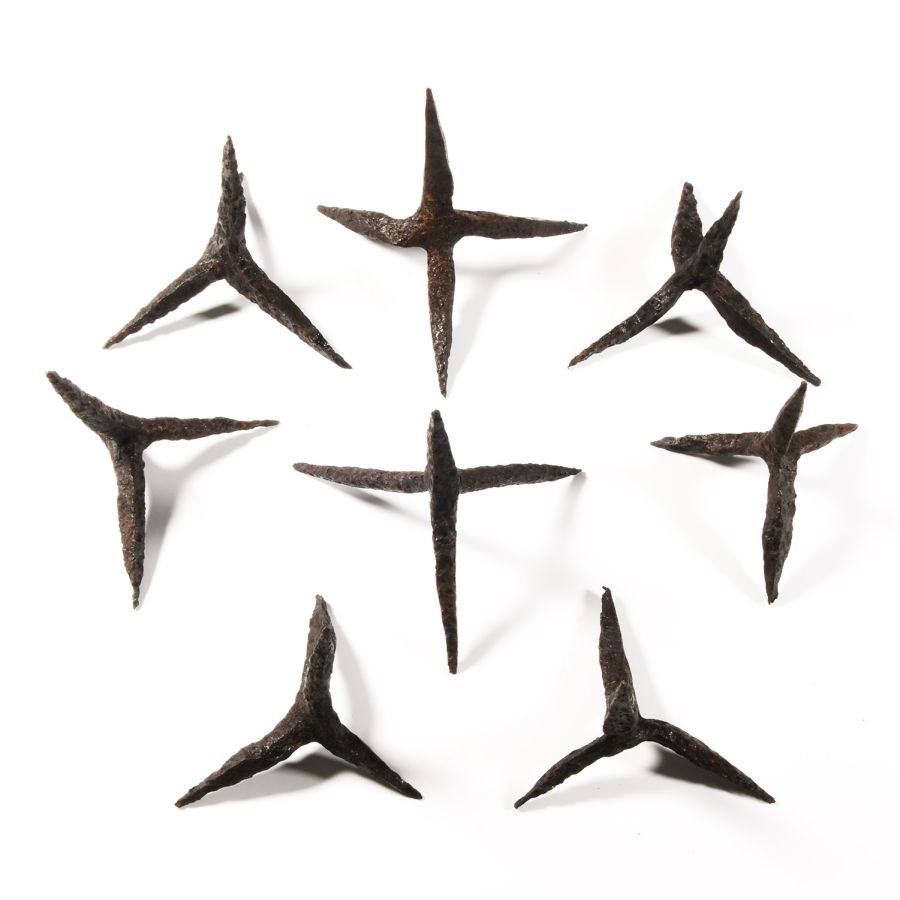
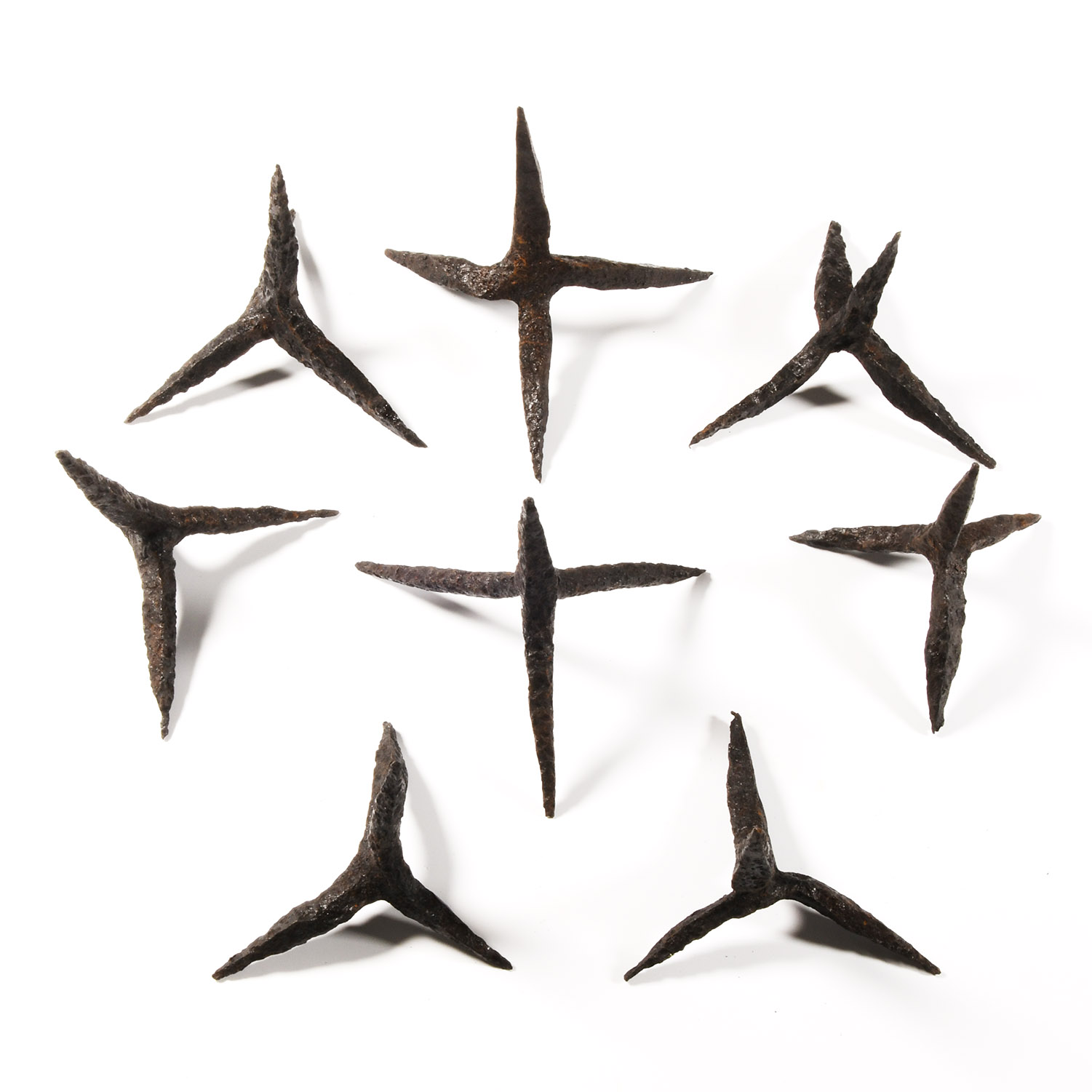
Medieval Iron Anti-Cavalry Caltrop Group
13TH-15TH CENTURY A.D.
3 3/8 - 4 in. (505 grams total, 8.7-10 cm).
Comprising eight anti-cavalry caltrops, hand-forged with square-section spikes. [8, No Reserve]
ProvenanceFrom the private collection of a London gentleman, from his grandfather's collection formed before the early 1970s.
LiteratureCf. Žákovský, P., ‘Caltrop. Contribution to the knowledge of one neglected weapon (in Bohemian language)’ in Studia Minora Facultatis Philosophicae Universitatis Brunensis, M 12-13, 2007-2008, pp.115-132, fig.9, no.4 (type 3 of Žákovský classification).
FootnotesCaltrops were scattered on battlefields in an effort to stop or slow advancing enemy cavalry or foot soldiers; regardless of how a caltrop lands, one spike is always facing upwards.
CONDITIONTimeLine Auctions follows a vetting process to ensure the authenticity and legality of all items, reinforcing our commitment to integrity and responsible trading. Each antiquity, antique, and coin lot undergoes thorough examination by a vetting committee of at least ten external specialists, professional trade association members, scientists, and archaeologists: Our Vetting Process
AUCTIONS:
TimeLine is a leading auction house specialising in antiquities, ancient art, collectables, natural history, coins, medals, and books. Our auctions offer museums, collectors, historians, and enthusiasts the opportunity to acquire unique and historically significant pieces.
-
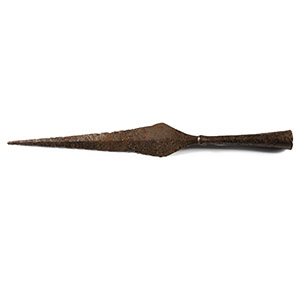
Viking Age Iron Socketted Spearhead
10-11th century A.D.Sold for (Inc. bp): £234
Type M with rhomboid blade with straight edges, ending in squared angles at the base and narrowing as it merges into the round cross-section socket. 313 grams, 40.7 cm
Ex private collection of Mr M.B., Mainz, Germany, since the 1980s. Acquired from the above, 2004.
This type of spears account for half of the found Viking spears, together with types I,K,G,F. Differently from the previous types of Viking spearheads, side wings do not feature commonly in these typologies. A Viking spear of M type, dated at end of 11th century A.D., was found on the Drastar battlefield, showing a cross intermediary between the blade and the shaft. -
.jpg)
Hellenistic Bronze Armour Section with Herakles Fighting Hydra
Circa 4th-3rd century B.C.Sold for (Inc. bp): £3,120
Comprising an embossed fragment of a breast-plate from muscle-type armour (thorax statos) representing Herakles fighting against the Hydra of Lerna; three-quarters of the hero's body preserved showing him naked in a dynamic position, wearing a fluttering short cloak (chlamys), overlooking the body of the monster of which the long tail covered with scales and fins is visible; fragment of cloak preserved separately. 122 grams total, 3.4-17.5 cm
Good portion of armour, extremely rare
Acquired on the French art market before 2000. From an EU collection before 2020.
This kind of armour is very rare, especially for this period, when most of the attested armour is plain or only slightly decorated. The young Herakles appears in heroic nudity running to the right, but, as on the cheek-piece from Gurlo, his head was probably turned in the opposite direction. The plasticism of the scene finds a good match in the Thracian tradition of the representation of weapons and armour, and the embossed elements with the highly prized work of the Panagyurishte treasure. The warrior-theme and the representation of Herakles or other fighting scenes on the Thracian and Hellenistic armours was a reference to the spirit of the immortal fighter. -
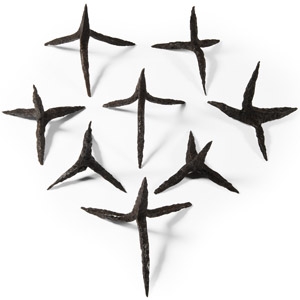
Medieval Iron Anti-Cavalry Caltrop Group
13th-15th century A.D.Sold for (Inc. bp): £221
Comprising eight caltrops, hand-forged with square-section spikes. 398 grams total, 76-95 mm
From the private collection of a London gentleman, from his grandfather's collection formed before the early 1970s.
