
Loading, please wait...
LOT 1499
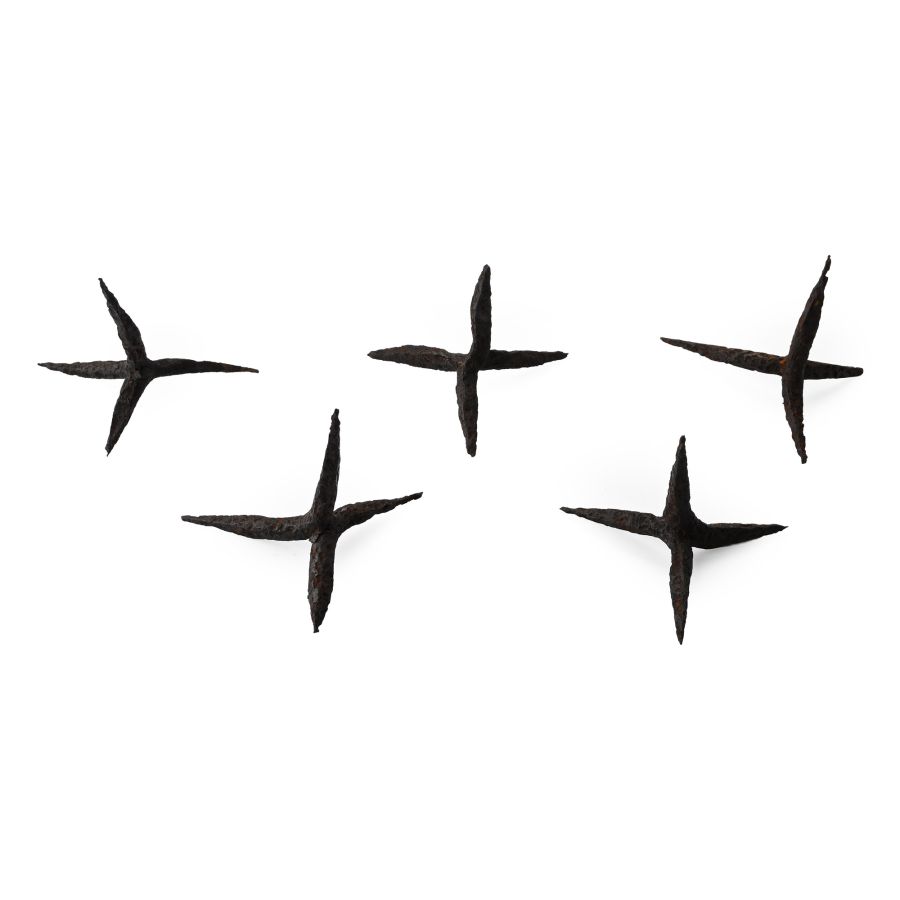
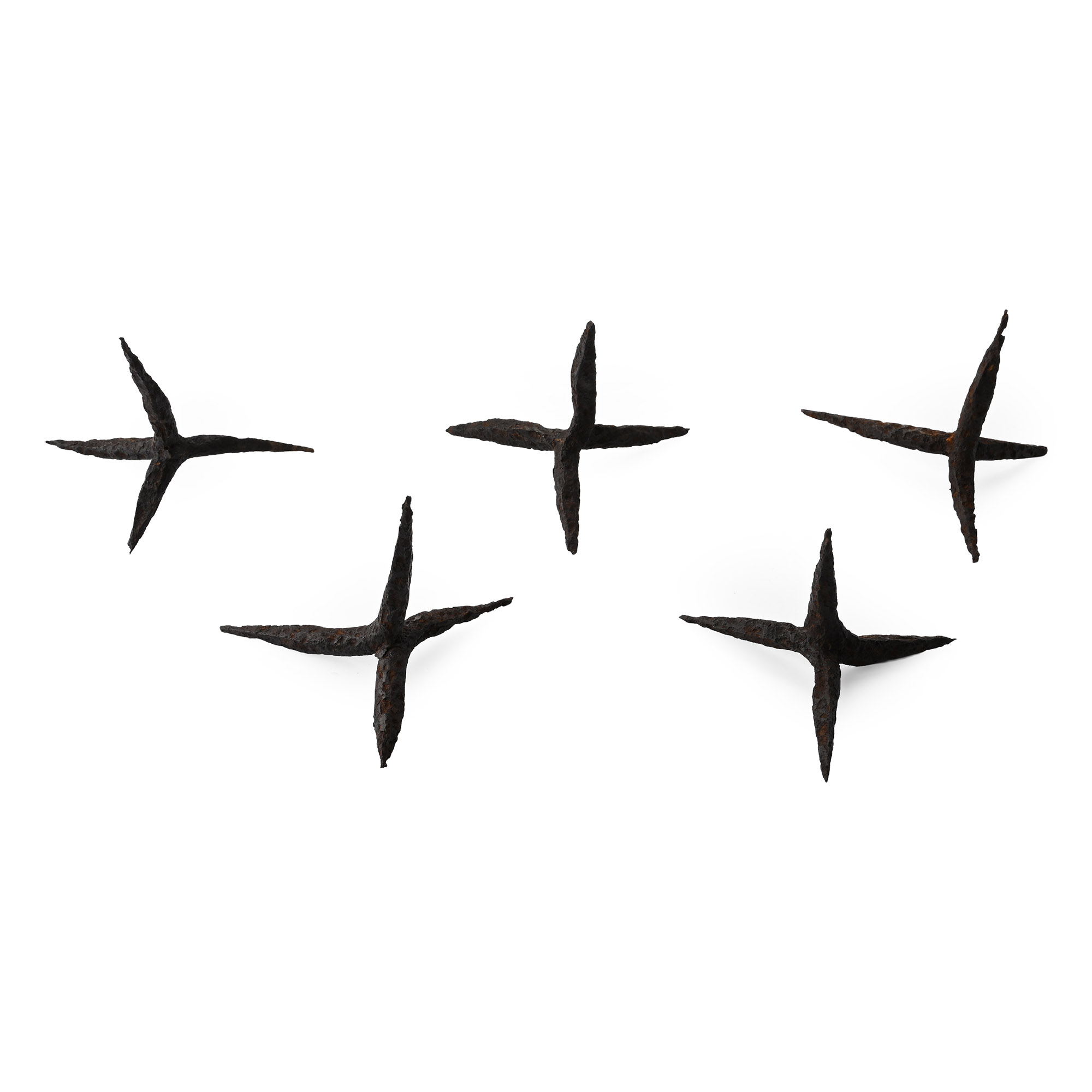
Medieval Iron Anti-Cavalry Caltrop Collection
CIRCA 13TH-14TH CENTURY A.D.
3 - 3 7/8 in. (277 grams total, 78-99 mm).
Each hand-forged with square-section spikes, designed so that however the item falls, one spike is always vertical. [4, No Reserve]
ProvenanceFrom the private collection of a London gentleman, from his grandfather's collection formed before the early 1970s.
This lot is accompanied by an illustrated lot declaration signed by the Head of the Antiquities Department, Dr Raffaele D'Amato.
TimeLine Auctions follows a vetting process to ensure the authenticity and legality of all items, reinforcing our commitment to integrity and responsible trading. Each antiquity, antique, and coin lot undergoes thorough examination by a vetting committee of at least ten external specialists, professional trade association members, scientists, and archaeologists: Our Vetting Process
AUCTIONS:
TimeLine is a leading auction house specialising in antiquities, ancient art, collectables, natural history, coins, medals, and books. Our auctions offer museums, collectors, historians, and enthusiasts the opportunity to acquire unique and historically significant pieces.
-
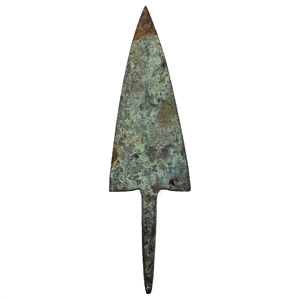
Large Luristan Bronze Arrowhead
2nd-1st millennium B.C.Sold for (Inc. bp): £85
Large triangular point with slightly raised midrib, long flat tang. 28.9 grams, 13.4 cm
Acquired on the UK art market before 2000. Property of an Essex, UK, gentleman. This lot is accompanied by an illustrated lot declaration signed by the Head of the Antiquities Department, Dr Raffaele D'Amato. -
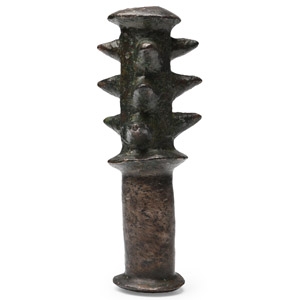
Luristan Bronze Socketted Macehead
2nd-1st millennium B.C.Sold for (Inc. bp): £286
Cylindrical in plan, the upper section with vertical columns of three prominent spikes, short cylindrical shaft, flange rim to each end. 359 grams, 12.5 cm
Acquired in the 1990s. Ex Abelita family collection. This lot is accompanied by an illustrated lot declaration signed by the Head of the Antiquities Department, Dr Raffaele D'Amato. -
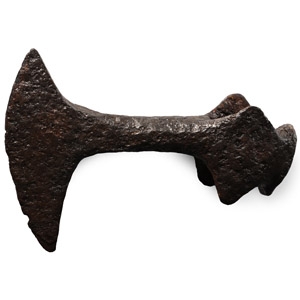
Viking Age Iron Axehead
10th-12th century A.D.Sold for (Inc. bp): £364
With flaring triangular-section blade extending to a curved edge, socket with lateral flanges and hammer extension to the rear. 447 grams, 16 cm
From the private collection of a London gentleman, from his grandfather's collection formed before the early 1970s. This lot is accompanied by an illustrated lot declaration signed by the Head of the Antiquities Department, Dr Raffaele D'Amato.
The axe seems to be product of Baltic workmanship. The Curonians were known as fierce warriors and sailors who were involved in several wars and alliances with the Swedish, Danish and Icelandic Vikings. Baltic tribes created an original and impressive set of weaponry. They included battle knives, battle axes and spears and javelins with medium sized heads of a characteristic shape.
