
Loading, please wait...


LOT 2185
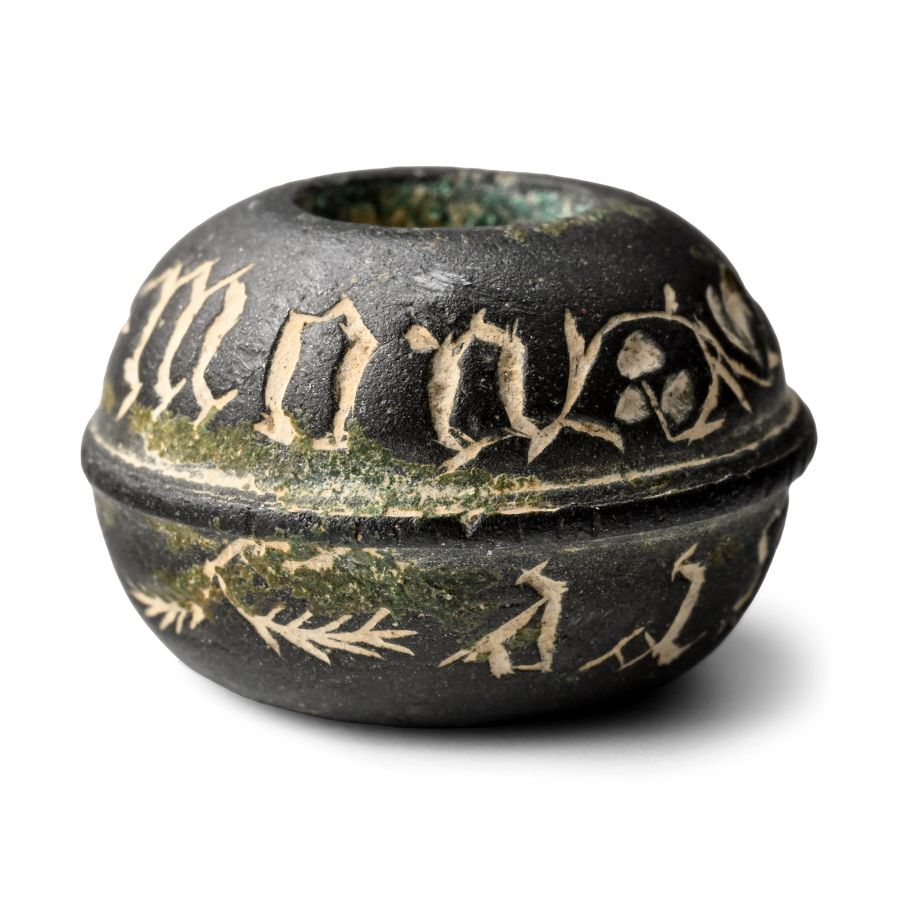
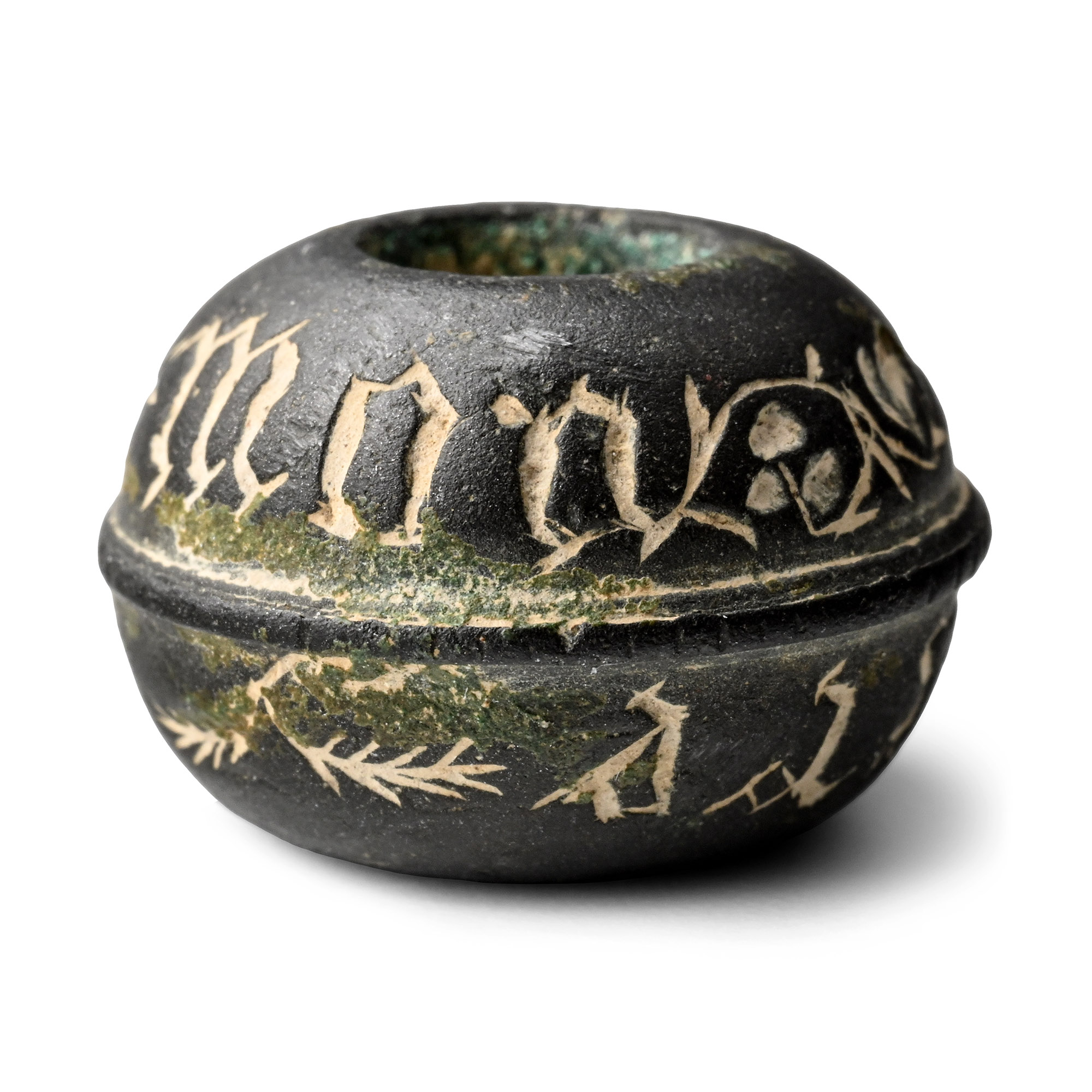
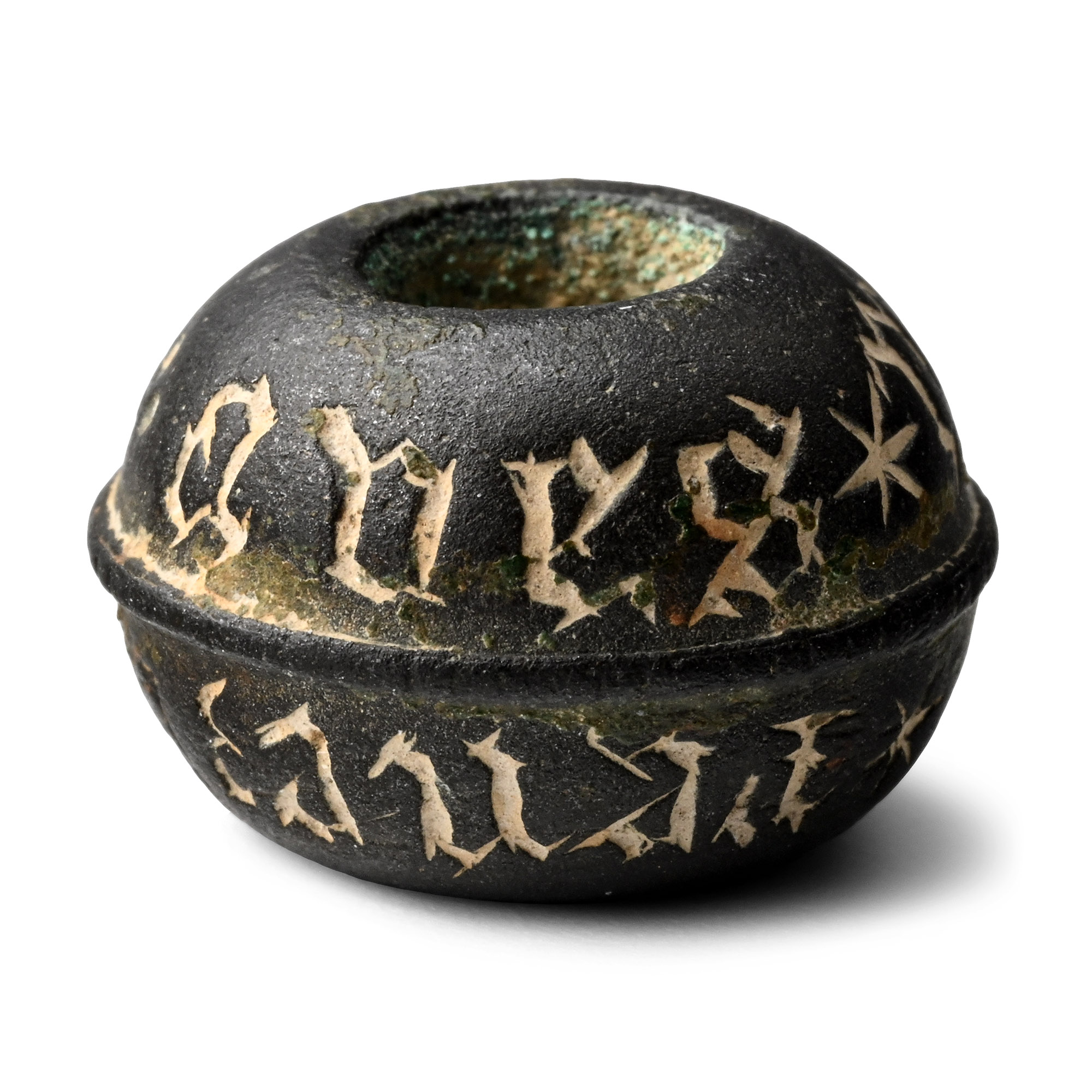
Medieval Inscribed Bronze Rosary or Paternoster Gaud
PROBABLY ENGLAND, CIRCA 1450–1500 A.D.
5/8 in. (13.2 grams, 17 mm).
A substantial biconvex prayer bead pierced through its vertical axis and divided by a moulded equatorial band, the two halves engraved in Gothic blackletter with the Marian invocation: 'O MATER DEI / MEMENTO MEI' for 'O Mother of God, remember me'; six-pointed stars, flowers and foliate sprays accompany the lettering.
ProvenanceAcquired on the European art market.
UK, private collection.
The size and elaborate inscription are consistent with a larger gaud, used to distinguish prayers within a rosary or paternoster.
CONDITIONTimeLine Auctions follows a vetting process to ensure the authenticity and legality of all items, reinforcing our commitment to integrity and responsible trading. Each antiquity, antique, and coin lot undergoes thorough examination by a vetting committee of at least ten external specialists, professional trade association members, scientists, and archaeologists: Our Vetting Process
AUCTIONS:
TimeLine is a leading auction house specialising in antiquities, ancient art, collectables, natural history, coins, medals, and books. Our auctions offer museums, collectors, historians, and enthusiasts the opportunity to acquire unique and historically significant pieces.
LOT 2185
Medieval Inscribed Bronze Rosary or Paternoster Gaud
Estimate £150 - 200€170 - 230 (for guidance only)$200 - 270 (for guidance only)
Opening Bid
£75 (EUR 87; USD 101) +BP*
-
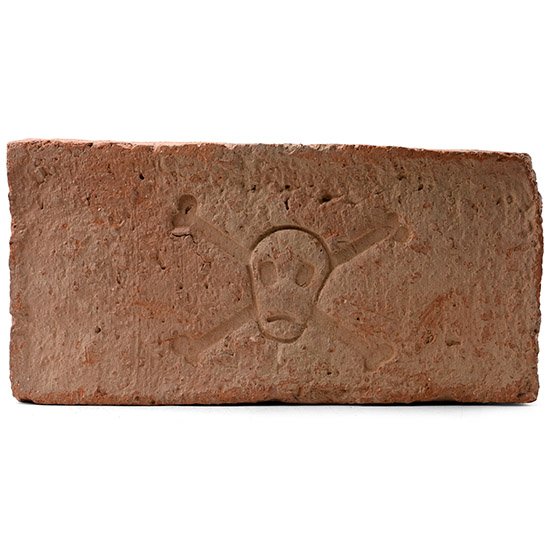
Medieval Terracotta Brick with Skull
16th century A.D.Estimate: £600 - 800 (+bp*)
Opening Bid: £5
Rectangular in plan with impressed low-relief facing skull and crossed longbones. 3.27 kg, 29.5 cm
Acquired from Palau Antiguitats, Barcelona, 2 January 2025. -
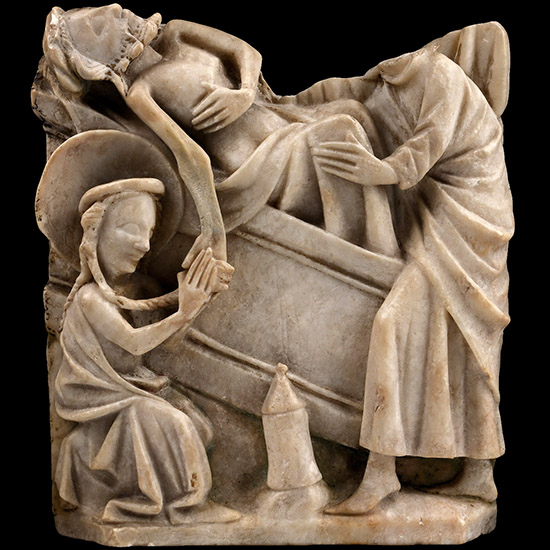
Medieval Stone Panel with The Entombment of Christ
England, Nottingham Alabaster, Midlands, circa 1440-1460 A.D.Estimate: £3,000 - 4,000 (+bp*)
Bids: 1 | Current Bid: £5
High-relief carving depicting a figural scene: nimbate Mary Magdalene crouching at bottom left, extending her hand with one braid of her hair towards the extended right hand of a supine Christ resting on a rectangular tomb; robed figure of Joseph of Arimathea to the right with a lantern at his feet, supporting the folded knees of the supine figure; on a wooden base with framed and felt-covered board to the rear. 5.75 kg, 36 cm high
Joanna Booth, London, UK, 2011. This lot has been checked against the Interpol Database of stolen works of art and is accompanied by search certificate no.13524-262844.
The entombment of Christ is a widely interpreted topic in the religious art of the Middle Ages: the scene always includes the presence of Mary Magdalene holding the hand of Christ and Joseph of Arimathea, who, according to the Gospel of John (XIX, 38-42), placed Jesus in his own unused tomb. -
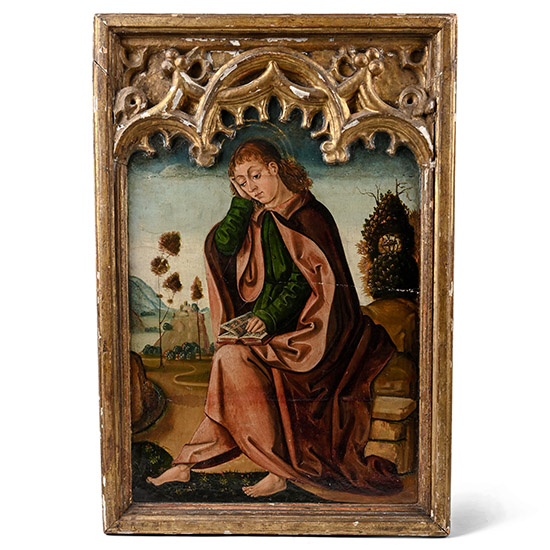
Medieval Painting of Saint John on Patmos
Spain, circa 1500 A.D.Estimate: £3,000 - 4,000 (+bp*)
Bids: 1 | Current Bid: £5
Oil on board in a gilt-moulded frame with arcade detailing at the top; youthful figure shown sitting on a stone bench, barefoot with right leg extended; head bowed and book supported on the left knee, wearing a green tunic and large brown hooded travelling cloak; set in a landscape with hilltop city in the middle distance; reinforcing straps and suspension to the reverse. 4.15 kg, 61.5 cm high
Ex Vicar Anders Frostenson (1906-2006), Sweden. This lot has been checked against the Interpol Database of stolen works of art and is accompanied by search certificate no.13515-262842.
It was common in Western art of this period to depict Saint John on Patmos as a youthful figure. By contrast, the Eastern tradition tended to represent him as an old man. In this regard, if we accept that the author of the Apocalypse was Saint John the Evangelist, he would have been approximately ninety years old at the time of its composition. However, painters such as Francisco Pacheco portrayed Saint John the Evangelist on multiple occasions and, notably, tended to depict him as a young man.
