
Loading, please wait...
LOT 1873
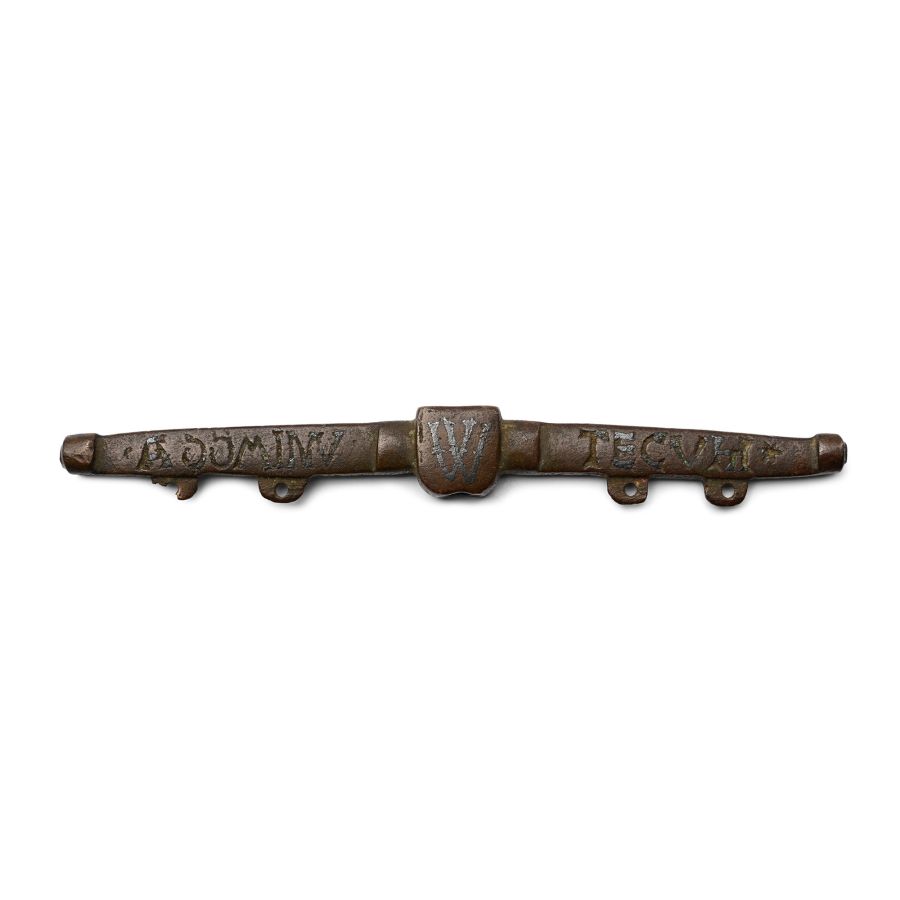
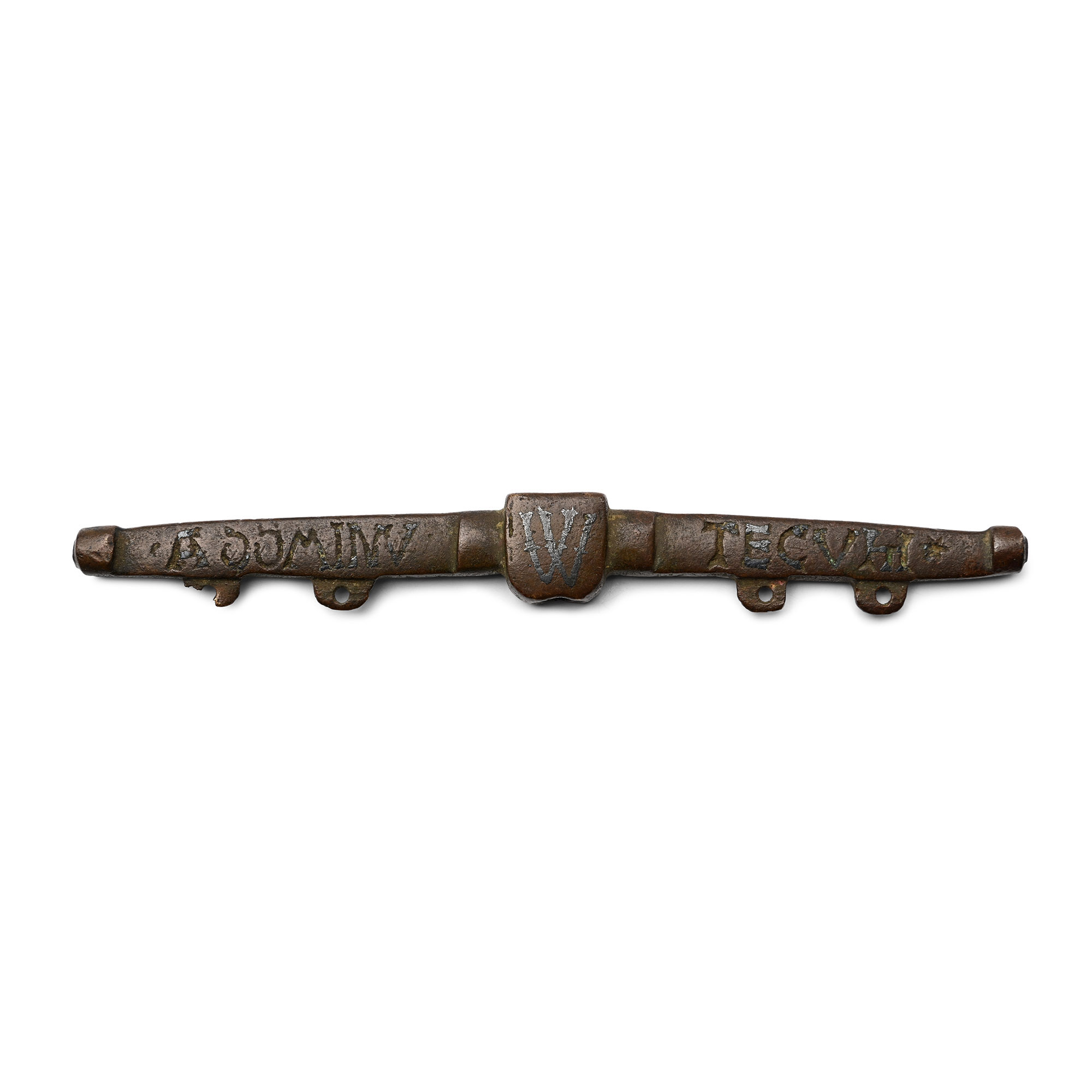
Medieval Inscribed Bronze Purse Bar
14TH-15TH CENTURY A.D.
6 in. (58 grams, 15.1 cm).
With niello-filled legend to the bar: 'AVE MARIA G[R]ACIA PLE' and to reverse 'A DOMINV TE CVM *'; central heater-shaped plaque with niello-filled 'W' to one face and 'IHS' monogram to reverse. [No Reserve]
ProvenanceAcquired on the European art market in the early 2000s.
with Galerie Rhéa, Zurich, Switzerland.
Cf. for similar purse bars with religious inscription PAS no. BERK-C3DBF9, in Leahy, K., Lewis, M., Finds Identified II, Dress fittings & ornaments, Witham, 2020, p.175.
CONDITIONTimeLine Auctions follows a vetting process to ensure the authenticity and legality of all items, reinforcing our commitment to integrity and responsible trading. Each antiquity, antique, and coin lot undergoes thorough examination by a vetting committee of at least ten external specialists, professional trade association members, scientists, and archaeologists: Our Vetting Process
AUCTIONS:
TimeLine is a leading auction house specialising in antiquities, ancient art, collectables, natural history, coins, medals, and books. Our auctions offer museums, collectors, historians, and enthusiasts the opportunity to acquire unique and historically significant pieces.
-
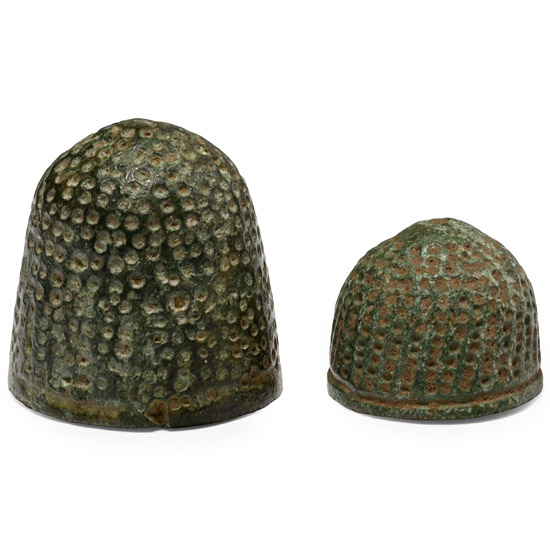
Medieval Bronze 'Beehive' Thimble Group
Circa 14th-15th century A.D.Sold for (Inc. bp): £39
Pair of thimbles with pellet decoration, and a narrow plain band to the lower edge. 13.4 grams total, 16-21 mm
Acquired on the UK art market. Property of a Lancashire, UK, collector. -
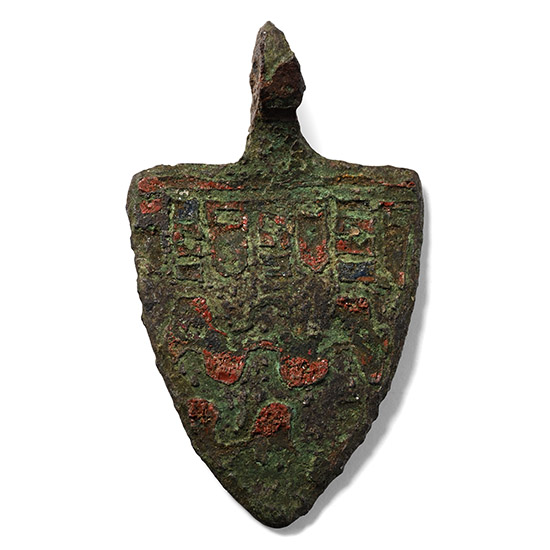
Medieval Knight's Enamelled Bronze Heraldic Horse Harness Pendant
Circa 13th-14th century A.D.Sold for (Inc. bp): £78
Heater-shaped with pierced suspension lug above; enamelled field in undy (wavy) lines with label in chief. 8.69 grams, 42 mm
From a UK collection formed in the 1980s. Property of an Essex, UK, gentleman.
The label was applied over the family arms to denote the first son during his father's lifetime. -
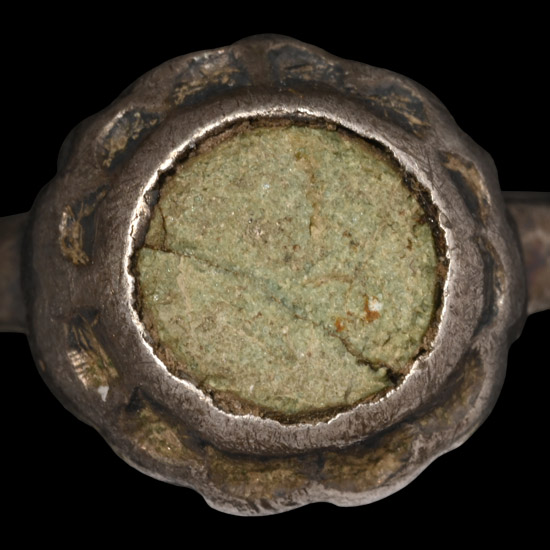
Medieval Silver Enamelled Ring
Circa 14th-15th century A.D.Sold for (Inc. bp): £85
Featuring a slender hoop and a circular bezel with a piecrust edge and a rosette underneath, a recess at the centre with light-green enamel. 4.01 grams, 23.16 mm overall, 16.68 mm internal diameter (approximate size British L 1/2, USA 6, Europe 11.87, Japan 11)
From the private collection of a European gentleman (1942-2024), formed since the 1970s.
