
Loading, please wait...
LOT 1932
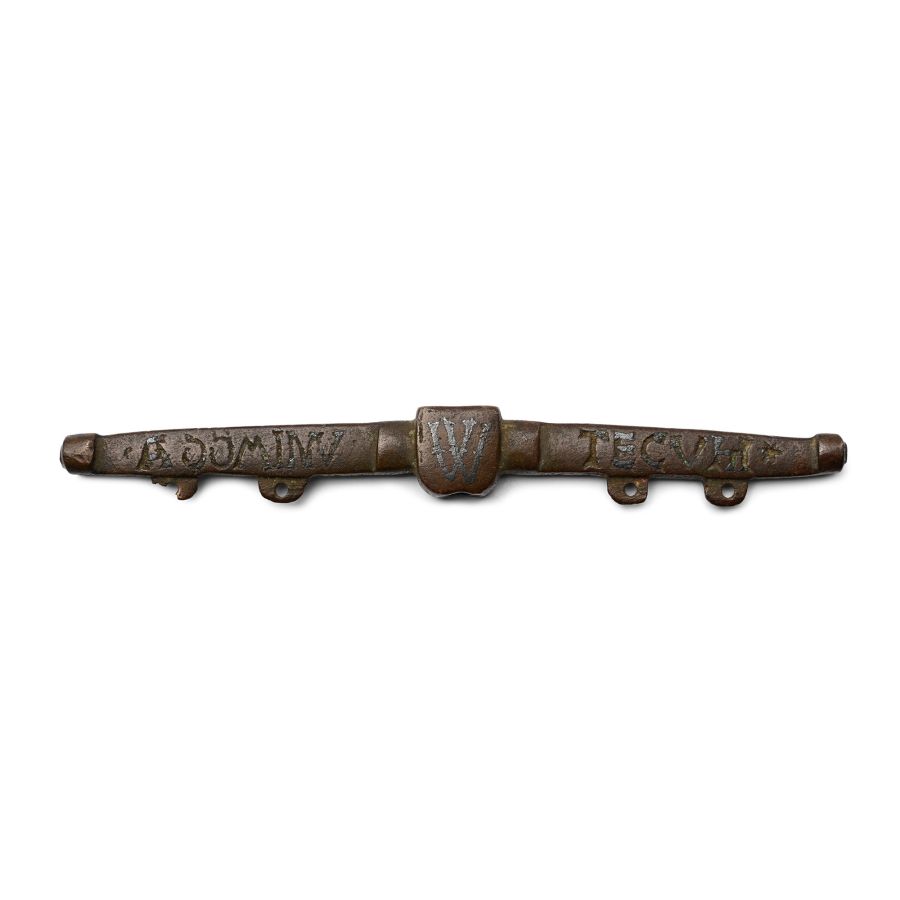
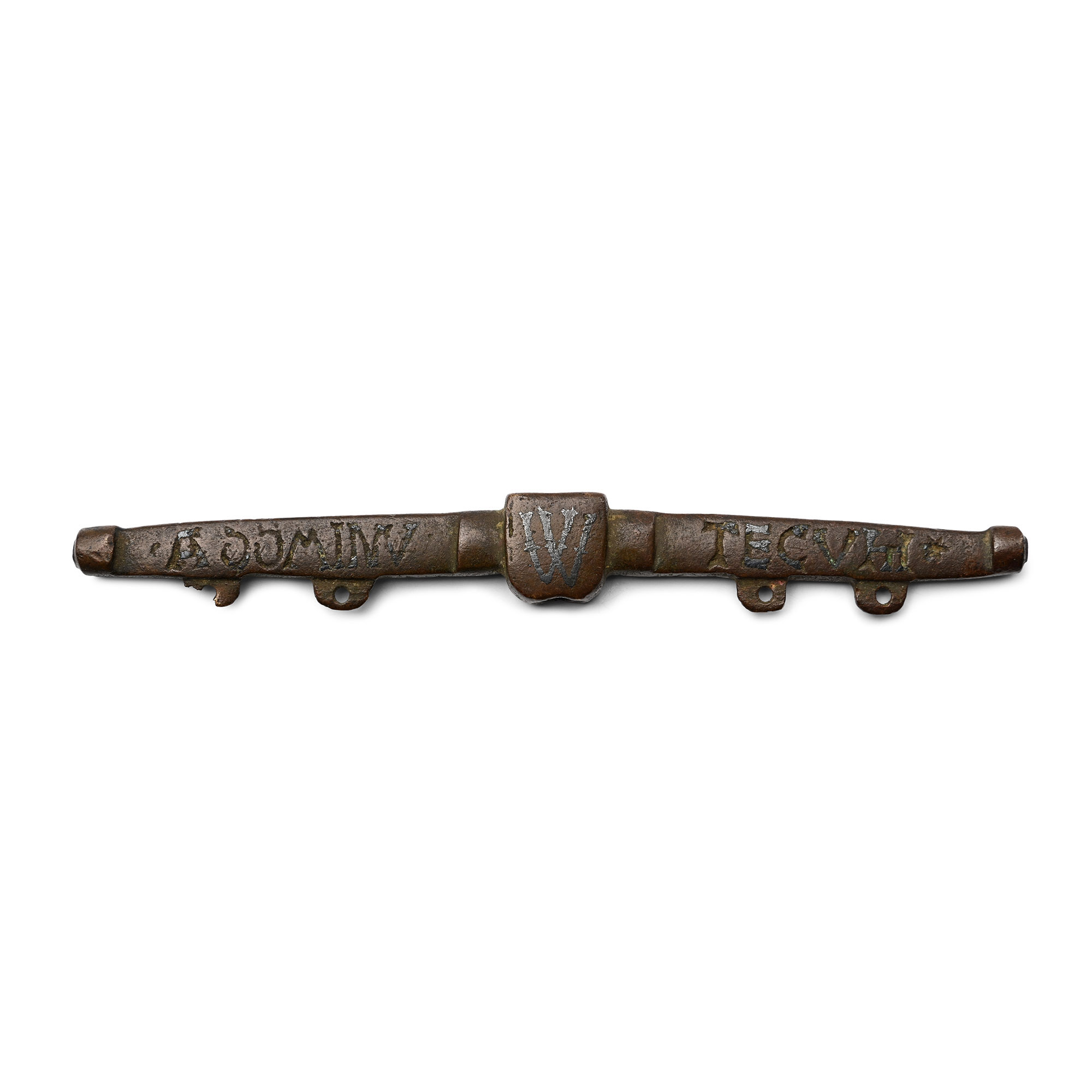
Medieval Inscribed Bronze Purse Bar
14TH-15TH CENTURY A.D.
6 in. (58 grams, 15.1 cm).
With niello-filled legend to the bar: 'AVE MARIA GACIA PLE' and to reverse 'A DOMINV TE CVM *'; central heater-shaped plaque with niello-filled 'W' to one face and 'IHS' monogram to reverse.
ProvenanceAcquired on the European art market in the early 2000s.
with Galerie Rhéa, Zurich, Switzerland.
TimeLine Auctions follows a vetting process to ensure the authenticity and legality of all items, reinforcing our commitment to integrity and responsible trading. Each antiquity, antique, and coin lot undergoes thorough examination by a vetting committee of at least ten external specialists, professional trade association members, scientists, and archaeologists: Our Vetting Process
AUCTIONS:
TimeLine is a leading auction house specialising in antiquities, ancient art, collectables, natural history, coins, medals, and books. Our auctions offer museums, collectors, historians, and enthusiasts the opportunity to acquire unique and historically significant pieces.
LOT 1932
Medieval Inscribed Bronze Purse Bar
Estimate £180 - 240€210 - 280 (for guidance only)$240 - 320 (for guidance only)
-
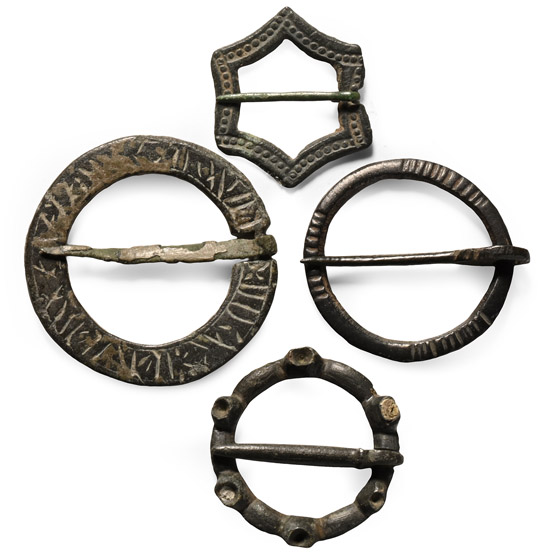
Medieval Bronze Ring Brooch Collection
14th-15th century A.D.Sold for (Inc. bp): £52
Including circular type with six cells to the hoop, hexagram and other types, one with the inscription 'IhESVS Nazarenvs' [Jesus of Nazareth]. 17.39 grams total, 24-33 mm
Found Norfolk, UK. -
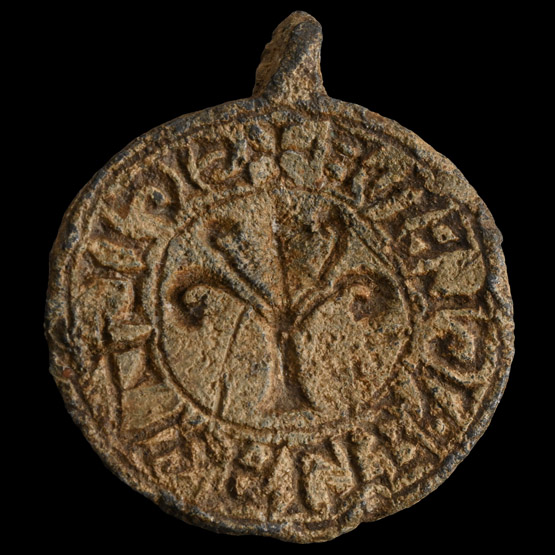
Medieval Lead Seal Matrix of Walter Gleive
13th century A.D.Sold for (Inc. bp): £52
Doscoid in plan with lug; tondo with stylised plant motif; border with Lombardic script legend ' + SIGILL WALTERI GLEIVE' (seal of Walter Gleive). 22.8 grams, 37.5 mm
Found Norfolk, UK. -
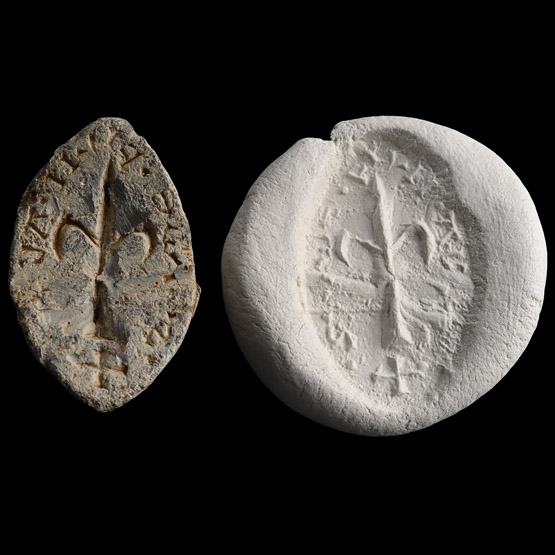
Medieval Lead Vesica-Shaped Seal Matrix with Fleur-de-Lys
13th century A.D.Sold for (Inc. bp): £33
Scaphoid in plan with rounded edges, cruciform strap to reverse; obverse with incuse legend 'S' [...]E . FILLI . AV [...]' ( ... son of ...); supplied with a plaster impression. 32.4 grams, 42.4 mm
Found whilst searching with a metal detector near Little Wibraham, South Cambridgeshire, UK. Accompanied by a copy of the British Museum's Portable Antiquities Scheme (PAS) report no.SF-B3407B.
